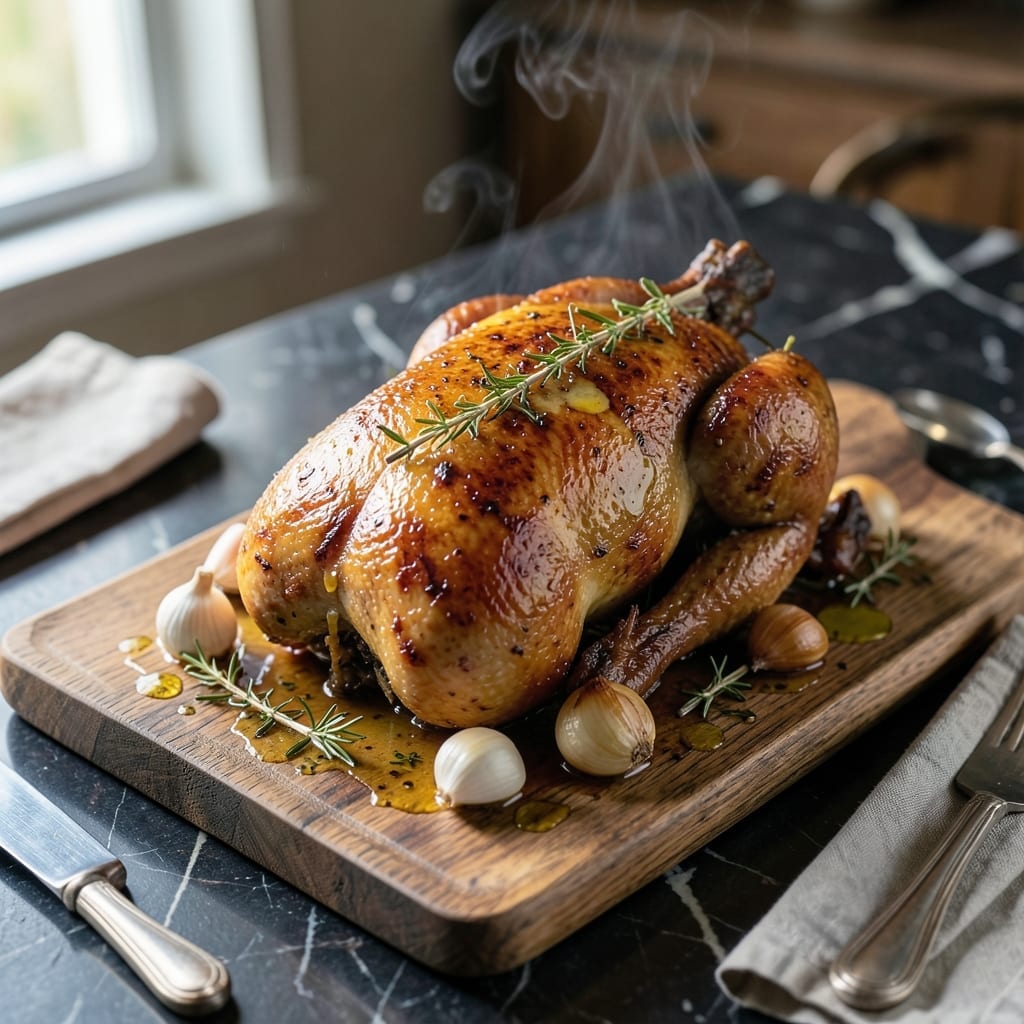
Here’s the thing—real French farmhouse chicken isn’t about fancy techniques. It’s about respecting the bird and letting its natural flavor shine.
I discovered this method while foraging wild herbs near the coast, realizing simple ingredients can create luxury. This dish proves that tender, juicy chicken only needs time and care.
What you get is meat so succulent it falls off the bone, with skin that crisp up perfectly. The aroma alone will transport you to a French countryside kitchen.
Serve it with roasted vegetables or crusty bread to soak up every drop of flavor. This is comfort food at its most elegant.
Ingredients for Poulet De Bresse
Twelve ingredients transform this chicken into French countryside luxury on your plate.
| Ingredient | Amount | Notes |
|---|---|---|
| Whole Chicken 🍗 | 4 lb | Bresse breed preferred, patted dry |
| Unsalted Butter 🧈 | ½ cup | Softened to room temperature |
| Fresh Thyme Sprigs 🌿 | 8 sprigs | Plus extra for garnish |
| Fresh Rosemary Sprigs 🌿 | 4 sprigs | Woody stems removed |
| Garlic Cloves 🧄 | 6 cloves | Smashed, unpeeled |
| Shallots 🧅 | 2 whole | Halved, skin on |
| Dry White Wine 🍷 | 1 cup | Sauvignon Blanc or Pinot Grigio |
| Chicken Stock 🥣 | 1 cup | Low-sodium preferred |
| Sea Salt 🧂 | 1 ½ tsp | Divided, plus more to taste |
| Black Peppercorns 🌶️ | 1 tsp | Lightly crushed |
| Lemon 🍋 | 1 whole | Zested and juiced |
| Bay Leaves 🍃 | 2 pieces | Dried, for aromatics |
| Olive Oil 🫒 | 2 tbsp | For searing and basting |
[recipe_ingredient_scaler]
The chicken itself is non-negotiable—Bresse breed if you can find it (check Whole Foods or specialty butchers), but a high-quality free-range bird works too. Look for plump, moist skin and a sweet smell. The butter should be European-style (higher fat content, like Plugrá or Kerrygold) for that rich, French finish. Fresh herbs are a must—skip the dried stuff here (the aroma won’t be the same).
No Bresse chicken? A free-range roaster at about 4 pounds is your next best bet. Out of white wine? Dry vermouth works in a pinch. The thyme and rosemary can be swapped for savory or tarragon, but the flavor profile will shift slightly. If you’re missing shallots, yellow onions cut into wedges will do. Just don’t skip the lemon zest—it brightens everything up.
This dish tastes even better the next day (if it lasts that long). Store leftovers in an airtight container for up to 4 days in the fridge. Reheat gently in a covered skillet to keep the skin crisp. Freezing isn’t ideal—it dulls the texture—but you can freeze the carcass for 3 months to make stock later.
Why You’ll Love This Recipe
- One Pan Wonder: I just toss the chicken with butter, thyme, rosemary, and garlic in a single dish—hardly any cleanup.
- Sunday or Tuesday: Honestly, it feels fancy enough for company but simple enough for a regular weeknight dinner.
- Leftovers Gold: The meat stays juicy, so I love shredding extras for sandwiches or salads the next day.
Step-by-Step Instructions for Poulet De Bresse
This method delivers crisp skin and fall-off-the-bone tenderness with classic French aromatics.
Step 1: Prep and Season the Whole Chicken
Begin by patting the 4 lb Whole Chicken completely dry with paper towels. This step is crucial for achieving crispy skin. Season the cavity and exterior generously with 1 tsp Sea Salt and the 1 tsp Black Peppercorns, lightly crushed. I always use my hands to rub the seasoning evenly into the skin.
Place the 2 pieces Bay Leaves, 6 cloves Garlic Cloves (smashed, unpeeled), 2 whole Shallots (halved, skin on), 4 sprigs Fresh Rosemary Sprigs, and 4 sprigs Fresh Thyme Sprigs inside the cavity. These aromatics will infuse the meat with incredible flavor as it roasts.
Step 2: Truss and Prepare for Roasting
Tuck the wings under the body and tie the legs together with kitchen twine. This compact shape ensures even cooking and presentation. Brush the exterior with 2 tbsp Olive Oil to help the skin brown beautifully.
Let the seasoned Whole Chicken sit at room temperature for 30 minutes before roasting. This step ensures more even cooking throughout the bird. Meanwhile, preheat your oven to 425°F to get it nice and hot.
Step 3: Start with High Heat for Crisp Skin
Place the Whole Chicken breast-side up on a roasting rack in a rimmed baking dish. Roast at 425°F for 30 minutes until the skin begins to turn golden brown. This high-heat start is the secret to that coveted crispy skin.
After 30 minutes, reduce the oven temperature to 350°F. Baste the chicken with 0.5 cup Unsalted Butter (softened) mixed with the lemon zest and lemon juice from the 1 whole Lemon. This adds moisture and incredible flavor.
Step 4: Finish with Moist Heat
Pour 1 cup Dry White Wine and 1 cup Chicken Stock into the bottom of the pan, being careful not to splash the chicken. Add the remaining 0.5 tsp Sea Salt and 4 sprigs Fresh Thyme Sprigs to the liquid.
Continue roasting at 350°F for another 45-60 minutes, basting occasionally with the pan juices. The chicken is done when the internal temperature reaches 165°F in the thickest part of the thigh and the juices run clear.
Step 5: Rest and Serve
Transfer the Whole Chicken to a cutting board and tent loosely with foil. Let it rest for 15-20 minutes before carving. This allows the juices to redistribute, ensuring moist, flavorful meat.
Carve the chicken and arrange on a platter. Spoon some of the pan juices over the top and garnish with extra Fresh Thyme Sprigs. The skin should be crisp and golden, while the meat remains tender and juicy with those beautiful French aromatics throughout.
Pro Tips For Making Poulet De Bresse
- Start Room Temp: Take the chicken out of the fridge 30-45 minutes before cooking—I learned this the hard way after my first few birds came out unevenly cooked.
- Butter Under Skin: Gently loosen the skin and rub about 2 tablespoons of unsalted butter directly onto the breast meat, then tuck the herbs under there too. Sounds weird, but it works.
- Don’t Overcrowd: If roasting with vegetables, spread them in a single layer around the chicken—steer clear of piling them up or they’ll steam instead of caramelize.
- Rest Before Carving: Give it a solid 15 minutes under foil after roasting. My grandmother swore by this, and she was right: the juices stay put instead of all over the cutting board.
Regional Styles of This Recipe
Classic Bresse Style
In its native Burgundy region, this dish stays true to tradition with minimal intervention. The bird is simply seasoned with sea salt, black peppercorns, and stuffed with thyme, rosemary, and garlic. Roasted at 375°F in a cast-iron cocotte, it relies on the chicken’s natural richness.
Provençal Herb Variation
Down south, they add herbes de Provence and lavender for a floral touch. I forage wild thyme near the coast to blend with the classic mix. The aromatics are more assertive here, complementing the bird’s delicate flavor beautifully. 🌿
Alsatian White Wine
In Alsace, they use Riesling instead of Sauvignon Blanc, creating a slightly sweeter pan sauce. The wine’s acidity still cuts through the richness, but adds a unique fruity note. I prefer a dry Alsatian Pinot Gris for this version.
Parisian Bistro
City chefs often add mushrooms and pearl onions to the roasting pan. The vegetables soak up the juices, creating a complete one-pan meal. I learned this trick during my French technique training—simple but impressive. 💫
Lyonnaise Cream
In Lyon, they finish with a crème fraîche sauce enriched with pan juices. The cream adds luxurious texture while maintaining the dish’s rustic charm. Use 1/2 cup crème fraîche whisked into the reduced pan liquids.
Modernist Approach
Some Parisian restaurants now use sous vide at 160°F for 2 hours before finishing in a hot pan. This guarantees perfect doneness while keeping the skin crisp. I’ve tried it—works beautifully for dinner parties.
Nutrition Facts
Frequently Asked Questions
What temperature should I roast it at?
Start at 425°F for 30 minutes for crisp skin, then reduce to 350°F until done.
How long does it need to rest before serving?
Let it rest for 15-20 minutes after cooking to keep the juices inside. This step is non-negotiable for perfect texture.
Can I substitute regular chicken?
Yes, use a high-quality free-range bird. While not identical to Bresse, the same technique works beautifully.
What if my skin isn’t crispy?
Pat the chicken completely dry before roasting and use 425°F initially. The high heat is key for that perfect crunch.

Trained in classic French technique but raised on slow-cooked ribs and spicy rubs, she blends culinary skill with smoke and soul.
- Recipe for Boneless Pork Chops in Cast Iron Skillet: Sear and Baste to Juicy Perfection - October 3, 2026
- Recipe for Boneless Cross Rib Roast: Slow-Roasted Beef with Herb Crust - October 3, 2026
- Hamburgers in Sauce Recipe Crock Pot: Slow-Cooked Savory Delight - October 3, 2026