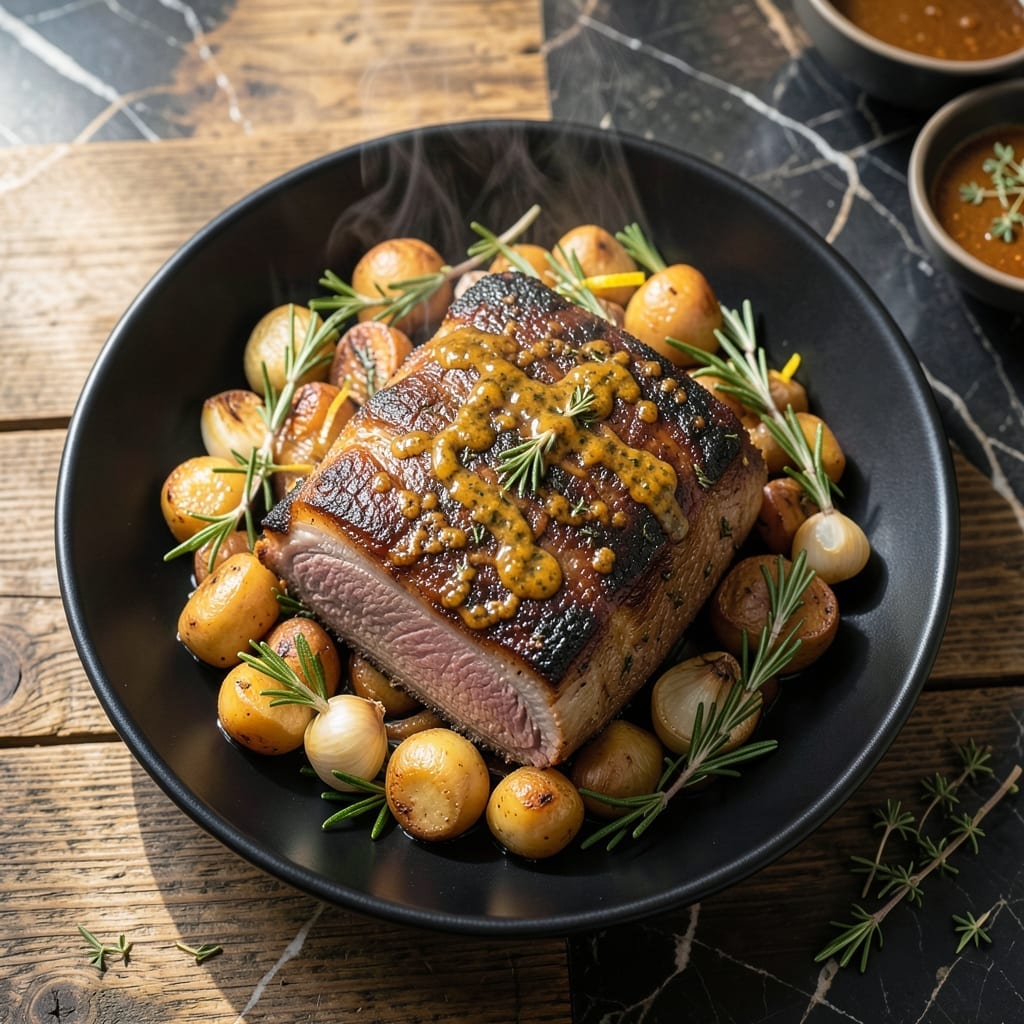
This slow-cooker method transforms prime rib into tender, juicy perfection with minimal effort. The low, steady heat breaks down the meat while the herb crust infuses every bite with flavor.
You’ll achieve restaurant-quality results with a hands-off approach, letting the crock pot do the work. The herb crust adds a savory finish that elevates this classic dish.
Ingredients for Prime Rib Recipe Crock Pot
Prime rib, bold herbs, and slow-cooker magic transform this classic dish with ease.
| Ingredient | Amount | Notes |
|---|---|---|
| Prime Rib Roast 🥩 | 3 lb | Bone-in, well-marbled preferred |
| Kosher Salt 🧂 | 2 tbsp | Diamond Crystal brand recommended |
| Freshly Ground Black Pepper 🌶️ | 1 tbsp | Coarse grind for texture |
| Garlic Cloves 🧄 | 6 cloves | Minced finely for crust |
| Fresh Rosemary 🌿 | 2 tbsp | Chopped, stems removed |
| Fresh Thyme 🍃 | 2 tbsp | Leaves stripped from stems |
| Dijon Mustard 🟡 | 2 tbsp | For herb crust binding |
| Beef Broth 🥣 | 1 cup | Low-sodium preferred for control |
| Red Wine 🍷 | ½ cup | Dry variety like Cabernet |
| Unsalted Butter 🧈 | 2 tbsp | For searing and richness |
| Olive Oil 🫒 | 1 tbsp | For searing prime rib |
| Carrots 🥕 | 3 whole | Peeled and chopped |
| Onion 🧅 | 1 whole | Yellow or white, quartered |
| Celery Stalks 🥬 | 2 whole | Chopped for aromatics |
[recipe_ingredient_scaler]
The prime rib is non-negotiable—bone-in, well-marbled roast from a reputable butcher yields the best results. Look for bright red meat with white fat streaks. Whole Foods or local butchers typically carry quality cuts. The herb crust demands fresh rosemary and thyme; avoid dried as they lack the necessary potency for this application. A good rule: if the herbs don’t smell strongly when rubbed between your fingers, they won’t flavor the meat properly.
No red wine? Substitute with additional beef broth plus a splash of balsamic vinegar for depth. Fresh garlic is ideal, but jarred minced garlic at half the quantity works in a pinch. For the Dijon, whole-grain mustard adds pleasant texture. The vegetables can be swapped—parsnips or potatoes replace carrots nicely, and shallots stand in for onion if preferred.
The roast can be prepped the night before—rub with salt, pepper, and herbs, then refrigerate uncovered to develop a crust. Cooked prime rib keeps 3-4 days refrigerated, though it’s best served fresh. Leftovers make incredible sandwiches with a little horseradish sauce.
Why You’ll Love This Recipe
- Set It & Forget: I toss the prime rib in the crock pot with garlic and rosemary before work, and it’s fall-apart tender by dinner.
- Holiday or Tuesday: I serve this for Christmas dinner, but it’s just as easy to make on a random weeknight when I’m craving something special.
- Leftovers for Days: One roast feeds us for two meals, and the sandwiches we make with the leftovers might be even better than the first serving.
Step-by-Step Instructions for Prime Rib Crock Pot
Master the technique for melt-in-your-mouth results with professional precision and timing.
Step 1: Prepare the Herb Crust and Sear the Prime Rib
Combine the 2 tbsp Fresh Rosemary, 2 tbsp Fresh Thyme, 6 cloves Garlic Cloves, 2 tbsp Kosher Salt, 1 tbsp Freshly Ground Black Pepper, and 2 tbsp Dijon Mustard in a small bowl. Stir until a thick paste forms—this will create a flavorful crust that locks in moisture during the slow cook.
Heat the 1 tbsp Olive Oil and 2 tbsp Unsalted Butter in a large skillet over high heat until the butter foams. Sear the 3 lb Prime Rib Roast on all sides for 2-3 minutes per side until deeply browned. This step develops a rich fond that enhances the finished dish.
Step 2: Deglaze and Prepare the Slow Cooker
Remove the prime rib from the skillet and set it aside. Add the 0.5 cup Red Wine to the hot skillet and scrape up all the browned bits with a wooden spoon. Let it reduce for 2-3 minutes until the liquid thickens slightly and turns a deep reddish-brown. This deglazing step captures concentrated flavor.
Place the 3 whole Carrots, 1 whole Onion, and 2 whole Celery Stalks in the bottom of your crock pot. These aromatics will infuse the meat with subtle sweetness and depth. Pour the 1 cup Beef Broth over the vegetables, then add the reduced red wine mixture.
Step 3: Slow Cook to Perfection
Position the seared prime rib on top of the vegetables in the crock pot, fat-side up. Cover and cook on low heat for 6-7 hours or on high heat for 4-5 hours. The meat is done when an instant-read thermometer inserted into the thickest part reads 125-130°F for medium-rare.
Resist the urge to lift the lid during cooking—each peek can add 20-30 minutes to the total time. The slow, steady heat breaks down the connective tissue, resulting in a roast that’s tender yet perfectly pink in the center.
Step 4: Rest and Serve
Carefully transfer the prime rib to a cutting board and tent loosely with foil. Let it rest for 15-20 minutes—this allows the juices to redistribute throughout the meat, ensuring every slice is moist and flavorful. The internal temperature will rise by 5-10°F during this time (carryover cooking).
Strain the cooking liquid from the crock pot and skim off excess fat to create a simple au jus for serving. Slice the prime rib against the grain into ½-inch thick slices and arrange on a platter. Serve with the strained au jus and your choice of sides.
Pro Tips For Making Prime Rib Recipe Crock Pot
- Sear Before Slow Cooking: I learned this the hard way—skip the sear and you’ll miss that deep, caramelized crust. A quick 2-3 minutes per side in a screaming-hot pan before the crock pot makes a real difference.
- Use Room-Temp Meat: Pull your prime rib out of the fridge 1-2 hours before cooking. Cold meat cooks unevenly, and I’ve ruined a few roasts by rushing this step.
- Don’t Drown the Rosemary: Fresh rosemary can overpower if you use too much—stick to 2-3 sprigs, lightly bruised. Sounds weird, but it works: the flavor stays balanced.
- Check Early, Often: After 4 hours on low, start testing with a meat thermometer. I was skeptical until I tried it—prime rib can go from perfect to overdone faster than you think.
Troubleshooting Perfect Results
Overcooked Meat
If your prime rib comes out dry, it likely cooked too long. Pull it at 125-130°F internal temp for medium-rare. Remember, it continues cooking while resting, so remove it 5-10°F before your target. I always set a timer for 6 hours on low and check early. 🌡️
Weak Herb Flavor
If the herb crust tastes bland, you may have used dried herbs instead of fresh. The recipe calls for 2 tbsp each of fresh rosemary and thyme. If substituting dried, use only 1 tbsp total—they’re more concentrated. Press the crust firmly onto the meat before searing.
Thin Au Jus
For a richer sauce, reduce the cooking liquid on the stovetop after removing the meat. Simmer 1-2 cups of strained liquid over medium-high heat for 10-15 minutes until it coats the back of a spoon. A cornstarch slurry (1 tbsp cornstarch + 1 tbsp water) works too.
Uneven Cooking
If the ends are overdone while the center is rare, your roast may be too large for your crock pot. For a 3 lb roast, use at least a 6-quart slow cooker. Also, ensure the meat sits fat-side up and isn’t submerged in liquid. 💡
Lid Condensation
Excess moisture dripping back onto the meat can wash away the herb crust. Place a clean kitchen towel between the lid and pot to absorb condensation. This small trick makes a noticeable difference in crust retention.
Searing Issues
If your sear isn’t developing, your pan may not be hot enough. Heat the olive oil and butter until shimmering but not smoking. Pat the roast dry before searing—wet meat steams instead of browns. I use a cast iron skillet for best results.
Nutrition Facts
Frequently Asked Questions
Do I need to sear the roast first?
Yes, searing locks in juices and creates a flavorful crust. Use high heat with olive oil and butter for 2-3 minutes per side until deeply browned.
Can I use a smaller slow cooker?
A 6-quart slow cooker is ideal for a 3 lb roast. A smaller one may cause uneven cooking or crowding, affecting texture and doneness.
What if I don’t have fresh herbs?
Dried herbs work in a pinch. Use 1 tbsp total (instead of 2 tbsp fresh each), as dried are more concentrated. Press firmly onto the meat before searing.
How do I know when it’s done?
Use an instant-read thermometer. Pull at 125-130°F for medium-rare, as the temp rises 5-10°F while resting.

Trained in classic French technique but raised on slow-cooked ribs and spicy rubs, she blends culinary skill with smoke and soul.
- Recipe for Boneless Pork Chops in Cast Iron Skillet: Sear and Baste to Juicy Perfection - October 3, 2026
- Recipe for Boneless Cross Rib Roast: Slow-Roasted Beef with Herb Crust - October 3, 2026
- Hamburgers in Sauce Recipe Crock Pot: Slow-Cooked Savory Delight - October 3, 2026