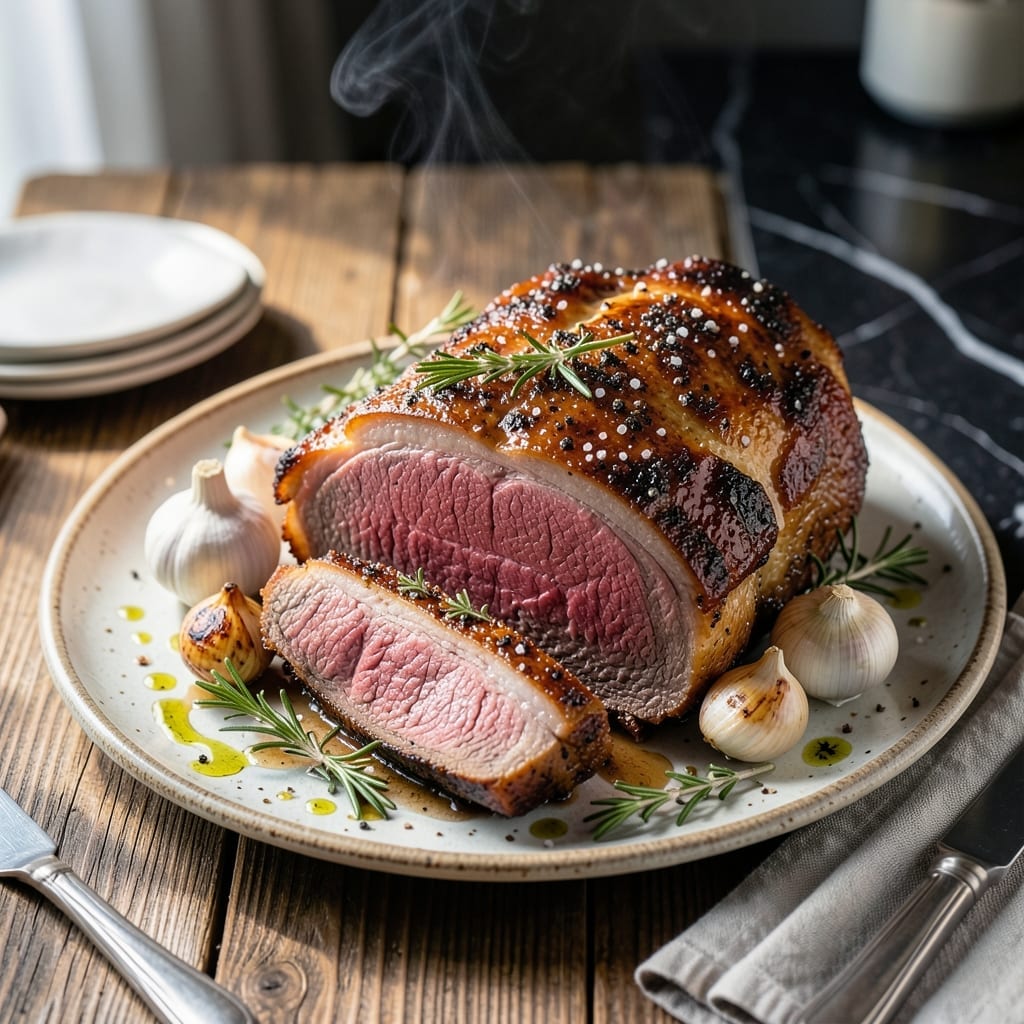
This oven method delivers a perfectly seared prime rib with a crispy herb crust every time. The slow roasting process ensures even cooking from edge to center.
Ideal for holiday gatherings, this technique combines simple seasoning with precise temperature control. The result is tender, juicy meat with a richly browned exterior.
Ingredients for Prime Rib Roast Recipe Oven
Quality matters here. Prime rib, fresh herbs, and bold flavors create this holiday centerpiece.
| Ingredient | Amount | Notes |
|---|---|---|
| Prime Rib Roast 🥩 | 5 lb | Bone-in, well-marbled preferred |
| Kosher Salt 🧂 | 2 tbsp | Diamond Crystal recommended |
| Freshly Ground Black Pepper 🌶️ | 2 tbsp | Coarse grind for texture |
| Garlic Cloves 🧄 | 8 cloves | Smashed, peeled, halved |
| Fresh Rosemary Sprigs 🌿 | 4 whole | Woody stems removed |
| Fresh Thyme Sprigs 🍃 | 6 whole | Stems intact for removal |
| Dijon Mustard 🟡 | ¼ cup | Whole grain preferred |
| Extra-Virgin Olive Oil 🫒 | ¼ cup | High smoke point variety |
| Dry Red Wine 🍷 | 1 cup | Full-bodied like Cabernet Sauvignon |
| Beef Stock 🥣 | 2 cups | Low-sodium preferred |
| Unsalted Butter 🧈 | ½ cup | Softened for herb crust |
| All-Purpose Flour 🌾 | 2 tbsp | For thickening pan juices |
[recipe_ingredient_scaler]
The prime rib is non-negotiable—bone-in for flavor and even cooking. Source from a reputable butcher like Whole Foods or your local meat market, requesting a cut with abundant marbling. USDA Prime grade delivers the best results, though Choice works well for smaller budgets. Ask for the ribeye end if available (more fat, more flavor). The fat cap should be at least 1/2-inch thick to protect the meat during roasting.
No fresh herbs? Dried at one-third the quantity, but fresh is strongly preferred for the crust. For the wine, any bold dry red works—even a cheap Cabernet. Out of beef stock? Mushroom broth adds depth without overpowering. The Dijon can be swapped for whole-grain mustard (actually better texture). If avoiding gluten, use cornstarch instead of flour for the pan sauce.
Roast leftovers in their juices stay perfect for 3-4 days refrigerated. Slice only what you need, keeping the rest whole to prevent drying. Freezes beautifully for up to 3 months. Reheat slices gently in a warm oven with a splash of stock to restore moisture.
Why You’ll Love This Recipe
- Set It and Forget: Honestly, just rub the roast with salt, pepper, garlic, and rosemary, pop it in the oven, and let the oven do the work.
- Garlic-Rosemary Magic: That combo of fresh rosemary and garlic cloves makes every bite taste like a high-end steakhouse.
- Holiday Showstopper: I serve this for Christmas and birthdays—always impresses, and it’s easier than it looks.
- Next-Day Luxury: Leftovers make incredible sandwiches, and the flavor only gets richer. I’ll be real: sometimes I make extra just for this.
Step-by-Step Instructions for Prime Rib Roast Oven
Achieve a perfectly crusted holiday centerpiece with this proven oven roasting method.
Step 1: Prepare and Season the Prime Rib Roast
Remove the 5 lb Prime Rib Roast from the refrigerator 2 hours before cooking to bring it to room temperature. Pat it completely dry with paper towels—this ensures a proper sear and crispy crust. Rub the entire surface generously with the 2 tbsp Kosher Salt and 2 tbsp Freshly Ground Black Pepper.
In a small bowl, combine the 0.25 cup Dijon Mustard and 0.25 cup Extra-Virgin Olive Oil. Brush this mixture evenly over the roast. This creates a flavorful base for the herbs to adhere to and promotes even browning.
Step 2: Create the Herb Crust
Finely chop the 8 cloves Garlic Cloves, 4 whole Fresh Rosemary Sprigs (woody stems removed), and leaves from the 6 whole Fresh Thyme Sprigs. In a separate bowl, mix these with the 0.5 cup Unsalted Butter until well combined.
Spread this herb butter mixture evenly over the entire surface of the seasoned roast. Press it in firmly so it forms a thick, even crust. This layer will caramelize during roasting, creating an aromatic barrier that locks in moisture while adding incredible depth of flavor.
Step 3: Roast at High Temperature
Preheat your oven to 450°F. Place the roast bone-side down on a rack in a roasting pan—this positioning allows the heat to penetrate through the bones, cooking the meat more evenly. Insert a meat thermometer into the thickest part of the roast, avoiding the bone.
Roast for 20 minutes at 450°F, then reduce the oven temperature to 325°F and continue roasting. This initial high-heat sear creates a beautiful, flavorful crust while the lower temperature allows for gentle, even cooking throughout the roast.
Step 4: Finish Cooking and Rest
Continue roasting at 325°F until the internal temperature reaches 115-120°F for medium-rare, which should take approximately 1.5 to 2 hours for a 5 lb roast. The exact time will depend on your oven and the roast’s shape, so rely on the thermometer rather than the clock.
Transfer the roast to a cutting board, tent loosely with foil, and let it rest for 20-30 minutes. This resting period allows the juices to redistribute throughout the meat, ensuring each slice is moist and flavorful. The internal temperature will rise 5-10°F during resting (carryover cooking).
Step 5: Make the Pan Sauce and Serve
Place the roasting pan on the stovetop over medium heat. Add the 1 cup Dry Red Wine to deglaze, scraping up all the browned bits from the bottom of the pan. Let it simmer for 3-4 minutes until reduced by half.
Whisk in the 2 tbsp All-Purpose Flour to create a roux, then slowly pour in the 2 cups Beef Stock, whisking constantly to prevent lumps. Simmer for 5-7 minutes until the sauce thickens enough to coat the back of a spoon. Strain and serve alongside the sliced prime rib.
Pro Tips For Making Prime Rib Roast Recipe Oven
- Start High, Finish Low: Sear the roast at 450°F for 20 minutes to get that deep brown crust, then drop the temp to 325°F to cook it through without overcooking the edges. I learned this the hard way after serving a few too many dry ends.
- Salt It Overnight: Rub the roast with kosher salt 12-24 hours before cooking—it penetrates deep and seasons the meat all the way through. My first few prime ribs tasted bland until I finally tried this.
- Skip the Water Pan: Resist the urge to add water to the pan; it steams the meat instead of roasting it. Does it look dry in there? Good. That’s how you get a perfect crust.
- Rest Under Foil: Let the roast rest for at least 20 minutes under foil before carving—it redistributes the juices so every slice stays moist. I used to skip this when I was hungry, and the difference is night and day.
Creative Variations of This Recipe
Classic Au Jus Style
For a traditional approach, replace the herb butter with a simple rub of 2 tbsp Kosher Salt, 2 tbsp Freshly Ground Black Pepper, and 1 tbsp garlic powder. Roast as directed, then serve with the natural juices strained and reduced by half for a clean, rich au jus. 🥩
Coffee-Rubbed Version
Add 2 tbsp finely ground coffee and 1 tbsp brown sugar to your salt and pepper rub. The coffee deepens the beef’s natural flavors while the sugar helps create a darker, more caramelized crust. I love this with a bold Cabernet Sauvignon pan sauce.
Mediterranean Herb Blend
Swap rosemary and thyme for 2 tbsp dried oregano, 1 tbsp dried basil, and 1 tsp crushed red pepper. Add zest of 1 lemon to your herb butter for brightness. This variation pairs beautifully with roasted vegetables.
Smoked Paprika Crust
Mix 1 tbsp smoked paprika and 1 tsp ground cumin into your herb butter. This adds a subtle smokiness that complements the natural beef flavors. I recommend using Spanish smoked paprika for authentic depth.
Blue Cheese Butter
Fold ½ cup crumbled blue cheese into your softened butter before applying to the roast. The cheese melts into the crust, creating a tangy, rich layer. This works particularly well with a Port wine reduction for serving.
Balsamic Glaze Finish
During the last 30 minutes of roasting, brush the crust with a mixture of ¼ cup balsamic vinegar and 2 tbsp honey. This creates a glossy, slightly sweet finish that caramelizes beautifully under the broiler for 2-3 minutes. 💫
Nutrition Facts
Frequently Asked Questions
What internal temperature should I aim for?
For medium-rare, remove from oven at 115-120°F. The temperature will rise 5-10°F during resting. Use a meat thermometer for accuracy—this is non-negotiable for perfect results.
Should I cover the roast while resting?
Yes, tent loosely with foil for 20-30 minutes. This keeps it warm while allowing juices to redistribute. Skipping this step risks dry meat, as all those flavorful juices will end up on your cutting board.
Can I use a boneless roast?
though bone-in adds flavor and helps with even cooking. For boneless, reduce cooking time slightly and ensure the fat cap is at least ½-inch thick to protect the meat.
Why start with high heat?
The initial 450°F sear creates a flavorful crust. After 20 minutes, lower to 325°F for even cooking. This two-stage method guarantees a crispy exterior and tender interior.

Trained in classic French technique but raised on slow-cooked ribs and spicy rubs, she blends culinary skill with smoke and soul.
- Recipe for Boneless Pork Chops in Cast Iron Skillet: Sear and Baste to Juicy Perfection - October 3, 2026
- Recipe for Boneless Cross Rib Roast: Slow-Roasted Beef with Herb Crust - October 3, 2026
- Hamburgers in Sauce Recipe Crock Pot: Slow-Cooked Savory Delight - October 3, 2026