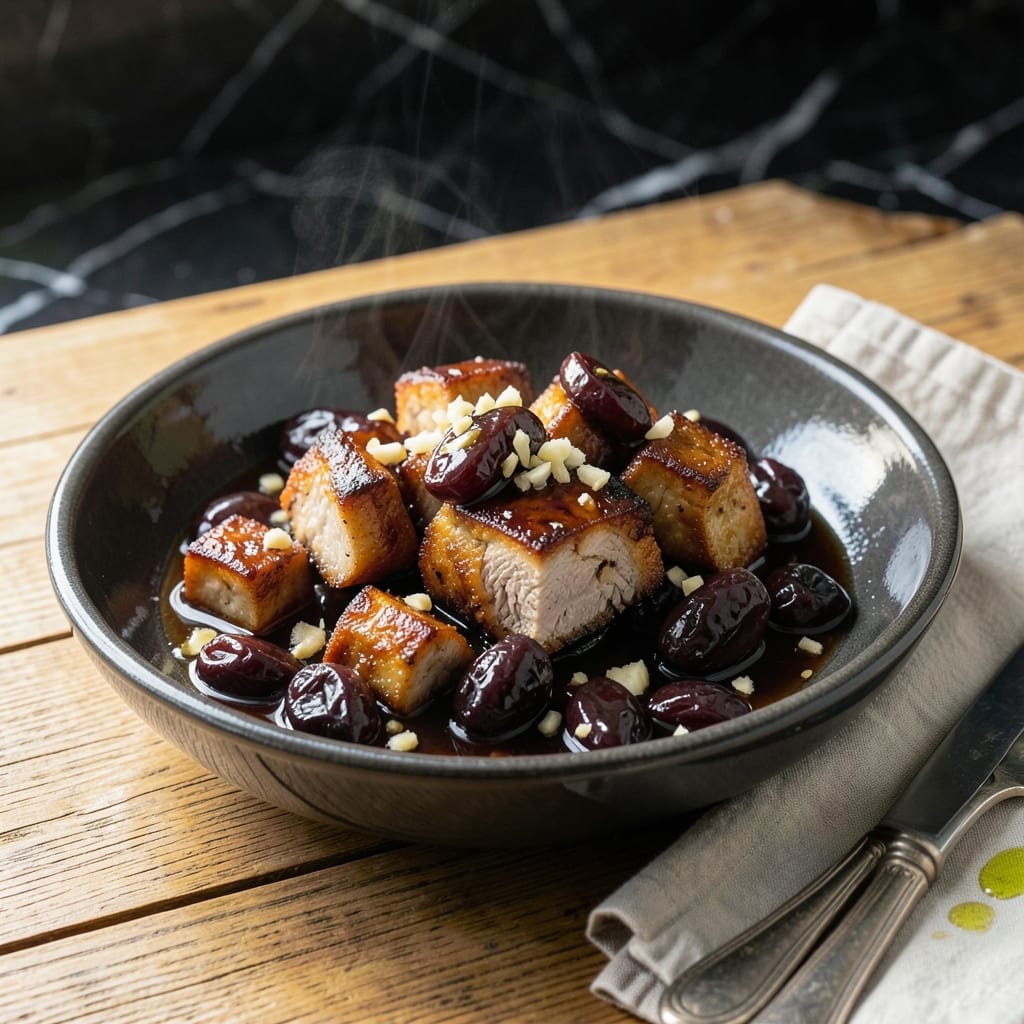
This Hawaiian prune mui delivers a perfect balance of sweet and savory flavors that define island-style cooking.
Tender pork is slow-cooked with prunes until the meat becomes fall-apart tender and the sauce thickens into a rich, caramelized glaze. The dish captures the essence of local comfort food, blending Chinese and Hawaiian culinary traditions into one satisfying meal.
What makes this recipe special is its simplicity—just a few ingredients transform into something extraordinary with time and low heat. The prunes melt into the sauce, creating a deep, complex sweetness that pairs beautifully with the pork.
Serve this over steamed rice to soak up every bit of the flavorful sauce. Here’s how to make it at home.
Ingredients for Prune Mui Recipe Hawaii
A handful of humble ingredients transforms into a rich, island-inspired masterpiece with time.
| Ingredient | Amount | Notes |
|---|---|---|
| Pork Shoulder 🥩 | 2 lb | Boneless, cut into 2-inch cubes |
| Pitted Prunes 🟣 | 1 ½ cups | Packed, roughly chopped |
| Soy Sauce 🫕 | ½ cup | Low-sodium preferred |
| Brown Sugar 🍚 | ½ cup | Light or dark variety |
| Garlic Cloves 🧄 | 6 cloves | Minced for depth of flavor |
| Fresh Ginger 🌿 | 2 tbsp | Peeled, freshly grated |
| Green Onions 🧅 | ½ cup | Thinly sliced, white and green parts separated |
| Rice Vinegar 💧 | 2 tbsp | Unseasoned variety |
| Vegetable Oil 🫒 | 2 tbsp | For searing pork |
| Water 💧 | 1 cup | For braising liquid |
| Cornstarch 🌾 | 1 tbsp | Mixed with water for slurry |
| Salt 🧂 | 1 tsp | Kosher or sea salt |
| Black Pepper 🌶️ | ½ tsp | Freshly ground preferred |
[recipe_ingredient_scaler]
The pork shoulder is non-negotiable—look for well-marbled cuts at Costco or your local butcher for that fall-apart texture. Prunes should be plump and moist; Sun-Maid or generic store brands work equally well. Avoid dry, shriveled prunes as they won’t melt into the sauce properly. Fresh ginger and garlic are essential—pre-minced jars lack the vibrant punch needed for authentic flavor.
No pork shoulder? Pork butt works identically. Out of prunes? Dried apricots at a 1:1 ratio offer a similar sweetness. For a gluten-free version, tamari instead of soy sauce is seamless. Brown sugar can be swapped for coconut sugar (same amount), but avoid granulated white sugar—it lacks the molasses depth that balances the dish.
Store raw pork in the fridge for up to 3 days or freeze for 6 months. Once cooked, this keeps beautifully for 4-5 days in the fridge. The flavors deepen overnight, making leftovers even more delicious. Reheat gently to preserve the sauce’s silky texture.
Why You’ll Love This Recipe
- One Pot Magic: I just dump everything in—pork shoulder, prunes, garlic—then let the oven do the work.
- Sweet & Savory Bomb: The brown sugar and soy sauce create this sticky, tangy glaze that clings to the pork like a dream.
- Feeds the Whole Ohana: Between us, this is my go-to for family gatherings—even the picky eaters reach for seconds.
- Leftovers? Even Better: Honestly, it tastes richer the next day, and the prunes get this melt-in-your-mouth texture.
Step-by-Step Instructions for Island-Style Sweet and Savory Pork
This traditional method ensures tender pork and a rich, balanced sauce every time.
Step 1: Sear the Pork Shoulder for Depth of Flavor
Heat the 2 tbsp vegetable oil in a heavy pot over medium-high heat until shimmering. Add the 2 lb pork shoulder cubes in a single layer, working in batches if necessary to avoid crowding the pan. Sear for 3-4 minutes per side until deeply browned.
This browning creates the fond that will form the base of your sauce. Don’t rush this step—the caramelization develops complex flavors. The pork should release easily from the pan when properly seared.
Step 2: Build the Braising Liquid with Aromatics
After removing the pork, reduce heat to medium. Add the 6 cloves garlic cloves and 1 tbsp fresh ginger to the pot, stirring for 30 seconds until fragrant. Immediately add the 0.5 cup soy sauce, 0.5 cup brown sugar, 2 tbsp rice vinegar, 1 cup water, and 1 tsp five-spice powder, scraping up any browned bits.
This liquid should come to a gentle simmer within 2-3 minutes. The sugar will dissolve completely, and the mixture will take on a deep amber color. The vinegar’s acidity balances the sweetness while the five-spice adds its distinctive warmth.
Step 3: Braise the Pork with Prunes Until Tender
Return all the pork to the pot along with the 1.5 cups pitted prunes. The liquid should come about halfway up the meat. Reduce heat to low, cover, and simmer gently for 1.5 to 2 hours, stirring occasionally.
Check the pork at the 1.5-hour mark—it should be fork-tender and the prunes plump and soft. The sauce will have thickened slightly and taken on a glossy appearance. If the liquid reduces too quickly, add a splash of water to maintain the level.
Step 4: Reduce the Sauce and Finish
Once the pork is tender, remove the lid and increase heat to medium. Simmer uncovered for 10-15 minutes to reduce the sauce to your desired consistency. The sauce should coat the back of a spoon and the prunes should have broken down slightly, thickening the mixture naturally.
Taste and adjust seasoning if needed, though the balance of sweet, salty, and tangy should already be well-developed. The prunes will have absorbed the braising liquid, becoming intensely flavored while contributing their natural sweetness to the dish.
Step 5: Serve Over Steamed White Rice
Spoon the pork and sauce over the 4 cups steamed white rice, ensuring each serving gets plenty of the rich sauce and tender prunes. Garnish with the 4 whole green onions, thinly sliced. The contrast of the vibrant green against the deep brown sauce makes for an appealing presentation.
The sauce should soak into the rice slightly, creating a perfect ratio of meat to rice in each bite. Serve immediately while hot, as the sauce will continue to thicken as it cools.
Pro Tips For Making Prune Mui Recipe Hawaii
- Brown the Pork First: Sear the pork shoulder in a hot pan until deeply browned on all sides—I learned this the hard way after my first batch turned out pale and bland. The caramelized crust adds layers of flavor to the final dish.
- Soak the Prunes: Plump the pitted prunes in warm water for 10-15 minutes before adding them to the pot. Sounds weird, but it works: they’ll absorb the braising liquid better and won’t turn into tough, chewy bits.
- Skip the Pre-Chopped Garlic: Crush the garlic cloves lightly with the side of your knife instead of mincing—this keeps the pieces intact for easy removal but still infuses the oil and sauce with flavor.
- Simmer Low and Slow: After combining everything, keep the heat at a gentle simmer, not a rolling boil. My grandmother swore by this, and she was right: it prevents the pork from toughening up and lets the flavors meld properly.
Creative Variations of This Dish
Spicy Thai Twist
Add 2 tbsp red curry paste and 1 can coconut milk to the braising liquid for a Thai-inspired version. The creamy coconut balances the sweet prunes beautifully. Finish with fresh Thai basil and a squeeze of lime for brightness. 🌶️
Smoky BBQ Variation
Swap the soy sauce for 1 cup BBQ sauce and add 1 tsp smoked paprika. Use dried apricots instead of prunes for a deeper smoky-sweet profile. This version pairs wonderfully with cornbread instead of rice.
Vegetarian Mui
Replace pork with 2 lb mushrooms (cremini or shiitake) and 1 block firm tofu, cubed. Use vegetable broth instead of water. The prunes and sauce will still create that signature sweet-savory depth.
Pineapple Fusion
Add 1 cup fresh pineapple chunks along with the prunes for a tropical twist. The pineapple’s acidity brightens the dish while adding authentic Hawaiian flavor. Remove lid for the last 15 minutes to let excess liquid evaporate.
Quick Weeknight Version
Use a pressure cooker to cut cooking time to 30 minutes. Sear pork as directed, then pressure cook on high for 20 minutes with a natural release. The flavors develop faster but still taste rich and complex.
Extra Umami Boost
Stir in 2 tbsp hoisin sauce and 1 tbsp oyster sauce at the end for deeper umami layers. Garnish with toasted sesame seeds and extra green onions. This takes the dish to restaurant-quality with minimal effort. ✨
Nutrition Facts
Frequently Asked Questions
Can I use a different cut of pork?
Yes, pork butt works identically to shoulder. Both cuts have enough fat to stay tender during the 1.5-2 hour braise. Avoid lean cuts like tenderloin as they’ll dry out.
Why do the prunes melt into the sauce?
During the long simmer, prunes absorb the braising liquid and break down naturally, creating a rich, thick glaze. This process intensifies their sweetness and blends perfectly with the savory pork.
How do I prevent the sauce from becoming too thick?
Check the liquid level every 30 minutes and add a splash of water if needed. The sauce should coat the back of a spoon but still be pourable when served over rice.
Can this be made in a slow cooker?
Sear the pork first, then cook on low for 6-8 hours or high for 4-5 hours. The flavors will develop beautifully with the hands-off method.

Trained in classic French technique but raised on slow-cooked ribs and spicy rubs, she blends culinary skill with smoke and soul.
- Recipe for Boneless Pork Chops in Cast Iron Skillet: Sear and Baste to Juicy Perfection - October 3, 2026
- Recipe for Boneless Cross Rib Roast: Slow-Roasted Beef with Herb Crust - October 3, 2026
- Hamburgers in Sauce Recipe Crock Pot: Slow-Cooked Savory Delight - October 3, 2026