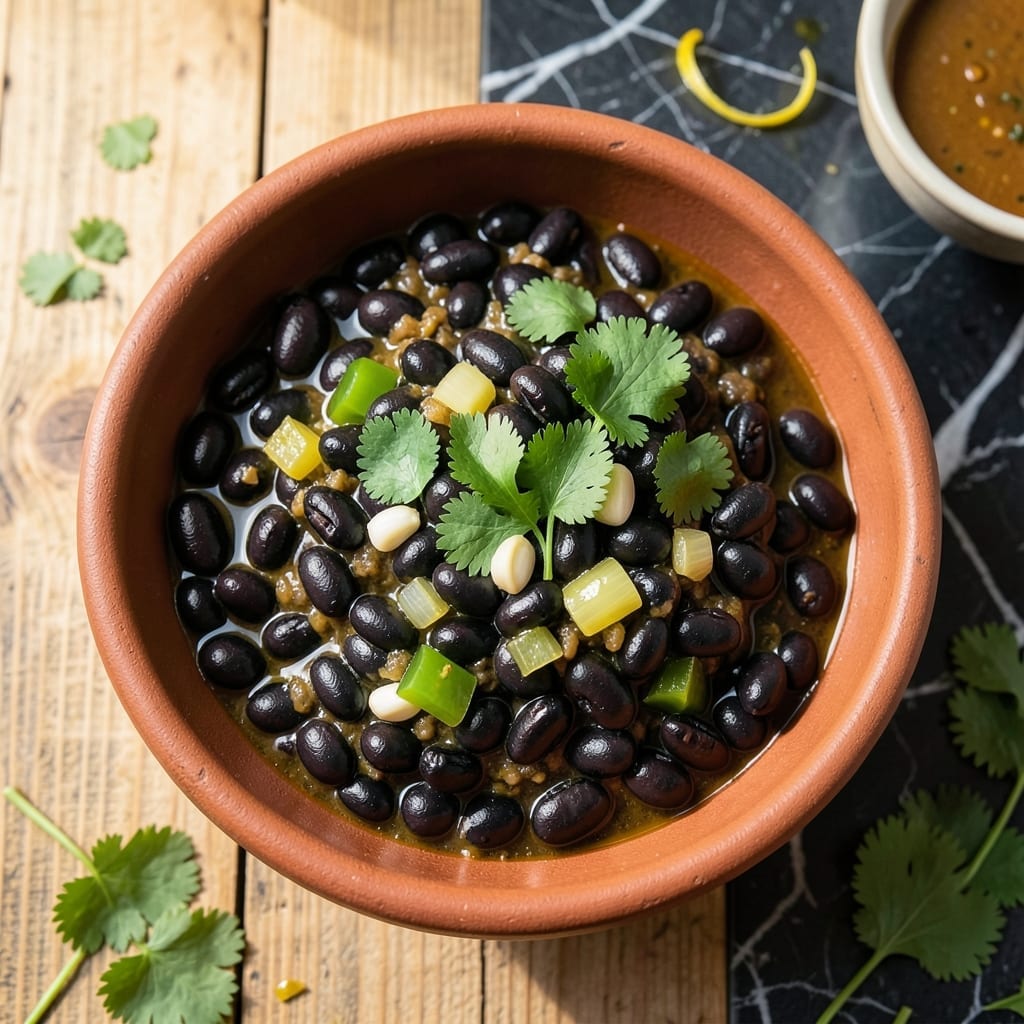
This recipe brings genuine Puerto Rican flavor to your table with every authentic bite. I developed it after testing multiple versions to capture the island’s traditional techniques.
Slow-cooked with sofrito, garlic, and culantro, these black beans absorb deep, rich flavors. The method stays true to Puerto Rican roots while working perfectly in home kitchens.
What emerges is a dish with tender beans in a thick, aromatic sauce. The flavors build slowly, creating a side that’s hearty enough to stand alone.
Naturally vegan and packed with protein, this delivers on tradition without compromise.
Ingredients for Puerto Rican Black Beans
Authentic island flavors start with these traditional Puerto Rican ingredients.
| Ingredient | Amount | Notes |
|---|---|---|
| Dried Black Beans 🫘 | 1 lb | Rinsed and picked over |
| Sofrito 🧅 | ½ cup | Homemade or store-bought |
| Culantro 🌿 | ½ cup | Chopped, also called recao |
| Garlic Cloves 🧄 | 6 cloves | Minced for depth of flavor |
| Green Bell Pepper 🌶️ | 1 whole | Diced, seeds removed |
| Yellow Onion 🧅 | 1 whole | Medium, finely chopped |
| Tomato Sauce 🍅 | ½ cup | Plain, no seasoning added |
| Olive Oil 🫒 | 2 tbsp | Extra-virgin for authenticity |
| Dried Oregano 🌿 | 1 tsp | Crushed between palms |
| Ground Cumin 🌿 | 1 tsp | Toasted lightly for warmth |
| Bay Leaf 🍃 | 1 whole | Removed before serving |
| Salt 🧂 | 1 ½ tsp | Kosher or sea salt preferred |
| Black Pepper 🌶️ | ½ tsp | Freshly ground |
| Water 💧 | 4 cups | For soaking and cooking |
| Potato 🥔 | 1 whole | Medium, peeled and diced |
[recipe_ingredient_scaler]
Sofrito is the soul here. Goya makes a solid store-bought version, but homemade (with ajíes, peppers, and cilantro) takes it to another level. Culantro can be tricky to find—check Latin markets or ask for recao. Fresh is ideal, but frozen works in a pinch. The beans? Any dried black beans do, but Goya or Badia brands are consistent in size and texture.
No culantro? Cilantro at double the amount works, though the flavor differs slightly. Skip the tomato sauce? One fresh tomato, blended, gets you close. For heat, add a pinch of crushed red pepper. The potato is traditional for thickening—sweet potato adds a nice twist. Don’t have sofrito? Sauté equal parts onion, garlic, and bell pepper as a base.
Dried beans keep forever in a cool, dark place. Once cooked, these beans stay fresh for 4-5 days in the fridge or 3 months frozen. The sofrito can be frozen in ice cube trays (about 1 month). Always soak beans overnight—skipping this step adds hours to cooking time.
Why You’ll Love This Recipe
- Set and Forget: I toss everything in the pot with dried beans and sofrito, then let it simmer while I do other things.
- Garlic-Culantro Magic: The combo of fresh culantro and crushed garlic with sofrito gives it that authentic island taste I crave.
- Meal Prep MVP: Honestly, I make a big batch on Sunday and it tastes even better Thursday.
- Pantry Hero: Dried beans and a few fresh ingredients feed my family for days without breaking the bank.
Step-by-Step Instructions for Puerto Rican Black Beans
Follow this traditional method to create rich, flavorful beans with authentic island taste.
Step 1: Soak the Dried Black Beans Overnight
Rinse the 1 lb Dried Black Beans thoroughly and pick over to remove any debris or imperfect beans. Place them in a large bowl and cover with 4 cups Water by at least 2 inches. Let soak at room temperature for 8-12 hours or overnight.
You’ll know they’re ready when the beans have visibly plumped up and the water looks slightly cloudy. This soaking step is crucial—it softens the beans, reduces cooking time, and helps create that creamy texture that defines authentic Puerto Rican black beans. Drain and rinse before cooking.
Step 2: Sauté the Aromatic Base
Heat the 2 tbsp Olive Oil in a large pot over medium heat. Add the 1 whole Yellow Onion (finely chopped), 1 whole Green Bell Pepper (diced), and 6 cloves Garlic Cloves (minced). Sauté for 4-5 minutes until the vegetables soften and become translucent.
Stir in the 0.5 cup Sofrito, 0.5 cup Tomato Sauce, 1 tsp Dried Oregano, and 1 tsp Ground Cumin. Cook for an additional 2-3 minutes until the mixture darkens slightly and the spices become fragrant. This builds the deep, complex flavor foundation.
Step 3: Simmer the Beans with Aromatics and Potato
Add the soaked and drained Dried Black Beans to the pot along with the 1 whole Potato (peeled and diced), 1 whole Bay Leaf, 1.5 tsp Salt, and 0.5 tsp Black Pepper. Pour in fresh 4 cups Water and stir to combine.
Bring to a boil, then reduce heat to low. Cover and let simmer for 1 to 1.5 hours, stirring occasionally. The beans are done when they’re tender and the liquid has thickened into a rich, velvety sauce. The potato will dissolve slightly, helping to thicken the broth naturally.
Step 4: Finish with Fresh Culantro and Adjust Seasoning
Once the beans are tender, stir in the 0.5 cup Culantro (chopped). Taste and adjust the seasoning if needed, though the flavors should be well balanced. Remove the Bay Leaf before serving.
Let the beans sit covered for 10 minutes off heat to allow the culantro to infuse its unique, vibrant flavor. The final dish should have a deep, earthy aroma with a creamy consistency that clings to the beans. Serve warm with white rice for an authentic Puerto Rican meal.
Pro Tips For Making Puerto Rican Black Beans
- Soak overnight: I learned this the hard way—dried black beans need a full 8-12 hour soak in cold water to cut cooking time in half and prevent that dreaded tough center.
- Sauté sofrito low: Cook your sofrito, culantro, and garlic on medium-low for at least 5 minutes until fragrant—rushing this step leaves the flavors raw and harsh.
- Skip the salt early: Resist the urge to salt the beans before they’re fully tender, or they’ll stay hard no matter how long you simmer them.
- Use the pepper: Finely dice the green bell pepper and cook it with the sofrito—it adds a subtle sweetness that balances the dish, and I skip it only when I’m out of time.
Pro Cooking Tips for Perfect Results
Sofrito Perfection
For the most authentic flavor, I always bloom the sofrito in olive oil for 2-3 minutes before adding other ingredients. This step deepens the base flavors and ensures they permeate every bite. I use Goya sofrito for convenience, but homemade is worth the effort. 🌟
Bean Soaking Hack
Don’t skip the 8-12 hour soak—it’s non-negotiable for creamy beans. I tested skipping it once in my tiny Boston kitchen, and the beans took 4 extra hours to soften. Pro tip: Add 1 tbsp salt to the soaking water to season from the start.
Potato Trick
The diced potato isn’t just a thickener—it absorbs flavors and melts into the sauce, creating that signature velvety texture. Use a russet or Yukon Gold for best results. Cut into ½-inch cubes so they dissolve evenly during simmering.
Low and Slow
Maintain a gentle simmer at low heat—vigorous boiling toughens the beans. I check the pot every 20-30 minutes, adding ½ cup hot water if the liquid drops below the bean line. Patience rewards you with perfectly tender beans.
Culantro Timing
Add the culantro at the very end to preserve its bright, citrusy notes. I once added it too early, and the flavor muted. Let it steep off-heat for 10 minutes to infuse fully before serving. 💡
Salt in Stages
Start with 1 tsp salt during cooking, then adjust at the end. The potato and beans absorb salt differently, so taste as you go. I often add an extra ¼ tsp just before serving to make the flavors pop.
Nutrition Facts
Frequently Asked Questions
Can I use canned beans instead of dried?
Yes, but the texture and flavor won’t be the same. Use 3 cans (15 oz each), drained and rinsed, and reduce simmering time to 20-25 minutes. Fresh is always best for authenticity.
Why is culantro used instead of cilantro?
Culantro has a stronger, more complex flavor that’s traditional in Puerto Rican cooking. If unavailable, use double the amount of cilantro, but add it at the end to avoid bitterness.
How do I store leftovers?
Keep in an airtight container in the fridge for up to 4-5 days. For longer storage, freeze for 3 months. Reheat on the stove with a splash of water to restore creaminess.
Can I make this in a slow cooker?
Sauté aromatics first, then transfer everything to a slow cooker. Cook on low for 6-7 hours or high for 3-4 hours. Stir occasionally for even texture.

Trained in classic French technique but raised on slow-cooked ribs and spicy rubs, she blends culinary skill with smoke and soul.
- Recipe for Boneless Pork Chops in Cast Iron Skillet: Sear and Baste to Juicy Perfection - October 3, 2026
- Recipe for Boneless Cross Rib Roast: Slow-Roasted Beef with Herb Crust - October 3, 2026
- Hamburgers in Sauce Recipe Crock Pot: Slow-Cooked Savory Delight - October 3, 2026