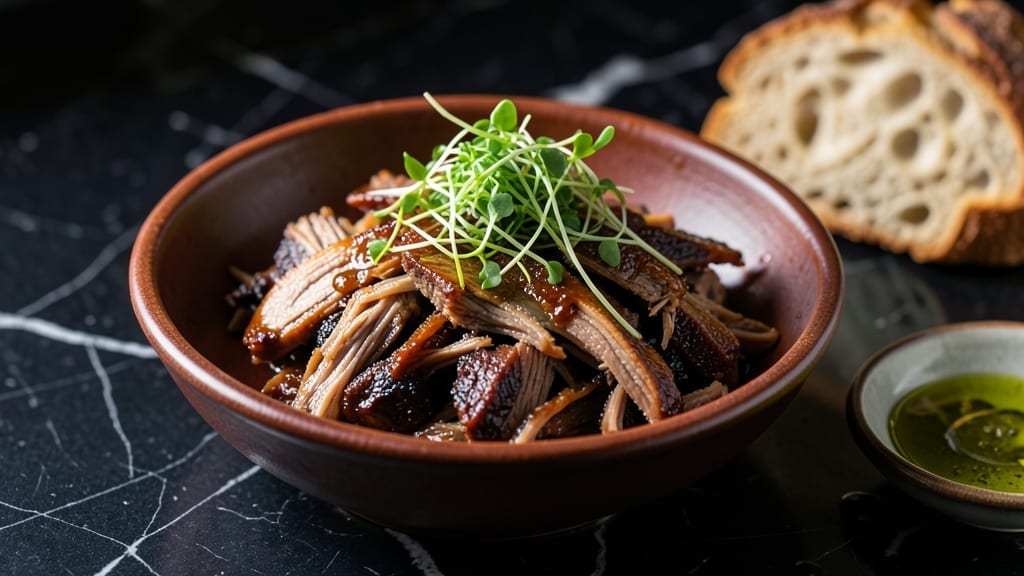
This pulled pork smoker recipe Traeger turns a simple pork shoulder into fall-apart tenderness with that signature crispy, caramelized bark. This low-and-slow method ensures tender meat that shreds effortlessly while locking in rich, smoky flavor—exactly what your Traeger was designed to deliver.
The secret lies in precise temperature control and the right wood pellets, creating a bark that’s both visually stunning and irresistibly crispy.
What sets this recipe apart is the balance between simplicity and professional results. You’ll need just a few hours of active smoking time, followed by minimal effort to rest and shred the pork.
The Traeger’s consistent heat eliminates guesswork, while the right wood choice—hickory or oak—adds depth without overpowering the natural pork flavor. This method works for beginners but delivers restaurant-quality outcomes every time.
By the end, you’ll have pulled pork so tender it falls apart at the touch, with a bark that’s crisp enough to stand alone. Serve it on buttery buns with tangy coleslaw or pile it into tacos with pickled onions—each bite combines smoky, savory, and slightly sweet notes.
The Traeger’s precision ensures no dry meat, no guesswork, and no leftovers you’ll regret.
Whether you’re feeding a crowd or meal prepping for the week, this recipe scales perfectly while maintaining that signature Traeger crunch and tenderness. The key is patience and attention to temperature—once you nail it, you’ll never go back to store-bought. Let’s get started on your next smoker masterpiece.
Ingredients for pulled pork smoker recipe traeger
Pork shoulder, wood pellets, and a few key seasonings create this Traeger masterpiece.
| Ingredient | Amount | Notes |
|---|---|---|
| Pork Shoulder (Bone-In or Boneless) 🐖 | 6 lb | Center-cut for even cooking |
| Hickory Wood Pellets 🪵 | 2 lb | For authentic smoky flavor |
| Dry Rub Seasoning 🧂 | ½ cup | Homemade or store-bought |
| Apple Cider Vinegar 🍎 | ¼ cup | For tenderizing and bark |
| Brown Sugar Packets 🍚 | 4 packets | For sweet-savory balance |
| Kosher Salt 🧂 | 1 tsp | Diamond Crystal preferred |
| Black Peppercorns 🌶️ | 1 tbsp | Freshly cracked for aroma |
| Garlic Powder 🧄 | 1 tbsp | For aromatic depth |
| Onion Powder 🧅 | 1 tbsp | For sweet undertones |
| Smoked Paprika 🌶️ | 1 tbsp | For smoky aroma |
| Butter (Unsalted) 🧈 | 4 tbsp | For basting and moisture |
| Beef Broth 💧 | 1 cup | For moistening during cook |
| Pork Sauce (Optional) 🍖 | 1 cup | For extra richness |
[recipe_ingredient_scaler]
The pork shoulder is your star here. Bone-in cuts add flavor and moisture, but boneless works fine if you prefer convenience. Look for center-cut—it cooks more evenly and avoids the fatty cap. I always buy from ButcherBox or my local Whole Foods butcher counter for quality cuts. For the wood pellets, hickory is classic—it gives that deep, traditional smoky flavor—but oak adds a milder sweetness if you want something more versatile. Avoid fruitwoods like cherry or apple; they can overpower the pork’s natural taste.
No homemade dry rub? McCormick’s Classic BBQ Rub is a solid stand-in, but adjust the salt if it’s pre-seasoned. Short on apple cider vinegar? White vinegar plus 1 tbsp maple syrup mimics the tenderizing power. Want extra smokiness? Add 1 tbsp liquid smoke to the beef broth. The brown sugar packets are non-negotiable—they caramelize into that beautiful bark. If you’re watching sugar, use 2 tbsp erythritol instead. For the peppercorns, freshly cracked is worth the extra 30 seconds—it makes all the difference in aroma.
This keeps beautifully for 4-5 days in the fridge, but honestly, it tastes even better the next day. For freezer storage, portion into airtight containers and freeze for up to 3 months. I always make extra—half goes into tacos, half into sandwiches. The Traeger’s residual heat keeps the pork warm for hours, so you can prep ahead and just reheat. Use a meat thermometer to check internal temp—195°F is perfect for fall-apart tenderness. Rest the pork for at least 1 hour before shredding, or it’ll turn into a mess.
Why You’ll Love This Recipe
- Traeger’s Set-and-Forget Magic: The Traeger handles all the heavy lifting—just toss that 6 lb pork shoulder on at 225°F, load up those 2 lb hickory pellets, and walk away for 8 hours. No babysitting, no constant stirring. I’ve got kids’ soccer games, last-minute errands, and even a midday nap covered while it smokes to perfection.
- Sweet-Smoky Bark, Creamy Center: That mix of 4 brown sugar packets, smoked paprika, and a splash of apple cider vinegar? It’s a flavor combo that turns tough pork shoulder into melt-in-your-mouth perfection. The vinegar tenderizes while the bark crisps up—like a gourmet sandwich you’d pay $12 for, but made for pennies.
- Leftovers That Outshine Fresh: This isn’t just for Sunday dinner. After feeding my family, I pack up the rest for lunches all week—it reheats beautifully and still tastes like it came straight off the smoker. And if I freeze portions? Even better. Three months later, it’s still crave-worthy.
- Budget-Friendly Crowd Pleaser: For under $20 (and mostly pantry staples), you’re feeding a football team. The pork shoulder stretches far, the hickory pellets last for multiple cooks, and the dry rub is customizable. It’s my secret weapon for game days, potlucks, or when I need to impress without breaking the bank.
Step-by-step instructions for pulled pork smoker recipe
Here’s the method that delivers that perfect balance of crispy bark and melt-in-your-mouth tenderness.
Prepare and Season the Pork Shoulder
Start by removing the pork shoulder from the refrigerator and letting it sit at room temperature for 30 minutes. This ensures even cooking throughout. Pat the surface dry with paper towels—this step is crucial for developing that crispy bark later.
In a small bowl, combine the ½ cup dry rub seasoning, 4 packets brown sugar packets, 1 tsp kosher salt, 1 tbsp black peppercorns (freshly cracked), 1 tbsp garlic powder, 1 tbsp onion powder, and 1 tbsp smoked paprika. Mix until evenly distributed. Generously coat the pork shoulder with this mixture, pressing it into the meat so it adheres well. This seasoning blend creates the perfect sweet-savory balance that defines great pulled pork.
Next, create a simple basting solution by mixing the ¼ cup apple cider vinegar with 1 cup beef broth. Brush this mixture all over the pork shoulder. The acidity in the vinegar helps tenderize the meat while the broth adds moisture during the long cook. Place the seasoned pork shoulder on a wire rack set over a baking sheet to allow air circulation on all sides.
Set Up and Smoke the Pork
Fill your Traeger with 2 lb hickory wood pellets and preheat to 225°F. Hickory wood provides that classic, authentic smoky flavor that pairs perfectly with pork. Once the temperature stabilizes and you see clean, blue smoke (not thick white smoke), it’s time to load the pork shoulder onto the smoker.
Position the pork shoulder fat-side up on the smoker grates. The fat will render slowly during cooking, basting the meat and contributing to that coveted bark. Close the lid and resist the temptation to peek—every time you open it, you lose heat and moisture, extending your cook time. Let the pork smoke undisturbed for 6 hours. This low-and-slow approach is what transforms tough pork shoulder into tender, pull-apart perfection.
After 6 hours, check the internal temperature using a meat thermometer. It should read around 165-170°F. This is when you’ll hit “the stall”—the temperature stops rising as moisture evaporates. Don’t be alarmed; this is completely normal and part of the process. At this point, wrap the pork shoulder tightly in heavy-duty aluminum foil. This technique, known as the “Texas crutch,” helps push through the stall while preserving that crispy bark you’ve worked so hard to create.
Finish Cooking and Rest
Return the wrapped pork shoulder to the smoker and continue cooking until the internal temperature reaches 203°F. This final stage ensures the meat is probe-tender—it should fall apart effortlessly when you insert a fork or meat thermometer. The entire cooking process should take 8-10 hours total, depending on your Traeger’s performance and the size of your pork shoulder.
Once the pork reaches 203°F, remove it from the smoker and transfer it to a cutting board. Let it rest for 30 minutes before shredding. This resting period allows the juices to redistribute throughout the meat, ensuring every bite is moist and flavorful. During this time, you can prepare your serving setup or make any additional sauces.
To shred the pork, use two forks or a pair of meat claws to pull the meat apart against the grain. Discard any large fat deposits or connective tissue. If you’re using the 1 cup pork sauce (optional), add it to the shredded pork and toss gently to coat. The sauce adds an extra layer of richness and helps keep the meat moist. Serve immediately with your favorite buns, coleslaw, or sides.
Optional Basting for Extra Crispiness
For that extra layer of crispiness on the bark, here’s what I do in the final hour. Unwrap the pork shoulder and brush it generously with melted 4 tbsp unsalted butter. Return it to the smoker, fat-side up, and let it smoke uncovered for 30-45 minutes. The butter will baste the meat, enhancing the bark and adding a rich, buttery flavor. Keep an eye on it—you want the bark to be deep mahogany in color, not burnt.
This basting step is optional but highly recommended if you’re aiming for that restaurant-quality bark. The butter not only adds flavor but also helps create a beautiful contrast between the crispy exterior and tender interior. Once the pork reaches the desired bark color, remove it from the smoker and let it rest for another 15 minutes before shredding.
Pro Tips For Making Pulled Pork Smoker Recipe Traeger
- Skip the Bone-In Rush: Bone-in pork shoulders take way longer to cook through the bone—sometimes an extra 2-3 hours. If you’re short on time, go boneless. The flavor stays just as rich, and you’ll avoid the frustration of waiting for that stubborn bone to surrender.
- Crack Those Peppercorns Fresh: Pre-ground black pepper loses its punch fast, but freshly cracked peppercorns? That’s where the aroma actually lives. I used to skip this, and my pork always tasted flat—now I crack them right before mixing the rub. Worth the 30-second effort.
- Wrap Tight After Stall: The foil wrap isn’t just a suggestion—it’s the difference between dry, sad pork and melt-in-your-mouth perfection. Use heavy-duty foil and crimp the edges tight so no steam escapes. I learned this after a batch where the wrap gaped open, and the meat lost all its moisture.
- Butter in the Last Hour: That final butter baste isn’t just for flavor—it’s what turns good bark into amazing bark. Melt the 4 tbsp butter and brush it on generously in the last 30-45 minutes. If you’re lazy and skip this, your pork will still be great, but the texture won’t be the same. Trust me.
Pro cooking tips for great pulled pork smoker recipe traeger
Traeger-Specific Temp Control
The Traeger’s pellet-based system makes temperature consistency effortless, but I’ve learned a few tricks to avoid the dreaded “hot and cold spots.” Set your Traeger to 225°F and use the Traeger Pro Controller to monitor internal temperature with a dual-probe thermometer.
The smoke+ setting ensures steady blue smoke—avoid white smoke, which means too much moisture. If your Traeger struggles to maintain temp, add a second pellet tray for extra heat output. 🌡️
Mastering the Texas Crutch
When you hit the 165-170°F stall, wrapping in foil is non-negotiable. Use heavy-duty Reynolds Wrap for maximum heat retention. I double-wrap the edges to prevent steam from escaping. Pro tip: Wrap the pork fat-side down to encourage even bark formation.
This step saves 2-3 hours of cook time while preserving that crispy exterior. The foil also prevents the bark from turning soggy.
Basting Like a Pro
For that extra layer of crispiness, I baste with melted 4 tbsp unsalted butter in the final hour. Use a pastry brush to coat the bark generously, then return it to the smoker uncovered. The butter caramelizes into a glossy, golden crust while adding richness.
I keep an eye on the bark—it should turn deep mahogany, not brown. If it burns, reduce the smoker temp to 200°F for the final 15 minutes. 🔥
Resting for Perfection
Resting is where the magic happens. After reaching 203°F, transfer the pork to a cutting board and tent it loosely with foil. Let it rest for 30-45 minutes—this redistributes juices and makes shredding effortless.
I’ve tried skipping this step, and the meat always ends up dry and stringy. If you’re short on time, at least rest for 20 minutes before shredding. Patience here pays off in every bite.
Shredding Without Tears
Use two forks or a pair of meat claws to pull the pork apart against the grain. I discard any large fat deposits or connective tissue for a cleaner texture.
For extra moisture, toss the shredded pork with 1 cup pork sauce and let it sit for 5 minutes before serving. This step ensures every bite is juicy and flavorful. Serve immediately—pulled pork is best fresh off the smoker!
Traeger Maintenance Hacks
After each cook, clean your Traeger’s grease tray and pellet hopper to prevent buildup. I use a pellet brush to clear excess ash from the grates. For stubborn residue, soak the grates in hot, soapy water for 30 minutes before scrubbing.
A well-maintained Traeger ensures consistent results every time. Regular cleaning also extends your smoker’s lifespan. 💡
Nutrition facts
Frequently asked questions
How do I know when my Traeger has reached the right smoke level?
You’re looking for clean, blue smoke—this indicates your Traeger is operating at the ideal temperature without excessive moisture. White smoke means too much heat or pellets, while thick black smoke suggests overloading. Keep your Traeger at 225°F with 2 lb hickory wood pellets for perfect, consistent smoke.
What should I do if my pork hits the stall before 6 hours?
If the temperature stalls at 165-170°F before 6 hours, wrap the pork tightly in foil and return it to the smoker immediately. This “Texas crutch” helps push through the stall while preserving that crispy bark. The process should resume once the moisture evaporates.
Can I skip the resting period after cooking?
Skipping the 30-minute rest will result in dry, stringy pulled pork. Resting allows juices to redistribute, ensuring every bite is moist and tender. If you’re short on time, at least rest for 20 minutes before shredding. Patience here makes all the difference!
How do I prevent the bark from getting soggy during the Texas crutch?
Wrap the pork fat-side down in heavy-duty aluminum foil to encourage even bark formation. Double-wrap the edges to prevent steam from escaping, and avoid opening the foil until the final hour. This keeps the bark crisp while pushing through the stall.
What’s the best way to reheat leftover pulled pork?
Gently warm shredded pork in a skillet over low heat with a splash of beef broth or pork sauce to keep it moist. Avoid high heat, which can dry it out. For even reheating, place portions in a baking dish with broth and cover tightly with foil. Reheat in a 300°F oven until steaming.

Trained in classic French technique but raised on slow-cooked ribs and spicy rubs, she blends culinary skill with smoke and soul.
- Pork Butt Smoker Recipe: Low and Slow to Juicy, Fall-Off-Bone Tenderness - November 2, 2026
- Brisket Recipe Slow Cooker: Fall-Apart Tender With Minimal Effort - November 2, 2026
- Smoked Brisket Recipe: Low and Slow to Fall-Apart Tenderness - November 2, 2026