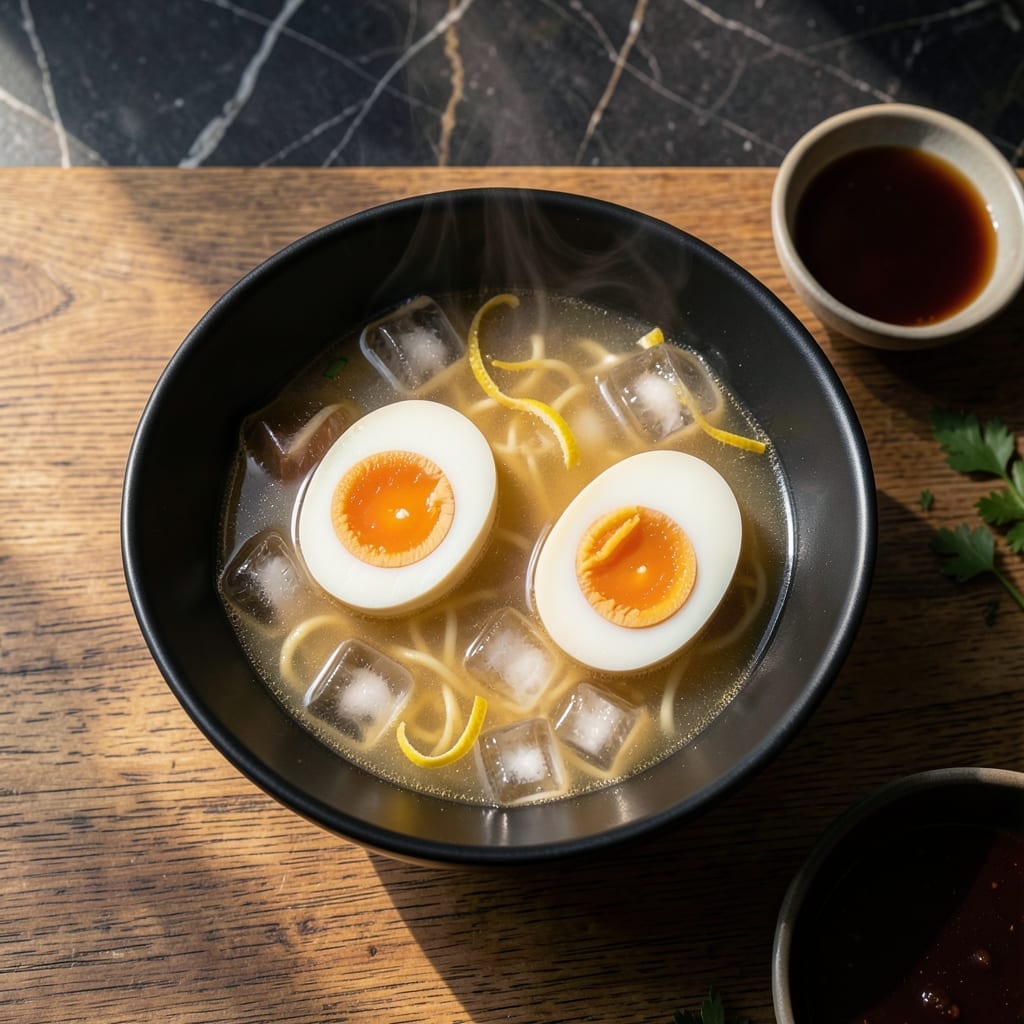
This method delivers perfectly jammy ramen eggs with minimal effort and maximum flavor. I developed this technique for busy mornings when I crave that restaurant-style egg without the wait.
The key is precise timing—6 minutes in simmering water creates that signature runny yolk and firm white. A quick ice bath stops the cooking process, ensuring the texture stays just right.
What you get is a tender egg with a rich, creamy center that pairs beautifully with ramen noodles. The whole process takes 10 minutes from start to finish, making it ideal for quick breakfasts or meal prep.
Customize with soy-marinated variations or keep it simple. Here’s how to make them every time.
Ingredients for Quick Ramen Egg
Just a few ingredients for those rich, creamy yolks you crave.
| Ingredient | Amount | Notes |
|---|---|---|
| Large Eggs 🥚 | 2 whole | Room temperature preferred |
| Water 💧 | 4 cups | For simmering eggs |
| White Vinegar 🍶 | 2 tbsp | Helps prevent cracking |
| Ice Cubes ❄️ | 2 cups | For ice bath |
| Cold Water 💧 | 2 cups | For ice bath |
| Soy Sauce 🫕 | ¼ cup | For optional marinade |
| Water 💧 | ¼ cup | For optional marinade |
| Mirin 🍶 | 1 tbsp | For optional marinade |
| Sugar 🧈 | 1 tbsp | For optional marinade |
[recipe_ingredient_scaler]
The eggs are everything here. Room temperature helps prevent cracking when they hit the water. I grab organic, free-range from Whole Foods—the yolks are that much richer. The vinegar trick is old-school but works: it helps the whites set faster. Don’t skip it, even if you’re making a plain batch without the marinade.
No mirin? White wine or rice vinegar with a pinch of sugar gets you close. Short on soy sauce? Tamari or coconut aminos work (though flavors differ slightly). The marinade is totally optional—these eggs are delicious plain, just peeled and halved over ramen. But if you’re marinating, give them at least 4 hours (overnight is magic).
Unpeeled eggs keep in the fridge for 5 days in their shells. Peeled? Store in water in a sealed container for 3 days. Marinated eggs taste best within 5 days—the texture starts to change after that.
Why You’ll Love This Recipe
- 5-Minute Magic: I can have these eggs peeled and ready while my ramen noodles cook—no multitasking required.
- Jammy Center: That runny yolk with the firm white is exactly what you need to take ramen from basic to restaurant-worthy.
- Meal Prep Hero: I make a batch on Sunday and they keep perfectly in the fridge all week for instant ramen upgrades.
- Pocket Change: Honestly, eggs and vinegar cost less than a coffee and transform my cheap ramen into something special.
Step-by-Step Instructions for Ramen Eggs
Here’s the method I use to get those perfect jammy yolks with minimal effort.
Step 1: Prepare the Water Bath
In a medium saucepan, combine the 4 cups Water and 2 tbsp White Vinegar. The vinegar helps prevent the eggs from cracking during cooking. Bring this mixture to a gentle boil over medium-high heat.
Once boiling, reduce the heat to maintain a steady simmer. You want small bubbles consistently breaking the surface, not a rolling boil. This controlled temperature is crucial for achieving the perfect texture without overcooking the yolks.
Step 2: Cook the Eggs
Using a slotted spoon, carefully lower the 2 whole Large Eggs into the simmering water. I always use room temperature eggs for this—they’re less likely to crack when they hit the hot water.
Set a timer for exactly 6 minutes. This is the sweet spot for that coveted jammy yolk with a fully set white. If you like your yolks a bit more firm, go for 7 minutes, but don’t exceed that or you’ll lose the creamy center.
Step 3: Create the Ice Bath
While the eggs cook, prepare your ice bath. In a large bowl, combine the 2 cups Ice Cubes and 2 cups Cold Water. The water helps the ice surround the eggs completely for rapid cooling.
As soon as the timer goes off, immediately transfer the eggs to the ice bath using your slotted spoon. Let them cool for at least 5 minutes—this stops the cooking process completely and makes them easier to peel.
Step 4: Optional Marinade for Extra Flavor
If you want that classic ramen egg flavor, combine the 0.25 cup Soy Sauce, 0.25 cup Water, 1 tbsp Mirin, and 1 tbsp Sugar in a bowl. Stir until the sugar dissolves completely.
Peel the cooled eggs and place them in the marinade. For best results, let them soak for at least 4 hours (overnight is ideal). The eggs will develop a beautiful brown color and absorb that umami-rich flavor that makes ramen eggs so special.
When you’re ready to use them, slice in half lengthwise to reveal that perfect jammy yolk. The contrast between the firm white and creamy center is what makes these eggs irresistible in ramen or enjoyed on their own.
Pro Tips For Making Quick Ramen Egg
- Boil Vigorous Water: Start with a full rolling boil, not a gentle simmer—I learned this the hard way after ending up with undercooked yolks and sad noodles.
- Use Room Temp Eggs: Pull your eggs out of the fridge 10-15 minutes before boiling, or they’ll crack when they hit the hot water. Cold eggs straight from the fridge are just begging to split open.
- Shock Immediately: Plunge those eggs straight into ice water the second the timer dings, or the carryover heat will keep cooking them. I skip this when I’m lazy, but the texture suffers every time.
- Add Vinegar First: Toss a tablespoon of white vinegar into the boiling water—it helps the whites set faster if a crack does happen, and it doesn’t affect the taste. Sounds weird, but it works.
Health Benefits of This quick ramen egg
Protein Powerhouse
Each egg delivers 6 grams of high-quality protein, containing all nine essential amino acids your body needs. This makes them perfect for breakfast or a post-workout snack. The protein helps keep you full and supports muscle repair throughout your day. 💪
Brain-Boosting Nutrients
Eggs are rich in choline, a nutrient crucial for brain health and development. They also contain lutein and zeaxanthin, antioxidants that support eye health. Just one egg provides about 20% of your daily choline needs.
Vitamin D Source
These eggs provide vitamin D, which is essential for bone health and immune function. With many people deficient in this vitamin, adding eggs to your diet is an easy way to boost your intake naturally.
Heart-Healthy Fats
While eggs contain cholesterol, they also have healthy unsaturated fats that support heart health. The fats in eggs help your body absorb fat-soluble vitamins like A, D, E, and K from other foods.
Low-Calorie Option
At just 70 calories per egg, this is a nutrient-dense, low-calorie addition to your meals. The marinade adds minimal calories while packing in flavor. Perfect for those watching their calorie intake without sacrificing nutrition. ✨
B Vitamin Complex
Eggs are packed with B vitamins like B12, riboflavin, and folate. These vitamins play vital roles in energy metabolism and red blood cell formation. A simple way to support your body’s daily functions.
Nutrition Facts
Frequently Asked Questions
Why use vinegar in the water?
The 2 tbsp White Vinegar helps the egg whites set faster and prevents cracking. It’s an old trick that makes peeling easier too. Don’t worry—it won’t affect the flavor.
Can I make these ahead of time?
Store unpeeled eggs in the fridge for up to 5 days. For marinated eggs, keep them in the liquid for up to 5 days—the flavor deepens over time.
What if my yolk isn’t jammy enough?
Next time, reduce cooking to 5 minutes for a runnier center or try 6 minutes for slightly firmer. The ice bath is key—don’t skip it!

Trained in classic French technique but raised on slow-cooked ribs and spicy rubs, she blends culinary skill with smoke and soul.
- Recipe for Boneless Pork Chops in Cast Iron Skillet: Sear and Baste to Juicy Perfection - October 3, 2026
- Recipe for Boneless Cross Rib Roast: Slow-Roasted Beef with Herb Crust - October 3, 2026
- Hamburgers in Sauce Recipe Crock Pot: Slow-Cooked Savory Delight - October 3, 2026