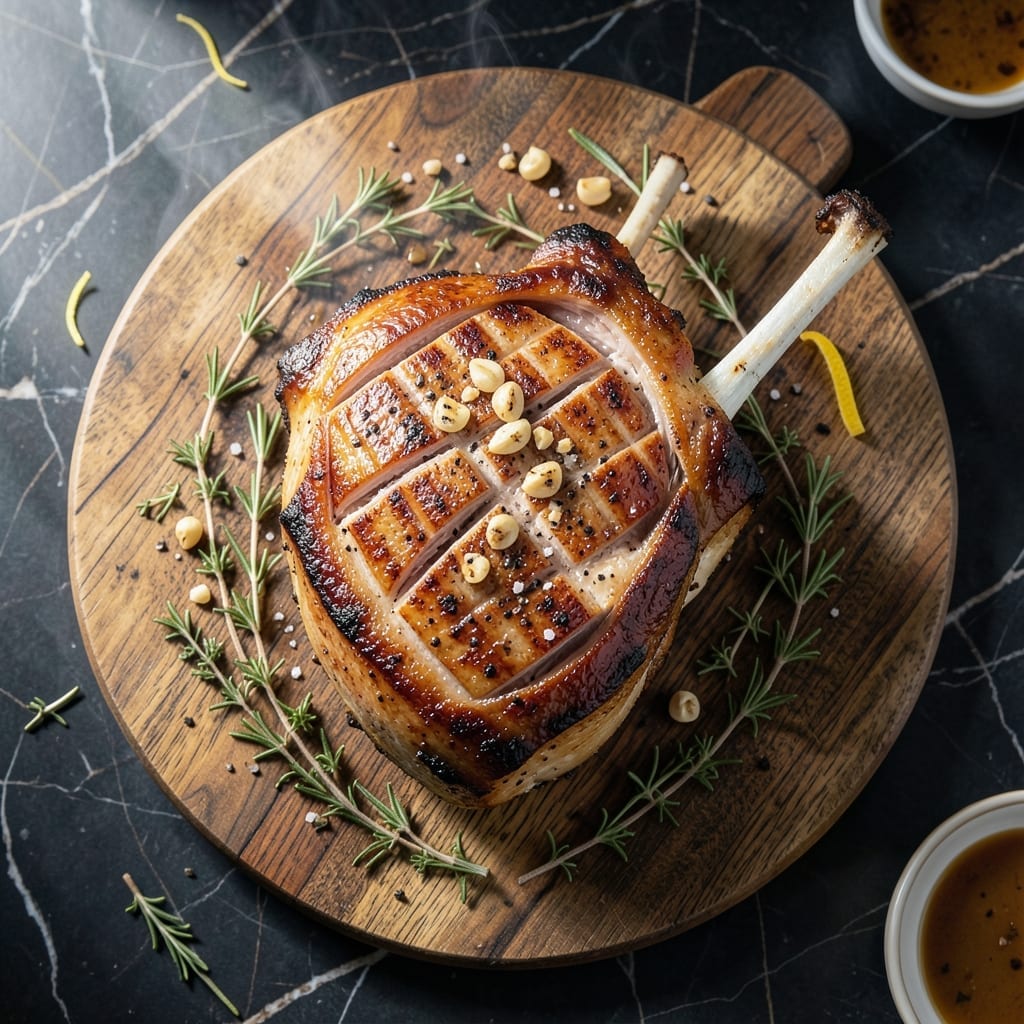
This rack of pork roast delivers juicy centers with a perfectly crisp herb crust. I developed this method after years of testing, blending classic French technique with my pitmaster instincts.
The secret is a simple dry brine and herb rub that creates a flavorful crust while keeping the meat tender. High heat at the start ensures a golden exterior before finishing at a lower temperature.
What you get is an elegant centerpiece with evenly cooked, succulent meat and a fragrant herb crust. The aroma alone will have everyone gathering at the table.
Perfect for Sunday suppers or holiday meals. This recipe proves that impressive results don’t require complicated techniques.
Ingredients for Rack of Pork Roast
Quality pork and aromatic herbs form the foundation of this elegant centerpiece dish.
| Ingredient | Amount | Notes |
|---|---|---|
| Bone-In Pork Rib Roast 🥩 | 3 lb | Frenched bones, fat cap scored |
| Kosher Salt 🧂 | 2 tbsp | Diamond Crystal preferred |
| Freshly Ground Black Pepper 🌶️ | 2 tsp | Coarse grind for crust |
| Fresh Rosemary 🌿 | 3 tbsp | Finely chopped, stems discarded |
| Fresh Thyme Leaves 🍃 | 2 tbsp | Stripped from stems |
| Garlic Cloves 🧄 | 6 cloves | Minced to fine paste |
| Dijon Mustard 🟡 | 3 tbsp | Whole-grain for texture |
| Olive Oil 🫒 | 2 tbsp | Extra-virgin for richness |
| Unsalted Butter 🧈 | 4 tbsp | Softened, European-style preferred |
| Dry White Wine 🍷 | ½ cup | For deglazing pan |
| Chicken Stock 🥣 | 1 cup | Low-sodium preferred |
| Shallots 🧅 | 2 whole | Finely minced for sauce |
[recipe_ingredient_scaler]
The pork rib roast is non-negotiable here. Source bone-in, frenched ribs from a trusted butcher—Whole Foods or local purveyors typically carry excellent quality. Look for even marbling and a thick fat cap (you’ll score this for maximum crispiness). The herb quality matters: organic rosemary and thyme from the refrigerated section have superior aroma to dried. Avoid pre-minced garlic; fresh cloves are essential for the paste.
No white wine? Dry vermouth or apple cider vinegar (reduced by half) works in a pinch. For the mustard, whole-grain Dijon at Grey Poupon quality provides ideal texture. Substitute fresh sage at half the quantity if rosemary isn’t available. The butter can be ghee for higher smoke point, but don’t skip the olive oil—its fruitiness balances the fat. Shallots can be yellow onions if that’s what’s on hand.
The roast benefits from 24-hour dry brining uncovered in the fridge. Post-roasting, rest 30 minutes before carving. Leftovers keep 5 days refrigerated, but this is best served fresh. The herb crust loses crispness upon reheating—re-crisp in a 400°F oven for 10 minutes if necessary.
Why You’ll Love This Recipe
- Minimal Effort: I just rub the pork with salt, pepper, and fresh herbs, then let the oven do the work.
- Herb-Infused Crust: That rosemary and thyme crust forms this ridiculously good golden-brown layer with every bite.
- Sunday Supper Star: It’s my go-to for feeding a crowd—elegant enough for guests, but unfussy enough for family dinner.
- Lunch for Days: One roast means sandwiches for lunch all week—shredded pork with that herby flavor is my secret weapon.
Step-by-Step Instructions for Herb-Crusted Rack of Pork
Master the technique for perfectly cooked pork with a fragrant herb crust and juicy interior.
Step 1: Prepare and Score the Roast
Begin by patting the 3 lb bone-in pork rib roast completely dry with paper towels. This step is crucial for achieving a proper sear and crispy crust. Using a sharp knife, score the fat cap in a crosshatch pattern, cutting about ¼ inch deep without piercing the meat.
The frenched bones should already be exposed, but if not, ask your butcher to clean them for you. This scoring allows the fat to render more efficiently and helps the herb mixture adhere better to the surface.
Step 2: Create the Herb-Garlic Rub
In a small bowl, combine the 2 tbsp kosher salt, 2 tsp freshly ground black pepper, 3 tbsp fresh rosemary, and 2 tbsp fresh thyme leaves with the 6 cloves garlic cloves minced to a paste. Add the 3 tbsp dijon mustard and 2 tbsp olive oil to form a thick, spreadable paste.
Rub this mixture all over the pork, pressing it into the scored fat cap and between the bones. The mustard in the rub not only adds flavor but helps create a beautiful crust. Let the roast sit at room temperature for 30 minutes to allow the flavors to penetrate.
Step 3: Sear and Begin Roasting
Preheat your oven to 425°F. In a large oven-safe skillet or roasting pan, heat the 4 tbsp unsalted butter over medium-high heat until foaming. Sear the pork on all sides until the fat cap is deep golden brown, about 3-4 minutes per side.
This initial sear develops the crust and locks in juices. Transfer the pan to the preheated oven and roast for 20 minutes to continue building color and flavor.
Step 4: Finish Roasting with Aromatics
After the initial 20 minutes, reduce the oven temperature to 350°F. Add the 2 whole shallots (finely minced), 0.5 cup dry white wine, and 1 cup chicken stock to the pan. These liquids will create a basting environment and form the base for a pan sauce.
Continue roasting, basting the pork with the pan juices every 15 minutes, until the internal temperature reaches 145°F in the thickest part of the meat. This should take about 45-60 minutes total, depending on your oven.
Step 5: Rest and Serve
Remove the pork from the oven and transfer it to a cutting board. Tent loosely with foil and let it rest for 15 minutes. This resting period allows the juices to redistribute throughout the meat, ensuring every slice is moist and flavorful.
While the pork rests, you can reduce the pan juices on the stovetop to create a quick sauce. Slice the pork between the bones into individual chops and serve with the pan sauce spooned over the top. The meat should be tender and juicy with a perfectly browned herb crust.
Pro Tips For Making Rack Of Pork Roast
- Dry the Roast: Pat the pork rib roast completely dry with paper towels before seasoning—I learned this the hard way after my first few came out steamed instead of browned.
- Start Hot, Finish Low: Sear it at 450°F for 20 minutes first, then drop to 325°F to finish. This gives you that perfect crust without overcooking the center.
- Use Fresh Herbs: Skip the dried stuff for this one; fresh rosemary and thyme actually change the outcome when rubbed directly into the meat.
- Rest Before Carving: Give it a solid 10-15 minutes under foil after roasting, or all those juices will end up on your cutting board instead of in the meat.
Pro Cooking Tips for Great rack of pork roast
Temperature Precision
Start with a 425°F oven for the initial sear—this high heat creates that beautiful golden crust on the fat cap. I use an oven thermometer to verify my dial settings because many home ovens run 25-50°F cool. The 20-minute blast at this temp is non-negotiable for proper browning. 🌡️
Internal Temp Control
After reducing to 350°F, monitor the pork with a meat thermometer in the thickest part. Pull it at 140°F—it’ll coast to 145°F while resting. I learned this trick at a Kansas City BBQ competition and it’s saved me from overcooking countless times.
Basting Technique
Baste every 15 minutes with those pan juices containing 0.5 cup dry white wine and 1 cup chicken stock. Use a bulb baster or large spoon, and don’t worry if some herbs stick to the roast—that’s flavor gold. The liquid should just barely cover the pan bottom.
Scoring the Fat
Your crosshatch scoring should be about ¼ inch deep—deep enough to help render fat but not so deep you cut into meat. I use a Wüsthof paring knife for precision. Score in both directions for maximum crispiness and rub penetration.
Resting Period
The 15-minute rest is when the magic happens. Tent loosely with foil—don’t seal it tightly or the crust will steam and soften. I set a timer because it’s tempting to cut early, but the juices need this time to redistribute.
Pan Sauce Pro Tip
After removing the pork, place the pan on the stovetop over medium heat. Add a splash of wine to deglaze, scraping up those browned bits. Reduce by half for a sauce that’ll have everyone asking for the recipe. 💡
Nutrition Facts
Frequently Asked Questions
What internal temperature should I aim for?
Pull the roast at 140°F internal temperature. It will rise to 145°F while resting, which is the USDA safe minimum for pork. This ensures juicy meat without overcooking.
Can I use dried herbs instead of fresh?
Yes, but reduce the amount by half. Use 1.5 tbsp dried rosemary and 1 tbsp dried thyme. Fresh herbs provide better flavor, but dried work in a pinch.
How do I prevent the herb crust from burning?
Tent the roast with foil after the first 20 minutes if the crust browns too quickly. This protects the herbs while allowing the meat to cook through.
What’s the best way to carve the roast?
Slice between the bones after resting. Use a sharp knife and cut straight down to separate into individual chops with frenched bones for elegant presentation.

Trained in classic French technique but raised on slow-cooked ribs and spicy rubs, she blends culinary skill with smoke and soul.
- Recipe for Boneless Pork Chops in Cast Iron Skillet: Sear and Baste to Juicy Perfection - October 3, 2026
- Recipe for Boneless Cross Rib Roast: Slow-Roasted Beef with Herb Crust - October 3, 2026
- Hamburgers in Sauce Recipe Crock Pot: Slow-Cooked Savory Delight - October 3, 2026