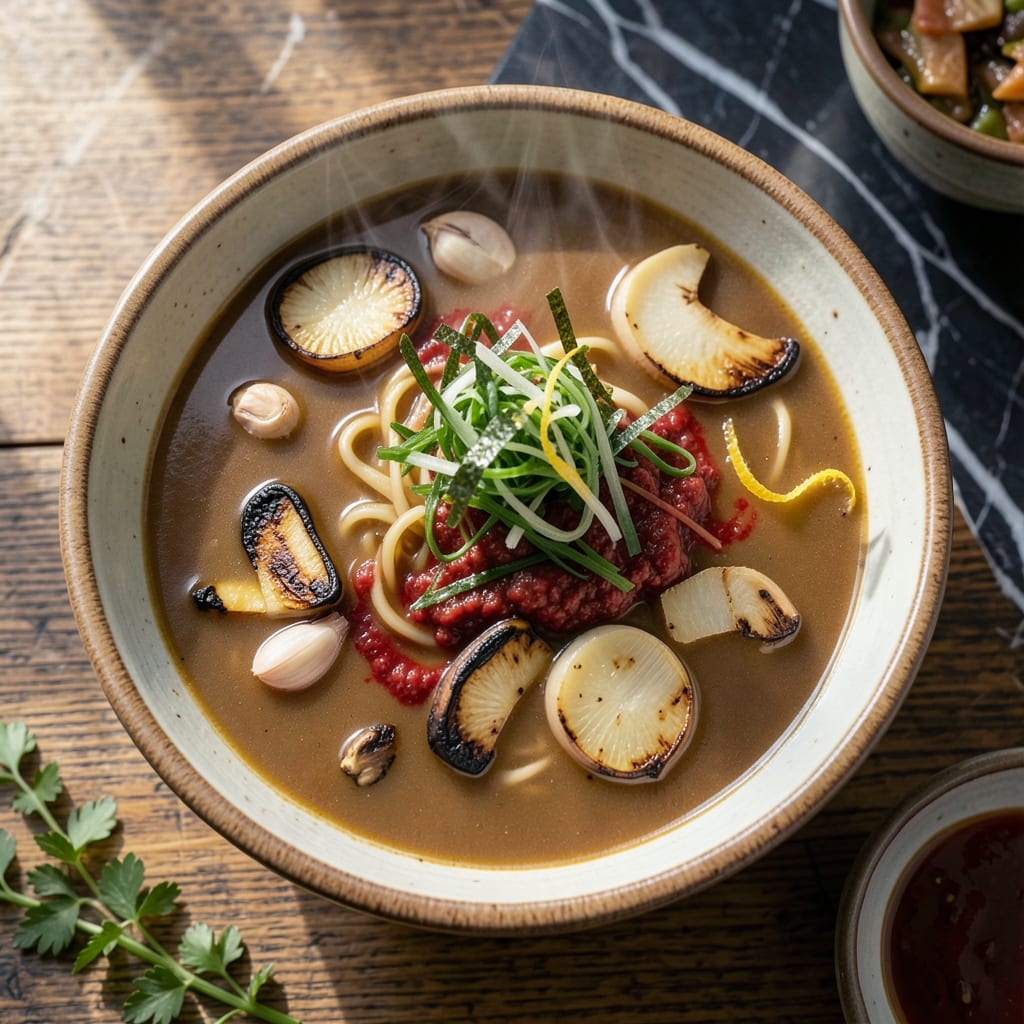
This vegetarian ramen broth delivers umami-rich depth that rivals any meat-based version. I developed this recipe after years of experimenting with plant-based ingredients to achieve that signature savory complexity.
The secret lies in layered flavors from dried shiitake mushrooms, miso paste, and kombu seaweed. These ingredients create a base so robust, even meat lovers won’t miss the traditional pork or chicken.
Simmered for 2 hours, the broth develops a velvety texture and deep, satisfying taste. The mushrooms infuse earthy notes while the miso adds that crucial salty-sweet balance.
Serve this as the foundation for your next ramen bowl, complete with noodles, soft-boiled eggs, and all your favorite toppings. The results speak for themselves.
Ingredients for Ramen Broth Recipe Vegetarian
Umami-packed ingredients build a broth so rich, you won’t believe it’s meat-free.
| Ingredient | Amount | Notes |
|---|---|---|
| Dried Shiitake Mushrooms 🍄 | 1 oz | Whole, stems attached for depth |
| Kombu Seaweed 🌊 | 2 pieces | 4-inch squares, wiped clean |
| Yellow Onion 🧅 | 1 whole | Quartered, skin on for color |
| Garlic Cloves 🧄 | 6 cloves | Smashed, skin on |
| Fresh Ginger 🌿 | 3 slices | 1/4-inch thick, peeled |
| Red Miso Paste 🥣 | ½ cup | White or awase miso works too |
| Soy Sauce 🫕 | ¼ cup | Low-sodium preferred for balance |
| Mirin 🍶 | 2 tbsp | Sweet rice wine essential |
| Sesame Oil 🫒 | 1 tbsp | Toasted variety for aroma |
| Vegetable Stock 🥫 | 8 cups | Low-sodium for control |
| Scallions 🧅 | 4 whole | White and green parts separated |
| Nori Sheets 🌊 | 2 sheets | For garnish, torn into strips |
[recipe_ingredient_scaler]
The shiitakes are non-negotiable here. Asian markets have the best dried ones—look for thick caps, not those wispy ones. Kombu adds that oceanic depth; Whole Foods usually carries it near the sushi supplies. Don’t skip wiping the kombu (it’s dusty), but don’t wash it either—you’ll lose flavor. For the miso, Miso Master or South River brands are fantastic if your store has them.
No mirin? Dry sherry plus 1/2 tsp sugar per tablespoon gets you close. Out of shiitake? Cremini or portobello (fresh or dried) in a pinch, but shiitake’s umami is unmatched. Vegetable stock can be homemade or store-bought—Imagine or Pacific Foods are reliable. If your soy sauce is super salty, cut back slightly and add a splash of water to compensate.
Broth keeps 5 days in the fridge or 3 months frozen (leave headspace for expansion). Strain and cool completely before storing. The flavor actually improves overnight—perfect for meal prep. Reheat gently to preserve those delicate aromas.
Why You’ll Love This Recipe
- Set and Forget: It’s just simmering kombu and shiitakes with aromatics—no stirring, no fuss.
- Umami Bomb: The dried mushrooms and seaweed pack that deep, savory punch I crave in every spoonful.
- Meal Prep champ: I make a big batch Sunday and it fuels my ramen bowls all week long.
- Pantry Hero: Honestly, these shelf-stable ingredients cost pennies and last for months in my cupboard.
Step-by-Step Instructions for Vegetarian Ramen Broth
This method builds layers of umami that’ll surprise even meat-loving ramen fans.
Step 1: Toast and Steep the Umami Base
Wipe the 2 pieces Kombu Seaweed with a damp towel, then add to a large pot with the 1 oz Dried Shiitake Mushrooms. Toast over medium heat for 2-3 minutes until fragrant—this wakes up the glutamates.
Add the 8 cups Vegetable Stock and bring to a gentle simmer. I always watch for tiny bubbles at the edges, not a rolling boil. Simmer for 30 minutes to extract maximum flavor from the seaweed and mushrooms.
Step 2: Char and Caramelize the Aromatics
Meanwhile, char the 1 whole Yellow Onion (quartered with skin on), 6 cloves Garlic Cloves (smashed with skins), and 3 slices Fresh Ginger in a dry skillet over medium-high heat for 8-10 minutes.
You want deep blackened spots on the onion and garlic—this adds a smoky depth that mimics traditional meat-based broths. The ginger should turn golden at the edges. Don’t skip this step; it’s where the magic happens.
Step 3: Build the Broth Foundation
Strain the stock through a fine-mesh sieve into a clean pot, discarding the kombu and shiitake (or save them for another use). Add the charred aromatics to the strained stock and return to a simmer.
Simmer for another 20 minutes to infuse the broth with those caramelized flavors. The liquid should take on a rich amber hue and smell deeply aromatic. I like to press the onion quarters gently with a spoon to release more flavor.
Step 4: Finish with Miso and Seasonings
Remove the pot from heat and let it cool slightly for 5 minutes—this prevents the miso from losing its beneficial probiotics. In a small bowl, whisk together the 0.5 cup Red Miso Paste, 0.25 cup Soy Sauce, 2 tbsp Mirin, and 1 tbsp Sesame Oil into a smooth paste.
Ladle about 1 cup of the hot broth into the miso mixture to temper it, stirring until fully dissolved. Then pour this back into the main pot of broth and stir well. The broth should now have a deep, complex aroma with a rich reddish-brown color.
Step 5: Strain and Serve
Strain the broth once more through a fine-mesh sieve to remove all solids, pressing gently on the aromatics to extract every last bit of flavor. Your broth is now ready to use as a base for ramen bowls.
Ladle the hot broth over cooked noodles and top with the white parts of the 4 whole Scallions (thinly sliced) and the 2 sheets Nori Sheets (torn into strips). The green scallion tops make a perfect garnish for serving.
Pro Tips For Making Ramen Broth Recipe Vegetarian
- Cold Start Kombu: Add kombu to cold water and slowly bring to a simmer—this extracts maximum umami without bitterness. I learned this the hard way after boiling it first and getting a harsh, one-note broth.
- Toast the Shiitakes: Dry-toast the shiitake mushrooms in a pan for 2-3 minutes before adding liquid. Sounds weird, but it works: it deepens their flavor and eliminates any raw, earthy aftertaste.
- Skip the Boil: Never let the broth reach a rolling boil once the kombu is in—it turns the stock cloudy and bitter. Keep it at a gentle simmer, just barely bubbling.
- Char the Onions: Blacken your halved onions (skin on) under the broiler for 10 minutes before adding to the pot. My grandmother swore by this, and she was right: it adds a rich, caramelized depth that raw onions just can’t.
Dietary Considerations for These Flavors
Gluten-Free Adaptation
For gluten-free ramen broth, swap the soy sauce for tamari—it has the same rich flavor without the wheat. I use San-J brand because it’s widely available and consistently good. Also, check your miso label; most are gluten-free but some contain barley. 💡
Vegan Variations
This recipe is already vegan as written! Just ensure your toppings align. I love adding tofu marinated in extra miso and wood ear mushrooms for texture. The broth’s umami depth means you won’t miss the eggs.
Low-Sodium Option
Cut the soy sauce in half and use low-sodium vegetable stock. You can boost flavor with 1 tsp white pepper and 1 tbsp nutritional yeast instead. Taste as you go—it’s easier to add salt than remove it.
Nut Allergy Note
This recipe is naturally nut-free, but always check your miso paste label. Some brands process their products in facilities that handle nuts. I recommend Miso Master for its clean ingredient list.
Spice Sensitivity
The charred aromatics add smoky depth, not heat. For those avoiding spice entirely, skip any chili-based toppings. The broth itself remains mild and comforting. I often serve this to friends who can’t handle spicy foods.
Add 1 tsp agave syrup if you prefer a touch of sweetness to balance the savory notes. 💛
Nutrition Facts
Frequently Asked Questions
Can I use fresh mushrooms instead of dried?
Fresh mushrooms work but won’t provide the same intense umami. Use 8 oz fresh shiitake and simmer them 45 minutes to extract maximum flavor. Dried are preferred for their concentrated taste.
Why char the onion and garlic?
Charred aromatics add smoky depth that mimics meat-based broths. The blackened bits develop complex flavors during the 8-10 minutes of dry-heat cooking. Don’t skip this step!
How do I fix a broth that’s too salty?
Dilute with more vegetable stock or water, then adjust with 1 tsp mirin for balance. Always taste before adding the final miso paste to avoid over-salting.
Can I make this in a slow cooker?
Yes! Combine all ingredients except miso paste and cook on low for 6 hours. Stir in the miso at the end. The long cook time enhances the umami extraction.

Trained in classic French technique but raised on slow-cooked ribs and spicy rubs, she blends culinary skill with smoke and soul.
- Recipe for Boneless Pork Chops in Cast Iron Skillet: Sear and Baste to Juicy Perfection - October 3, 2026
- Recipe for Boneless Cross Rib Roast: Slow-Roasted Beef with Herb Crust - October 3, 2026
- Hamburgers in Sauce Recipe Crock Pot: Slow-Cooked Savory Delight - October 3, 2026