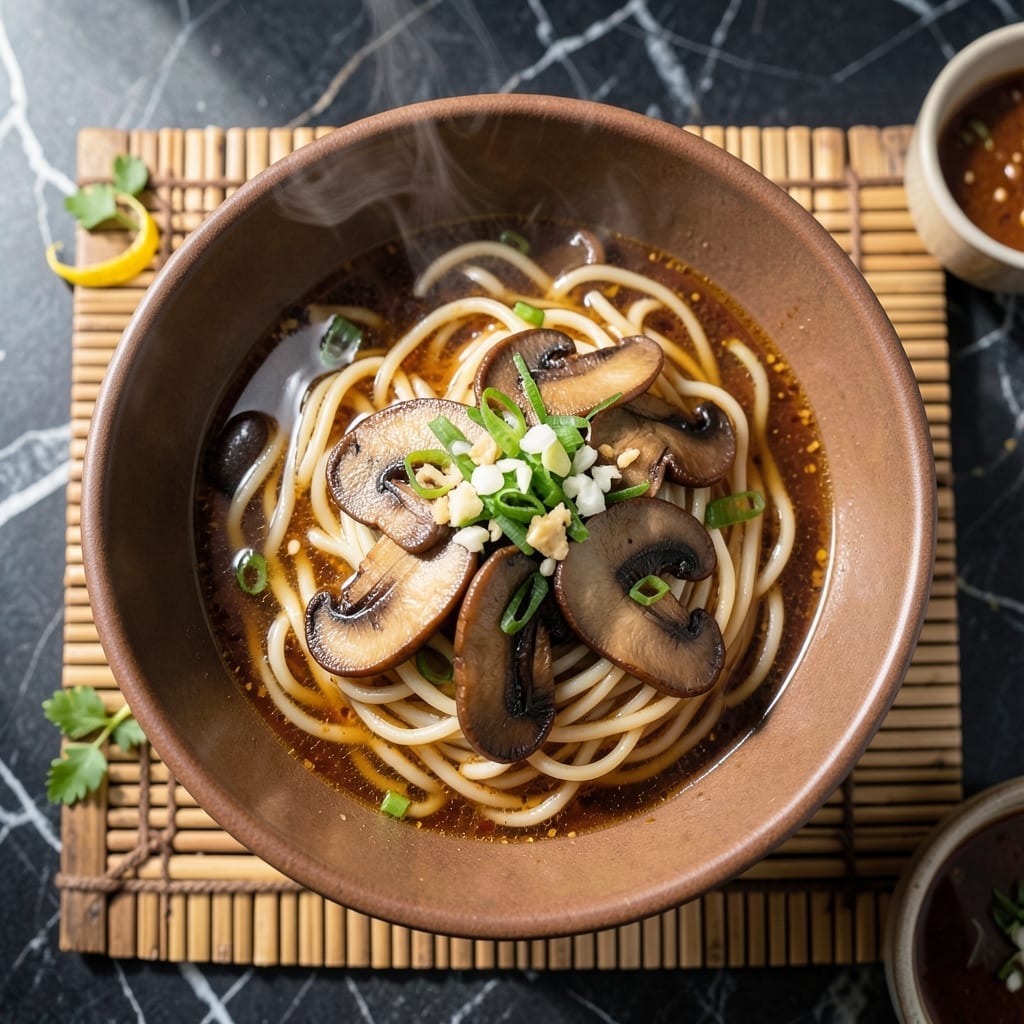
I’ve created a homemade ramen broth that replaces the seasoning packet with rich, layered umami flavors. This approach elevates instant noodles into a satisfying, restaurant-worthy dish.
Using simple pantry staples, the broth comes together in 20 minutes, delivering depth and complexity without shortcuts. The result is a bowl of ramen that tastes authentically crafted, not processed.
Ingredients for Ramen Recipe Without Seasoning Packet
Pantry staples plus a few fresh additions. Simple, but restaurant-worthy in minutes.
| Ingredient | Amount | Notes |
|---|---|---|
| Ramen Noodles 🍜 | 4 packages | Discard seasoning packets |
| Chicken Stock 🥣 | 8 cups | Low-sodium preferred |
| Soy Sauce 🫒 | ½ cup | Use low-sodium for balance |
| Miso Paste 🥄 | 3 tbsp | White or red miso works |
| Sesame Oil 🫒 | 1 tbsp | Toasted variety preferred |
| Garlic Cloves 🧄 | 4 cloves | Minced for maximum flavor |
| Fresh Ginger 🌿 | 1 tbsp | Grated or finely minced |
| Green Onions 🧅 | 4 whole | Thinly sliced for garnish |
| Soft-Boiled Eggs 🥚 | 2 whole | Optional but recommended |
| Shiitake Mushrooms 🍄 | 6 whole | Fresh or dried, sliced |
| Nori Sheets 🌊 | 2 sheets | Cut into thin strips |
| Sesame Seeds 🌰 | 1 tsp | Toasted for garnish |
| Red Pepper Flakes 🌶️ | ½ tsp | Adjust to spice preference |
[recipe_ingredient_scaler]
The chicken stock is your foundation here. Swanson or Better Than Bouillon are solid store-bought choices, but homemade takes it next level. Miso paste is non-negotiable—look for it in the refrigerated section at Whole Foods or any Asian market. The garlic and ginger need to be fresh (no powder here). I grab mine from Trader Joe’s for consistency and price.
No miso? A splash of fish sauce (if you eat it) or extra soy sauce works in a pinch, but the flavor won’t be as deep. Dried shiitakes? Rehydrate them in hot water for 20 minutes—use the soaking liquid as part of your broth. Green onions can be subbed with chives. The sesame oil is key though—Kadoya brand is my go-to for that nutty, toasted flavor.
Broth keeps 4-5 days in the fridge, freezes for 3 months. Cook noodles fresh each time to avoid mush. The eggs? Make them the day of—peeled and halved, they soak up the broth beautifully (worth the extra minute).
Why You’ll Love This Recipe
- Ready in 15: Honestly, it’s just boil noodles, mix the stock, soy, and miso—done. No chopping, no fuss.
- Umami Bomb: The miso and soy sauce combo gives it that deep, savory richness the seasoning packet can’t touch.
- Weeknight Hero: I throw this together after work, and it’s exactly what you need when takeout feels like too much.
- Pennywise Perfection: A pack of noodles and a few pantry staples stretch into a meal that tastes way pricier than it is.
Step-by-Step Instructions for Homemade Ramen Without Seasoning Packet
Here’s how I build that rich, umami-packed broth from scratch in under 20 minutes.
Step 1: Build the Umami Broth Base
In a large pot, heat the 1 tablespoon sesame oil over medium-high heat until shimmering. Add the minced 4 cloves garlic cloves and 1 tablespoon fresh ginger, stirring constantly for 30-45 seconds until fragrant but not browned.
Immediately pour in all 8 cups chicken stock. This stops the aromatics from burning. Stir in the 0.5 cup soy sauce and 3 tablespoons miso paste until fully dissolved. The miso should melt smoothly into the hot liquid, creating a rich base. Bring to a gentle simmer.
Step 2: Add Mushrooms and Simmer
Add the 6 whole shiitake mushrooms (sliced if using fresh, rehydrated and sliced if dried). Maintain a steady simmer for 10-12 minutes—this is where the magic happens. The mushrooms will absorb the broth while releasing their earthy depth.
You’ll notice the broth darken slightly as the miso and soy sauce meld together. Taste at this point; it should be deeply savory with a balanced saltiness. If using dried shiitakes, remove them now as they can become tough.
Step 3: Cook the Ramen Noodles
Discard the seasoning packets from all 4 packages ramen noodles. Add the noodles directly to the simmering broth. Cook for 2-3 minutes until just tender—ramen noodles cook faster than regular pasta.
Stir occasionally to prevent sticking, but don’t overwork them. They should be soft with a slight chew. The noodles will soak up that incredible broth flavor as they cook.
Step 4: Assemble and Garnish
Ladle the hot noodles and broth into serving bowls. Top each portion with half of a soft-boiled egg (peeled and halved), thinly sliced green onions, and thin strips from the 2 sheets nori sheets.
Finish with a sprinkle of 1 teaspoon sesame seeds and 0.5 teaspoon red pepper flakes (divided evenly). The egg yolk should be runny, ready to mix into the broth for extra richness. Serve immediately while piping hot.
Pro Tips For Making Ramen Recipe Without Seasoning Packet
- Cook Noodles Separately: Boil the ramen noodles in plain water first, then drain and add to your broth. I learned this the hard way—cooking them directly in the stock makes it starchy and dulls the flavor. —
- Bloom the Miso: Whisk the miso paste into a ladle of hot chicken stock before stirring it into the pot. Sounds fussy, but it prevents clumping and ensures even distribution. —
- Skip the Overcook: Ramen noodles soften fast—pull them at 2 minutes, not the package’s 4. After burning three batches to mush, I finally figured out they keep cooking in the hot broth. —
- Finish with Sesame: Stir in the sesame oil at the very end, off the heat. My grandmother swore by this, and she was right: heating it too long turns the flavor bitter.
Regional Styles of These Flavors
🥘 Tokyo Style
Tokyo-style ramen, also known as shoyu ramen, is a soy sauce-based broth that’s both tangy and rich. The broth is typically made with chicken or pork stock, combined with soy sauce, Mirin, and a touch of dashi. The noodles are curly and medium-thick, perfectly complementing the light yet flavorful broth. Toppings often include chashu pork, menma (bamboo shoots), and a soft-boiled egg. This style is a great starting point for a homemade ramen recipe without seasoning packets.
🍜 Sapporo Style
Hailing from Hokkaido, Sapporo-style ramen features a miso-based broth that’s hearty and slightly sweet. The broth is often enriched with pork fat or butter, giving it a creamy texture. The noodles are thick and straight, ideal for soaking up the rich flavors. Common toppings include corn, cabbage, and bean sprouts, reflecting the region’s agricultural abundance. This style is perfect for those who love a robust, umami-packed bowl.
🔥 Hakata Style
Hakata ramen, originating from Fukuoka, is famous for its tonkotsu (pork bone) broth, which is simmered for hours until it becomes creamy and collagen-rich. The noodles are thin and firm, designed to hold up against the thick broth. Toppings are minimal, often just chashu pork, green onions, and pickled ginger, letting the broth shine. This style is a bit more involved but worth the effort for a truly authentic experience.
🌶️ Kyoto Style
Kyoto-style ramen is lighter and often vegetarian-friendly, using a clear, kombu-based broth. The focus is on simplicity and the natural flavors of the ingredients. Noodles are thin and delicate, and toppings might include tofu, spinach, and mushrooms. This style is ideal for those looking for a cleaner, more refined ramen experience without relying on seasoning packets.
Nutrition Facts

Trained in classic French technique but raised on slow-cooked ribs and spicy rubs, she blends culinary skill with smoke and soul.
- Recipe for Boneless Pork Chops in Cast Iron Skillet: Sear and Baste to Juicy Perfection - October 3, 2026
- Recipe for Boneless Cross Rib Roast: Slow-Roasted Beef with Herb Crust - October 3, 2026
- Hamburgers in Sauce Recipe Crock Pot: Slow-Cooked Savory Delight - October 3, 2026