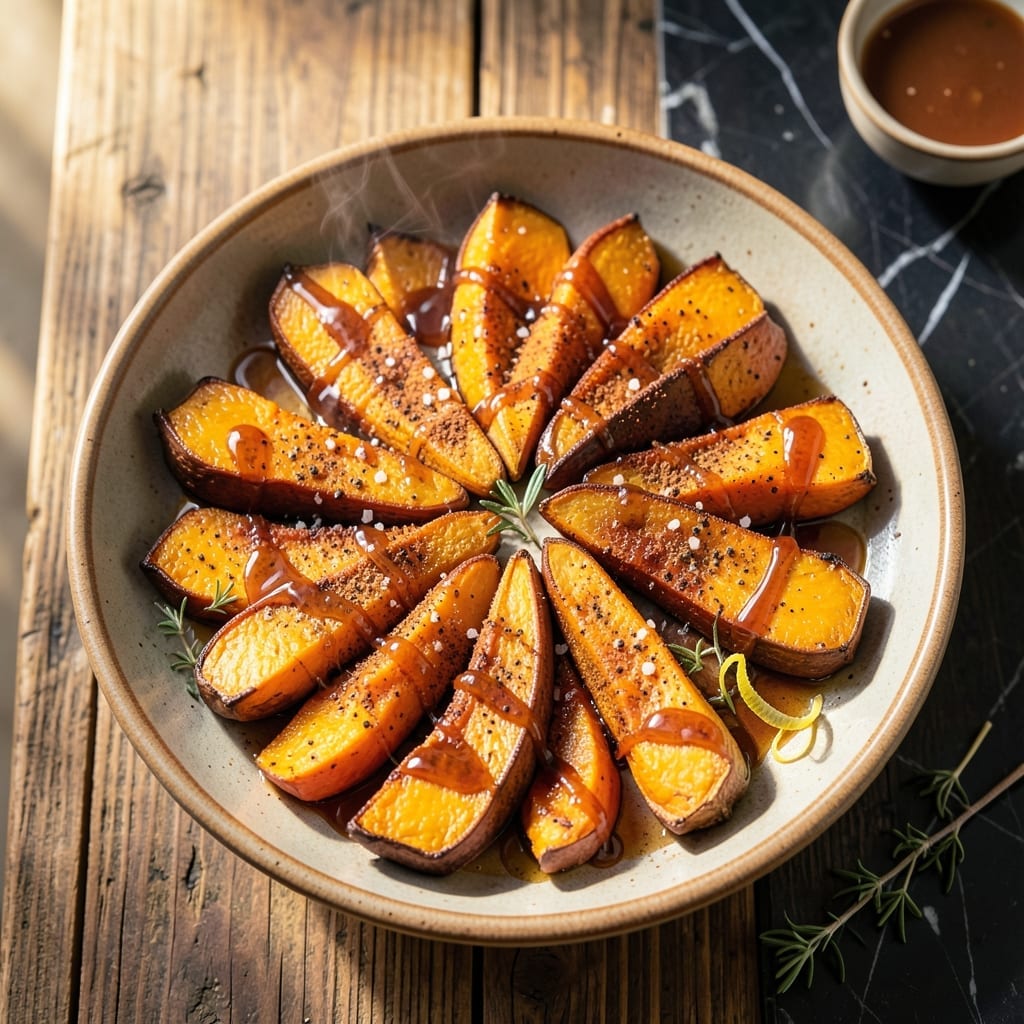
This simple method transforms acorn squash into a dish with caramelized edges and sweet, tender flesh. The oven does most of the work, creating a side that’s both rustic and elegant.
With just a few ingredients and 40 minutes in the oven, you’ll have a naturally sweet, richly flavored vegetable that pairs perfectly with any main course.
Ingredients for Recipe Baking Acorn Squash
Simple, wholesome ingredients transform this humble squash into something extraordinary with minimal effort.
| Ingredient | Amount | Notes |
|---|---|---|
| Acorn Squash 🎃 | 2 whole | Medium-sized, about 1.5 lbs each |
| Extra-Virgin Olive Oil 🫒 | 2 tbsp | Divided for brushing |
| Pure Maple Syrup 🍁 | 2 tbsp | Grade A or B preferred |
| Kosher Salt 🧂 | 1 tsp | Diamond Crystal preferred |
| Freshly Ground Black Pepper 🌶️ | ½ tsp | Coarsely ground |
| Ground Cinnamon 🌿 | ½ tsp | Optional, for warmth |
| Fresh Rosemary 🍃 | 1 tbsp | Finely chopped (or 1 tsp dried) |
| Fresh Thyme 🌿 | 1 tbsp | Leaves only, stems discarded |
| Garlic Cloves 🧄 | 2 cloves | Minced or pressed |
| Balsamic Vinegar 🧂 | 1 tbsp | Aged for depth |
| Toasted Pecans 🌰 | ¼ cup | Chopped, for garnish |
[recipe_ingredient_scaler]
Selecting the right squash is key. Look for acorn squash with firm, deep green skin and no soft spots—about 1.5 lbs each is ideal. Whole Foods and Trader Joe’s typically stock quality organic options. The maple syrup should be pure, not pancake syrup—Grade A or B offers the best depth of flavor. For the olive oil, a good extra-virgin makes all the difference in the caramelization process.
No maple syrup? Agave nectar or coconut sugar works in a pinch, though the flavor profile shifts slightly. Fresh herbs can be swapped for dried at one-third the amount. If rosemary or thyme aren’t on hand, sage or marjoram complement the squash beautifully. The pecans are optional but add a lovely crunch—walnuts or pumpkin seeds make fine substitutes.
Store uncut squash in a cool, dark place for up to 1 month. Once roasted, leftovers keep in the fridge for 4-5 days and reheat beautifully. The dish actually improves overnight as the flavors meld together.
Why You’ll Love This Recipe
- Hands-Off Cooking: I just halve the squash, drizzle with oil and maple syrup, and let the oven do the work.
- Sweet-Savory Magic: That caramelized maple glaze with the salty pepper hit is ridiculously good.
- Meal Prep Star: Roasts a batch on Sunday and I’ve got sides for three dinners—no reheating required.
- Pantry Hero: Acorn squash keeps for weeks, so I can bake one anytime without a special grocery run.
Step-by-Step Instructions for Baking Acorn Squash
Here’s the method I use to achieve perfectly caramelized edges and tender, sweet flesh every time.
Step 1: Prep the Acorn Squash for Even Cooking
Begin by preheating your oven to 400°F. This high temperature ensures the squash develops those coveted caramelized edges while cooking through evenly. I always use an oven thermometer to verify accuracy.
Cut each acorn squash in half lengthwise and scoop out the seeds with a spoon. Then slice each half into ¾-inch thick crescents. This consistent thickness guarantees uniform cooking. You’ll want about 24-30 pieces total from the two squash.
Step 2: Season and Arrange for Maximum Caramelization
In a large bowl, toss the squash pieces with 2 tbsp extra-virgin olive oil, 2 tbsp pure maple syrup, 1 tsp kosher salt, 0.5 tsp freshly ground black pepper, and 0.5 tsp ground cinnamon. The maple syrup will create that beautiful caramelization we’re after.
Add 1 tbsp finely chopped fresh rosemary, 1 tbsp fresh thyme leaves, and 2 minced garlic cloves. Toss until every piece is evenly coated. Arrange the squash in a single layer on two parchment-lined baking sheets, leaving space between pieces to prevent steaming.
Step 3: Roast Until Caramelized and Tender
Roast for 20 minutes, then carefully flip each piece. The undersides should be starting to turn golden brown. Drizzle any remaining oil and syrup mixture from the bowl over the squash.
Return to the oven and roast for another 15-20 minutes until the edges are deeply caramelized and the squash is tender when pierced with a fork. The maple syrup will bubble and create a glossy glaze. Watch closely during the last 5 minutes to prevent burning.
Step 4: Finish with Balsamic and Pecans
Remove the squash from the oven and immediately drizzle with 1 tbsp balsamic vinegar. The acidity will balance the sweetness and add depth. Toss gently to distribute the vinegar evenly.
Transfer to a serving platter and sprinkle with 0.25 cup toasted pecans. The residual heat will warm the nuts slightly, enhancing their fragrance. Serve immediately while hot—the caramelized edges will soften slightly as they cool, but maintain their rich flavor.
Pro Tips For Making Recipe Baking Acorn Squash
- Halve Evenly First: Cut the squash stem-to-end, not side-to-side—this makes scooping out seeds way easier and guarantees even roasting I learned this the hard way after wrestling with uneven halves for years.
- Prick the Skin: Before baking, score the flesh in a crosshatch pattern about 1/4-inch deep. This helps the olive oil and maple syrup penetrate deeper, and you get that caramelized crust in every bite.
- Skip Cold Syrup: Warm the maple syrup for 10 seconds in the microwave before drizzling. Cold syrup just pools and slides off, but warm syrup clings and caramelizes better—sounds weird, but it works.
- Check at 30 Minutes: Acorn squash size varies wildly, so start checking doneness at 30 minutes with a fork. The flesh should be tender but not mushy, and the edges should be golden—overcooking turns it to paste.
Regional Styles of This Recipe
New England Style
In the Northeast, this dish often gets a touch of Grade B maple syrup for deeper flavor, paired with local apple cider vinegar instead of balsamic. I love how the cider vinegar adds a fruity tang that complements the squash’s natural sweetness. 🍁
Southern Comfort
Down South, they might swap the maple syrup for sorghum molasses and add smoked paprika for a subtle kick. The pecans get toasted with a pinch of cayenne for extra warmth. This version feels like a cozy hug on a chilly evening.
Southwest Fusion
For a Tex-Mex twist, I add 1 tsp ground cumin and ½ tsp chili powder to the seasoning mix. Top with crumbled cotija cheese and fresh cilantro instead of pecans. The smoky, spicy notes pair beautifully with the squash’s sweetness.
Mediterranean Approach
Skip the maple syrup and cinnamon, and instead toss the squash with 1 tbsp honey and 1 tsp za’atar spice. Finish with crumbled feta and pomegranate seeds for a bright, fresh take. This version feels light yet satisfying.
Midwest Simple
In the heartland, they keep it straightforward—just olive oil, salt, and pepper, roasted until deeply caramelized. The simplicity lets the squash’s natural sweetness shine. I often add a sprinkle of dried cranberries for a pop of color and tartness.
Nutrition Facts
Frequently Asked Questions
How do I know when the squash is properly cooked?
It’s done when a fork easily pierces the flesh and the edges are deeply golden brown. Expect this at about 35-40 minutes total at 400°F.
Can I prepare the squash ahead of time?
Yes! Slice and season the squash up to 4 hours before baking. Keep it refrigerated until ready to roast for best results.
What if my squash isn’t caramelizing?
Ensure pieces are ¾-inch thick and not crowded on the pan. A hotter oven or 5 extra minutes can help deepen the color.
Can I use a different sweetener?
Swap maple syrup for honey or brown sugar. Each adds its own unique flavor profile.

Trained in classic French technique but raised on slow-cooked ribs and spicy rubs, she blends culinary skill with smoke and soul.
- Recipe for Boneless Pork Chops in Cast Iron Skillet: Sear and Baste to Juicy Perfection - October 3, 2026
- Recipe for Boneless Cross Rib Roast: Slow-Roasted Beef with Herb Crust - October 3, 2026
- Hamburgers in Sauce Recipe Crock Pot: Slow-Cooked Savory Delight - October 3, 2026