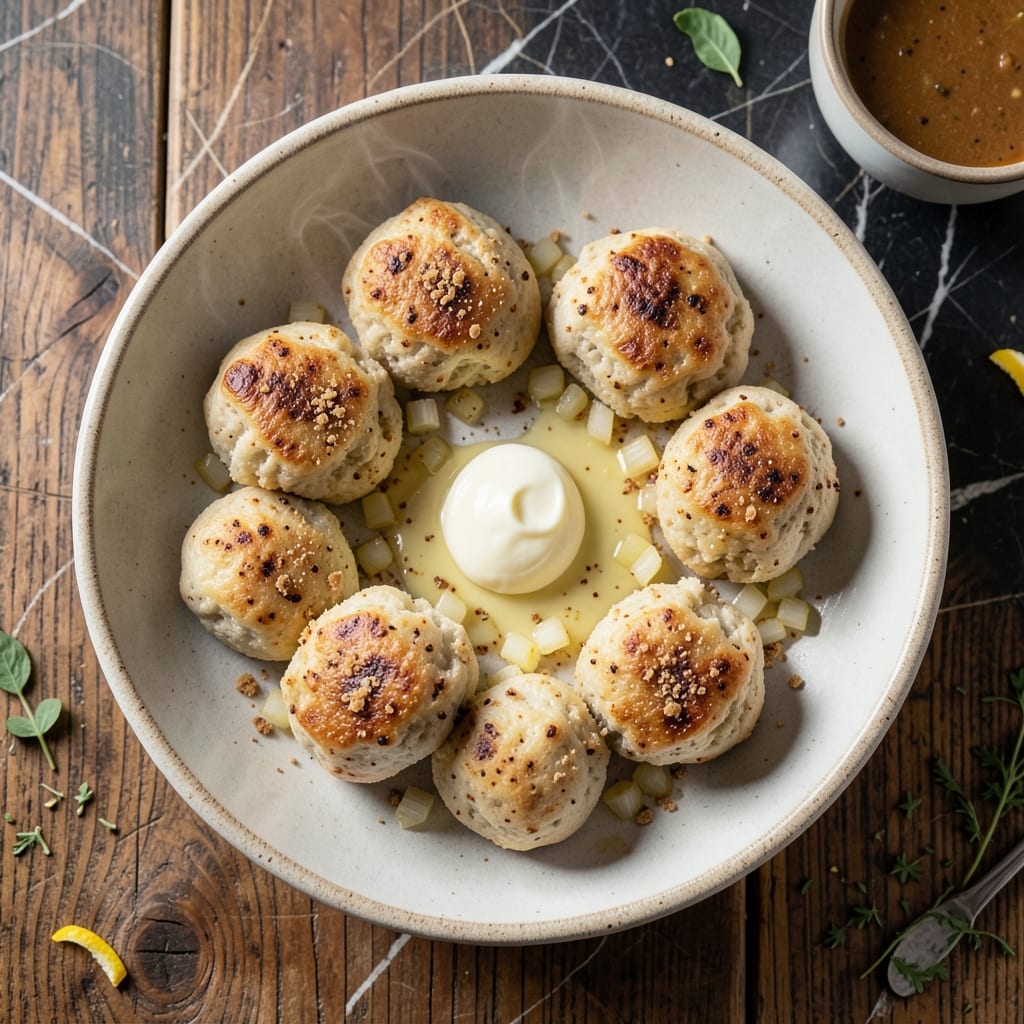
Bread dumplings are the unsung hero of comforting meals, transforming simple ingredients into fluffy pillows that soak up stews beautifully.
I learned this technique from my grandmother, who insisted on using day-old bread for the perfect texture. The key is proper hydration and gentle handling.
These dumplings emerge light yet substantial, with a tender crumb that holds its shape in hot broth. They elevate any hearty dish.
Serve them with rich gravies or as a satisfying vegetarian main. This method delivers consistent results every time.
Ingredients for Recipe Bread Dumplings
Transform humble day-old bread into tender, fluffy dumplings with these essential ingredients.
| Ingredient | Amount | Notes |
|---|---|---|
| Day-Old Bread 🍞 | 8 cups | Cubed, crusts removed preferred |
| Whole Milk 🥛 | 1 ¼ cups | Warmed to room temperature |
| Large Eggs 🥚 | 2 whole | Beaten for binding |
| All-Purpose Flour 🌾 | ¾ cup | For structure and binding |
| Unsalted Butter 🧈 | 2 tbsp | Melted for richness |
| Yellow Onion 🧅 | ½ whole | Finely diced for flavor |
| Fresh Parsley 🌿 | ¼ cup | Chopped for freshness |
| Garlic Cloves 🧄 | 2 cloves | Minced for depth |
| Sea Salt 🧂 | 1 tsp | Fine grain for seasoning |
| Ground Black Pepper 🌶️ | ½ tsp | Freshly ground preferred |
| Ground Nutmeg 🌰 | ¼ tsp | For warm spice note |
| Dried Marjoram 🍃 | ½ tsp | Subtle herbal aroma |
[recipe_ingredient_scaler]
The bread is critical—stale sourdough or French loaf yields the best texture. Avoid fresh bread as it turns gummy. Whole Foods and local bakeries often sell day-old loaves at a discount. The milk should be whole fat for richness; low-fat versions produce drier dumplings. For optimal structure, ensure your bread cubes are uniform in size (about 1-inch pieces).
No day-old bread? Toast fresh bread until completely dry, then cube. Unsweetened plant milk at a 1:1 ratio can replace dairy. Out of marjoram? Dried thyme at half the amount works well. For a richer flavor, substitute half the milk with heavy cream. The nutmeg can be omitted if you prefer a simpler profile.
Prepared dumplings keep in the fridge for 2 days or can be frozen for 1 month. Store uncooked dumpling mixture tightly covered in the refrigerator for up to 12 hours before cooking. Reheat gently in broth to restore their fluffy texture.
Why You’ll Love This Recipe
- No-Fuss Mixing: I just soak the stale bread in warm milk, mix in the eggs and flour, and that’s it—no fancy techniques.
- Buttery Richness: The melted butter gives them this golden crust with a tender, almost custardy center.
- Weeknight Hero: Great with stews, soups, or just smothered in gravy for a quick dinner.
- Pennywise Comfort: Uses up leftover bread and costs almost nothing, but tastes like a hug on a plate.
Step-by-Step Instructions for Bread Dumplings
Master the technique for creating light, airy dumplings that soak up sauce beautifully.
Step 1: Prepare the Bread Base
Tear the 8 cups Day-Old Bread into rough 1-inch cubes, discarding any tough crusts if desired. Place them in a large mixing bowl. I use day-old bread specifically because its reduced moisture content prevents the dumplings from becoming gummy.
Pour the 1.25 cups Whole Milk (warmed to room temperature) over the bread cubes. Press down gently to ensure all pieces are submerged. Let this mixture sit for 10-15 minutes until the bread has absorbed most of the milk—it should look swollen but not soggy.
Step 2: Create the Flavor Foundation
While the bread soaks, finely dice the 0.5 whole Yellow Onion and mince the 2 cloves Garlic Cloves. In a small skillet over medium heat, melt 2 tbsp Unsalted Butter until foaming subsides, then sauté the onion for 4-5 minutes until translucent.
Add the minced garlic and cook for an additional 30 seconds until fragrant. Remove from heat and stir in the 0.5 tsp Dried Marjoram and 0.25 tsp Ground Nutmeg. This aromatic base will infuse your dumplings with subtle depth of flavor.
Step 3: Combine and Season the Mixture
To the soaked bread, add the 2 whole Large Eggs (beaten), 0.75 cup All-Purpose Flour, 1 tsp Sea Salt, and 0.5 tsp Ground Black Pepper. Pour in the onion-butter mixture from the skillet.
Fold everything together gently with a spatula or your hands until just combined. The mixture should hold together when pressed but remain slightly sticky. Avoid overmixing, which can make the dumplings dense. Fold in the 0.25 cup Fresh Parsley last for a burst of color and freshness.
Step 4: Form and Cook the Dumplings
Using wet hands (this prevents sticking), shape the mixture into 8 equal portions—about the size of a tennis ball. These will expand during cooking, so don’t make them too large.
Bring a large pot of salted water to a gentle simmer (not a rolling boil, which can break the dumplings). Carefully drop in the formed dumplings. Cook for 15-18 minutes, turning occasionally, until they float to the surface and feel firm when pierced with a skewer.
Step 5: Rest and Serve
Remove the dumplings with a slotted spoon and transfer to a warm plate. Let them rest for 2-3 minutes to set fully—this ensures they hold their shape when sliced.
Serve immediately with your favorite stew or gravy. The dumplings should be light yet substantial, with a tender crumb that absorbs sauce without falling apart.
Pro Tips For Making Recipe Bread Dumplings
- Soak the Bread: Let your day-old bread soak in the warm milk for at least 15 minutes—I learned this the hard way when my first batch turned out dense and dry.
- Use Stale Bread: Skip fresh bread; stale or day-old works best to absorb the milk without turning to mush.
- Don’t Overmix: Stir just until combined after adding eggs and flour, or your dumplings will be tough and chewy.
- Simmer, Don’t Boil: Keep the water at a gentle simmer while cooking, or the dumplings will break apart before they’re done.
Regional Styles of These Flavors
German Semmelknödel
In Bavaria, these become Semmelknödel, using old rolls instead of bread cubes. They’re often formed around a small cube of bacon or chives for extra flavor. The texture is slightly denser, perfect for soaking up rich gravies. 🗺️
Czech Houskové Knedlíky
Czech version uses yeast rolls and is steamed rather than boiled. The result is a slightly chewy dumpling that’s a staple with roast pork and sauerkraut. They’re larger, often sliced like bread, and have a subtle sweetness from the rolls.
Hungarian Nokedli
Hungarian nokedli are smaller, about 1-inch balls, and often include sour cream in the dough. They’re typically served with goulash or paprikash. The sour cream makes them incredibly tender and adds a slight tang.
Italian Canederli
In my grandmother’s Sicily, we make canederli with breadcrumbs, eggs, and Speck (smoked ham). These are baked or simmered in broth and often include fontina cheese for extra richness. They’re a Sunday dinner favorite.
Austrian Kaiser Semmeln
Austrian versions use Kaiser rolls and are often flavored with nutmeg and parsley. They’re a bit sweeter and are traditionally served with beef goulash or mushroom sauces. The rolls give them a distinct, slightly crispy exterior.
American Adaptations
In the US, especially in Pennsylvania Dutch country, bread dumplings often include potatoes or cornmeal for texture. They’re typically larger and heartier, perfect for cold weather meals. My version stays true to the Italian roots but with a nod to these local adaptations.
Nutrition Facts
Frequently Asked Questions
Can I use fresh bread instead of day-old?
No, fresh bread contains too much moisture and will make your dumplings gummy. If you only have fresh bread, toast it first until completely dry, then cube.
How do I know when they’re done cooking?
They’re ready when they float to the surface and feel firm when pierced with a skewer. This typically takes 15-18 minutes in gently simmering water.
Why did my dumplings fall apart?
This usually happens if the mixture is too wet or the water is boiling too hard. Use day-old bread, measure liquids carefully, and keep the water at a gentle simmer.
Can I make these ahead of time?
Yes! Store uncooked mixture covered in the fridge for up to 12 hours. Cook just before serving for best texture.

Trained in classic French technique but raised on slow-cooked ribs and spicy rubs, she blends culinary skill with smoke and soul.
- Best Smoked Oxtail Recipe: Deep-Rich Flavor After Low-and-Slow Cooking - October 14, 2026
- Pit Boss Smoked Prime Rib Roast Recipe: Bark-to-Bone Crispness in 4 Hours - October 14, 2026
- Smoked Tuna Steak Recipe: Seared Crust Meets Silky Centers - October 14, 2026