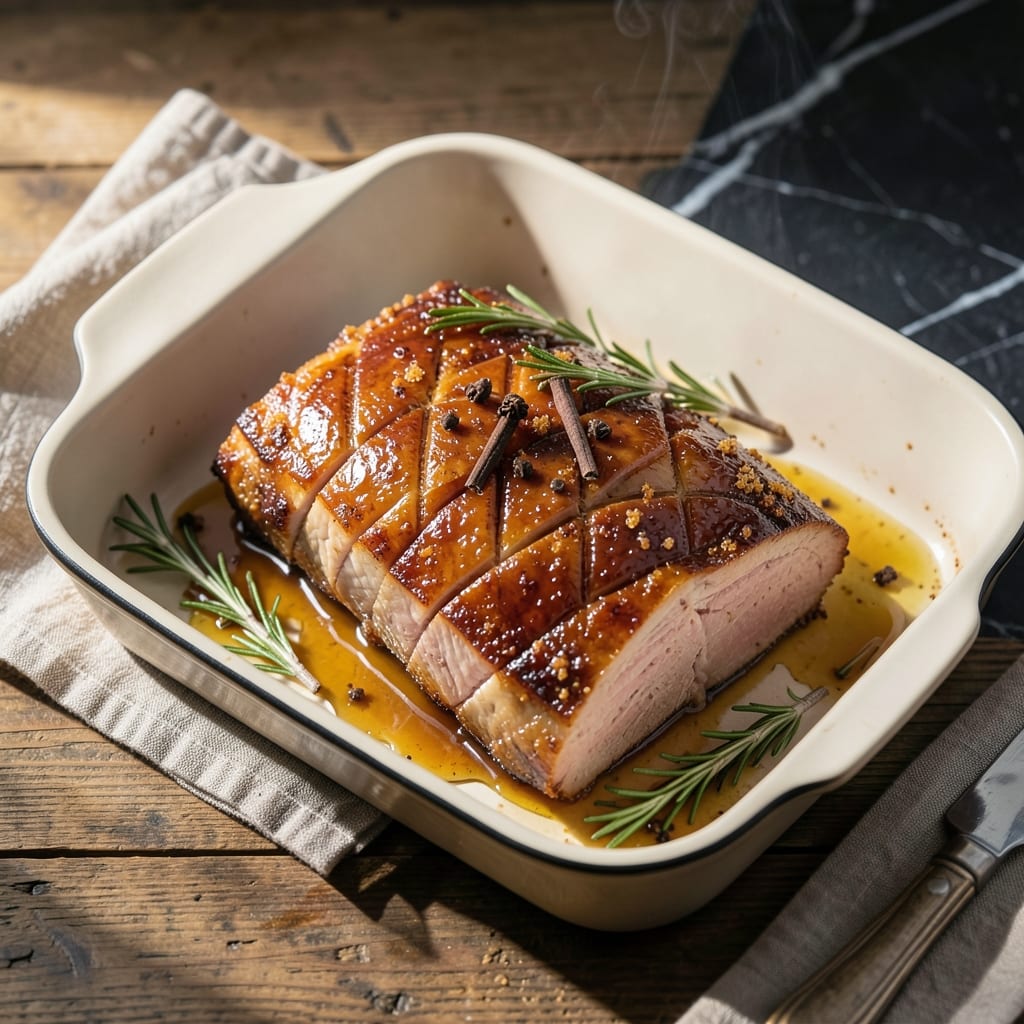
Transforming canned ham into a centerpiece-worthy dish is simpler than most expect. This method proves that convenience doesn’t mean sacrificing flavor or presentation.
I’ve tested numerous glazes, and this savory-sweet version consistently delivers the best balance. The key is applying it during the final 20 minutes of baking to achieve a sticky, caramelized finish.
The result is tender, juicy ham with a glossy exterior that looks and tastes gourmet. It’s the kind of dish that turns a humble can into a meal worth celebrating.
Perfect for holidays or Sunday suppers, this approach ensures every slice is flavorful and impressive. Here’s how to make it happen.
Ingredients for Recipe for Canned Ham
A fully cooked can becomes a showstopper with just a handful of pantry essentials and thoughtful technique.
| Ingredient | Amount | Notes |
|---|---|---|
| Canned Ham 🍖 | 1 can | Fully cooked, about 8-10 lbs |
| Brown Sugar 🍚 | ¾ cup | Light or dark variety |
| Dijon Mustard 🟡 | ¼ cup | Smooth, not whole grain |
| Honey 🍯 | ¼ cup | Pure, unprocessed preferred |
| Apple Cider Vinegar 💧 | 2 tbsp | For tangy balance |
| Ground Cloves 🌿 | ¼ tsp | Freshly ground if possible |
| Garlic Powder 🧄 | 1 tsp | Not garlic salt |
| Onion Powder 🧅 | 1 tsp | For depth of flavor |
| Black Pepper 🌶️ | ½ tsp | Freshly ground preferred |
| Unsalted Butter 🧈 | 4 tbsp | Melted for glaze base |
| Pineapple Rings 🍍 | 1 can | In juice, drained (optional) |
| Maraschino Cherries 🍒 | ½ cup | For garnish (optional) |
[recipe_ingredient_scaler]
The ham itself is the foundation, so select a high-quality canned variety—brands like Hormel or Libby’s offer reliable options. Look for cans without added preservatives if possible. The size matters: an 8-10 lb can serves a small gathering, while larger cans (12+ lbs) are better for holidays. Always check the label for bone-in vs. boneless, as this affects slicing.
For the glaze, pure honey and real Dijon mustard make a difference—avoid generic brands with fillers. No honey? Maple syrup at a 1:1 ratio works well. Brown sugar can be swapped for coconut sugar at equal volume, though the flavor profile shifts slightly. The vinegar is non-negotiable for balance, but white vinegar in a pinch is acceptable.
Store unopened cans in a cool, dark place for up to 2 years. Once opened, transfer to an airtight container and refrigerate for up to 5 days. The glaze can be prepped 24 hours ahead and reheated gently before applying.
Why You’ll Love This Recipe
- 5-Minute Glaze: I mix the brown sugar, Dijon, honey, and vinegar in one bowl—no chopping, no fuss.
- Sweet & Tangy: That glaze caramelizes into a sticky crust with just enough bite from the mustard and vinegar.
- Holiday Shortcut: I serve it for Easter or Sunday suppers, and nobody guesses it started with a can.
- Feeds Many: One can stretches to feed six, with leftovers that taste even better the next day.
Step-by-Step Instructions for Canned Ham
Transform your canned ham into a show-stopping centerpiece with this foolproof glazing technique.
Step 1: Prepare the Ham Base
Remove the canned ham from its packaging and pat it completely dry with paper towels. Place it in a roasting pan or baking dish that accommodates its size. I always score the surface in a diamond pattern about ½ inch deep—this creates channels for the glaze to penetrate and crispy edges that everyone loves.
The scoring also helps the heat distribute more evenly throughout the ham, preventing dry spots. Position it cut-side down in the pan to maximize surface area for glazing. Preheat your oven to 325°F while you prepare the glaze.
Step 2: Create the Glaze Mixture
In a medium saucepan, melt the 4 tbsp unsalted butter over medium heat. Add the 0.75 cup brown sugar, 0.25 cup Dijon mustard, 0.25 cup honey, 2 tbsp apple cider vinegar, 0.25 tsp ground cloves, 1 tsp garlic powder, 1 tsp onion powder, and 0.5 tsp black pepper.
Whisk continuously for 3-4 minutes until the mixture thickens slightly and becomes smooth. The glaze should coat the back of a spoon and have a glossy appearance. This balance of sweet, tangy, and spiced elements is what elevates the ham from ordinary to extraordinary.
Step 3: Apply and Bake the Glazed Ham
Brush half of the glaze evenly over the entire surface of the ham, making sure to get into all those scored crevices. Reserve the remaining glaze for later. Cover the pan loosely with foil—this prevents the glaze from burning during the initial baking phase.
Bake at 325°F for 1 hour. At this point, the ham will have absorbed much of the glaze’s flavor. Remove the foil and increase the oven temperature to 375°F for the final stage of cooking.
Step 4: Finish with Pineapple and Cherries (Optional)
Arrange the 1 can pineapple rings (drained) on top of the ham, securing them with toothpicks if needed. Place a maraschino cherry in the center of each ring for that classic presentation. Brush the remaining glaze over the pineapple and cherries.
Return the ham to the oven and bake uncovered for an additional 20-25 minutes, or until the glaze is caramelized and the pineapple has heated through. The edges should be deep golden brown and slightly crisp, with the glaze bubbling in the scored lines.
Step 5: Rest and Serve
Remove the ham from the oven and let it rest for 15 minutes before slicing. This resting period allows the juices to redistribute throughout the ham, ensuring every slice is moist and flavorful. The glaze will thicken slightly as it cools, creating a beautiful sheen.
Slice the ham following the scored lines for even portions. Serve immediately with the pineapple rings and cherries still attached for that festive presentation. The combination of sweet, tangy, and savory flavors makes this dish memorable for any occasion.
Pro Tips For Making Recipe For Canned Ham
- Score the Ham: Cut a diamond pattern into the fat cap before glazing—about 1/4 inch deep—so the brown sugar, honey, and mustard seep in and caramelize properly.
- Simmer the Glaze: Warm the brown sugar, honey, Dijon, and vinegar together for 2-3 minutes on low heat; this melts the sugar evenly and prevents grainy texture on the ham.
- Skip the Boil: I learned this the hard way—don’t boil the glaze or it’ll turn bitter and thicken too fast, making it hard to spread.
- Use the Juices: After baking, spoon the pan drippings over the ham before serving—it’s packed with flavor and keeps the meat moist.
Dietary Considerations for recipe for canned ham
Gluten-Free Friendly
This recipe is naturally gluten-free, making it safe for those with celiac disease or gluten sensitivity. All ingredients in the glaze—brown sugar, Dijon mustard, honey, and spices—contain no gluten. Just double-check your Dijon mustard brand, as some may contain additives. 💪
Low-Carb Adaptation
To reduce carbs, replace the 0.75 cup brown sugar with a sugar-free alternative like Swerve or Erythritol in a 1:1 ratio. The honey can be swapped for sugar-free maple syrup. This cuts net carbs significantly while keeping the glaze’s rich texture.
Sodium Considerations
Canned ham can be high in sodium, so I recommend selecting a low-sodium variety if available. Brands like Hormel offer reduced-sodium options. You can also rinse the ham briefly under cold water to remove excess salt from the surface.
Dairy-Free Option
For a dairy-free version, substitute the 4 tbsp unsalted butter with coconut oil or a plant-based butter like Miyoko’s. The flavor remains rich and the glaze will still caramelize beautifully during baking.
Vegetarian Alternative
While this is a meat-based dish, you can create a similar flavor profile with a vegetarian ham substitute. Brands like Tofurky or Field Roast offer plant-based options that work well with the same glaze and baking method. 🌱
Allergen Notes
This recipe contains no common allergens like nuts, eggs, or soy, but always verify ingredient labels. The Dijon mustard and spices are typically allergen-free, but cross-contamination can occur in processing facilities.
Nutrition Facts
Frequently Asked Questions
Do I need to rinse canned ham before cooking?
Rinsing can help remove excess salt from the surface, especially for high-sodium varieties. Pat it dry thoroughly afterward to help the glaze adhere better.
Can I make the glaze ahead of time?
Yes, prepare the glaze up to 24 hours in advance. Store it in an airtight container in the fridge, then reheat gently before applying.
What if my glaze burns during baking?
Cover the ham loosely with foil if the glaze starts to darken too quickly. Lower the oven temperature to 350°F and check every 10 minutes to prevent burning.
How do I store leftovers?
Slice and store in an airtight container in the fridge for up to 5 days. Reheat in the oven at 325°F for 10-15 minutes to maintain moisture.

Trained in classic French technique but raised on slow-cooked ribs and spicy rubs, she blends culinary skill with smoke and soul.
- Smoked Teriyaki Beef Jerky Recipe: Umami-Deep Flavor in Every Chewy Bite - October 15, 2026
- Stewed Beef Brisket Recipe: Deep-Rich Flavor After 8 Hours of Slow Simmering - October 15, 2026
- Beef Brisket Rolls Recipe: Flaky Layers and Smoky Sweet Filling - October 15, 2026