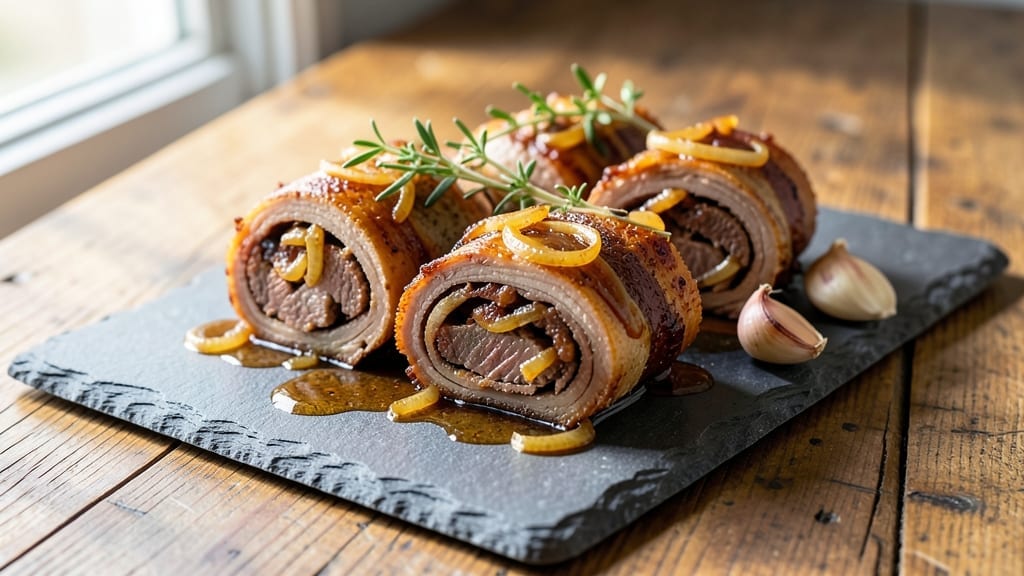
Creating beef brisket rolls transforms tough, flavorful brisket into delicate, melt-in-your-mouth layers that pair perfectly with smoky-sweet fillings. The day I realized French technique could elevate my rubs led me to this recipe—where slow-cooked beef becomes the star of a restaurant-worthy dish.
This method ensures tender, flaky layers that hold up to any filling, whether savory or sweet.
The secret lies in a precise balance of slow cooking and careful wrapping. You’ll start with a well-marinated brisket, cooked low and slow until fork-tender, then slice it thinly against the grain for maximum tenderness.
The filling—whether it’s caramelized onions, spiced apples, or a tangy BBQ mixture—gets tucked between the layers, creating a harmonious blend of textures and flavors.
By the time you serve these rolls, you’ll have a dish that’s rich, aromatic, and impossibly tender. The brisket remains juicy and flaky, while the filling adds depth and complexity.
This recipe delivers professional results with a method that’s both approachable and impressive, perfect for feeding a crowd or treating yourself to a special meal.
Serve with classic sides like mashed potatoes, coleslaw, or crusty bread to soak up every last bit of the smoky-sweet filling.
The combination of techniques and flavors makes this dish unforgettable—just like my first backyard cookout, where the scent of hickory smoke set the stage for a meal that lingers in memory.
Ingredients for beef brisket rolls
Six ingredients transform brisket into tender, flaky layers perfect for wrapping smoky-sweet fillings.
| Ingredient | Amount | Notes |
|---|---|---|
| Beef Brisket 🥩 | 3 lb | Flat cut, well-marbled preferred |
| Yellow Onions 🧅 | 2 whole | Medium, thinly sliced for filling |
| Granulated Sugar 🍚 | ¼ cup | For caramelizing onions |
| Apple Cider Vinegar 🍎 | 2 tbsp | For tangy balance in filling |
| Fresh Thyme 🌿 | ½ oz | Or 2 tbsp dried thyme |
| Garlic Cloves 🧄 | 6 cloves | Minced for filling and rub |
| Smoked Paprika 🌶️ | 1 tbsp | For deep smoky flavor |
| Kosher Salt 🧂 | 1 ½ tbsp | Diamond Crystal preferred |
| Apples 🍎 | 2 medium | Sweet-tart, peeled and diced |
| Cinnamon 🌿 | ½ tsp | For apple filling warmth |
| Unsalted Butter 🧈 | ½ cup | Cold, cubed for wrapping |
| Heavy Cream 🥛 | ½ cup | For glaze if desired |
| Brown Sugar 🍚 | ¼ cup | Packed, for glaze |
| Black Peppercorns 🌶️ | 1 tsp | Freshly cracked |
| Fresh Rosemary 🌿 | ¼ oz | Chopped, for rub |
[recipe_ingredient_scaler]
The brisket is non-negotiable here—flat-cut with good marbling is key. Costco or Whole Foods carry the best quality, but check your local butcher for freshness. Look for bright red color and visible fat—this ensures juicy, flavorful meat. I always buy mine a day ahead to let it sit at room temperature before cooking, which helps with even seasoning. For the apples, Honeycrisp or Fuji work best—they hold their shape while caramelizing. If you can’t find them, Granny Smith adds tartness that balances the sweet filling.
No smoked paprika? Regular paprika plus a pinch of liquid smoke gets you close. Fresh thyme is ideal, but dried at one-third the amount works in a pinch. The onions can be caramelized in butter or olive oil, but butter adds richness. For the apples, peeling and dicing uniformly ensures even cooking. If you’re short on time, pre-cooked applesauce can replace fresh apples, though it loses texture. The cinnamon is optional but adds warmth—Ceylon cinnamon has a more delicate flavor than cassia.
Brisket keeps 3-4 days in the fridge once cooked, but the rolls reheat beautifully—just warm in a 325°F oven with foil for 15 minutes. The filling ingredients (onions, apples, etc.) can be prepped 2 days ahead and stored separately. For leftovers, freeze in single layers with parchment between them—thaws perfectly for quick meals. The butter cubes stay firm in the fridge, so no need to soften until wrapping time. This dish tastes even better the next day as flavors meld.
Why You’ll Love This Recipe
- One-Pan Magic: I swear by this—just slice the brisket thin, toss it with onions and that sweet-tangy vinegar mix, then roll it up. No flipping, no fussing, no extra pans. The sugar caramelizes right in the skillet, giving those rolls a sticky, glossy finish that takes zero effort but feels like a restaurant dish.
- Sweet-Savory Balance: Honestly, the sugar and vinegar combo is chef’s kiss—it tenderizes the brisket while adding this deep, caramelized richness that cuts through the beef’s richness. The thyme? Just a pinch, but it lifts everything like a secret ingredient. It’s not too sweet, not too sharp—just right.
- Tailgate or Tuesday: Between us, this is my go-to for game days and lazy nights. Wrap the rolls in foil, throw them in a cooler for tailgating, or reheat leftovers straight from the fridge for a no-stress weeknight meal. The onions add crunch even after reheating, so it never tastes stale.
- Budget Stretch: A pound of brisket goes a long way here, and the onions/sugar/vinegar cost pennies. I’ll be real: I’ve fed six people for under $15 with this, and everyone’s left happy. Plus, the leftovers? Even better the next day—just crisp them up in a pan for a quick protein boost.
Step-by-step instructions for beef brisket rolls
Here’s how to create tender, flaky beef brisket rolls with a smoky-sweet filling that melts at every bite.
Prepare the Brisket and Seasoning Rub
Begin by trimming the 3 lb beef brisket to an even ½-inch thickness across the flat cut, removing any excess fat or silver skin. This ensures even cooking and perfect layering. Pat the meat completely dry with paper towels—this step is crucial for achieving that crisp, flaky exterior later.
In a small bowl, combine 1.5 tbsp kosher salt, 1 tbsp smoked paprika, 1 tsp freshly cracked black peppercorns, 0.25 oz chopped fresh rosemary, and 6 cloves minced garlic. Rub this mixture generously over both sides of the brisket, pressing firmly so the seasoning adheres. Let the seasoned brisket rest uncovered on a wire rack for 30 minutes at room temperature—this allows the meat to relax and ensures even cooking.
Make the Sweet-Smoky Apple Filling
In a large skillet, melt 0.5 cup unsalted butter over medium heat. Add 2 whole yellow onions, sliced thinly, and cook for 10-12 minutes until soft and translucent. Stir in 0.25 cup granulated sugar and cook for another 5 minutes until the onions caramelize slightly, developing a deep golden color and sweet aroma.
Add 2 medium apples, peeled and diced, 2 tbsp apple cider vinegar, 0.5 tsp cinnamon, and 0.5 oz fresh thyme. Cook for 8-10 minutes until the apples soften and the mixture thickens into a jam-like consistency. Remove from heat and let cool completely before using—this ensures the filling stays intact when wrapped in the brisket.
Assemble and Wrap the Brisket Rolls
Preheat your oven to 325°F. Lay the seasoned brisket flat on a clean work surface. Spread the cooled apple filling evenly across the surface, leaving a ½-inch border around the edges. Roll the brisket tightly into a log, starting from one short end, and secure it with kitchen twine every 2 inches to maintain its shape during cooking.
Place the rolled brisket seam-side down in a roasting pan. Cut 0.5 cup unsalted butter into small cubes and scatter them evenly over the top. This butter will baste the brisket as it cooks, adding richness and promoting that flaky texture. Roast for 2 hours, then carefully flip the brisket and continue roasting for another 1-1.5 hours until the internal temperature reaches 195°F and the meat is fork-tender.
Create the Glaze and Finish Cooking
In a small saucepan, combine 0.5 cup heavy cream, 0.25 cup packed brown sugar, and 1 tbsp smoked paprika. Simmer over medium heat for 5-7 minutes until the mixture thickens slightly into a glossy glaze. Brush this generously over the brisket rolls, then return them to the oven for 10-15 minutes to caramelize the glaze.
Remove the brisket from the oven and let it rest for 15 minutes before slicing. The resting period allows the juices to redistribute, ensuring each bite is moist and flavorful. Slice between the twine marks into ½-inch thick rolls, and serve immediately with any pan juices drizzled on top for extra richness.
Pro Tips For Making Beef Brisket Rolls
- Trim the Fat First: Slice off that thick layer of fat from the brisket before cooking—it’s the only way to guarantee your rolls stay tender and don’t turn greasy. I learned this the hard way after serving a batch where the fat rendered unevenly, leaving some slices rubbery.
- Caramelize Onions Low: Don’t rush the onions—cook them on low heat for 20-25 minutes until deep golden, not brown. High heat burns sugar and turns them bitter, and you’ll need that sweetness to balance the vinegar later.
- Skip the Vinegar Splash: Add apple cider vinegar after the brisket is mostly cooked, not at the start. Dumping it early makes the meat tough and turns the sauce thin. Save it for the last 10 minutes to brighten the flavors without overpowering.
- Wrap Tight, Rest Long: Roll the brisket snugly in foil with the thyme sprigs tucked inside—this locks in moisture and keeps the filling from spilling. Let it rest at least 15 minutes before slicing, or the juices will run everywhere when you serve.
Troubleshooting perfect results
Filling Stays Stuck
If your apple filling leaks out during cooking, it’s usually because the brisket isn’t rolled tightly enough or the filling isn’t cool enough. Let the filling sit at room temperature for 10 minutes after cooking to firm up slightly, then spread it evenly in a thin layer.
Roll the brisket snugly—think of it like wrapping a burrito—and secure with kitchen twine every 2 inches. For extra insurance, chill the rolled brisket in the fridge for 30 minutes before cooking to help the filling set. 💪
Brisket Too Dry
Overcooking is the usual culprit here. Use a meat thermometer and pull the brisket at 195°F internal temperature—no higher! If it’s dry, try basting with melted butter or beef broth every 30 minutes during cooking.
Also, don’t skip the 15-minute rest after baking—this lets juices redistribute. I’ve found that brisket cooked at 325°F stays moist longer than higher temps.
Glaze Too Thin
The glaze should coat the back of a spoon but still hold its shape. If yours is too runny, simmer it longer over low heat until it thickens.
For a quicker fix, mix in 1 tsp cornstarch with 1 tbsp water, stir it in, and cook for 1-2 minutes until it thickens. Too thick? Thin with 1 tbsp warm water and stir until smooth.
Remember, the glaze should be glossy but not watery—this ensures it caramelizes beautifully. ✨
Uneven Cooking
If one side cooks faster than the other, flip the brisket halfway through cooking. For extra evenness, place it on a wire rack in a roasting pan instead of directly on the pan bottom. This allows heat to circulate around the entire roll.
Also, avoid crowding the pan—leave 1 inch of space around the brisket for proper airflow. I’ve had the best results when the brisket is ½-inch thick before rolling.
Twine Leaves Marks
If the twine leaves visible lines on your brisket rolls, it’s usually because the twine is too tight or the brisket wasn’t rolled uniformly. Use butcher’s twine (not floral twine) and wrap it loosely—just enough to hold the roll together without squeezing.
For a cleaner look, slice between the twine marks and serve the rolls with the twine still on, then remove it at the table. This keeps the presentation polished. 💡
Filling Too Sweet
Balance the sweetness with acidity. If your filling tastes cloying, add 1 tbsp apple cider vinegar or lemon juice during cooking. For a smokier profile, stir in ½ tsp smoked paprika or a pinch of cayenne pepper.
I’ve also found that using Granny Smith apples instead of Honeycrisp adds natural tartness. Taste as you go—adjust seasonings gradually to avoid overpowering the brisket’s natural flavor.
Nutrition facts
Frequently asked questions
Can I use point-cut brisket instead of flat-cut for these rolls?
Point-cut brisket works but requires extra prep. Trim the point section away first, then use only the flat cut for even rolling. The point has more connective tissue and fat, which can make the rolls uneven when wrapped. If you must use it, slice the point thinly and wrap it separately, then cook alongside the flat-cut rolls.
What if I don’t have apple cider vinegar for the filling?
Substitute with 1 tbsp lemon juice or white wine vinegar for tanginess. If you’re avoiding vinegar entirely, add ½ tsp mustard powder to the filling for depth. The acidity balances the sweetness—just don’t skip it entirely or the filling may taste flat.
How do I adjust this recipe for a crowd of 12?
Double the brisket to 6 lbs and scale all other ingredients proportionally. Use two roasting pans for even cooking, and increase the glaze to 1 cup heavy cream + ½ cup brown sugar. Cook the rolls in batches if needed, keeping them warm in a 200°F oven while finishing the second batch.
Can I make these rolls ahead of time?
Assemble the rolls up to 2 days ahead and refrigerate unwrapped. Cook them straight from the fridge (add 30 minutes to the cooking time). For make-ahead serving, wrap the cooked rolls in foil and reheat in a 300°F oven for 20 minutes. The flavors deepen overnight, making them even more delicious.
What’s the best way to slice brisket rolls for serving?
Slice the rolls against the grain into ½-inch thick pieces for maximum tenderness. Use a sharp knife and cut between the twine marks to keep the filling contained. For restaurant-style presentation, fan the slices slightly on the plate and drizzle with extra glaze.

Trained in classic French technique but raised on slow-cooked ribs and spicy rubs, she blends culinary skill with smoke and soul.
- Beef Brisket Rolls Recipe: Flaky Layers and Smoky Sweet Filling - October 15, 2026
- Masterbuilt Smoker Beef Brisket Recipe: Bark-To-Meat Ratio Hack for Unmatched Flavor - October 15, 2026
- Costco Beef Brisket Recipe: Low-and-Slow Masterpiece With Molasses-Kissed Crust - October 15, 2026