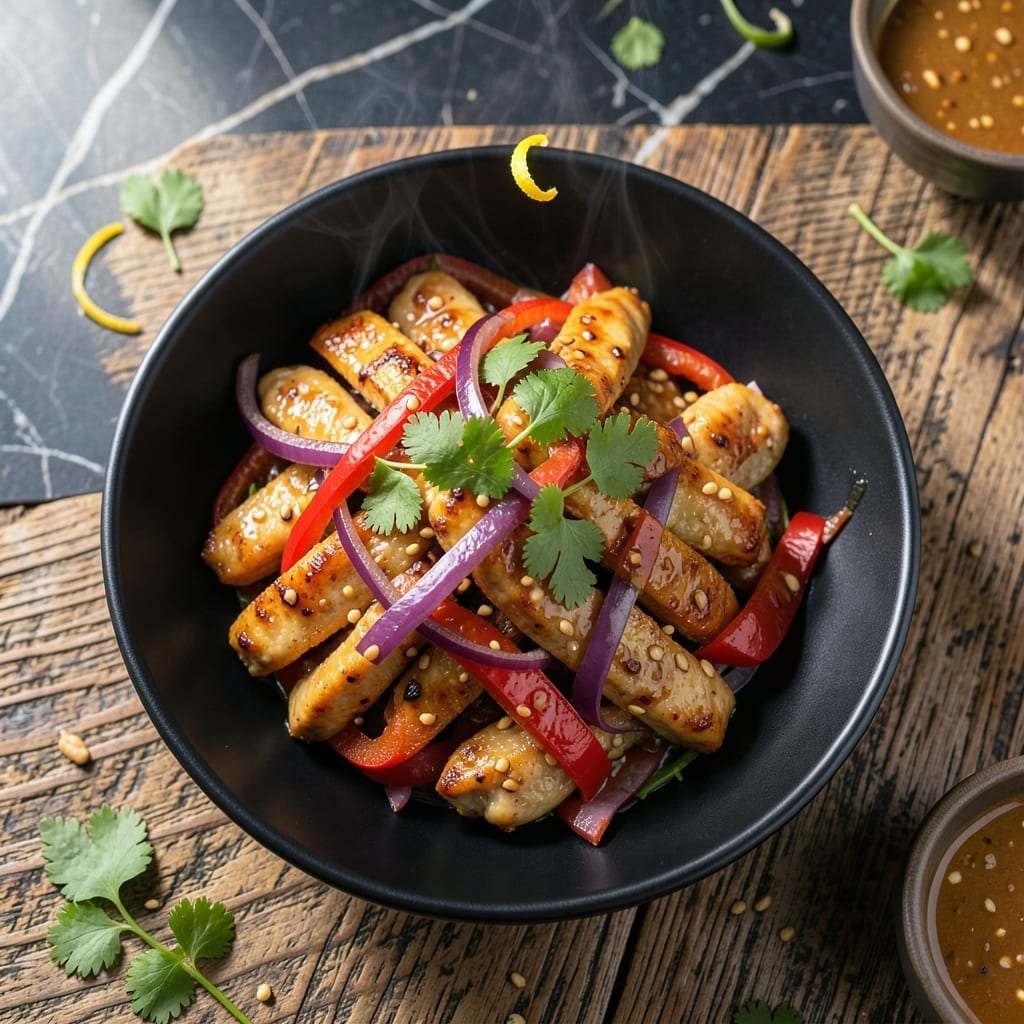
I’ve simplified traditional chicken satay into a skewer-free stir-fry that keeps all the bold peanut flavors without the fuss. The dish captures the same rich, aromatic taste of classic satay, but with a quicker, more approachable method.
This version cooks chicken in a skillet with a fragrant peanut sauce, blending creamy, nutty, and slightly spicy notes. The sauce thickens naturally as it simmers, coating every piece of chicken and vegetable in its savory-sweet depth.
The result is tender chicken and crisp vegetables enveloped in a velvety peanut glaze. It’s a weeknight-friendly take on a beloved dish, ready in 30 minutes with minimal cleanup.
Serve it over steamed rice or noodles for a satisfying meal that feels special without the extra effort.
Ingredients for Recipe for Chicken Satay Stir Fry
Simple ingredients deliver bold peanut flavors in this quick stir-fry dish.
| Ingredient | Amount | Notes |
|---|---|---|
| Boneless Skinless Chicken Breast 🍗 | 1 ½ lb | Cut into thin strips |
| Peanut Butter 🥜 | ¾ cup | Creamy, unsweetened preferred |
| Soy Sauce 🫒 | ¼ cup | Low-sodium for control |
| Coconut Milk 🥥 | ½ cup | Full-fat for creaminess |
| Lime Juice 🍈 | 2 tbsp | Freshly squeezed preferred |
| Brown Sugar 🍚 | 2 tbsp | Light or dark variety |
| Garlic Cloves 🧄 | 4 cloves | Minced for sauce |
| Fresh Ginger 🌿 | 1 tbsp | Grated or minced |
| Red Bell Pepper 🌶️ | 1 whole | Thinly sliced for crunch |
| Red Onion 🧅 | 1 whole | Thinly sliced for bite |
| Vegetable Oil 🫒 | 2 tbsp | High smoke point for stir-frying |
| Chili Flakes 🔥 | ½ tsp | Adjust for heat preference |
| Ground Cumin 🌿 | ½ tsp | Toasted lightly for depth |
| Ground Coriander 🍃 | ½ tsp | Complements peanut flavor |
[recipe_ingredient_scaler]
The peanut butter is non-negotiable here. Natural, unsweetened varieties from Whole Foods or Trader Joe’s work best—skip the sugary kinds. Chicken breast stays tender when sliced thinly against the grain. For coconut milk, Thai Kitchen or Native Forest are reliable brands. Fresh lime juice adds the right brightness, but bottled works in a pinch (just use less).
No peanut butter? Cashew or almond butter at a 1:1 ratio gets you close. Out of fresh ginger? Ground ginger at one-third the amount works. The soy sauce can be swapped for tamari (gluten-free) or coconut aminos. Red bell pepper adds crunch, but snap peas or zucchini are great alternatives. If you want more heat, add a dash of sriracha to the sauce.
Stir-fry leftovers keep in the fridge for 3-4 days—the sauce thickens as it cools. Freeze cooked chicken and sauce separately for up to 3 months. Reheat gently on the stove with a splash of water to loosen the sauce.
Why You’ll Love This Recipe
- One Pan Wonder: I toss everything into a single skillet and let the peanut butter and coconut milk work their magic together.
- Crave-Worthy Sauce: The lime juice cuts through the rich peanut butter and soy sauce in a way that keeps me going back for another bite.
- Feeds a Crowd: Between us, this stretches easily for family dinners or meal prep with leftovers that reheat beautifully.
- Budget Friendly: Honestly, chicken breast and pantry staples like peanut butter make this a wallet-friendly weeknight win.
Step-by-Step Instructions for Chicken Satay Stir Fry
Here is the method. Straightforward, tested, works every time.
Step 1: Prepare the Chicken and Vegetables
Cut the 1.5 lb Boneless Skinless Chicken Breast into thin strips, about ¼ inch thick. Uniform pieces ensure even cooking and prevent dryness. Thinly slice the Red Bell Pepper and Red Onion into even strips as well—they should be similar in size to the chicken for consistent texture.
This step is crucial for quick, even cooking. You want all ingredients to reach perfect doneness at the same time. Keep the sliced vegetables and chicken separate for now to prevent cross-contamination.
Step 2: Make the Peanut Sauce
In a bowl, whisk together the 0.75 cup Peanut Butter, 0.25 cup Soy Sauce, 0.5 cup Coconut Milk, 2 tbsp Lime Juice, 2 tbsp Brown Sugar, minced 4 cloves Garlic Cloves, grated 1 tbsp Fresh Ginger, 0.5 tsp Chili Flakes, 0.5 tsp Ground Cumin, and 0.5 tsp Ground Coriander. Mix until smooth and fully combined.
The sauce should be creamy and pourable. If it’s too thick, add a splash of warm water to reach your desired consistency. Taste and adjust seasoning if needed, though the soy sauce and peanut butter provide a solid flavor base.
Step 3: Stir-Fry the Chicken and Vegetables
Heat 2 tbsp Vegetable Oil in a large skillet or wok over medium-high heat until shimmering. Add the chicken strips and cook for 5-6 minutes, stirring occasionally, until they are no longer pink and just cooked through. Remove the chicken from the skillet and set aside.
In the same skillet, add the sliced Red Bell Pepper and Red Onion. Stir-fry for 3-4 minutes until the vegetables are tender-crisp and the onion starts to soften. The edges of the onion should begin to turn translucent, but the vegetables should retain some bite.
Step 4: Combine and Finish
Return the cooked chicken to the skillet with the vegetables. Pour the peanut sauce over everything and stir to coat evenly. Cook for an additional 2-3 minutes over medium heat, stirring constantly, until the sauce thickens slightly and clings to the chicken and vegetables.
You’ll know it’s ready when the sauce has a glossy sheen and everything is heated through. The chicken should be tender, and the vegetables should still have a slight crunch. Serve immediately over steamed rice or noodles for a complete meal.
Pro Tips For Making Recipe For Chicken Satay Stir Fry
- Slice Against the Grain: Cut the chicken breast into thin strips against the grain—this keeps it tender and prevents chewy bites, which I learned the hard way after a few rubbery stir-fries.
- Thin the Peanut Butter: Mix the peanut butter with warm coconut milk before adding it to the pan; otherwise, it clumps and leaves streaks in your sauce, no matter how much you stir.
- Don’t Overcrowd the Pan: Cook the chicken in batches if needed—steaming from too many pieces at once turns it gray and soggy, and the satay flavor won’t develop properly.
- Finish with Lime: Add the lime juice at the very end, just before serving, so it stays bright and zesty; adding it too early mutes the tang and dulls the freshness.
Storing and Reheating This Dish
Refrigerator Storage
Let your stir-fry cool completely before transferring to airtight containers. It’ll keep in the fridge for 3-4 days—the peanut sauce actually thickens and deepens in flavor overnight. I use glass containers from my local New Seasons Market. ❄️
Freezer Storage
For longer storage, freeze the chicken and sauce together in quart-sized freezer bags for up to 3 months. Squeeze out excess air to prevent freezer burn. The vegetables are best fresh, so I skip freezing them.
Stovetop Reheating
Reheat gently over medium-low heat in a skillet, adding 2-3 tbsp water to loosen the sauce. Stir frequently for 5-7 minutes until everything is heated through. This method keeps the chicken tender.
Microwave Reheating
Place portions in a microwave-safe dish, cover with a damp paper towel, and heat on 70% power for 2-3 minutes. Stir halfway through and add a splash of water if needed. 🔥
Sauce Separation Fix
If the peanut sauce separates after storage, whisk in 1-2 tsp warm water or coconut milk until smooth. The natural oils in peanut butter can settle, but they reincorporate easily.
Nutrition Facts
Frequently Asked Questions
Can I use chicken thighs instead of breast?
Yes! Boneless thighs stay juicier and are more forgiving. Cook for 6-7 minutes instead of 5-6 minutes since they take slightly longer.
How do I make the sauce less thick?
Whisk in 1-2 tbsp warm water or coconut milk until smooth. The sauce thickens as it cools, so adjust while still warm.
What if I don’t have a wok?
A large skillet works perfectly. Use medium-high heat and cook in batches to avoid overcrowding.
Can I make this ahead?
Prep all ingredients and sauce up to 1 day ahead. Store separately and cook just before serving for best texture.

Trained in classic French technique but raised on slow-cooked ribs and spicy rubs, she blends culinary skill with smoke and soul.
- Best Smoked Oxtail Recipe: Deep-Rich Flavor After Low-and-Slow Cooking - October 14, 2026
- Pit Boss Smoked Prime Rib Roast Recipe: Bark-to-Bone Crispness in 4 Hours - October 14, 2026
- Smoked Tuna Steak Recipe: Seared Crust Meets Silky Centers - October 14, 2026