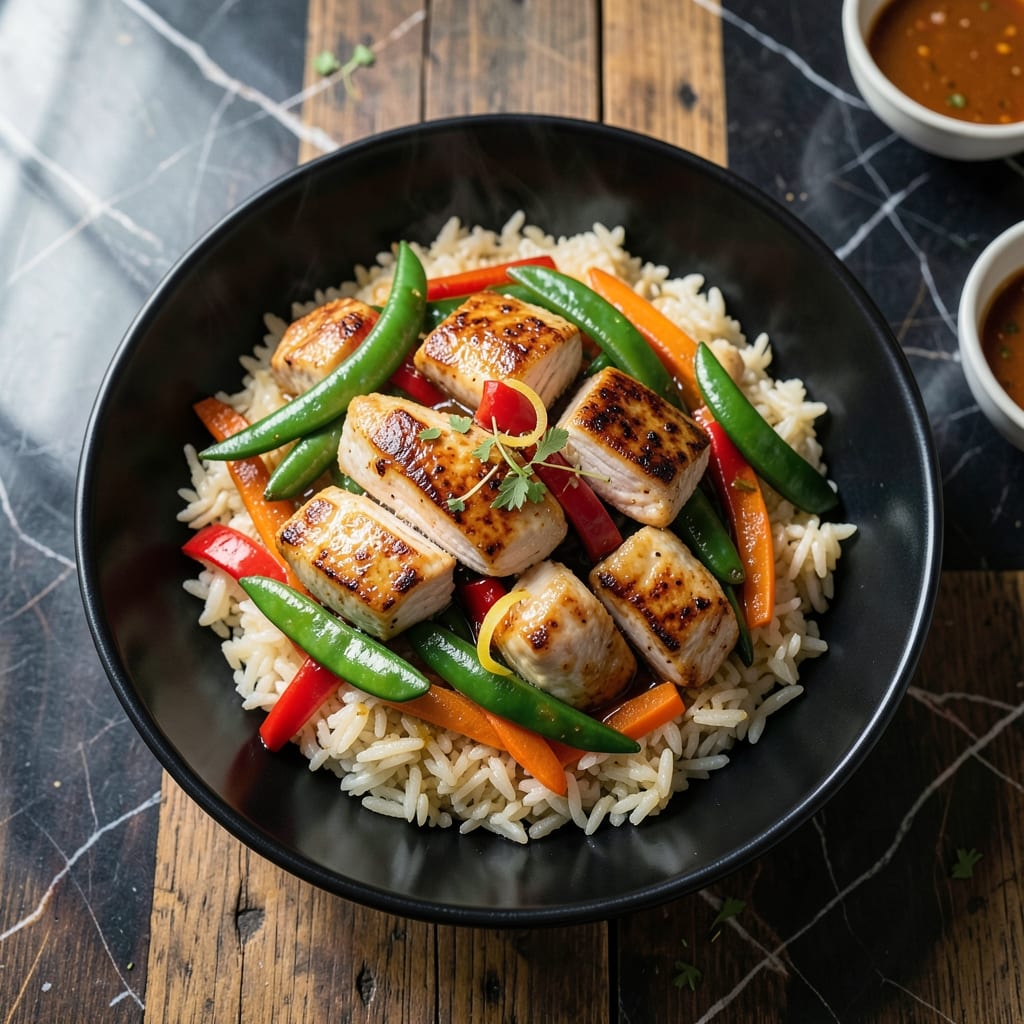
This weeknight stir fry proves that frozen vegetables can be just as delicious as fresh. I developed this recipe in my tiny Boston kitchen, testing it repeatedly to ensure perfect results every time.
The method is simple yet precise: sear the chicken first to build flavor, then stir-fry the frozen veggies to maintain their crisp texture. The sauce comes together quickly in the same pan, infusing everything with savory depth.
What you get is tender chicken pieces, vibrant vegetables, and fluffy rice all coated in a glossy, flavorful sauce. The entire dish comes together in under 30 minutes, making it ideal for busy evenings.
This is the kind of meal that turns a hectic day into something manageable and delicious. The ingredients are forgiving, and the process is streamlined for real-life cooking conditions.
Ingredients for Recipe for Chicken Stir Fry with Frozen Vegetables and Rice
Pantry staples plus frozen veggies and chicken. Weeknight dinner, sorted in minutes.
| Ingredient | Amount | Notes |
|---|---|---|
| Boneless Skinless Chicken Breasts 🍗 | 1 ½ lb | Cut into 1-inch pieces |
| Frozen Stir-Fry Vegetable Mix 🥦 | 4 cups | No need to thaw |
| Long-Grain White Rice 🍚 | 2 cups | Uncooked, or sub jasmine |
| Soy Sauce 🫒 | ⅓ cup | Low-sodium preferred |
| Sesame Oil 🫒 | 1 tbsp | Toasted for depth |
| Vegetable Oil 🫒 | 2 tbsp | High smoke point for searing |
| Garlic Cloves 🧄 | 3 cloves | Minced for sauce |
| Fresh Ginger 🌿 | 1 tbsp | Grated or minced |
| Brown Sugar 🍚 | 2 tbsp | For sauce balance |
| Rice Vinegar 🍋 | 2 tbsp | Adds tangy brightness |
| Cornstarch 🌾 | 1 tbsp | For sauce thickening |
| Green Onions 🧅 | 3 whole | Thinly sliced for garnish |
| Sesame Seeds 🌾 | 1 tbsp | Toasted for crunch |
| Red Pepper Flakes 🌶️ | ½ tsp | Adjust for heat preference |
[recipe_ingredient_scaler]
The chicken is the foundation here—Costco’s air-chilled breasts stay juicier than most. For frozen veggies, Trader Joe’s stir-fry mix has the best texture (not mushy, not waterlogged). I always grab a bag when they’re on sale. The rice? Any long-grain works, but jasmine adds a fragrant note that pairs perfectly with the sesame and soy. Look for Kikkoman low-sodium soy sauce—it’s consistent and not overly salty.
No fresh ginger? Ground ginger at half the amount works in a pinch (just add it with the sauce, not the oil). Skip the brown sugar? Honey or maple syrup can sub, but reduce the vinegar slightly. If you’re out of rice vinegar, apple cider vinegar is fine—just taste before adding all at once. For extra veggie crunch, toss in a handful of frozen peas or bell peppers with the mix.
Leftover chicken and sauce keep 4-5 days in the fridge. The rice? Best fresh, but reheats okay with a splash of water. Freeze extras for 3 months—just thaw and stir-fry again to revive. I always make double the sauce (it’s that good) and keep it in a jar for quick meals later.
Why You’ll Love This Recipe
- One Pan Meal: I love using just my wok and a pot—no mountain of dishes, and the frozen veggies go straight from freezer to pan.
- Umami Bomb: That first sizzle of chicken in sesame oil with soy sauce hits different—savory, nutty, and honestly irresistible.
- Weeknight Hero: I’ve served this for quick dinners, lunchboxes, and even impromptu potlucks. Always a win.
- Budget Stretcher: Boneless chicken breasts and frozen veggies keep costs low, and leftovers taste just as good the next day.
Step-by-Step Instructions for Chicken Stir Fry With Frozen Vegetables and Rice
Here’s the method. Straightforward, tested, works every time.
Step 1: Cook Rice and Prep Chicken
Start by cooking the 2 cups long-grain white rice according to package instructions. While it simmers, cut the 1.5 lb boneless skinless chicken breasts into 1-inch pieces—uniform size ensures even cooking. I like to trim any excess fat as I work for cleaner texture.
Pat the chicken dry with paper towels. This step prevents steaming when it hits the hot pan, which means better browning. Set it aside and prep your sauce ingredients—mince the 3 cloves garlic cloves and grate the 1 tbsp fresh ginger. Having everything ready before cooking is the secret to stir-fry success.
Step 2: Create the Stir-Fry Sauce
In a small bowl, whisk together the 0.33 cup soy sauce, 2 tbsp brown sugar, 2 tbsp rice vinegar, 1 tbsp sesame oil, and 0.5 tsp red pepper flakes. The brown sugar should fully dissolve into the liquid, creating a glossy, dark mixture.
Next, add the 1 tbsp cornstarch to the sauce and whisk vigorously until no lumps remain. This slurry will thicken into a beautiful, clingy sauce that coats every piece of chicken and vegetable. Real talk: if you skip this step, you’ll end up with a watery stir-fry that slides right off your rice.
Step 3: Stir-Fry Chicken and Vegetables
Heat the 2 tbsp vegetable oil in a large skillet or wok over medium-high heat until it shimmers. Add the chicken in a single layer and let it cook undisturbed for 2-3 minutes until the bottoms turn golden brown. Flip and cook another 2-3 minutes until the chicken is just cooked through.
Add the 4 cups frozen stir-fry vegetable mix directly to the pan—no need to thaw. Stir-fry for 4-5 minutes until the vegetables are tender-crisp and any ice crystals have disappeared. The frozen veggies will release moisture as they cook, which actually helps create steam to finish cooking the chicken perfectly.
Step 4: Combine and Finish
Pour the sauce over the chicken and vegetables, then stir everything together. The sauce will immediately start to bubble and thicken. Keep stirring for 1-2 minutes until the sauce has reduced to a glossy coat that clings to the chicken and vegetables.
Taste and adjust seasoning if needed. The sauce should balance sweet, salty, and tangy flavors. If it’s too thick, add a splash of water; if too thin, let it cook a bit longer. The 3 whole green onions come in next—slice them thinly and sprinkle over the top along with the 1 tbsp sesame seeds for that final pop of color and crunch.
Step 5: Serve Immediately Over Rice
Divide the cooked rice among plates and spoon the stir-fry over the top. The rice should be fluffy and hot, ready to soak up every bit of that flavorful sauce. Garnish with any remaining green onions and sesame seeds for presentation.
This dish comes together in under 30 minutes, making it the perfect weeknight solution. The chicken should be tender and juicy, the vegetables vibrant and crisp, and the sauce rich and velvety. Serve while hot—the flavors meld beautifully when everything is fresh from the pan.
Pro Tips For Making Recipe For Chicken Stir Fry With Frozen Vegetables And Rice
- Pre-Cook the Rice: Start the rice first—it takes 15-20 minutes, and you’ll want it ready by the time the stir-fry is done. I learned this the hard way after serving lukewarm rice with piping hot chicken more times than I’d like to admit.
- Thaw and Drain: Spread the frozen veggies on a paper towel for 10 minutes to thaw, then squeeze out excess water. Sounds tedious, but it prevents that sad, soggy stir-fry no one wants.
- High Heat Only: Crank the heat to high before adding the chicken—it should sizzle immediately. After burning three batches at medium heat, I finally figured out that stir-fry demands that aggressive sear.
- Velvet the Chicken: Toss the chicken with 1 teaspoon cornstarch and 1 tablespoon soy sauce before cooking. My grandmother swore by this, and it makes the chicken absurdly tender—yes, even the breast.
Regional Styles of This Recipe
Chinese Takeout Style
This is the version I make when craving that classic Chinese restaurant flavor. Use dark soy sauce instead of regular for deeper color, and add 1 tsp oyster sauce to the mix. The key is high heat—crank your burner to max and keep everything moving. 🔥
Thai Inspired
Swap the soy sauce for fish sauce and add 1 tbsp lime juice plus 1 tsp curry powder to the sauce. Finish with fresh cilantro and a squeeze of lime. The bright, tangy flavors transport this dish straight to Bangkok.
Korean Fusion
Add 2 tbsp gochujang to your sauce for that signature Korean heat. I also like to toss in 1 cup bean sprouts with the frozen veggies for extra crunch. Garnish with toasted sesame seeds and a fried egg on top.
Japanese Teriyaki
Replace the brown sugar with 3 tbsp honey and add 1 tbsp mirin to the sauce. The result is a glossy, sweet-savory teriyaki glaze that clings beautifully to the chicken. Sprinkle with black sesame seeds for visual contrast.
Indian Spiced
Stir in 1 tsp garam masala and ½ tsp turmeric with your sauce ingredients. The warm spices pair surprisingly well with the soy base. I like to finish with fresh cilantro and a dollop of plain yogurt on the side.
Boston Irish-Italian
My family’s twist adds ½ cup marinara to the sauce for a sweet-tangy depth. We also stir in ½ cup grated Parmesan at the end—it sounds unconventional, but the salty cheese works beautifully with the soy and sesame. Trust me, it’s a Boston thing. 💛
Nutrition Facts
Frequently Asked Questions
Do I need to thaw the frozen vegetables first?
No, toss them in straight from the freezer. This prevents mushiness and maintains texture. The ice crystals help steam the chicken as they melt.
Can I use a different protein instead of chicken?
Try shrimp (cook 2-3 minutes total) or tofu (press and cube first). Adjust cooking time to avoid overcooking.
Why is my stir-fry sauce too thin?
You likely skipped the cornstarch slurry. Mix 1 tbsp cornstarch with cold water, then stir into the sauce. Let it bubble for 1-2 minutes to thicken.
What’s the best rice for this dish?
Jasmine or long-grain white work best. Start cooking it first since it takes 15-20 minutes. Avoid instant rice—it gets gummy.

Trained in classic French technique but raised on slow-cooked ribs and spicy rubs, she blends culinary skill with smoke and soul.
- Smoked Whitefish Recipe: Wood-Fired Flakes with Herbed Butter Drizzle - October 15, 2026
- Smoked Teriyaki Beef Jerky Recipe: Umami-Deep Flavor in Every Chewy Bite - October 15, 2026
- Stewed Beef Brisket Recipe: Deep-Rich Flavor After 8 Hours of Slow Simmering - October 15, 2026