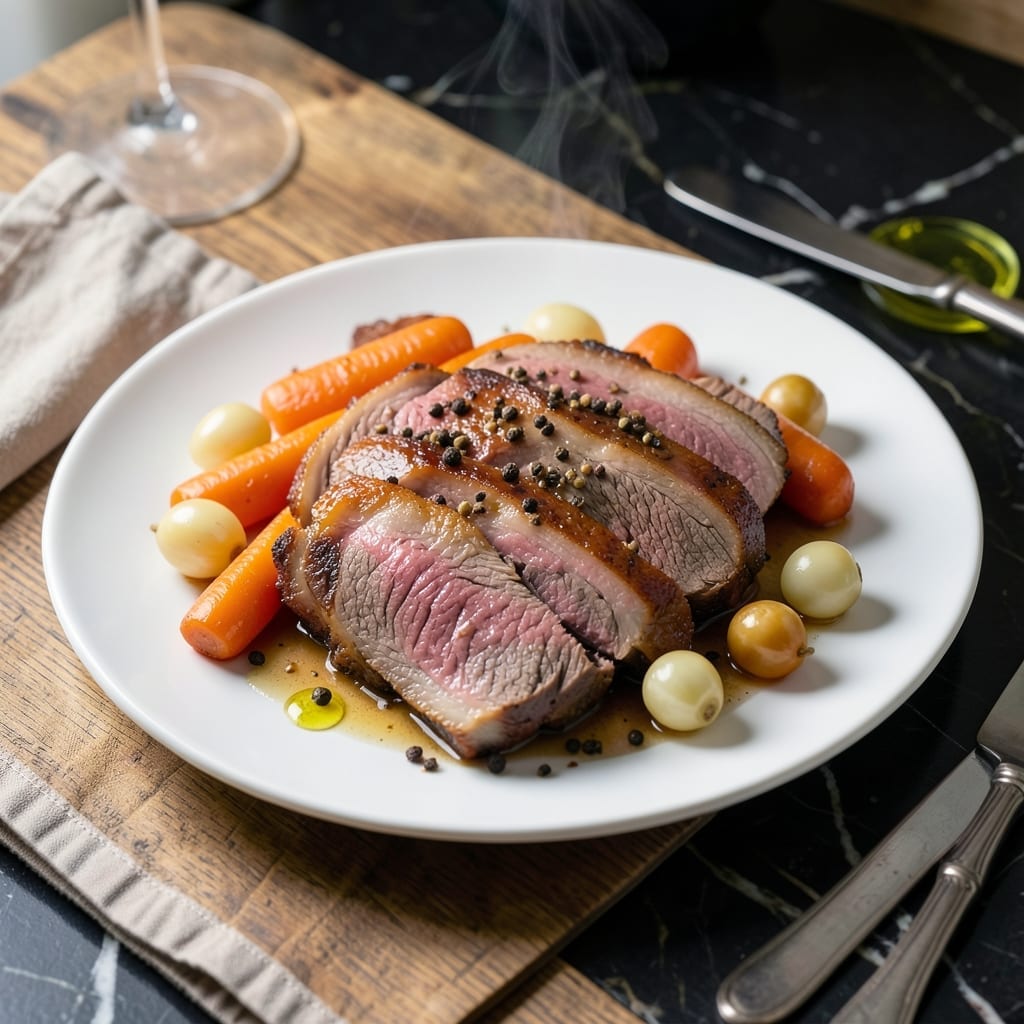
This slow-cooked brisket transforms a simple cut into a tender, flavorful centerpiece for any meal.
I developed this method after years of testing, finding the perfect balance of spices and slow cooking to achieve that fall-apart texture. The brining process ensures every bite is packed with savory depth.
The result is a savory tradition that’s rich and satisfying, with a crust that gives way to juicy, melt-in-your-mouth meat. It’s the kind of dish that brings people together.
Serve with classic sides or let it shine on its own. Here’s how to master it at home.
Ingredients for Recipe for Corn Beef Brisket
Slow cooking turns humble cuts into something extraordinary with these pantry and fresh ingredients.
| Ingredient | Amount | Notes |
|---|---|---|
| Beef Brisket 🥩 | 3 lb | Flat cut preferred, trimmed of fat |
| Kosher Salt 🧂 | ½ cup | Diamond Crystal brand recommended |
| Granulated Sugar 🍚 | 2 tbsp | Balances the brine |
| Brown Sugar 🍯 | 2 tbsp | Light or dark works |
| Black Peppercorns 🌶️ | 1 tbsp | Whole for brine, crushed |
| Mustard Seeds 🌿 | 1 tbsp | Yellow or brown variety |
| Coriander Seeds 🍃 | 1 tbsp | Lightly toasted for flavor |
| Bay Leaves 🍂 | 4 pieces | Dried, whole leaves |
| Garlic Cloves 🧄 | 6 cloves | Smashed, peeled |
| Water 💧 | 8 cups | For brining liquid |
| Beef Broth 🥩 | 2 cups | Low-sodium preferred |
| Apple Cider Vinegar 🍏 | ½ cup | Adds tang to brine |
| Carrots 🥕 | 3 whole | Peeled, cut into chunks |
| Yellow Onions 🧅 | 2 whole | Quartered for cooking |
| Red Potatoes 🥔 | 1 ½ lb | Small, halved |
[recipe_ingredient_scaler]
The brisket is everything here. Flat cut stays more consistent in shape and cooks evenly—avoid the point cut (it’s fattier). Look for good marbling at Whole Foods or Costco; their briskets are reliably tender. The flat cut usually runs about 3-4 pounds, so grab one closer to 3 if feeding a smaller group. For the spices, Penzeys has the freshest mustard and coriander seeds if you’re restocking your pantry.
Out of apple cider vinegar? White vinegar in a pinch—just cut it by half since it’s sharper. No beef broth? Water with a bouillon cube works, but the depth won’t be the same. The carrots and potatoes can be swapped for parsnips or sweet potatoes (they’ll soak up the brine just as well). If you’re missing a spice or two in the brine, don’t stress—black pepper and bay leaves are the non-negotiables.
Brined brisket keeps in the fridge for up to 5 days before cooking (it actually gets better). Leftovers? Slice, then store in the cooking liquid for 4-5 days—reheats like a dream. Freeze for 3 months if you’re meal prepping (the texture stays spot-on).
Why You’ll Love This Recipe
- Set and Forget: I rub the brisket with salt, sugar, and peppercorns, then let the oven do all the work—no babysitting required.
- Sweet-Savory Magic: The combo of brown sugar and kosher salt creates that sticky, caramelized crust I can’t resist.
- Feeds a Hungry Crowd: One brisket means leftovers for sandwiches, tacos, or hash—honestly, it’s my secret weapon for busy weeks.
- Budget Stretch: A single brisket goes a long way, and the simple spice blend keeps costs low without skimping on flavor.
Step-by-Step Instructions for Corned Beef Brisket
Here’s the method that transforms tough brisket into fall-apart tender perfection every time.
Step 1: Prepare the Brine with Aromatics
In a large stockpot, combine the 8 cups water, 0.5 cup Kosher Salt, 2 tbsp Granulated Sugar, 2 tbsp Brown Sugar, 1 tbsp Black Peppercorns, 1 tbsp Mustard Seeds, 1 tbsp Coriander Seeds, and 4 pieces Bay Leaves. Stir until the salt and sugars dissolve completely.
Add the 6 cloves Garlic Cloves and 0.5 cup Apple Cider Vinegar. The vinegar will create a subtle tang that balances the richness of the beef. Bring this mixture to a boil, then remove from heat and let it cool to room temperature before adding the beef brisket.
Step 2: Brine the Beef Brisket
Once the brine is completely cool, submerge the 3 lb Beef Brisket in the liquid. The brisket should be fully covered—if not, add a bit more water. Weight it down with a plate if needed to keep it submerged.
Cover and refrigerate for 5-7 days. I know this seems long, but the extended brine time is what gives corned beef its signature flavor and texture. The salt will penetrate deeply, while the spices infuse every bite with complex, savory notes.
Step 3: Simmer with Vegetables
After brining, remove the beef brisket from the liquid (don’t rinse—it’ll remove the flavor). Place it in a large Dutch oven and add the 2 cups Beef Broth, 3 whole Carrots, 2 whole Yellow Onions, and 1.5 lb Red Potatoes.
Bring to a boil, then reduce heat to maintain a gentle simmer. Cover and cook for 3-4 hours, turning the brisket occasionally, until it’s fork-tender and the internal temperature reaches 195°F. The vegetables will absorb the brining flavors and become part of the meal.
Step 4: Rest and Slice
Carefully transfer the beef brisket to a cutting board. Let it rest for 15-20 minutes before slicing—this allows the juices to redistribute for maximum tenderness. The rest is crucial; cutting too soon will result in dry meat.
Slice against the grain into ¼-inch thick pieces. The grain runs in one direction through the brisket, so look for the natural lines in the meat. Serve with the cooked vegetables and some of the brining liquid as a light broth.
Pro Tips For Making Recipe For Corn Beef Brisket
- Cure Long Enough: Give the brisket a full 5-10 days in the wet brine with the kosher salt, sugars, and peppercorns—I learned this the hard way after pulling mine out at day 3 and ending up with bland, unevenly cured meat.
- Use Coarse Salt: Stick with kosher salt for the brine, not table salt. The larger grains dissolve more evenly and won’t over-salt the meat like fine grains can.
- Rinse After Curing: Sounds weird, but it works: rinse the brisket under cold water after curing to remove excess salt, or your finished corned beef will taste unpleasantly briny.
- Simmer, Don’t Boil: Keep the cooking liquid at a gentle simmer, around 180-190°F. Boiling makes the brisket tough—I was skeptical until I tried it and noticed how much more tender the meat became.
Wine and Beer Pairings for This Recipe
Beer Pairings
An Irish stout like Guinness is my top pick—the roasted malt flavors complement the brisket’s depth. The slight bitterness cuts through the richness beautifully. For a local twist, try a dry Irish stout from your nearest craft brewery. 🍺
Wine Pairings
A bold Cabernet Sauvignon stands up to the brisket’s robust flavor. Look for one with dark fruit notes and firm tannins. I also love a Malbec—its smoky undertones mirror the dish’s savory character.
Cider Option
For non-beer drinkers, a dry hard cider like Angry Orchard Traditional Dry offers crisp acidity that refreshes your palate. The apple notes subtly echo the cider vinegar in the brine.
Non-Alcoholic Choices
Sparkling ginger beer provides a spicy kick that works surprisingly well. I also recommend iced black tea with lemon—its tannins mimic the pairing qualities of red wine.
Serving Temperature
Serve beers and ciders slightly chilled (45-50°F). Red wines should be just below room temperature (60-65°F). This ensures all flavors shine without overpowering the dish. ✨
Nutrition Facts
Frequently Asked Questions
How long should I brine the brisket?
Brine for 5-7 days for optimal flavor and tenderness. This extended time allows the salt and spices to fully penetrate the meat. Don’t rush it—shorter brining won’t deliver the same depth.
Can I use a different cut of beef?
Stick with flat cut brisket for best results. Other cuts may not hold up as well to the long cooking time or absorb the brine flavors the same way.
What if my brisket isn’t fork-tender after 3 hours?
Continue simmering until it reaches 195°F internally. Some pieces take closer to 4 hours depending on size. Keep it covered and check periodically.
Can I make this in a slow cooker?
Yes! After brining, place everything in the slow cooker and cook on low for 8-9 hours. The result will be just as tender and flavorful.

Trained in classic French technique but raised on slow-cooked ribs and spicy rubs, she blends culinary skill with smoke and soul.
- Recipe for Boneless Pork Chops in Cast Iron Skillet: Sear and Baste to Juicy Perfection - October 3, 2026
- Recipe for Boneless Cross Rib Roast: Slow-Roasted Beef with Herb Crust - October 3, 2026
- Hamburgers in Sauce Recipe Crock Pot: Slow-Cooked Savory Delight - October 3, 2026