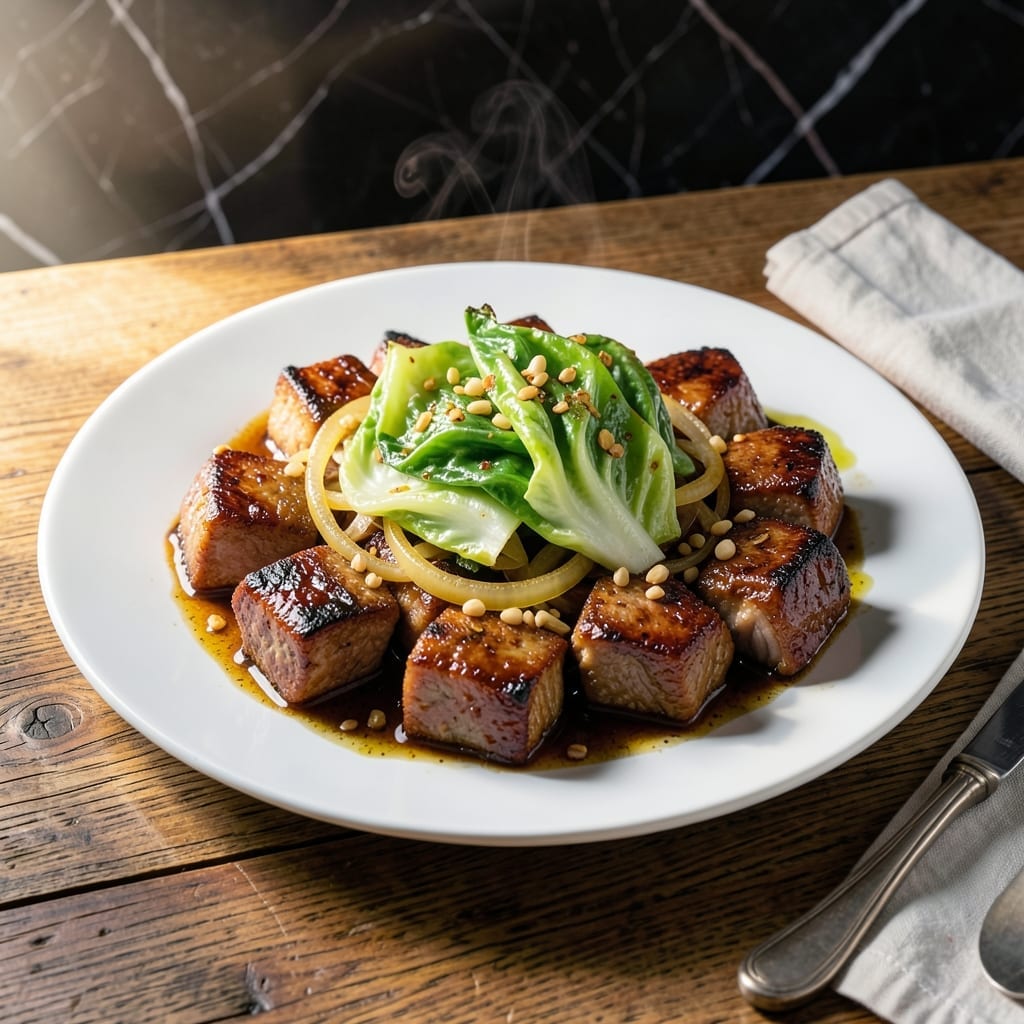
This Filipino-inspired dish brings together tender pork and wilted cabbage in a savory adobo-style braise. The combination of vinegar, soy sauce, and garlic creates a rich, tangy base that perfectly complements the sweetness of the pork.
The cabbage softens beautifully as it absorbs the flavorful braising liquid, while the pork becomes fork-tender. This one-pot method ensures every bite is packed with layered tastes and textures.
What you’ll get is a hearty, comforting meal that’s both simple to prepare and deeply satisfying. The adobo braising technique guarantees fall-apart tender pork with a sauce that’s perfect for soaking up with rice.
Serve this with steamed rice to complete the experience. Here’s how to make it.
Ingredients for Pork with Cabbage Recipe Pinoy
Tender pork and cabbage meet in this adobo-style braise with bold Filipino flavors.
| Ingredient | Amount | Notes |
|---|---|---|
| Pork Shoulder 🥩 | 1 ½ lb | Cut into 1-inch cubes, boneless |
| Green Cabbage 🥬 | 1 whole | Medium head, cored and sliced |
| Soy Sauce 🫚 | ½ cup | Use Filipino brand if available |
| White Vinegar 🍶 | ½ cup | Cane vinegar preferred for authenticity |
| Garlic Cloves 🧄 | 8 cloves | Minced for maximum flavor infusion |
| Yellow Onion 🧅 | 1 whole | Medium, thinly sliced |
| Bay Leaves 🍃 | 3 pieces | Dried, for aromatic depth |
| Black Peppercorns 🌶️ | 1 tsp | Freshly cracked for boldness |
| Brown Sugar 🫙 | 1 tbsp | Balances the acidity of vinegar |
| Olive Oil 🫒 | 2 tbsp | For searing pork cubes |
| Water 💧 | ½ cup | To adjust braising liquid consistency |
| Salt 🧂 | 1 tsp | Adjust to taste at the end |
[recipe_ingredient_scaler]
The pork shoulder is non-negotiable here. Chuck roast works in a pinch but lacks the fat for that signature fall-apart texture. Filipino markets often carry pre-cubed pork for adobo—ask for it at the butcher counter. For soy sauce, Silver Swan or Datu Puti are authentic choices (found at Asian grocery stores). The vinegar should be cane vinegar if possible—it’s milder than white vinegar and balances the dish perfectly.
No cane vinegar? Apple cider vinegar is the closest substitute (avoid balsamic—too sweet). Green cabbage is traditional, but Napa cabbage works too with a slightly sweeter profile. For a quicker version, pre-minced garlic saves time (though fresh is ideal). If you’re missing bay leaves, a pinch of dried thyme adds similar depth. The brown sugar can be omitted, but it rounds out the sharpness beautifully.
This braise tastes even better the next day. Store in an airtight container in the fridge for up to 4 days, or freeze for 3 months. Reheat gently on the stove with a splash of water to revive the sauce.
Why You’ll Love This Recipe
- One Pan Meal: I just toss the pork shoulder, cabbage, and garlic in one pan—minimal cleanup, maximum flavor.
- Savory Tangy Bite: The soy sauce and vinegar combo with garlic gives it that classic Pinoy sour-salty kick I crave.
- Feeds the Family: It’s my go-to for weeknights when I need something hearty that both kids and adults will eat.
- Budget Stretcher: Pork shoulder and cabbage are cheap, and this makes enough for leftovers that taste even better the next day.
Step-by-Step Instructions for Pork With Cabbage Pinoy
Master the adobo-braising technique for tender pork and perfectly wilted greens every time.
Step 1: Sear the Pork Shoulder Cubes
Heat the 2 tbsp olive oil in a large Dutch oven over medium-high heat until shimmering. Add the 1.5 lb pork shoulder cubes in a single layer, working in batches if necessary to avoid crowding.
Sear undisturbed for 4-5 minutes per side until deeply browned on all sides. This creates a rich fond that will deepen the flavor of your braising liquid. The pork should develop a deep golden crust and release easily from the pot when properly seared.
Step 2: Build the Adobo Braising Liquid
Reduce heat to medium and add the 1 whole yellow onion and 8 cloves garlic cloves to the pot. Sauté for 2-3 minutes until the onion softens and becomes translucent. The garlic should be fragrant but not browned.
Pour in the 0.5 cup soy sauce, 0.5 cup white vinegar, 1 tbsp brown sugar, 1 tsp black peppercorns, 3 pieces bay leaves, and 0.5 cup water. Stir to combine, scraping up any browned bits from the bottom of the pot. The liquid should come to a gentle simmer.
Step 3: Braise the Pork to Tenderness
Return all pork to the pot, ensuring it’s mostly submerged in the liquid. Bring to a boil, then reduce heat to low, cover, and simmer for 1.5-2 hours. Check occasionally and add a splash of water if the liquid reduces too quickly.
The pork is done when it’s fork-tender and the internal temperature reaches 195°F. At this stage, the meat should easily pull apart with a fork. The braising liquid will have reduced slightly and taken on a rich, dark color from the soy sauce and caramelized pork juices.
Step 4: Add and Wilt the Cabbage
Once the pork is tender, stir in the 1 whole green cabbage slices. The cabbage will seem voluminous at first but will wilt down significantly. Cover and cook for an additional 15-20 minutes on medium-low heat.
Stir occasionally to ensure even cooking. The cabbage is ready when it’s tender but still retains some structure, and has absorbed much of the braising liquid. The leaves should be glossy from the sauce and have a slight bite, not mushy.
Step 5: Finish and Adjust Seasoning
Discard the bay leaves and taste the dish. Adjust seasoning with the 1 tsp salt if needed, though the soy sauce may have provided enough saltiness already. The balance should be tangy from the vinegar, savory from the soy sauce, with a subtle sweetness from the brown sugar.
Let the dish rest for 10 minutes off heat before serving. This allows the flavors to meld together. The final dish should have a glossy, slightly thickened sauce coating both the pork and cabbage, with the pork falling apart at the touch of a fork.
Pro Tips For Making Pork With Cabbage Recipe Pinoy
- Brown the Pork: Sear the pork shoulder pieces on medium-high heat until deeply browned before adding liquids—this builds a flavor base that soy sauce alone can’t achieve.
- Slice Cabbage Thick: Cut cabbage into 1-inch wedges instead of shredding so it holds up to the long simmer and doesn’t turn mushy.
- Balance the Vinegar: Add the white vinegar at the end and taste as you go; too much early can make the pork tough, but a final splash brightens the whole dish.
- Use Pork Fat: Leave a little fat on the pork shoulder—it renders into the sauce and keeps the lean meat from drying out during cooking.
Health Benefits of This Dish
Rich in Protein
This dish delivers a solid protein punch with 1.5 lb pork shoulder, providing about 40g of protein per serving. Protein is essential for muscle repair and keeping you full longer. The slow braising ensures every bite is packed with this nutrient. 💪
Vitamin C Boost
The green cabbage in this recipe is a fantastic source of vitamin C, with one cup offering about 54% of your daily needs. This vitamin supports immune function and skin health, making this meal as nourishing as it is delicious.
Low-Calorie Comfort
Despite its rich flavors, this dish remains relatively low in calories. The adobo braising method uses minimal oil, and cabbage adds volume with very few calories—just 22 calories per cup. It’s comfort food without the guilt.
Gut Health Support
Cabbage is rich in fiber, which aids digestion and promotes a healthy gut. Combined with the fermented notes from vinegar, this dish supports your digestive system while delivering bold Filipino flavors.
Balanced Macronutrients
With a mix of protein from pork, fiber from cabbage, and healthy fats from olive oil, this meal offers a well-rounded macronutrient profile. It’s a balanced dish that fuels your body efficiently.
Antioxidant Properties
The garlic and onion in this recipe are packed with antioxidants that help combat inflammation. These ingredients not only enhance flavor but also contribute to your overall well-being. ✨
Nutrition Facts
Frequently Asked Questions
Can I use a different cut of pork?
Pork shoulder is ideal, but pork belly or chuck roast work too. Shoulder’s fat content ensures tenderness. Avoid lean cuts like tenderloin as they dry out.
What if my cabbage turns mushy?
Add cabbage later in cooking to retain texture. If it’s already mushy, reduce cooking time next time to 10-15 minutes for a slight bite.
Can I make this in a slow cooker?
Yes! Sear pork first, then transfer to the slow cooker with all ingredients. Cook on low for 6-7 hours or high for 4 hours.
How do I store leftovers?
Keep in an airtight container in the fridge for up to 4 days. Reheat gently on the stove with a splash of water.

Trained in classic French technique but raised on slow-cooked ribs and spicy rubs, she blends culinary skill with smoke and soul.
- Recipe for Boneless Pork Chops in Cast Iron Skillet: Sear and Baste to Juicy Perfection - October 3, 2026
- Recipe for Boneless Cross Rib Roast: Slow-Roasted Beef with Herb Crust - October 3, 2026
- Hamburgers in Sauce Recipe Crock Pot: Slow-Cooked Savory Delight - October 3, 2026