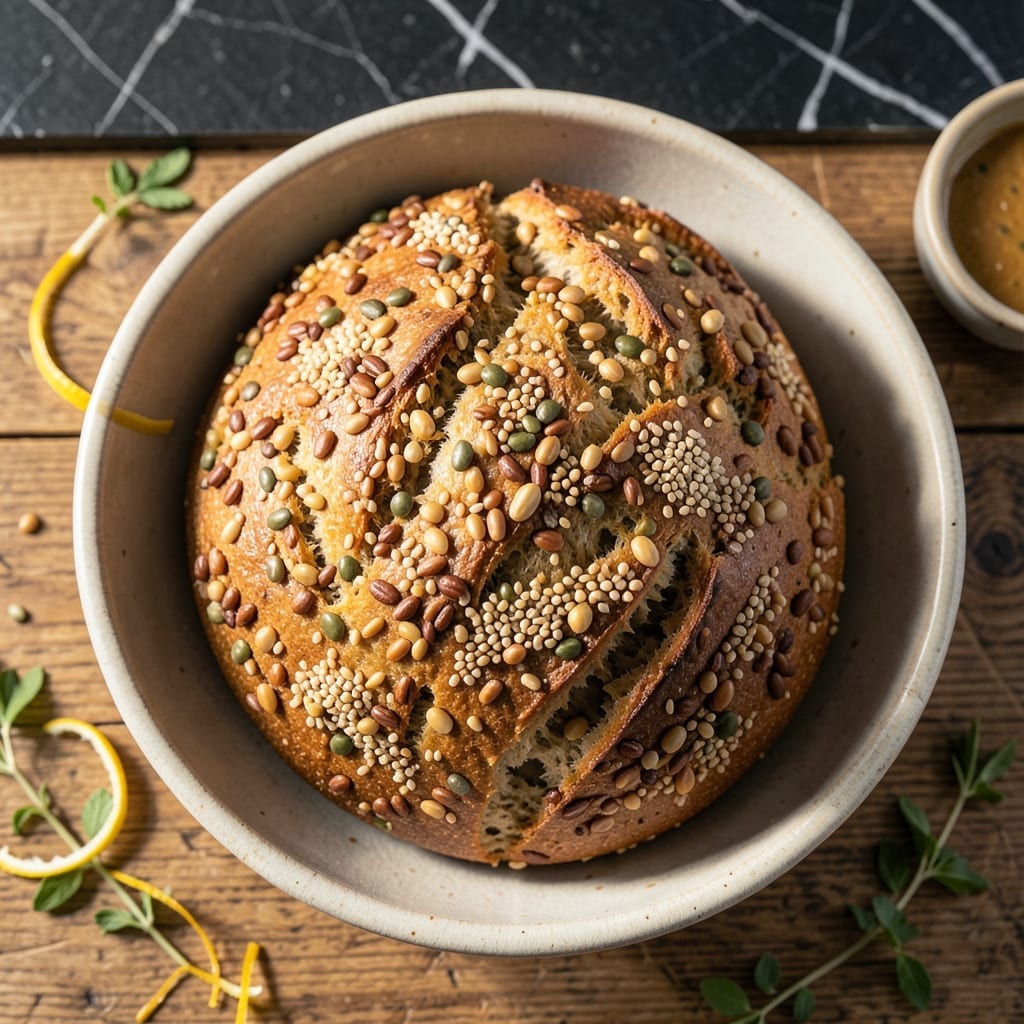
This homemade loaf transforms simple sprouted grains into a nutrient-packed bread that’s both hearty and wholesome. The process honors traditional methods while delivering a loaf with robust texture and rich flavor.
Using sprouted grains enhances digestibility and boosts nutritional value, making this bread a standout addition to any meal. The result is a dense, satisfying loaf that’s as nourishing as it is delicious.
Ingredients for Recipe for Ezekiel Bread with Sprouted Grains
Pantry raid for sprouted goodness. Dense, wholesome, and packed with nutrition.
| Ingredient | Amount | Notes |
|---|---|---|
| Sprouted Wheat Berries 🌾 | 2 cups | Rinsed and drained well |
| Sprouted Barley 🌾 | 1 cup | Rinsed and drained well |
| Sprouted Millet 🌾 | ½ cup | Rinsed and drained well |
| Sprouted Lentils 🌱 | ½ cup | Rinsed and drained well |
| Sprouted Chickpeas 🥜 | ½ cup | Rinsed and drained well |
| Sprouted Spelt 🌾 | ½ cup | Rinsed and drained well |
| Filtered Water 💧 | 1 ½ cups | Warm, for soaking grains |
| Olive Oil 🫒 | 2 tbsp | Extra-virgin for richness |
| Honey Substitute 🍁 | 2 tbsp | Maple syrup or agave |
| Sea Salt 🧂 | 1 tsp | Fine grain for even distribution |
| Active Dry Yeast 🍞 | 1 tbsp | Dissolved in warm water |
| Whole Wheat Flour 🌾 | 2 cups | For structural integrity |
[recipe_ingredient_scaler]
The sprouted grains are non-negotiable here. Whole Foods and Sprouts Farmers Market have the best selections—look for vibrant, plump grains (not shriveled or dull). I usually buy in bulk to save money, but pre-packaged works too. If you’re sprouting your own, 2-3 days is ideal for most grains. The wheat berries are the base, but the barley and millet add serious texture to the final loaf.
No sprouted grains? Unsprouted whole grains work in a pinch, but the texture won’t be as light. Out of maple syrup? Agave or date syrup at a 1:1 ratio keeps it vegan. Want a nutty twist? Swap half the spelt for sprouted quinoa. The olive oil can be any neutral oil, but the extra-virgin adds a nice depth. Yeast haters can try a sourdough starter, but that adds 12+ hours to the process.
Store sprouted grains in the freezer to extend shelf life—up to 6 months. Once baked, the loaf stays fresh for 3-4 days in a bread box or wrapped in a towel. Slice and freeze extras for toasting later—no waste, all flavor.
Why You’ll Love This Recipe
- No-Knead Magic: I just mix the sprouted grains, let the dough rise overnight, and bake—no fancy techniques or elbow grease required.
- Nutty Depth: The sprouted wheat berries and chickpeas give it this rich, earthy flavor that’s way more interesting than store-bought bread.
- Meal Prep Hero: I toast slices all week for sandwiches, avocado toasts, or even as croutons in soups. Honestly, it’s my kitchen MVP.
- Budget Stretcher: A bag of sprouted grains costs pennies per loaf, and one batch makes enough to freeze for later. I’ll be real: it’s saved me a fortune.
Step-by-Step Instructions for Ezekiel Bread with Sprouted Grains
This method ensures a dense, nutrient-rich loaf with perfect texture every time.
Step 1: Soak and Sprout the Grains
In a large bowl, combine the 2 cups Sprouted Wheat Berries, 1 cup Sprouted Barley, 0.5 cup Sprouted Millet, 0.5 cup Sprouted Lentils, 0.5 cup Sprouted Chickpeas, and 0.5 cup Sprouted Spelt. Cover with 1.5 cups Filtered Water and let soak for 8-12 hours or overnight.
You’ll notice the grains plump up significantly. Drain well and rinse thoroughly—this removes excess starch and prevents a gummy texture. Real talk: if your grains aren’t fully sprouted, the bread won’t rise as well, so don’t rush this step.
Step 2: Activate the Yeast and Mix the Dough
In a small bowl, dissolve the 1 tbsp Active Dry Yeast in ¼ cup of the Filtered Water that’s been warmed to 110°F. Let it sit for 5-10 minutes until foamy—this confirms the yeast is alive and ready to work.
In a stand mixer with a dough hook, combine the soaked grains, 2 cups Whole Wheat Flour, 1 tsp Sea Salt, 2 tbsp Olive Oil, and 2 tbsp Honey Substitute. Add the yeast mixture and mix on low for 2 minutes until everything is incorporated. The dough will be sticky, but that’s normal for this type of bread.
Step 3: First Rise and Shape the Loaf
Transfer the dough to a lightly oiled bowl, cover with a damp towel, and let it rise in a warm place for 1-2 hours or until doubled in size. I’ve found that placing it near a warm oven (turned off but still holding heat) speeds this up.
Once risen, punch down the dough to release air, then shape it into a loaf. Place it in a greased 9×5-inch loaf pan. The dough will be dense, so don’t worry if it doesn’t look like traditional bread dough—this is part of what makes Ezekiel bread unique.
Step 4: Second Rise and Bake
Cover the pan and let the dough rise again for 30-45 minutes until it’s just peeking over the rim of the pan. Preheat your oven to 350°F during the last 15 minutes of rising.
Bake the loaf for 45-50 minutes until the top is deep golden brown and the internal temperature reaches 190°F. If the top browns too quickly, tent it loosely with foil. The bread should sound hollow when tapped on the bottom.
Step 5: Cool Completely Before Slicing
Remove the loaf from the pan and let it cool on a wire rack for at least 1 hour. I know it’s tempting to slice into it right away, but cooling allows the structure to set, preventing a crumbly mess.
This bread is best enjoyed toasted or lightly warmed. It’s dense and hearty, packed with the nutty flavors of all those sprouted grains. Store it in an airtight container for up to 5 days, or freeze for longer storage.
Pro Tips For Making Recipe For Ezekiel Bread With Sprouted Grains
- Rinse Sprouted Grains: I learned this the hard way—give your sprouted wheat berries, barley, and lentils a thorough rinse before grinding to remove excess starch and prevent a gummy texture in the final loaf.
- Grind When Damp: Sounds weird, but it works: lightly pat the sprouted grains dry after rinsing but leave them slightly damp when grinding—this helps the flour clump just enough for better dough cohesion.
- Skip Over-Soaking: After burning three batches, I finally figured out that pre-soaking sprouted chickpeas too long turns them to mush—stick to a quick 10-minute soak if they seem dry, then drain immediately.
- Bake Low and Slow: Crust at 375°F for the first 15 minutes, then drop to 325°F for the remaining hour—this guarantees the dense, moist center Ezekiel bread is known for without a burnt exterior.
Make-Ahead Tips for This Recipe
Prep Sprouted Grains
Start by sprouting your grains 2-3 days ahead. I soak 2 cups wheat berries, 1 cup barley, and the rest of the grains overnight in filtered water. Rinse every 8-12 hours until tiny sprouts appear. This step is non-negotiable for that signature texture. 🌱
Pre-Mix Dry Ingredients
Combine 2 cups whole wheat flour and 1 tsp sea salt in a bowl the night before. This saves time on baking day. Store in an airtight container to keep it fresh.
Pre-Measure Wet Elements
Measure out 2 tbsp olive oil and your honey substitute (I use maple syrup) and keep them at room temperature. Cold ingredients can slow down yeast activation, so this small step ensures a smooth mixing process.
First Rise Shortcut
After mixing your dough, let it rise overnight in the fridge. This cold fermentation develops deeper flavor and works perfectly with busy schedules. In the morning, just shape and proceed with the second rise.
Freeze for Later
Baked loaves freeze beautifully for up to 3 months. Slice before freezing, then toast directly from frozen. I wrap slices in parchment and store in a ziplock bag to prevent freezer burn. ❄️
Revive Stale Bread
If your loaf loses freshness, sprinkle with water and bake at 350°F for 5-10 minutes. This trick restores moisture and brings back that just-baked taste.
Nutrition Facts
Frequently Asked Questions
Why use sprouted grains instead of regular?
Sprouted grains break down starches and increase nutrient absorption. They’re easier to digest and pack more vitamins and minerals than unsprouted grains.
Can I skip the yeast and make it sourdough?
Yes, but it adds 12+ hours to the process. Replace yeast with 1 cup active sourdough starter and extend the first rise to 8-12 hours.
How do I know when the bread is fully baked?
Check for a deep golden brown crust and internal temperature of 190°F. It should sound hollow when tapped on the bottom.
What if my dough doesn’t rise?
Ensure your yeast is fresh and water is 110°F. If grains weren’t fully sprouted, they may inhibit rising. Try again with properly sprouted grains.

Trained in classic French technique but raised on slow-cooked ribs and spicy rubs, she blends culinary skill with smoke and soul.
- Recipe for Boneless Pork Chops in Cast Iron Skillet: Sear and Baste to Juicy Perfection - October 3, 2026
- Recipe for Boneless Cross Rib Roast: Slow-Roasted Beef with Herb Crust - October 3, 2026
- Hamburgers in Sauce Recipe Crock Pot: Slow-Cooked Savory Delight - October 3, 2026