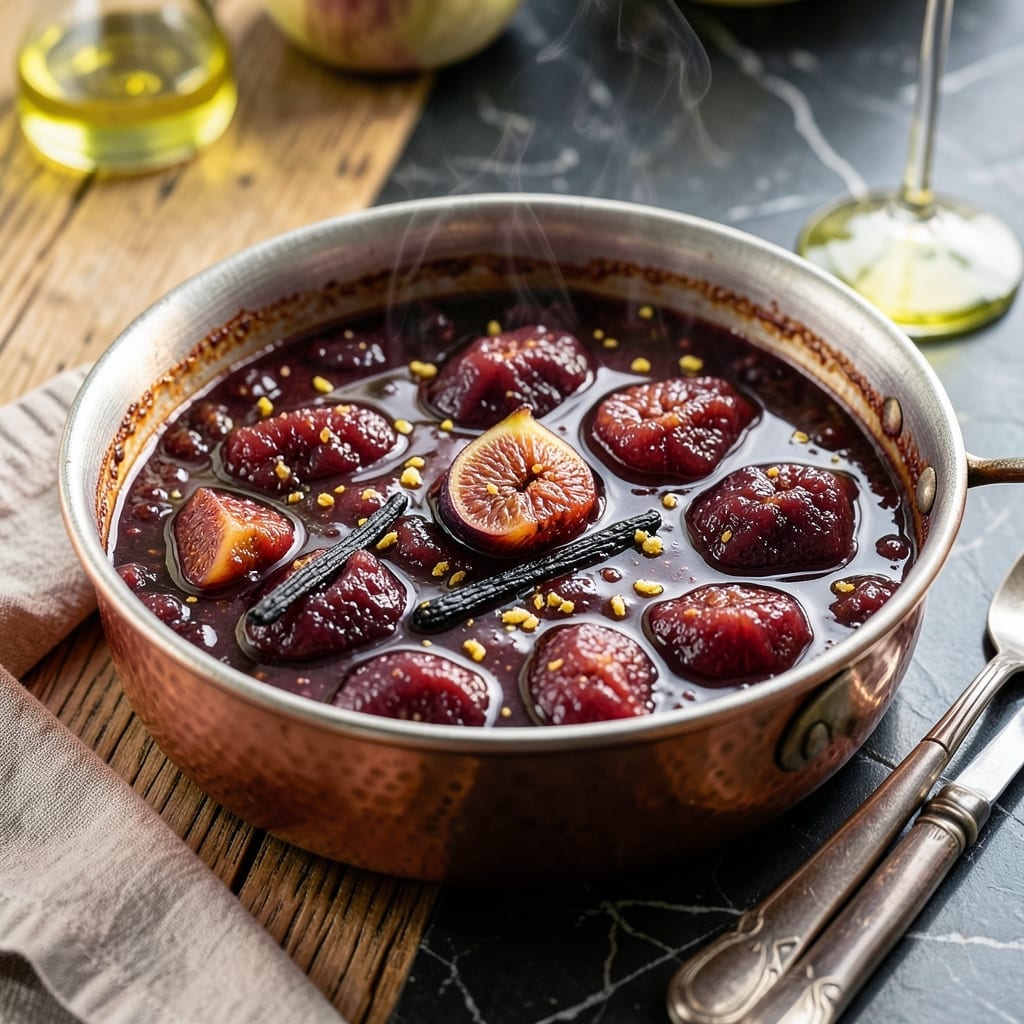
This fig jam recipe relies on natural pectin from fruit and lemon juice to achieve the perfect thick consistency without artificial additives.
The cooking process reduces the mixture to a rich, spreadable paste that captures the deep, sweet flavor of fresh figs. Store in sterilized jars for up to a year.
Ingredients for Recipe for Fig Jam Without Pectin
Natural fruit pectin and acid create thick, luscious jam without additives or preservatives.
| Ingredient | Amount | Notes |
|---|---|---|
| Fresh Figs 🍇 | 4 lb | Ripe, stems removed, chopped |
| Granulated Sugar 🍚 | 3 cups | Organic preferred for clean flavor |
| Lemon Juice 🍋 | ½ cup | Freshly squeezed for acidity |
| Lemon Zest 🍋 | 1 tbsp | Finely grated for brightness |
| Water 💧 | ½ cup | For initial cooking liquid |
| Vanilla Bean 🌿 | 1 whole | Split and scraped, or 1 tsp extract |
| Ground Cinnamon 🌿 | ½ tsp | Optional for warmth |
| Sea Salt 🧂 | ¼ tsp | Balances sweetness |
[recipe_ingredient_scaler]
The figs are everything here. Ripe Black Mission or Brown Turkey varieties have the most natural pectin—avoid underripe ones. I get mine from farmers markets in late summer when they’re abundant and cheap. The sugar isn’t just sweetener; it helps extract the pectin during cooking. Organic sugar prevents any off-flavors from processing. Don’t skip the lemon, its acid is what activates the pectin to thicken the jam naturally.
No fresh figs? Dried figs work at half the weight (soak them first in warm water to plump). Out of lemons? Lime juice at the same amount substitutes nicely, though it’ll taste slightly different. Want it spiced? Star anise or cardamom pods steeped during cooking add depth. The vanilla is optional but worth the splurge—real bean makes a noticeable difference over extract.
This keeps beautifully in sterilized jars for up to 12 months. Once opened, refrigerate and use within 1 month. The jam thickens more as it cools, so don’t overcook it—test the set on a chilled plate instead of judging by the pot.
Why You’ll Love This Recipe
- No Fuss Cooking: I just dump the figs, sugar, and a splash of lemon into one pot—no pectin, no stress.
- Sweet-Tart Magic: The lemon zest and juice cut through the figs’ sweetness in a way that’s downright addictive.
- Spread It Everywhere: I slather this on toast, swirl it into yogurt, or gift it in little jars—it never goes to waste.
- Pantry Hero: A pound of figs makes multiple jars, and honestly, it keeps for weeks in the fridge.
Step-by-Step Instructions for Fig Jam Without Pectin
This method relies on natural pectin in the fruit and acidity from citrus to achieve the perfect set.
Step 1: Prepare the Figs and Infuse Flavors
Rinse the 4 lb fresh figs and remove any stems. Chop them into small pieces—about ½-inch chunks work well. This size ensures even cooking and helps release the natural pectin as the fruit breaks down.
In a large, heavy-bottomed pot, combine the chopped figs with the 0.5 cup water and 0.5 cup lemon juice. Split the 1 whole vanilla bean, scrape out the seeds, and add both the seeds and pod to the pot. Stir in the 1 tbsp lemon zest, 0.5 tsp ground cinnamon, and 0.25 tsp sea salt. The salt enhances the sweetness and balances the flavors beautifully.
Step 2: Cook the Fruit Down to a Thick Puree
Place the pot over medium heat and bring the mixture to a gentle simmer. Stir occasionally with a wooden spoon, breaking up the figs as they soften. This should take about 15-20 minutes as the fruit releases its juices and begins to collapse.
Once the figs are completely soft and mushy, remove the vanilla bean pod. At this point, the mixture will look thin, but don’t worry—the natural pectin will activate as the sugar is added and the mixture reduces.
Step 3: Add Sugar and Reduce to Jam Consistency
Stir in the 3 cups granulated sugar until fully dissolved. Increase the heat to medium-high and bring the mixture to a rolling boil. Boil vigorously, stirring frequently to prevent sticking, for 25-35 minutes.
As the mixture thickens, it will deepen in color and develop a glossy sheen. To test for doneness, place a small spoonful on a chilled plate. If it wrinkles slightly when pushed with a finger, it’s ready. If it’s still runny, continue cooking and retest every 5 minutes.
Step 4: Jar and Seal for Long-Term Storage
Remove the pot from heat and let the jam cool for 5 minutes. Skim off any foam that has risen to the surface for a cleaner finish. Ladle the hot jam into sterilized jars, leaving ¼-inch headspace at the top.
Seal the jars with lids and process in a water bath for 10 minutes to ensure a proper seal. Alternatively, store the jam in the refrigerator for up to 3 weeks or freeze for longer storage. The flavor will continue to develop over time, becoming richer and more complex.
Pro Tips For Making Recipe For Fig Jam Without Pectin
- Cook It Low: After burning three batches, I finally figured out that a low, steady simmer is what thickens the jam naturally—no pectin needed. Keep it at a gentle bubble, not a rolling boil.
- Use Ripe Figs: My grandmother swore by this, and she was right: overripe figs break down faster and sweeten the jam better than firm ones. Skip the rock-hard ones at the store.
- Test for Doneness: Sounds weird, but it works: place a spoonful of jam on a chilled plate—if it wrinkles when pushed, it’s ready. I learned this the hard way after ending up with syrup instead of jam.
- Add Zest Last: I was skeptical until I tried it, but adding lemon zest in the last 10 minutes keeps its bright flavor from turning bitter during long cooking. The juice can go in early, though.
Essential Equipment for This Recipe
Must-Have Tools
To make a smooth and delicious fig jam without pectin, you’ll need a few key tools. A heavy-bottomed pot or saucepan (like a Le Creuset Dutch oven) ensures even heat distribution, preventing scorching. A wooden spoon or silicone spatula helps stir the mixture without scratching your cookware. 🍳
Nice-to-Have
A candy or instant-read thermometer (such as the Thermoworks MK4) helps monitor the jam’s temperature for perfect consistency. For easy jar filling, a ladle and funnel come in handy. If you plan to can your jam, a water bath canner ensures safe preservation. ✨
Budget Alternatives
No fancy tools? No problem! A sturdy stainless steel pot works just as well for cooking. A regular metal spoon can replace a wooden one, and a measuring cup doubles as a ladle for pouring. For testing doneness, use the plate test—place a spoonful on a chilled plate to check thickness. 💡
Nutrition Facts

Trained in classic French technique but raised on slow-cooked ribs and spicy rubs, she blends culinary skill with smoke and soul.
- Recipe for Boneless Pork Chops in Cast Iron Skillet: Sear and Baste to Juicy Perfection - October 3, 2026
- Recipe for Boneless Cross Rib Roast: Slow-Roasted Beef with Herb Crust - October 3, 2026
- Hamburgers in Sauce Recipe Crock Pot: Slow-Cooked Savory Delight - October 3, 2026