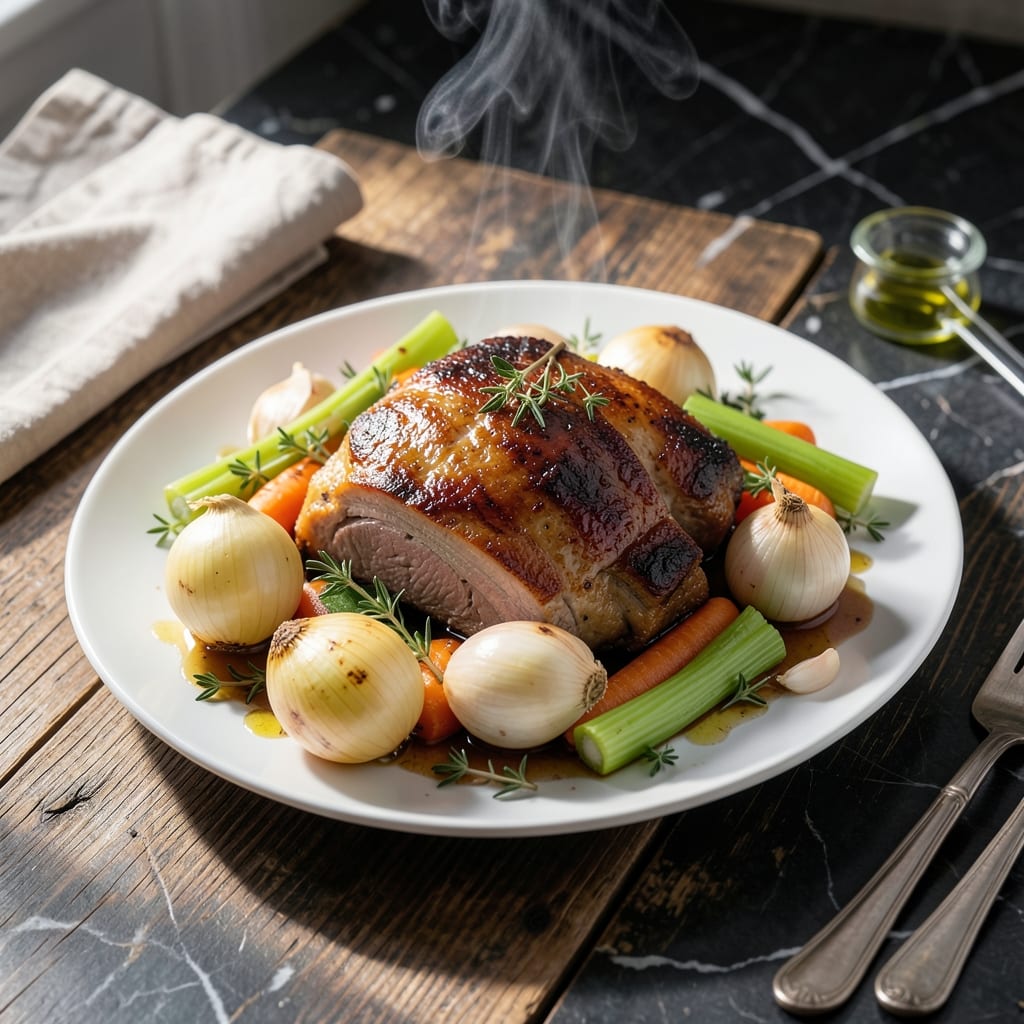
There’s a special satisfaction in transforming tough cuts of pork into fall-off-the-bone tender perfection. This slow-braised method unlocks the collagen in fresh pork hocks, creating a dish that’s rich and deeply flavorful.
The key lies in the low, steady heat that breaks down connective tissue over 3-4 hours. Aromatic vegetables and herbs infuse the meat with layers of taste while the natural gelatin creates a luxurious sauce.
What emerges from the pot is meat so tender it nearly dissolves in your mouth, surrounded by a silky, collagen-rich broth. The skin, if left on, becomes wonderfully sticky and flavorful.
Serve this traditional preparation with crusty bread or buttery mashed potatoes to soak up every last drop of the incredible sauce. The results are worth the wait.
Ingredients for Recipe for Fresh Pork Hocks
Transform tough pork hocks into tender perfection with these carefully selected ingredients.
| Ingredient | Amount | Notes |
|---|---|---|
| Fresh Pork Hocks 🐖 | 4 lb | Skin-on for sticky texture |
| Yellow Onions 🧅 | 2 whole | Large, roughly chopped |
| Carrots 🥕 | 3 whole | Peeled, cut into chunks |
| Celery Stalks 🌿 | 3 whole | Cut into 2-inch pieces |
| Garlic Cloves 🧄 | 6 cloves | Smashed, peeled |
| Fresh Thyme Sprigs 🌿 | 4 whole | Plus extra for garnish |
| Fresh Rosemary Sprigs 🌿 | 2 whole | Stems removed if desired |
| Bay Leaves 🍃 | 2 whole | Dried or fresh |
| Dry White Wine 🍷 | 1 cup | Sauvignon Blanc preferred |
| Chicken Stock 🥣 | 4 cups | Low-sodium for control |
| Tomato Paste 🍅 | 2 tbsp | For depth of flavor |
| Olive Oil 🫒 | 2 tbsp | Extra-virgin for richness |
| Kosher Salt 🧂 | 2 tsp | Diamond Crystal preferred |
| Black Peppercorns 🌶️ | 1 tsp | Freshly cracked |
[recipe_ingredient_scaler]
The pork hocks are the foundation—source skin-on hocks from a trusted butcher or Whole Foods for optimal collagen content. Look for pieces with good marbling and intact skin, as this ensures the sticky, flavorful result. Freshness is paramount; avoid any with a grayish tint or off odor. The aromatic vegetables should be organic when possible for the most vibrant flavor profile.
No white wine? Dry vermouth or apple cider vinegar with water can substitute in a pinch. If fresh herbs aren’t available, use dried at one-third the amount, though fresh will yield superior aromatics. For a deeper sauce, add 1 tbsp of balsamic vinegar toward the end of cooking. Chicken stock can be replaced with vegetable stock for a lighter finish.
This dish reheats beautifully, with flavors intensifying over 2-3 days. Store in an airtight container in the fridge for up to 5 days or freeze for 3 months. The collagen-rich broth will thicken when chilled—simply reheat gently to restore its silky texture.
Why You’ll Love This Recipe
- One Pot Wonder: I toss everything in, let it simmer, and the pork hocks practically cook themselves.
- Rich & Hearty: The garlic and slow-cooked pork create a depth of flavor that’s ridiculously good.
- Feeds the Whole Crew: I make a big batch and it’s always a hit—whether it’s Sunday dinner or a weeknight meal.
- Budget Stretcher: Honestly, pork hocks are cheap, and this dish turns them into something crave-worthy.
Step-by-Step Instructions for Slow-Braised Fresh Pork Hocks
Master this technique and you’ll transform tough cuts into fork-tender, collagen-rich perfection every time.
Step 1: Sear the Pork Hocks for Depth of Flavor
Heat the 2 tbsp Olive Oil in a large Dutch oven over medium-high heat until shimmering but not smoking. Pat the 4 lb Fresh Pork Hocks dry with paper towels to ensure proper browning—this prevents steaming and promotes a deep, caramelized crust.
Sear the hocks on all sides for 8-10 minutes total, turning occasionally, until deeply browned. You’ll know they’re ready to flip when they release easily from the pan. The skin should develop a rich mahogany color and crisp texture. Remove the hocks and set aside temporarily.
Step 2: Build the Aromatic Base
In the same pot, add the 2 whole Yellow Onions, 3 whole Carrots, and 3 whole Celery Stalks. Cook for 5-7 minutes over medium heat, stirring occasionally, until the vegetables begin to soften and develop golden edges.
Add the 6 cloves Garlic Cloves, 2 tbsp Tomato Paste, 4 whole Fresh Thyme Sprigs, 2 whole Fresh Rosemary Sprigs, and 2 whole Bay Leaves. Stir constantly for 2 minutes until the tomato paste darkens slightly and coats the vegetables. This step develops the flavor foundation for your braising liquid.
Step 3: Deglaze and Begin the Braise
Pour in the 1 cup Dry White Wine and scrape up all the browned bits from the bottom of the pot with a wooden spoon. Let the wine reduce by half, which takes about 3-4 minutes. You’ll see the liquid transform from pale to a deeper amber color as it concentrates.
Return the pork hocks to the pot along with any accumulated juices. Add the 4 cups Chicken Stock, 2 tsp Kosher Salt, and 1 tsp Black Peppercorns. The liquid should just cover the hocks—if it doesn’t, add a bit more stock. Bring the mixture to a gentle simmer over medium-high heat.
Step 4: Slow-Braise to Collagen-Rich Tenderness
Once simmering, reduce the heat to low, cover the pot, and maintain a gentle simmer. Cook for 3 to 3½ hours, turning the hocks every 45 minutes to ensure even cooking. The meat should become fork-tender and nearly falling off the bone when properly braised.
Check the hocks periodically—you’ll know they’re done when a fork slides in with no resistance and the collagen has fully rendered into the braising liquid, creating a rich, velvety sauce. The skin should be tender but still intact, and the meat should pull away from the bone easily.
Step 5: Rest and Serve
Carefully remove the pork hocks from the pot and transfer to a serving platter. Skim any excess fat from the surface of the braising liquid if desired, though I often leave it for extra richness. The sauce should coat the back of a spoon with a glossy, velvety texture.
Let the hocks rest for 10 minutes before serving to allow the juices to settle. Spoon the braising liquid and vegetables over the hocks, ensuring each serving gets plenty of the flavorful sauce. The final result should be meltingly tender meat with a luxurious, collagen-enriched sauce that clings to every bite.
Pro Tips For Making Recipe For Fresh Pork Hocks
- Parboil First: I learned this the hard way—start by simmering the hocks in salted water for 10-15 minutes before adding aromatics. It pulls out impurities and keeps your broth clean, not murky.
- Score the Skin: Use a sharp knife to make shallow cuts in the hock skin before cooking. Sounds weird, but it helps the flavors penetrate and gives you that tender, fall-off-the-bone texture.
- Skip the Rush: After burning two batches, I finally figured out low and slow is non-negotiable here. Keep the heat at a gentle simmer for at least 2-3 hours—any higher and the meat turns tough.
- Use the Veggies Twice: Strain the cooked carrots, celery, and onions from the broth, then blend them into a quick pan sauce. This isn’t the prettiest method, but it’s the tastiest way to use every bit of flavor.
Health Benefits of This Recipe
Collagen Boost
This dish is a natural collagen powerhouse—pork hocks are rich in connective tissue that breaks down during slow cooking. Each serving delivers about 10-15 grams of collagen, which supports skin elasticity, joint health, and gut integrity. I notice my hair and nails feel stronger when I eat this regularly. 💪
Protein Richness
A 4-ounce serving provides about 25 grams of high-quality protein, containing all essential amino acids. This protein is particularly valuable because it comes with the added benefits of collagen, unlike leaner cuts that lack this structural protein.
Iron and Zinc
Pork hocks are an excellent source of heme iron (about 2.5mg per serving), which is more easily absorbed by your body than plant-based iron. They also provide a substantial amount of zinc—approximately 4mg per serving—supporting immune function and metabolism.
B Vitamin Complex
You’ll get a full spectrum of B vitamins from this dish, particularly B12 and B6, which are crucial for energy production and nervous system health. A single serving covers about 30% of your daily B12 needs. I always feel energized after enjoying this meal. ✨
Low in Saturated Fat
Despite their rich flavor, pork hocks are relatively low in saturated fat compared to other cuts like ribs or belly. Most of the fat renders out during cooking, leaving you with a dish that’s indulgent in texture but not in unhealthy fats. The collagen content actually helps balance the overall fat profile.
Bone Broth Benefits
The braising liquid becomes a mineral-rich broth packed with calcium, magnesium, and phosphorus from the bones. This liquid gold supports bone health and provides electrolytes for hydration. I always sip a little extra from the pot—it’s that nourishing. 💛
Nutrition Facts
Frequently Asked Questions
How do I know when the hocks are done?
The meat is ready when it pulls away from the bone easily with a fork after about 3-3½ hours. The collagen should have fully rendered into the sauce, giving it a silky texture.
Can I use a slow cooker instead of a Dutch oven?
Yes! Brown the hocks first, then cook on low for 6-8 hours or high for 4-5 hours. The results will be just as tender, though the sauce may be less reduced.
Should I remove the skin before cooking?
No, leaving the skin on creates a sticky, flavorful texture. It also helps hold the meat together during the long braise. The skin softens beautifully and absorbs the braising liquid.
What if my sauce is too thin?
Simmer uncovered for 10-15 minutes after removing the hocks to reduce and thicken it. The collagen will naturally create a glossy, velvety consistency as it cools.

Trained in classic French technique but raised on slow-cooked ribs and spicy rubs, she blends culinary skill with smoke and soul.
- Smoked Whitefish Recipe: Wood-Fired Flakes with Herbed Butter Drizzle - October 15, 2026
- Smoked Teriyaki Beef Jerky Recipe: Umami-Deep Flavor in Every Chewy Bite - October 15, 2026
- Stewed Beef Brisket Recipe: Deep-Rich Flavor After 8 Hours of Slow Simmering - October 15, 2026