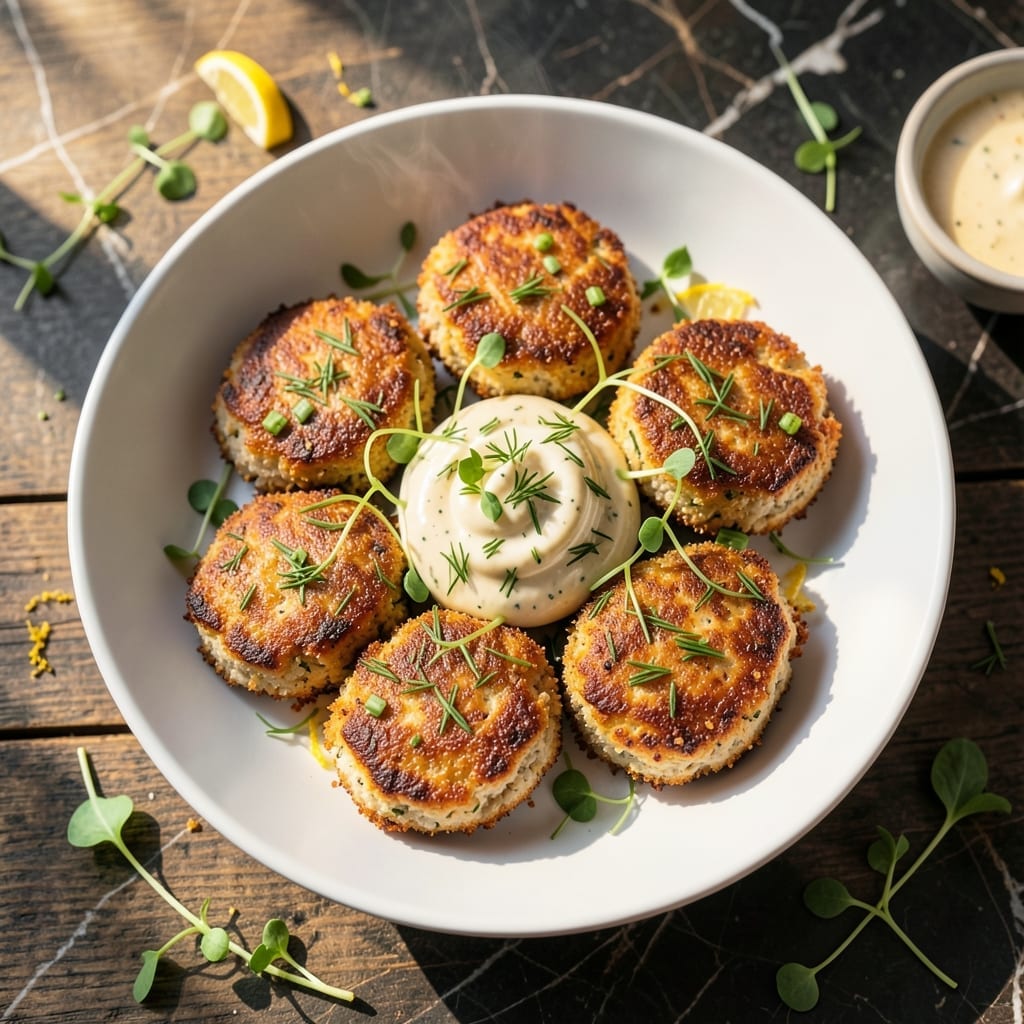
Achieving the perfect balance of crispy exterior and flaky interior in salmon patties is an art I’ve mastered through years of testing. This method ensures each bite delivers texture and flavor without compromise.
With a few simple ingredients and precise technique, you’ll create patties that hold together beautifully while maintaining the salmon’s natural tenderness. The result is a dish that’s both satisfying and approachable.
Ingredients for Recipe for Fried Salmon Patties
A handful of fresh ingredients transform into patties with crispy edges and flaky centers.
| Ingredient | Amount | Notes |
|---|---|---|
| Fresh Salmon Fillets 🐟 | 1 ½ lb | Skinless, boneless, finely chopped |
| Panko Breadcrumbs 🍞 | 1 cup | Japanese-style for extra crispiness |
| Large Egg 🥚 | 1 whole | Beaten, binds patties together |
| Dijon Mustard 🟡 | 2 tbsp | Adds tangy depth of flavor |
| Fresh Dill 🌿 | ¼ cup | Finely chopped, stems removed |
| Green Onions 🧅 | ½ cup | Thinly sliced, white and green parts |
| Lemon Zest 🍋 | 1 tbsp | Freshly grated for brightness |
| Worcestershire Sauce 🫒 | 1 tbsp | Adds umami complexity (use vegan if strict) |
| Mayonnaise 🥛 | ¼ cup | Full-fat for richness and moisture |
| Old Bay Seasoning 🌶️ | 1 tsp | Classic seafood seasoning blend |
| Salt 🧂 | ½ tsp | Diamond Crystal kosher preferred |
| Black Pepper 🌶️ | ½ tsp | Freshly ground for best flavor |
| All-Purpose Flour 🌾 | 2 tbsp | For dredging, helps with browning |
| Vegetable Oil 🫒 | ½ cup | For frying, high smoke point |
| Lemon Wedges 🍋 | 4 pieces | For serving, fresh squeeze |
[recipe_ingredient_scaler]
The salmon is the foundation here. Wild-caught sockeye or coho fillets yield the best texture and flavor (avoid farmed Atlantic for this). Purchase from a trusted fishmonger like Whole Foods or a local seafood market, ensuring the fillets are bright, odor-free, and firm to the touch. For convenience, pre-chopped salmon is available at some Costco locations, though fresh fillets allow you to control the grind size for the ideal flaky interior.
No fresh dill? Dried dill at half the amount works, or substitute with fresh parsley or tarragon. Mayonnaise can be swapped for Greek yogurt if you prefer a lighter option. Panko breadcrumbs are non-negotiable for achieving that golden, crispy exterior, but regular breadcrumbs in a pinch will do. The Dijon mustard can be replaced with whole-grain mustard for a coarser texture.
Salmon patties are best enjoyed fresh but can be refrigerated in an airtight container for up to 2 days. Reheat in a skillet over medium heat to restore crispiness. For longer storage, freeze uncooked patties on a baking sheet, then transfer to a freezer bag for up to 1 month.
Why You’ll Love This Recipe
- One Bowl Wonder: I mix everything right in the same bowl—salmon, panko, egg, mustard—and straight to the pan. No extra dishes, no fuss.
- Crispy, Zesty Bite: That panko crust gets golden and crunchy, while the Dijon and fresh dill give it this bright, herby kick.
- Family Approved: My picky nephew devours these, and honestly, they’re just as good cold in a sandwich the next day.
- Stretches the Budget: Fresh salmon feels fancy, but a little goes a long way here. One fillet makes four solid patties.
Step-by-Step Instructions for Fried Salmon Patties
Master the technique for achieving a crispy exterior while keeping the interior tender and flaky.
Step 1: Prepare and Mix the Salmon Base
Finely chop the 1.5 lb fresh salmon fillets into small, even pieces—this ensures uniform texture throughout the patties. In a large mixing bowl, combine the chopped salmon with 0.25 cup mayonnaise, 2 tbsp Dijon mustard, 1 tbsp Worcestershire sauce, 1 tbsp lemon zest, 0.25 cup fresh dill, 0.5 cup green onions, 1 tsp Old Bay seasoning, 0.5 tsp salt, and 0.5 tsp black pepper.
Mix gently but thoroughly to avoid breaking down the salmon too much. The goal is to maintain some texture for that promised flaky center. Over-mixing will result in dense, paste-like patties rather than the light, tender ones we’re aiming for.
Step 2: Bind and Form the Patties
Add the 1 whole large egg and 1 cup panko breadcrumbs to the salmon mixture. The egg acts as the binder, while the panko adds structure and ensures a crispy exterior. Fold everything together just until combined—you should still see flecks of salmon.
Divide the mixture into 4 equal portions and shape them into patties about 1-inch thick. Press gently to compact them, but don’t overwork the mixture. Place the formed patties on a plate and refrigerate for 15 minutes to firm up. This resting period helps them hold their shape during frying.
Step 3: Dredge and Fry to Golden Perfection
Spread the 2 tbsp all-purpose flour on a plate and lightly dredge each patty, shaking off any excess. The flour creates a thin, even coating that promotes browning and adds an extra layer of crispiness.
Heat the 0.5 cup vegetable oil in a large skillet over medium-high heat until it shimmers but doesn’t smoke. Carefully place the patties in the hot oil, leaving space between them to avoid crowding the pan. Fry for 4-5 minutes per side until they’re golden brown and crispy on the outside. The internal temperature should reach 145°F for perfectly cooked salmon.
Use a slotted spatula to transfer the patties to a paper towel-lined plate to drain excess oil. The patties should hold their shape well and have a beautiful, even golden crust.
Step 4: Serve Immediately with Bright Finishes
Serve the salmon patties hot, straight from the skillet. The contrast between the crispy exterior and the flaky, tender interior is at its peak when served immediately. Garnish with the 4 pieces lemon wedges for a bright, citrusy finish that cuts through the richness.
For best results, don’t let the patties sit too long after frying. The residual heat will continue cooking them slightly, and the crust may soften if left to cool. Each bite should deliver that perfect balance of crispy, golden edges and moist, flaky salmon within.
Pro Tips For Making Recipe For Fried Salmon Patties
- Chill the Mixture: After mixing the salmon with egg, panko, and dill, let it rest in the fridge for 15-20 minutes. I learned this the hard way—it keeps the patties from falling apart in the pan.
- Skip Wet Salmon: Pat the fresh fillets very dry with paper towels before flaking. My grandmother swore by this, and she was right: excess moisture makes the patties gummy, not crisp.
- Medium Heat Only: Cranking the heat too high burns the panko before the salmon cooks through. About 350°F in the pan guarantees a golden crust without a raw center.
- Use Cold Oil: Add the patties to cold oil, then turn the heat to medium. Sounds weird, but it works: the patties start cooking slowly, so the crust sets evenly without scorching.
Essential Equipment for Perfect Results
Quality Skillet
Invest in a heavy-bottomed cast iron skillet—I swear by my Lodge 12-inch for even heat distribution. Cast iron retains heat beautifully, ensuring your patties cook uniformly without hot spots. The natural non-stick surface develops over time, making it perfect for frying. 🔥
Precision Thermometer
A digital instant-read thermometer is essential for checking the salmon’s internal temperature. I use a ThermoWorks ThermoPop to ensure the patties reach 145°F without overcooking. This small tool makes a huge difference in achieving consistent results.
Mixing Bowls
Use a large stainless steel mixing bowl for combining your ingredients. Stainless steel is durable, easy to clean, and won’t absorb odors. A 3-quart bowl gives you plenty of room to mix the salmon mixture without making a mess.
Slotted Spatula
A sturdy slotted spatula is key for flipping patties and draining excess oil. I prefer one with a thin, flexible edge to slide easily under the patties. Look for a spatula with a heat-resistant handle for safety and comfort.
Paper Towels
Keep high-quality paper towels on hand for draining the fried patties. The thick, absorbent kind works best to soak up excess oil without falling apart. Place them on a plate or wire rack to catch any drips.
Cooling Rack
For the crispiest results, transfer patties to a wire cooling rack after frying. This allows air to circulate around the patties, preventing them from becoming soggy. A rack also helps any remaining oil drip away from the patties.
Nutrition Facts
Frequently Asked Questions
Can I use canned salmon instead of fresh?
Yes! Drain and flake 14.75 oz canned salmon (about 2 cans) as a substitute. Canned works well and is more budget-friendly. Just ensure it’s boneless, skinless salmon for the best texture.
How do I prevent patties from falling apart?
Chill the mixture for 15 minutes before frying, and avoid over-handling when shaping. The egg and panko act as binders, but resting is key for stability. Also, don’t flip too soon—wait until edges look set.
What oil works best for frying?
Use oils with a high smoke point like vegetable, canola, or peanut oil. Heat to medium-high and ensure it’s shimmering before adding patties. Avoid olive oil—it can burn at frying temps.
Can I bake instead of fry?
For a lighter option, bake at 400°F for 12-15 minutes per side on a lined tray. Brush with oil for crispiness. The texture will be slightly different but still delicious.

Trained in classic French technique but raised on slow-cooked ribs and spicy rubs, she blends culinary skill with smoke and soul.
- Recipe for Boneless Pork Chops in Cast Iron Skillet: Sear and Baste to Juicy Perfection - October 3, 2026
- Recipe for Boneless Cross Rib Roast: Slow-Roasted Beef with Herb Crust - October 3, 2026
- Hamburgers in Sauce Recipe Crock Pot: Slow-Cooked Savory Delight - October 3, 2026