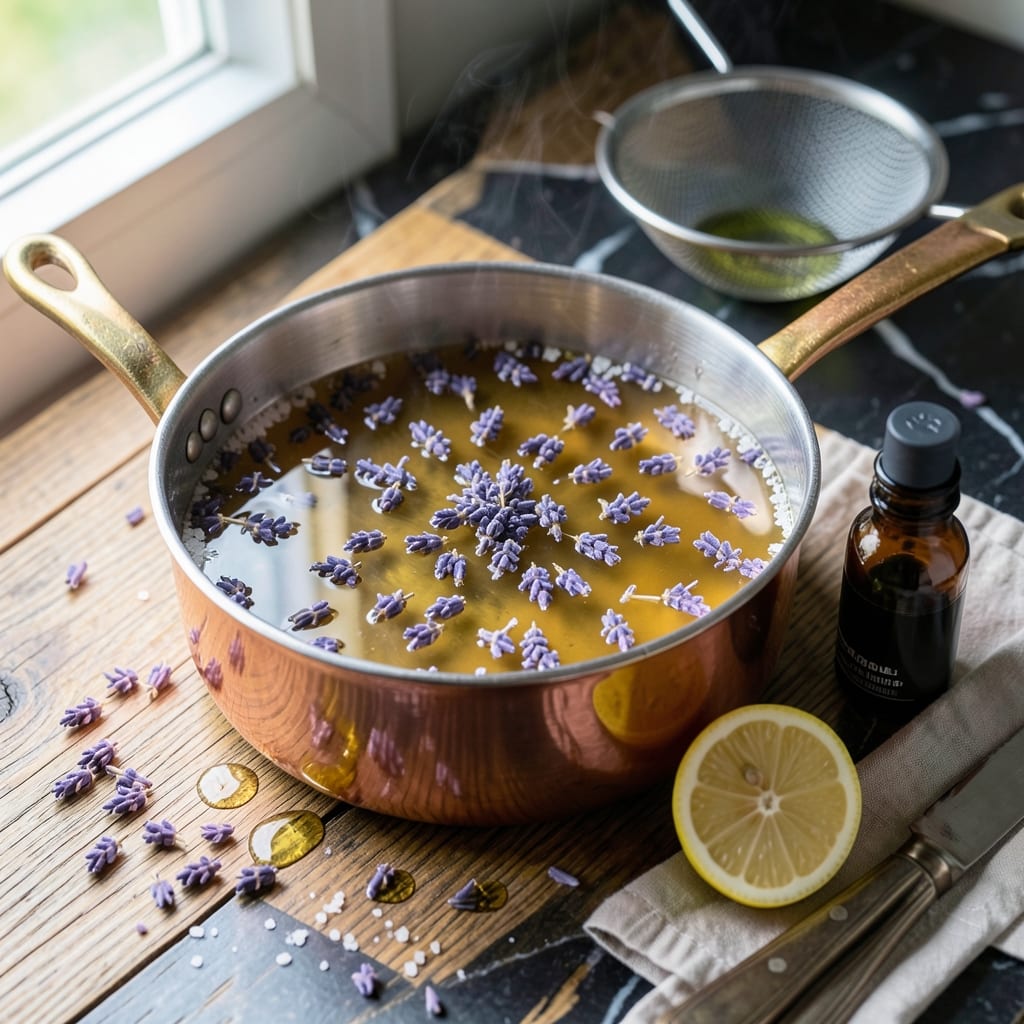
This floral syrup transforms ordinary drinks into extraordinary experiences with just a few simple ingredients. I’ve refined the technique to extract maximum lavender flavor without bitterness, ensuring a perfectly balanced sweetness every time.
The process is straightforward: combine equal parts sugar and water, steep with dried lavender, then strain. The result is a versatile syrup that enhances cocktails, teas, or desserts with its delicate aroma and subtle floral notes.
Use it to elevate lemonades, drizzle over fruit, or mix into sparkling water for a refreshing twist. Its simple preparation belies the depth of flavor it adds to any creation.
Store in the fridge for up to a month, and enjoy the convenience of having this elegant syrup on hand for any occasion.
Ingredients for Recipe for Lavender Simple Syrup
Five ingredients create this elegant floral syrup with balanced sweetness and delicate aroma.
| Ingredient | Amount | Notes |
|---|---|---|
| Dried Culinary Lavender Buds 🌸 | 2 tbsp | Food-grade, not ornamental |
| Granulated White Sugar 🍚 | 1 cup | Fine grain for quick dissolving |
| Filtered Water 💧 | 1 cup | Cold or room temperature |
| Lemon Juice 🍋 | ½ tsp | Freshly squeezed, optional |
| Pure Vanilla Extract 🌿 | ¼ tsp | Optional for depth |
[recipe_ingredient_scaler]
Culinary lavender is non-negotiable—ornamental varieties taste soapy and ruin the syrup. Find food-grade buds at specialty spice shops like Penzeys or online at Amazon. The sugar should be fine granulated white (organic if preferred) for clean dissolution. Filtered water prevents any off-flavors from tap minerals. For the optional vanilla, pure extract adds complexity without overpowering the lavender.
No culinary lavender? Skip the recipe—dried rose petals at half the amount work in a pinch but yield different floral notes. Swap white sugar for raw cane if you prefer, though it may darken the syrup slightly. The lemon juice (if using) should be fresh—bottled lacks brightness. For a richer profile, vanilla bean paste can replace extract, using the seeds from half a pod.
Strain and store in a clean glass bottle with a tight seal. Keeps beautifully in the fridge for up to 1 month. The flavor intensifies over 2-3 days, so let it rest before using. Freezing isn’t recommended—it can separate and lose its delicate aroma.
Why You’ll Love This Recipe
- One Pot Wonder: I just dump the lavender, sugar, and water in a saucepan—no fancy steps, no fuss.
- Floral Magic: The vanilla and lemon juice balance the lavender so it’s fragrant but never soapy.
- Cocktail Upgrade: Honestly, it turns my basic iced tea or gin fizz into something cafe-worthy.
- Keeps for Weeks: I make a big batch and it stays fresh in the fridge, ready for impromptu baking or drinks.
Step-by-Step Instructions for Lavender Simple Syrup
This straightforward method ensures perfect infusion without overpowering floral notes or bitterness.
Step 1: Bloom the Dried Culinary Lavender Buds
In a small saucepan, combine the 2 tbsp Dried Culinary Lavender Buds with the 1 cup Filtered Water. Place over medium heat and warm until the water just begins to simmer—you’ll see tiny bubbles forming at the edges but not a rolling boil.
Remove from heat immediately once simmering begins. Cover the pan and let the lavender steep for 15-20 minutes. This gentle heat extraction prevents the lavender from releasing bitter tannins while fully infusing its aromatic compounds into the water. The liquid should turn a pale, translucent lavender hue.
Step 2: Strain and Prepare the Sugar Base
After steeping, pour the lavender-infused water through a fine-mesh sieve into a clean saucepan, pressing gently on the lavender buds to extract all liquid. Discard the spent buds—they’ve given up all their flavor. Add the 1 cup Granulated White Sugar to the infused water.
The fine grain of the sugar ensures rapid dissolution. Stir the mixture until the sugar is mostly dissolved before returning to heat. This prevents hot spots that could cause the sugar to caramelize unevenly at the bottom of the pan.
Step 3: Simmer to Syrup Consistency
Return the saucepan to medium-low heat and bring to a gentle simmer. Cook for 5-7 minutes, stirring occasionally, until the sugar is completely dissolved and the mixture has slightly thickened. You’re looking for a consistency that coats the back of a spoon but still flows readily.
Watch for the syrup to become clear with a faint lavender tint. If any sugar crystals remain on the sides of the pan, use a wet pastry brush to dissolve them. This prevents the syrup from crystallizing during storage.
Step 4: Finish and Cool the Syrup
Remove from heat and stir in the 0.5 tsp Lemon Juice and 0.25 tsp Pure Vanilla Extract if using. The lemon juice brightens the floral notes, while the vanilla adds depth to the aroma. Both are optional but recommended for complexity.
Let the syrup cool to room temperature, about 30 minutes. As it cools, it will thicken slightly more. Transfer to a clean glass bottle or jar with a tight-fitting lid. The syrup will keep in the refrigerator for up to 1 month, with flavors intensifying slightly over time.
Pro Tips For Making Recipe For Lavender Simple Syrup
- Steep Off Heat: Once the sugar dissolves, remove from heat before adding lavender buds—boiling them directly makes the syrup bitter. I learned this the hard way after ruining two batches with over-extracted floral notes.
- Use Culinary Lavender: Skip the ornamental stuff and spring for food-grade dried lavender buds. After one disappointing attempt with cheap potpourri lavender, I finally understood why the label matters.
- Strain Twice: Pour the syrup through a fine-mesh sieve first, then again through cheesecloth or a coffee filter. It’s tedious, but it guarantees no gritty bits ruin your drink’s texture.
- Add Vanilla Last: Stir in the vanilla extract after straining and cooling slightly—high heat can mute its flavor. Sounds weird, but it works: the vanilla stays bright and aromatic instead of baking into the syrup.
Common Mistakes When Making This Dish
Wrong Lavender Choice
Using ornamental lavender instead of culinary-grade buds is the most common mistake. Ornamental varieties contain higher camphor, creating soapy, bitter flavors that ruin your syrup. I learned this the hard way—always check the label for food-grade certification. 🌸
Overheating the Water
Boiling water extracts bitter tannins from lavender, turning your syrup harsh. Keep the heat at a gentle simmer (tiny bubbles at edges) when steeping. Remove from heat immediately once simmering begins, then cover to trap the aromatic oils.
Insufficient Steeping Time
Rushing the steeping process results in weak, underdeveloped flavor. Give the lavender 15-20 minutes off-heat to fully infuse. The water should turn pale lavender—if it’s still clear, steep longer. I often set a timer to avoid forgetting.
Skipping the Strain
Leaving lavender buds in the syrup creates an unpleasant texture and can make the flavor turn bitter over time. Always strain through a fine-mesh sieve, pressing gently to extract all liquid. Discard the spent buds—they’ve given all their flavor.
Overcooking the Syrup
After adding sugar, cook only until dissolved and slightly thickened (5-7 minutes). Overcooking caramelizes the sugar, darkening the syrup and altering its delicate floral notes. Watch for a consistency that coats a spoon but still flows freely. 💡
Improper Storage
Storing in metal containers can react with the acidity, affecting flavor. Use glass bottles or jars with tight lids. Keep refrigerated for up to 1 month—the flavors deepen beautifully over 2-3 days but degrade after a month.
Nutrition Facts
Frequently Asked Questions
Can I use fresh lavender instead of dried?
Yes, but use 3-4 tbsp fresh buds for every 2 tbsp dried, as fresh contains more water. Ensure it’s culinary-grade to avoid soapy flavors.
How long does it take to make?
Total time is about 45 minutes, including 15-20 minutes steeping and 30 minutes cooling. Active prep is under 10 minutes.
What’s the best way to use this syrup?
Drizzle over desserts, sweeten teas, or mix into cocktails like lavender lemonade. A little goes a long way—start with 1 tbsp per serving.
Why did my syrup turn bitter?
Bitterness usually means overheating or using non-culinary lavender. Keep heat gentle and always use food-grade buds.

Trained in classic French technique but raised on slow-cooked ribs and spicy rubs, she blends culinary skill with smoke and soul.
- Recipe for Boneless Pork Chops in Cast Iron Skillet: Sear and Baste to Juicy Perfection - October 3, 2026
- Recipe for Boneless Cross Rib Roast: Slow-Roasted Beef with Herb Crust - October 3, 2026
- Hamburgers in Sauce Recipe Crock Pot: Slow-Cooked Savory Delight - October 3, 2026