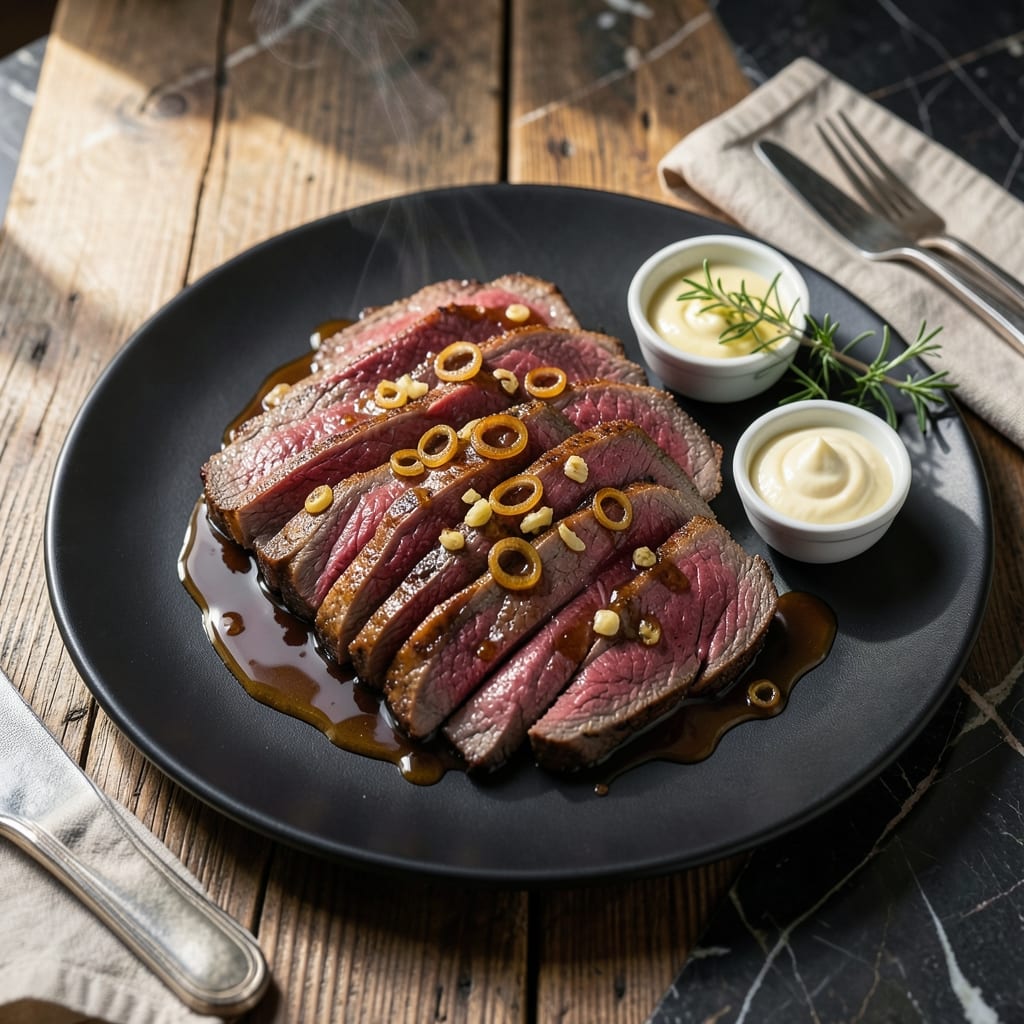
Last night’s filet mignon doesn’t have to be a one-time indulgence. I’ve spent years perfecting ways to transform premium leftovers into meals that taste even better the second time around.
This approach turns tender beef into new creations without losing its luxurious texture. Whether sliced thin for sandwiches or cubed for quick stir-fries, the key is gentle reheating to preserve that melt-in-your-mouth quality.
You’ll create dishes that feel restaurant-worthy with minimal effort. The secret lies in treating the leftover steak as a high-quality ingredient, not an afterthought.
From hearty salads to elegant beef stroganoff, these methods ensure your investment in quality meat keeps paying off through delicious reinventions.
Ingredients for Recipe for Leftover Filet Mignon
Transform last night’s luxury into today’s masterpiece with these quality ingredients.
| Ingredient | Amount | Notes |
|---|---|---|
| Leftover Filet Mignon 🥩 | 1 ½ lb | Sliced thin or cubed |
| Unsalted Butter 🧈 | 3 tbsp | For gentle reheating |
| Shallots 🧅 | 2 whole | Finely minced for depth |
| Garlic Cloves 🧄 | 3 cloves | Minced for aromatic base |
| Beef Stock 💧 | 1 cup | Low-sodium preferred |
| Dijon Mustard 🟡 | 2 tbsp | For tangy richness |
| Heavy Cream 🥛 | ½ cup | Full-fat for creaminess |
| Fresh Thyme Sprigs 🌿 | 4 sprigs | Leaves stripped |
| Dry Red Wine 🍷 | ½ cup | Bold variety preferred |
| Worcestershire Sauce 🍶 | 1 tbsp | For umami depth |
| Kosher Salt 🧂 | 1 tsp | Diamond Crystal preferred |
| Freshly Ground Black Pepper 🌶️ | ½ tsp | Coarse grind ideal |
| All-Purpose Flour 🌾 | 1 tbsp | For thickening sauce |
| Baby Spinach Leaves 🥬 | 4 cups | Packed, for serving |
| Crusty Bread 🍞 | 4 slices | For serving alongside |
[recipe_ingredient_scaler]
The filet mignon is the star here—use leftovers within 24-48 hours for peak texture. Slice against the grain for tenderness, or cube for stir-fries. Whole Foods or Costco often have pre-sliced options if you’re starting fresh. Butter quality matters too; Plugrá or Kerrygold are my go-to brands for that rich, European-style flavor that complements the beef beautifully.
No beef stock? Low-sodium chicken stock works in a pinch, but stick to beef for depth. Swap shallots for yellow onions (use half the amount), and dried thyme can replace fresh at one-third the quantity. For a non-alcoholic version, beef broth with a splash of balsamic vinegar mimics wine’s complexity. The Worcestershire is non-negotiable—it’s doing heavy lifting for umami.
Store leftovers in an airtight container for up to 3 days in the fridge. Reheat gently in a skillet with a splash of stock to prevent drying out. This dish doesn’t freeze well—best enjoyed fresh. Serve with crusty bread to soak up every last drop of sauce.
Why You’ll Love This Recipe
- One Pan Magic: I just melt butter, sauté shallots, and let the filet soak up that garlic-beef stock goodness—hardly any cleanup.
- Ridiculously Rich: The butter and shallots turn those leftover slices into something even better than the first meal.
- Fancy in Minutes: I serve this to guests who think I slaved for hours. (Spoiler: it’s ready before the wine breathes.)
- Zero Waste Win: That pricey filet doesn’t go to waste—this turns last night’s leftovers into tonight’s highlight.
Step-by-Step Instructions for Leftover Filet Mignon
Transform your leftovers into a restaurant-worthy dish with these foolproof techniques.
Step 1: Sear the Leftover Filet Mignon
Slice the 1.5 lb leftover filet mignon thin or cube it for even reheating. Heat a large skillet over medium-high heat and add 1 tbsp of the 3 tbsp unsalted butter. Once the butter foams, add the filet mignon in a single layer, being careful not to overcrowd the pan.
Sear for 1-2 minutes per side until just warmed through and lightly browned. The goal is to revive the meat without overcooking it. Transfer the filet mignon to a plate and tent with foil to keep warm. The residual heat in the skillet will carry over to the next steps.
Step 2: Build the Aromatic Base
In the same skillet, add the remaining 2 tbsp unsalted butter and reduce heat to medium. Add the 2 whole shallots, finely minced, and cook for 2-3 minutes until soft and translucent. Stir in the 3 cloves garlic cloves, minced, and the leaves from the 4 sprigs fresh thyme sprigs.
Cook for another 30 seconds until the garlic is fragrant but not browned. This aromatic base is the flavor foundation of the sauce, so take your time to develop the flavors properly. Sprinkle the 1 tbsp all-purpose flour over the mixture and stir to combine, cooking for 1 minute to remove the raw flour taste.
Step 3: Deglaze and Create the Pan Sauce
Pour in the 0.5 cup dry red wine and 1 tbsp Worcestershire sauce, scraping up any browned bits from the bottom of the skillet with a wooden spoon. This deglazing step captures all the concentrated flavors from searing the filet mignon. Let the wine simmer for 2-3 minutes until reduced by half.
Add the 1 cup beef stock, 2 tbsp Dijon mustard, 1 tsp kosher salt, and 0.5 tsp freshly ground black pepper. Stir well to combine and bring to a gentle simmer. Let the sauce cook for 5 minutes until it begins to thicken and coat the back of a spoon.
Step 4: Finish with Cream and Serve
Reduce the heat to medium-low and stir in the 0.5 cup heavy cream. Simmer for another 2-3 minutes until the sauce is smooth and has a rich, velvety texture. Return the filet mignon to the skillet and spoon the sauce over it, ensuring each piece is well-coated.
Cook for an additional 1-2 minutes to heat everything through. Divide the 4 cups baby spinach leaves among serving plates and top with the filet mignon and sauce. Serve immediately with the 4 slices crusty bread on the side to soak up every last bit of the delicious pan sauce.
Pro Tips For Making Recipe For Leftover Filet Mignon
- Slice Against Grain: Cut the leftover filet into thin slices against the grain before reheating—this keeps the meat tender instead of chewy. I learned this the hard way after ruining a perfectly good steak by slicing it the wrong way.
- Low and Slow Reheat: Warm the filet gently in a skillet with butter over medium-low heat for 2-3 minutes per side. High heat will turn your expensive leftovers into tough, dry disappointment.
- Deglaze with Stock: After reheating the filet, pour in beef stock to lift those browned bits from the pan—this adds depth to any sauce you make. Skip this and you’re wasting flavor.
- Butter at the End: Stir in cold unsalted butter off the heat for a silky finish to your pan sauce. Adding it too early can cause the butter to separate, and nobody wants a greasy mess.
Dietary Considerations for This recipe for leftover filet mignon
Gluten-Free Adaptation
This dish is naturally gluten-free if you swap the all-purpose flour for cornstarch—use 1 tbsp mixed with 1 tbsp cold water as a slurry. I tested this with my gluten-sensitive sister, and she couldn’t tell the difference. The sauce thickens beautifully without compromising texture. 💪
Dairy-Free Option
Replace the unsalted butter with olive oil and swap heavy cream for full-fat coconut milk. The coconut adds a subtle sweetness that pairs surprisingly well with beef. I use Native Forest brand for the richest flavor.
Low-Carb Friendly
Skip the crusty bread and serve over cauliflower mash or zucchini noodles instead. The sauce is already low-carb with only 1 tbsp flour in the entire recipe. I’ve served this to keto friends who raved about it.
Lower-Sodium Approach
Use low-sodium beef stock and reduce the kosher salt by half. The Worcestershire sauce and Dijon mustard still provide plenty of flavor. I often make this adjustment for my parents, who watch their sodium intake.
Paleo Adjustments
For paleo, replace the all-purpose flour with arrowroot powder and use ghee instead of butter. Serve with roasted vegetables instead of bread. I’ve tested this version multiple times—it holds up perfectly.
Nut Allergy Note
This dish is naturally nut-free, but always check your beef stock and Worcestershire sauce labels. Some brands process in facilities with nuts. I recommend Annie’s beef stock for allergy-safe cooking. ✨
Nutrition Facts
Frequently Asked Questions
How do I reheat the filet without drying it out?
Use a skillet over medium-low heat with a splash of beef stock. Sear for only 1-2 minutes per side to warm through gently. This preserves the meat’s tenderness and juiciness.
Can I use a different cut of beef?
Yes, but stick to tender cuts like ribeye or sirloin. Avoid leaner options like flank steak, as they won’t hold up as well to reheating. The method works best with well-marbled beef.
What’s the best way to slice leftover steak?
Always slice against the grain into thin strips. This shortens muscle fibers, making each bite more tender. For stir-fries, cut into 1-inch cubes for even cooking.
How long will the dish keep in the fridge?
Store leftovers in an airtight container for up to 3 days. Reheat gently on the stovetop with a little extra stock to revive the sauce.

Trained in classic French technique but raised on slow-cooked ribs and spicy rubs, she blends culinary skill with smoke and soul.
- Smoked Whitefish Recipe: Wood-Fired Flakes with Herbed Butter Drizzle - October 15, 2026
- Smoked Teriyaki Beef Jerky Recipe: Umami-Deep Flavor in Every Chewy Bite - October 15, 2026
- Stewed Beef Brisket Recipe: Deep-Rich Flavor After 8 Hours of Slow Simmering - October 15, 2026