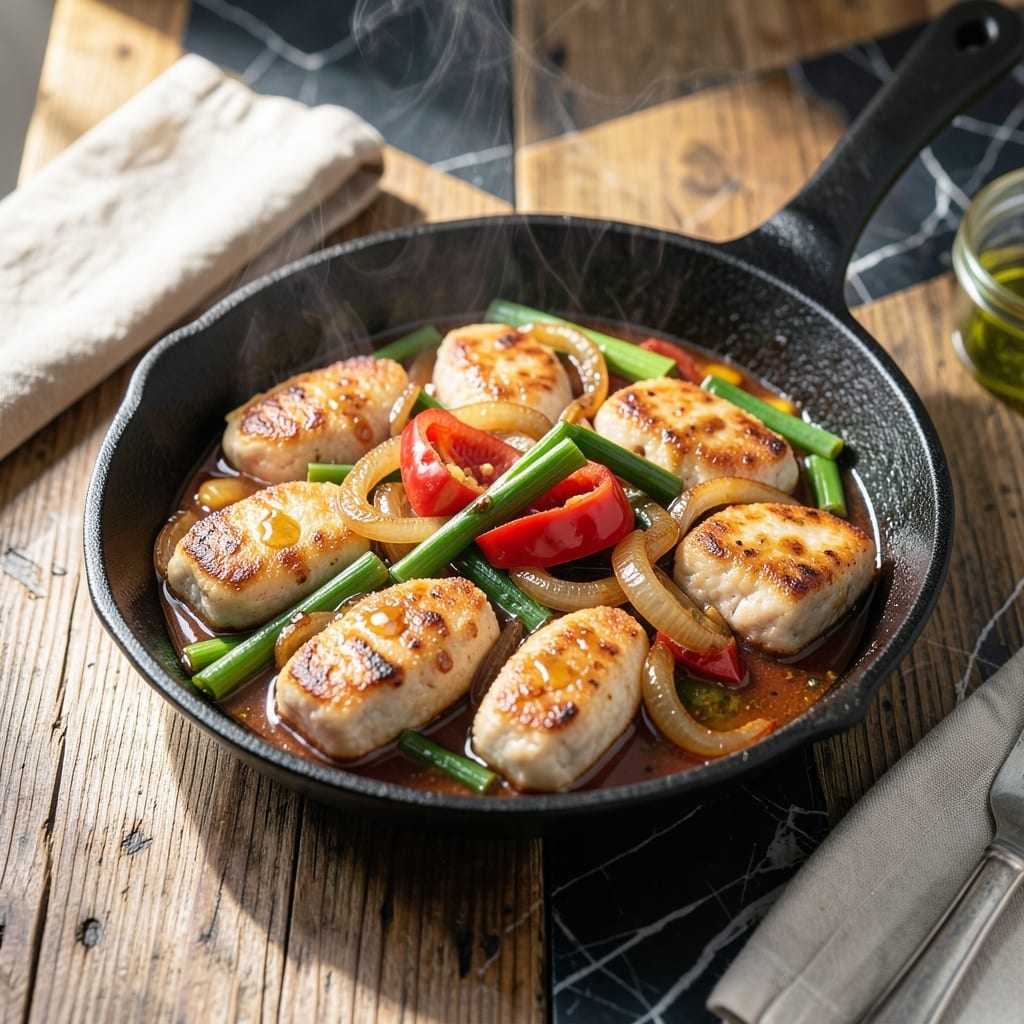
This Korean street food favorite transforms humble fish cakes into a crispy, savory masterpiece that’s impossible to resist. I’ve refined this stir fry method to capture the authentic market stall experience at home.
The key lies in high heat and quick cooking—just a few minutes in a hot pan gives these fish cakes their signature golden exterior while keeping the inside tender. A simple soy-vinegar sauce adds the perfect sweet-tangy finish.
Each bite delivers that satisfying contrast of textures: a shatteringly crispy outside with a soft, flaky center. It’s the kind of dish that disappears faster than you can serve it.
Ready in under 20 minutes, this stir fry makes a quick weeknight meal or impressive appetizer. Serve with toothpicks for easy sharing.
Ingredients for Odeng Recipe Stir Fry
Transform humble fish cakes into a crispy, savory stir fry with these pantry staples.
| Ingredient | Amount | Notes |
|---|---|---|
| Fish Cakes 🐟 | 1 lb | Korean odeng style preferred |
| Vegetable Oil 🫒 | ¼ cup | For high-heat frying |
| Soy Sauce 💧 | 3 tbsp | Low-sodium recommended |
| Rice Vinegar 🍶 | 2 tbsp | White or apple cider works |
| Brown Sugar 🍚 | 1 tbsp | Light or dark variety |
| Gochujang 🌶️ | 1 tbsp | Korean chili paste optional |
| Garlic Cloves 🧄 | 4 cloves | Minced finely for sauce |
| Fresh Ginger 🌿 | 1 tbsp | Grated or minced |
| Green Onions 🧅 | 4 whole | Thinly sliced for garnish |
| Sesame Seeds 🌾 | 1 tsp | Toasted for garnish |
| Sesame Oil 🫒 | 1 tsp | For finishing flavor |
| Red Pepper Flakes 🌶️ | ½ tsp | Adjust to spice preference |
| Cornstarch 🌾 | 1 tbsp | For sauce thickening |
| Water 💧 | ¼ cup | For sauce consistency |
[recipe_ingredient_scaler]
The fish cakes are the star here. Korean markets often carry odeng in the frozen section—look for brands like Sempio or Chung Jung One. If you’re using fresh fish cakes, pat them dry before frying to get that shatteringly crispy exterior. For the oil, avocado or peanut oil can handle the high heat better than olive oil for this application.
No gochujang? Sriracha or gochugaru can substitute in a pinch (use half the amount and adjust to taste). Fresh ginger is ideal but ground ginger at one-third the quantity works if needed. The brown sugar can be swapped for honey or maple syrup. If you don’t have rice vinegar, white vinegar with a pinch of sugar mimics the mild tang.
This keeps well in the fridge for 3-4 days in an airtight container. The fish cakes will lose some crispiness but regain it when reheated in a hot pan. Sauce can be made ahead and stored for up to 1 week.
Why You’ll Love This Recipe
- 20-Minute Meal: I can get this from pan to plate faster than takeout arrives. Honestly, just sear the fish cakes and toss with the sauce.
- Sweet-Savory Magic: The brown sugar caramelizes with soy sauce, creating this sticky glaze that clings to every bite.
- Feeds a Hungry Crowd: I make a double batch for game nights—everyone goes back for seconds of those crispy fish cakes.
- Pennywise Dinner: Fish cakes are cheap, the sauce uses pantry staples, and it stretches to fill bellies without stretching my wallet.
Step-by-Step Instructions for Odeng Stir Fry
Here’s how to achieve perfectly crispy fish cakes with a tangy, spicy sauce that clings beautifully.
Step 1: Pan-Fry the Fish Cakes to Golden Perfection
Heat the 0.25 cup vegetable oil in a large skillet over medium-high heat until it shimmers. The oil is ready when a small piece of fish cake sizzles immediately upon contact. Arrange the 1 lb fish cakes in a single layer, ensuring they’re not crowded.
Cook undisturbed for 3-4 minutes per side until deeply golden brown and crispy. This creates a delicious contrast with the tender interior. Use a slotted spatula to transfer them to a paper towel-lined plate to drain excess oil, keeping them warm.
Step 2: Build the Flavor Base for the Sauce
In the same skillet, reduce heat to medium and add the minced 4 cloves garlic cloves and grated 1 tbsp fresh ginger. Sauté for 30-45 seconds until fragrant but not browned—burnt garlic turns bitter, so watch closely.
Stir in the 1 tbsp gochujang, allowing it to toast lightly for 20 seconds. This deepens its umami flavor. The paste will darken slightly and become aromatic, signaling it’s ready for the next step.
Step 3: Create the Glossy Stir-Fry Sauce
In a small bowl, whisk together the 3 tbsp soy sauce, 2 tbsp rice vinegar, 1 tbsp brown sugar, 0.5 tsp red pepper flakes, and 0.25 cup water until the sugar dissolves. Pour this mixture into the skillet with the garlic and ginger.
In a separate small bowl, mix the 1 tbsp cornstarch with 1 tablespoon of the sauce from the skillet to create a slurry. Stir this back into the skillet and simmer for 1-2 minutes until the sauce thickens to a glossy consistency that coats the back of a spoon.
Step 4: Combine and Finish with Aromatic Garnishes
Return the crispy fish cakes to the skillet, gently tossing them in the sauce to coat evenly. Cook for an additional 1-2 minutes to allow the flavors to meld. The fish cakes should glisten with sauce but retain their crisp edges.
Remove from heat and drizzle with the 1 tsp sesame oil, then sprinkle with the thinly sliced 4 whole green onions and 1 tsp sesame seeds. These final touches add a bright, nutty finish that elevates every bite. Serve immediately while hot and crispy.
Pro Tips For Making Odeng Recipe Stir Fry
- Pre-fry the Fish Cakes: I learned this the hard way—giving the fish cakes a quick 2-minute fry in hot oil before stir-frying keeps them from breaking apart in the sauce. About 350°F oil works best.
- Balance the Sauce: After burning a batch, I now mix 1 part rice vinegar to 1.5 parts soy sauce and 0.5 parts brown sugar—this ratio actually changes the outcome from harsh to perfectly balanced.
- Skip the Overcrowding: Resist the urge to dump all the fish cakes in at once—cooking in batches guarantees they crisp instead of steam in their own juices.
- Use Cold Fish Cakes: Sounds weird, but it works: pulling the fish cakes straight from the fridge makes them hold together better during frying. I was skeptical until I tried it.
Common Mistakes When Making This Recipe
Overcrowding the Pan
Never crowd your skillet with too many fish cakes at once. I learned this the hard way—cooking in batches gives each piece space to crisp properly. 1 lb of fish cakes needs at least a 12-inch skillet for optimal browning.
Skipping the Paper Towels
After frying, always drain the fish cakes on paper towels. This removes excess oil that would make your sauce greasy. I use 3-4 layers of towels to absorb oil without sticking to the crispy exterior. 🔥
Burning the Garlic
Garlic burns in 30 seconds over high heat. Keep your heat at medium when sautéing the 4 cloves garlic and 1 tbsp ginger. Burnt garlic adds a bitter taste that ruins the sauce’s balance.
Sauce Too Thin
If your sauce doesn’t thicken, you likely skipped the cornstarch slurry. Always mix 1 tbsp cornstarch with cold liquid before adding to the skillet. This creates a velvety texture that clings to the fish cakes.
Uneven Cooking
Fish cakes cook unevenly if the oil isn’t hot enough. Test your oil with a small piece first—it should sizzle immediately at medium-high heat. Maintain this temperature throughout for consistent results.
Sauce Overpowering
Taste your sauce before adding the fish cakes. The 3 tbsp soy sauce can be intense—balance with a touch of brown sugar if needed. I adjust seasoning in small increments to avoid overwhelming the dish.
Nutrition Facts
Frequently Asked Questions
Can I use frozen fish cakes?
Yes, but thaw them completely and pat dry first. Frozen fish cakes release moisture that can prevent crisping. Cook them straight from thawed for best results.
What if I don’t have gochujang?
Substitute 1/2 tbsp sriracha or 1 tsp gochugaru (Korean chili flakes). Adjust to taste, as these can be spicier. The sauce will still be flavorful.
How do I keep the fish cakes crispy after cooking?
Drain on paper towels and serve immediately. If needed, reheat in a medium-high heat skillet for 1-2 minutes to restore crispness.
Can I make this dish ahead of time?
Cook fish cakes fresh for best texture, but sauce can be made 1 week ahead. Store it in an airtight container in the fridge.

Trained in classic French technique but raised on slow-cooked ribs and spicy rubs, she blends culinary skill with smoke and soul.
- Best Smoked Oxtail Recipe: Deep-Rich Flavor After Low-and-Slow Cooking - October 14, 2026
- Pit Boss Smoked Prime Rib Roast Recipe: Bark-to-Bone Crispness in 4 Hours - October 14, 2026
- Smoked Tuna Steak Recipe: Seared Crust Meets Silky Centers - October 14, 2026