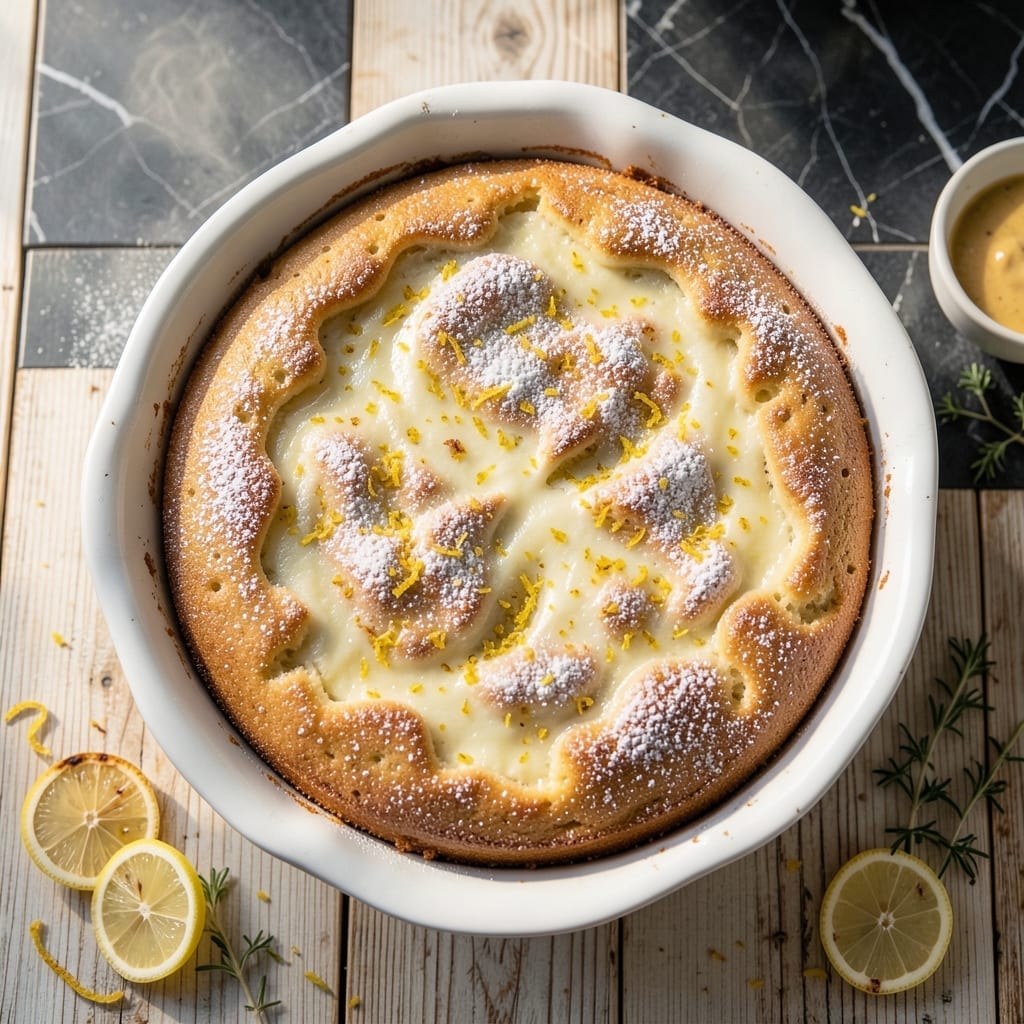
This cake redefines dessert with its perfect balance of tangy lemon and creamy custard layers. A simple batter creates both textures as it bakes.
The result is a moist, zesty base with a rich custard top. It’s an elegant treat that’s surprisingly easy to make at home.
Ingredients for Recipe for Lemon Custard Cake
A handful of pantry staples plus fresh lemons create this elegant layered dessert.
| Ingredient | Amount | Notes |
|---|---|---|
| All-Purpose Flour 🌾 | 1 ½ cups | Sifted for lightness |
| Granulated Sugar 🍚 | 1 ½ cups | Divided for batter and custard |
| Unsalted Butter 🧈 | ¾ cup | Melted and cooled |
| Large Eggs 🥚 | 4 whole | Room temperature, separated |
| Whole Milk 🥛 | 1 cup | Full-fat for richness |
| Lemon Zest 🍋 | 2 tbsp | Finely grated from fresh lemons |
| Fresh Lemon Juice 🍋 | ½ cup | Newly squeezed for tang |
| Vanilla Extract 🌿 | 1 tsp | Pure extract preferred |
| Baking Powder 🧂 | 1 ½ tsp | Ensures proper rise |
| Salt 🧂 | ¼ tsp | Fine sea salt |
| Powdered Sugar 🍚 | 2 tbsp | For dusting finished cake |
[recipe_ingredient_scaler]
The butter quality matters here. Plugrá or Kerrygold yield superior flavor and texture compared to generic brands. Use organic lemons for the zest and juice—their oils are more aromatic. Most supermarkets carry both, but Whole Foods often has the best selection of organic citrus. Freshly grated zest (not the pre-packaged kind) ensures the brightest lemon flavor.
No fresh lemons? Bottled lemon juice at half the amount works in a pinch, though the zest is non-negotiable for that signature citrus pop. For a dairy-free version, coconut milk can replace whole milk, but the custard layer may be slightly less rich. The flour can be swapped for cake flour at a 1:1 ratio for an even lighter crumb.
This cake stays moist for 3 days at room temperature in an airtight container. For longer storage, refrigerate for up to 1 week or freeze slices for 3 months. Dust with powdered sugar just before serving to keep it looking fresh.
Why You’ll Love This Recipe
- One Bowl Wonder: I mix everything right in the same bowl—flour, sugar, butter, eggs, milk—and it’s ready for the oven.
- Zesty Perfection: That bright lemon tang cutting through the rich, buttery custard layer? It’s the reason I make this every Sunday.
- Brunch to Dessert: I’ve served it warm with coffee or chilled with berries, and both times my guests asked for the recipe.
- Stays Fresh: Honestly, it tastes even better the next day, and the leftovers keep beautifully for three days.
Step-by-Step Instructions for Lemon Custard Cake
Master this technique and you’ll achieve distinct, creamy layers with bright citrus flavor every time.
Step 1: Prepare the Custard Layer Base
Preheat your oven to 325°F and prepare a 9×13-inch baking dish by greasing it lightly with some of the 0.75 cup unsalted butter. In a large bowl, whisk together the 4 whole large eggs with 1.5 cups granulated sugar until pale and slightly thickened, about 3-4 minutes.
Gradually whisk in the 1 cup whole milk, 0.5 cup fresh lemon juice, and 2 tbsp lemon zest. The mixture should be smooth and slightly foamy on top. Pour this custard base into your prepared baking dish—this forms the bottom layer that bakes into a rich, pudding-like consistency.
Step 2: Create the Cake Batter Layer
In a separate bowl, combine the 1.5 cups all-purpose flour, 1.5 tsp baking powder, and 0.25 tsp salt. Stir to aerate and distribute the leavening agent evenly. Make a well in the center and add the remaining 0.75 cup unsalted butter (melted and cooled) and 1 tsp vanilla extract.
Mix until just combined—the batter should be thick but pourable. Gently spoon this batter over the custard layer in the baking dish, spreading it evenly to the edges. The batter will sink slightly into the custard, which is normal and creates the signature layered effect.
Step 3: Bake Until Golden and Set
Place the baking dish in the center of your preheated oven. Bake for 45-55 minutes, or until the top is golden brown and a toothpick inserted into the cake layer comes out clean. The custard layer beneath will still have a slight jiggle—this is perfect.
Resist the urge to overbake. The residual heat continues cooking even after you remove it from the oven. If the top browns too quickly, tent loosely with aluminum foil during the last 10-15 minutes of baking.
Step 4: Cool Completely Before Serving
Remove the cake from the oven and let it cool in the dish for 10 minutes. Then transfer it to a wire rack to cool completely at room temperature, about 1-2 hours. This cooling period is crucial as it allows the custard to set fully and the layers to become distinct.
Once completely cooled, dust the top evenly with the 2 tbsp powdered sugar. Use a fine-mesh sieve for an even, professional-looking finish. Cut into squares and serve at room temperature for the best texture contrast between the moist cake and silky custard layers.
Pro Tips For Making Recipe For Lemon Custard Cake
- Room Temp Eggs: Pull your eggs out 30 minutes before mixing—cold eggs can cause the butter to clump, and I learned this the hard way after a lumpy batter disaster.
- Don’t Overmix: Stir the flour in just until it disappears; overworking it makes the cake dense instead of tender.
- Check at 40 Minutes: Oven times vary, and I’ve pulled perfect cakes at 40 and seen others need 50—start testing early with a toothpick in the center.
- Zest Before Juicing: Grate the lemon zest first, then cut and juice—it’s way harder to zest a halved lemon, and you’ll get more flavor from the rind this way.
Regional Styles of This recipe for lemon custard cake
British Classic
Across the pond, this dessert transforms into a lemon posset cake by folding whipped cream into the custard base. The British version often uses double cream for extra richness. I love serving it with fresh berries for contrast.
French Interpretation
In France, they might call this a gâteau au citron and add a splash of Grand Marnier to the custard layer. The alcohol enhances the lemon flavor beautifully. The cake is often served with a light crème anglaise drizzle.
Southern US Twist
The American South puts its spin on this by adding a buttermilk glaze after baking. Simply whisk 1 cup powdered sugar with 2 tbsp buttermilk and drizzle over the cooled cake. It adds a tangy sweetness that complements the lemon perfectly. 💛
Mediterranean Style
Greek cooks often incorporate yogurt into the custard layer for extra tang. I use full-fat Greek yogurt and top the finished cake with a sprinkle of pistachios for crunch and color.
Tropical Version
In Caribbean kitchens, they might use lime juice instead of lemon and add coconut milk to the custard. The result is a tropical-inspired cake that’s perfect for warm weather. 🌴
German Approach
Germans often make this as a Zitronenkuchen with a yeast-based dough. The custard layer is typically thicker and the cake is dusted with powdered sugar before baking for a caramelized top.
Nutrition Facts
Frequently Asked Questions
Why does my custard layer stay runny?
Underbaking or not cooling enough causes this. Bake until the top is golden and jiggles slightly, then cool for 1-2 hours to let it set fully.
Can I make this ahead of time?
Yes! Bake it 1 day ahead and store at room temperature in an airtight container. Dust with powdered sugar just before serving to keep it fresh.
What’s the best pan size?
A 9×13-inch baking dish works perfectly. For a thicker cake, use a 9×9-inch pan and adjust baking time to 50-60 minutes.

Trained in classic French technique but raised on slow-cooked ribs and spicy rubs, she blends culinary skill with smoke and soul.
- Recipe for Boneless Pork Chops in Cast Iron Skillet: Sear and Baste to Juicy Perfection - October 3, 2026
- Recipe for Boneless Cross Rib Roast: Slow-Roasted Beef with Herb Crust - October 3, 2026
- Hamburgers in Sauce Recipe Crock Pot: Slow-Cooked Savory Delight - October 3, 2026