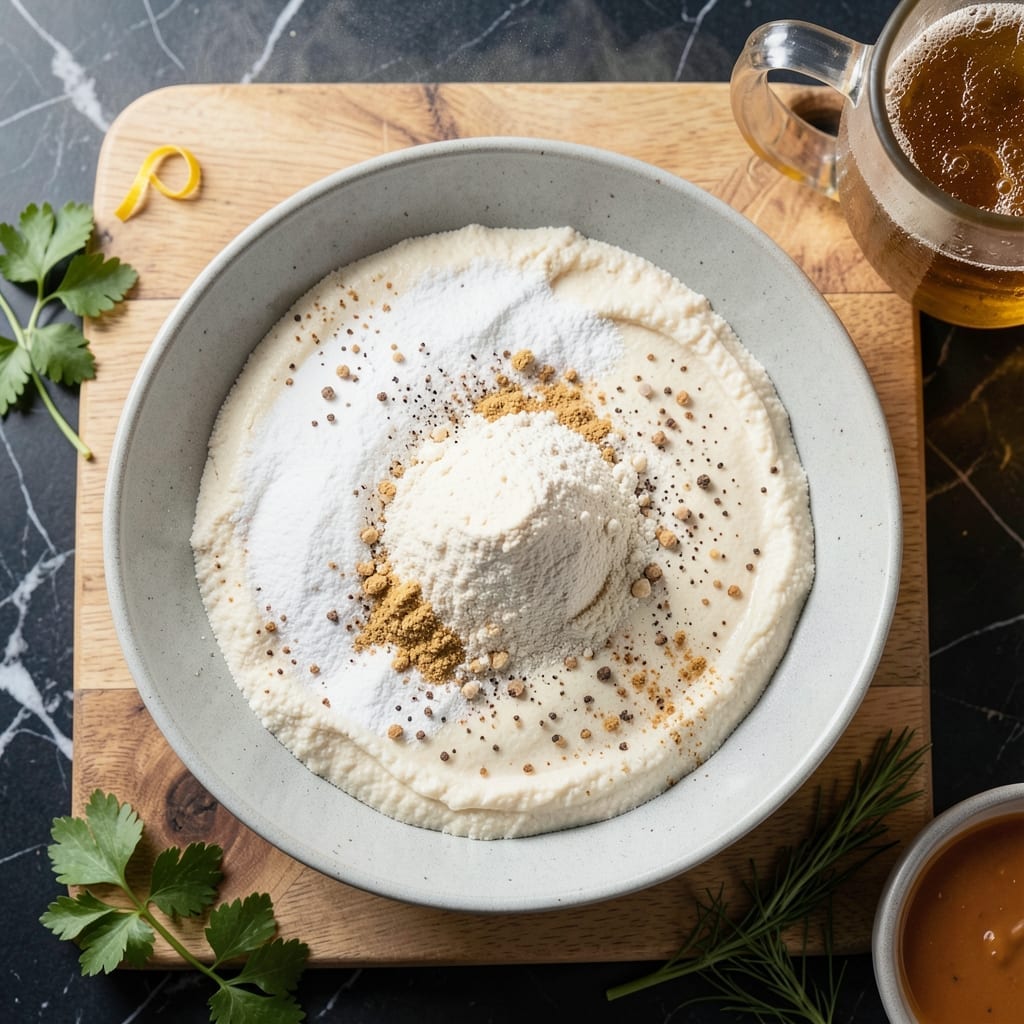
This batter delivers a crispy, golden coating that adheres perfectly to fish without falling apart during frying.
With just a few simple ingredients and the right technique, you’ll achieve professional results every time.
Ingredients for Recipe for Making Batter for Fish
These few quality ingredients create the perfect crispy fish batter every time.
| Ingredient | Amount | Notes |
|---|---|---|
| All-Purpose Flour 🌾 | 1 ½ cups | Sifted for smooth batter |
| Cornstarch 🌽 | ½ cup | For extra crispiness |
| Baking Powder 🧂 | 1 tbsp | Ensures light texture |
| Cold Beer 🍺 | 1 ¼ cups | Light lager preferred |
| Salt 🧂 | 1 tsp | Fine sea salt |
| Black Pepper 🌶️ | ½ tsp | Freshly ground |
| Garlic Powder 🧄 | 1 tsp | Enhances flavor depth |
| Paprika 🌶️ | 1 tsp | Smoked or sweet variety |
| White Fish Fillets 🐟 | 1 ½ lb | Cod or haddock recommended |
| Ice Water 💧 | ½ cup | As needed for consistency |
[recipe_ingredient_scaler]
The beer is non-negotiable for that airy, crisp crust—light lagers like Bud Light or Coors work best (avoid dark beers, they’re too heavy). All-purpose flour is the base, but cornstarch is the secret weapon for extra crunch. Baking powder adds lift, so don’t skip it. For the fish, fresh cod or haddock from the seafood counter is ideal; avoid pre-frozen if possible.
No beer? Sparkling water or vodka (yes, vodka) creates a similar effect—use the same amount. Out of cornstarch? Replace with rice flour at a 1:1 ratio. The paprika can be swapped for Cajun seasoning if you want a spicier kick. For gluten-free, rice flour or chickpea flour works, but the texture will differ slightly.
Mix the dry ingredients ahead and store in an airtight container for up to 1 month. The batter itself is best used immediately, but leftover fried fish keeps in the fridge for 2-3 days—reheat in the oven to revive the crispiness.
Why You’ll Love This Recipe
- Five-Minute Mix: I dump the flour, cornstarch, baking powder, and salt in a bowl, add cold beer, and stir—no resting, no fuss.
- Crispy Beer Magic: The beer gives the batter a light, airy crunch that clings to every flake of fish.
- Weeknight Rescue: Honestly, it’s my go-to for quick dinners when I need something fast and satisfying.
- Pennywise Feast: A handful of pantry staples turns affordable fish into a meal that feels like a treat.
Step-by-Step Instructions for Making Batter for Fish
Master this technique and you’ll achieve a golden, crispy coating that adheres beautifully to every fillet.
Step 1: Combine Dry Ingredients for Foundation
In a large mixing bowl, whisk together the 1.5 cups All-Purpose Flour, 0.5 cup Cornstarch, 1 tbsp Baking Powder, 1 tsp Salt, 0.5 tsp Black Pepper, 1 tsp Garlic Powder, and 1 tsp Paprika. The cornstarch is crucial here—it creates that ultra-crispy texture that sets this batter apart from ordinary recipes.
Sift the mixture if your flour isn’t pre-sifted to eliminate lumps and ensure a smooth, even batter. The baking powder will create tiny air pockets during frying, resulting in a light, delicate crunch. You should have a uniform, pale golden mixture with no visible clumps.
Step 2: Incorporate Liquid Components Gradually
Make a well in the center of your dry ingredients. Slowly pour in the 1.25 cups Cold Beer while whisking continuously from the center outward. The carbonation in beer creates an exceptionally light batter, while the alcohol content helps achieve maximum crispiness.
Use a light lager for the cleanest flavor that won’t overpower the fish. The batter should be slightly thicker than heavy cream at this stage. If it appears too dense, begin adding the 0.5 cup Ice Water one tablespoon at a time until it reaches the perfect consistency—thick enough to coat the back of a spoon but still pourable.
Step 3: Achieve the Ideal Batter Consistency
Let the batter rest for 5-10 minutes at room temperature. This allows the flour to fully hydrate and the baking powder to begin activating. You’ll notice the mixture thickens slightly during this rest period.
The ideal texture should coat a piece of fish without running off completely, yet still allow some to drip off for that characteristic crispy, lacy effect. If it’s too thin, add a tablespoon of additional all-purpose flour; if too thick, incorporate more ice water sparingly. The batter should look like a cross between pancake batter and tempura batter.
Step 4: Prepare and Coat the Fish Fillets
Pat the 1.5 lb White Fish Fillets completely dry with paper towels—this is critical for the batter to adhere properly. Any moisture on the surface will create a barrier between the fish and batter, leading to poor adhesion and potential flaking during frying.
Dip each fillet into the batter, turning to coat completely on all sides. Let any excess drip off for a moment before frying. The batter should cling evenly to the fish, creating a uniform layer about ⅛-inch thick. For best results, work with one fillet at a time to prevent the batter from sitting too long before hitting the hot oil.
Pro Tips For Making Recipe For Making Batter For Fish
- Chill the Beer: Use ice-cold beer straight from the fridge—warm beer makes the batter dense and heavy. I learned this the hard way after my first few batches turned out like pancakes.
- Rest the Batter: Let the batter sit for 10 minutes before dipping the fish. This gives the flour time to hydrate and the baking powder a chance to work its magic.
- Skip the Overmixing: Stir just until the ingredients come together—lumps are fine. Overmixing develops gluten, and you’ll end up with a tough, chewy coating instead of a light, crispy one.
- Add Cornstarch Last: Sprinkle the cornstarch in after mixing the wet and dry ingredients. This prevents clumping and ensures it distributes evenly for that extra-crispy finish.
Common Mistakes When Making recipe for making batter for fish
Overmixing the Batter
I see this happen often—overmixing creates a tough, dense batter. Stir just until the ingredients come together with a few small lumps. Those lumps dissolve during frying, and the gluten development stays minimal for a tender crust.
Using Warm Ingredients
Cold beer and ice water are non-negotiable for that crispy texture. Warm liquids activate the gluten too early, making the batter gummy. I always keep my beer in the fridge until I’m ready to mix. ❄️
Skipping the Rest
Letting the batter rest for 5-10 minutes allows the flour to fully hydrate. Without this step, your coating might be uneven or fall off during frying. The batter will thicken slightly, which is exactly what you want.
Incorrect Oil Temperature
Your oil must be at 350-375°F for perfect results. Too cool, and the fish absorbs oil, becoming greasy. Too hot, and the outside burns before the inside cooks. Use a thermometer—I trust my ThermoWorks for accuracy.
Wet Fish Fillets
Pat those fillets completely dry with paper towels. Any moisture creates steam between the fish and batter, causing the coating to detach. This is the most common reason for batter that slides right off.
Overcrowding the Fryer
Fry in small batches to maintain oil temperature. Adding too many fillets at once drops the temperature, leading to soggy, oil-logged fish. I never cook more than 2 fillets at a time in my home setup. 🔥
Nutrition Facts
Frequently Asked Questions
Can I use sparkling water instead of beer?
Sparkling water works as a great non-alcoholic substitute. It provides the same carbonation that creates a light, crispy texture. Use the same 1.25 cups measurement for best results.
How thick should the batter be?
The ideal consistency is between pancake batter and tempura batter. It should coat the back of a spoon but still be pourable. Adjust with ice water or flour as needed.
Why does my batter fall off during frying?
This usually happens if the fish isn’t dried properly or the oil isn’t hot enough. Pat fillets completely dry and maintain oil at 350-375°F for perfect adhesion.
Can I make the batter ahead of time?
Mix dry ingredients up to 1 month ahead and store in an airtight container. However, the wet batter is best used immediately for optimal texture and crispiness.

Trained in classic French technique but raised on slow-cooked ribs and spicy rubs, she blends culinary skill with smoke and soul.
- Recipe for Boneless Pork Chops in Cast Iron Skillet: Sear and Baste to Juicy Perfection - October 3, 2026
- Recipe for Boneless Cross Rib Roast: Slow-Roasted Beef with Herb Crust - October 3, 2026
- Hamburgers in Sauce Recipe Crock Pot: Slow-Cooked Savory Delight - October 3, 2026