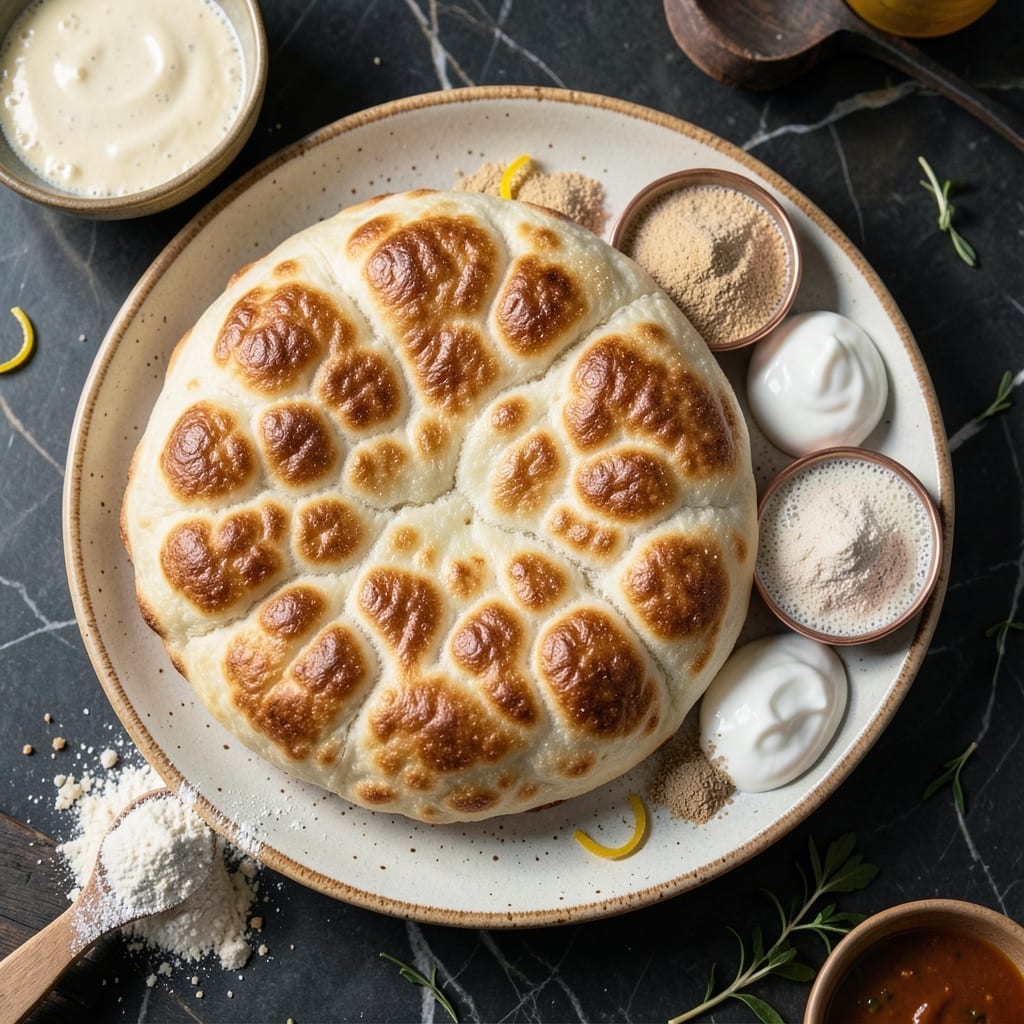
This North Indian flatbread delivers pillowy softness with every bite. The dough rests to develop flavor before frying to golden perfection.
Mastering bhatura requires patience with the rising process, but the result—fluffy, light bread perfect for pairing with curries—is worth the effort.
Ingredients for Recipe for Making Bhatura
Simple pantry ingredients transform into fluffy, golden North Indian flatbread ready for curries.
| Ingredient | Amount | Notes |
|---|---|---|
| All-Purpose Flour 🌾 | 3 cups | Plus extra for dusting |
| Semolina Flour 🌾 | ¼ cup | Fine variety preferred |
| Plain Yogurt 🥛 | ¾ cup | Room temperature, unsweetened |
| Lukewarm Water 💧 | ¾ cup | About 110°F for yeast activation |
| Active Dry Yeast 🍞 | 1 tsp | One packet, proofed in water |
| Granulated Sugar 🍚 | 1 tsp | For yeast activation |
| Baking Soda 🧂 | ½ tsp | Ensures extra fluffiness |
| Salt 🧂 | 1 tsp | Fine sea salt preferred |
| Vegetable Oil 🫒 | 2 tbsp | For dough, plus more for frying |
| Ghee 🧈 | 2 tbsp | For brushing finished bhatura |
[recipe_ingredient_scaler]
The flour is fundamental here. King Arthur all-purpose flour delivers consistent results, and Bob’s Red Mill semolina adds the right texture. For the yogurt, whole milk Greek yogurt (like Fage or Chobani) works best—its thickness helps develop the dough’s structure. Always check your yeast’s expiration date; old yeast won’t rise properly, no matter how patient you are.
No yogurt on hand? Buttermilk at the same quantity works in a pinch. Out of semolina? Fine cornmeal can substitute, though the texture will differ slightly. For the ghee, clarified butter is the closest alternative, but neutral oil (like avocado) works too. The water temperature is non-negotiable—too hot kills the yeast, too cold slows activation.
The dough can rest in the fridge for up to 24 hours, which actually enhances flavor. Fried bhatura keeps 2-3 days at room temperature in an airtight container, though it’s best served fresh. Reheat briefly in a dry skillet to restore softness.
Why You’ll Love This Recipe
- No-Knead Magic: I just mix the flour, yogurt, and yeast, let it rise, and the dough practically makes itself.
- Pillowy Perfection: That first bite of soft, slightly chewy bhatura fresh off the pan? Ridiculously good.
- Crowd Pleaser: I’ve served these with chole for dinner parties and quick weeknight meals—always disappears first.
- Budget Friendly: A handful of pantry staples turns into a feast that feeds my family for pennies. Honestly, it’s my go-to when the wallet’s tight.
Step-by-Step Instructions for Making Bhatura
Master the technique and achieve perfectly fluffy, golden bhatura with these precise steps.
Step 1: Activate the Yeast and Prepare the Dough Base
In a small bowl, combine the 1 tsp Active Dry Yeast, 1 tsp Granulated Sugar, and 0.75 cup Lukewarm Water. Stir gently and let it sit for 5-7 minutes until the mixture becomes frothy. This confirms the yeast is active—critical for achieving the airy texture.
In a large mixing bowl, add the 3 cups All-Purpose Flour, 0.25 cup Semolina Flour, 0.5 tsp Baking Soda, and 1 tsp Salt. Whisk these dry ingredients together to ensure even distribution. The semolina adds a subtle texture, while the baking soda enhances the lift.
Step 2: Combine Wet and Dry Ingredients
Pour the activated yeast mixture and the 0.75 cup Plain Yogurt into the dry ingredients. Add the 2 tbsp Vegetable Oil and begin mixing with your hands or a wooden spoon. The dough will be sticky at first, but continue until it comes together into a shaggy mass.
Turn the dough out onto a lightly floured surface. The Plain Yogurt adds tenderness and a slight tang, balancing the richness of the oil. Knead for 8-10 minutes until the dough is smooth and elastic. You’ll notice it transforms from rough to silky—this develops the gluten for that signature chew.
Step 3: First Rise for Fluffiness
Lightly oil a clean bowl with some of the Vegetable Oil and place the dough inside. Cover the bowl with a damp kitchen towel or plastic wrap. Let it rise in a warm, draft-free place for 2-3 hours or until doubled in size. The dough should look puffy and light, indicating the yeast has done its work.
For faster results, you can place the bowl in a turned-off oven with the light on for gentle warmth. However, avoid direct heat, which can kill the yeast. Patience here ensures maximum fluffiness in your finished bhatura.
Step 4: Shape and Second Rise
Punch down the risen dough to release the air. Divide it into 8 equal portions and roll each into a smooth ball. Place the balls on a lightly floured surface, cover them with a towel, and let them rest for 15-20 minutes. This second rise relaxes the gluten, making the dough easier to roll out.
After resting, flatten each ball slightly with your palm. Then, using a rolling pin, roll each piece into a 6-7 inch diameter circle. Aim for even thickness—about ¼ inch—to ensure uniform cooking. If the dough shrinks, let it rest for another 5 minutes before rolling again.
Step 5: Fry to Golden Perfection
Heat 1-2 inches of Vegetable Oil in a deep, heavy-bottomed pan over medium-high heat to 350-375°F. Test the temperature by dropping a small piece of dough into the oil—it should rise immediately and sizzle vigorously. If it sinks, the oil isn’t hot enough.
Carefully slide one rolled dough circle into the hot oil. Fry for 30-45 seconds until the surface is golden brown and bubbly. Flip it over using a slotted spoon and fry the other side for another 20-30 seconds until equally golden. The bhatura should puff up dramatically—this is the hallmark of a well-made flatbread.
Remove the bhatura from the oil and drain it on a paper towel-lined plate. While still hot, brush the top generously with 2 tbsp Ghee to add richness and a glossy finish. Serve immediately for the best texture, or keep warm in a 200°F oven until ready to serve.
Pro Tips For Making Recipe For Making Bhatura
- Proof the Yeast: Always activate your dry yeast in lukewarm water with a pinch of sugar first—if it doesn’t foam within 5-10 minutes, your bhatura won’t rise properly. I learned this the hard way after several flat, dense failures.
- Use Room-Temp Yogurt: Cold yogurt straight from the fridge can shock the dough and slow fermentation. Take it out 30 minutes before mixing to guarantee a soft, pillowy texture.
- Skip Over-Kneading: Knead just until the dough comes together—overworking it makes bhatura tough instead of fluffy. About 3-4 minutes by hand is plenty.
- Rest the Dough: Let the dough rise for at least 2 hours in a warm spot, or until doubled in size. Sounds tedious, but it’s the only way to get that airy, light bite.
Pro Cooking Tips for Perfect Results
Yeast Activation
Always proof your yeast in 110°F water with 1 tsp sugar first. If it doesn’t foam within 7 minutes, your yeast is dead—start over. I learned this the hard way after wasting 3 cups of flour on inactive yeast. 💡
Dough Consistency
Your dough should be soft but not sticky after kneading. If it clings to your hands, add 1 tbsp flour at a time. I use King Arthur flour for consistent results. Over-flouring makes bhatura dense instead of pillowy.
Rising Environment
For the first rise, place dough in a turned-off oven with the light on. This creates the perfect 80-85°F environment. Avoid drafts—they slow fermentation. I check progress at 2 hours; if not doubled, give it more time.
Rolling Technique
Roll bhatura to ¼-inch thickness using even pressure. If it shrinks, let it rest 5 minutes before trying again. I dust my surface with semolina flour to prevent sticking. Uniform thickness ensures even frying.
Frying Temperature
Maintain oil at 350-375°F for perfect puffing. Use a deep-fry thermometer—I trust Taylor’s brand. If oil smokes, it’s too hot; if dough absorbs oil, it’s too cool. Test with a small dough piece first. 🔥
Post-Fry Care
Drain fried bhatura on paper towels, then brush with ghee while hot. This adds flavor and keeps them soft. Serve immediately for best texture. I keep batches warm in a 200°F oven if frying ahead.
Nutrition Facts
Frequently Asked Questions
Can I use whole wheat flour instead?
You can substitute up to 1 cup of whole wheat flour, but the texture will be denser. The all-purpose flour gives the signature fluffiness. Add a bit more yogurt if the dough feels dry.
Why didn’t my bhatura puff up?
The yeast may not have been active, or the oil wasn’t hot enough. Ensure yeast foams before mixing and maintain oil at 350-375°F. Overcrowding the pan can also prevent puffing.
How do I store leftover bhatura?
Keep in an airtight container at room temperature for up to 2 days. Reheat in a dry skillet over medium heat for 30 seconds per side to restore softness.
Can I bake instead of fry?
Baking won’t give the same puff or texture. Frying at the right temperature creates the airy pockets. For a lighter option, try shallow frying with less oil.

Trained in classic French technique but raised on slow-cooked ribs and spicy rubs, she blends culinary skill with smoke and soul.
- Recipe for Boneless Pork Chops in Cast Iron Skillet: Sear and Baste to Juicy Perfection - October 3, 2026
- Recipe for Boneless Cross Rib Roast: Slow-Roasted Beef with Herb Crust - October 3, 2026
- Hamburgers in Sauce Recipe Crock Pot: Slow-Cooked Savory Delight - October 3, 2026