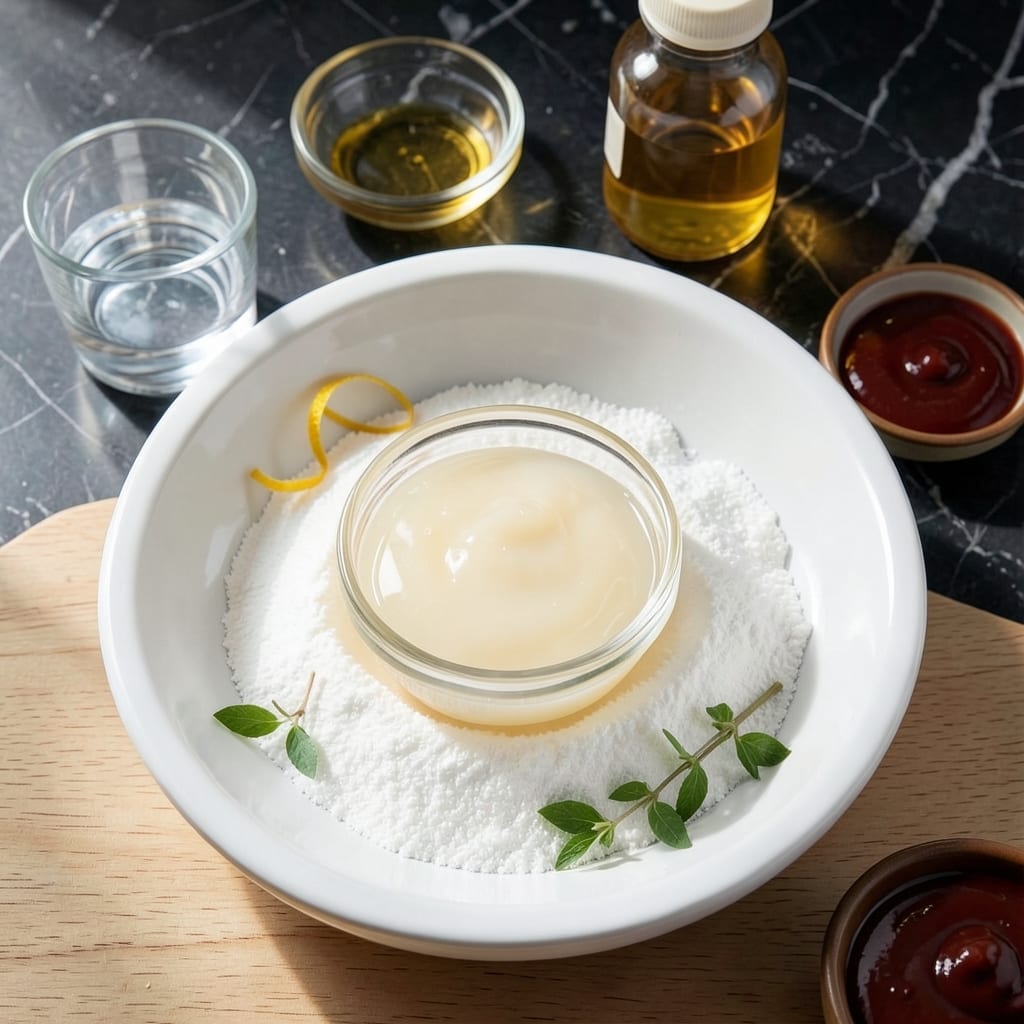
This fondant icing recipe creates a smooth, pliable base perfect for professional cake decorating. The secret lies in precise measurements and proper kneading to achieve the ideal consistency.
With just a few simple ingredients, you’ll have a versatile icing that rolls out effortlessly and covers cakes with a flawless finish. Store it properly to maintain freshness for future projects.
Ingredients for Recipe for Making Fondant Icing
Eight ingredients transform into a professional-grade decorating base with flawless consistency and smooth finish.
| Ingredient | Amount | Notes |
|---|---|---|
| Powdered Sugar 🍚 | 4 cups | Sifted for smooth texture |
| Water 💧 | ½ cup | Room temperature preferred |
| Unflavored Gelatin 🧂 | 2 tbsp | Vegetarian gelatin substitute if needed |
| Glycerin 🫒 | 2 tbsp | Food-grade liquid glycerin |
| Corn Syrup 🍯 | 2 tbsp | Light or clear variety |
| Vanilla Extract 🌿 | 1 tsp | Pure extract for best flavor |
| Salt 🧂 | ¼ tsp | Fine grain for even distribution |
| Cream of Tartar 🧂 | ½ tsp | Stabilizes fondant texture |
[recipe_ingredient_scaler]
The powdered sugar must be fresh and lump-free—sifting is non-negotiable for that silky texture professional bakers demand. C&H or Domino brands deliver consistent results. For the gelatin, vegetarian cooks should use agar-agar (2 tbsp per 1 tbsp gelatin ratio). Glycerin is sold in the baking aisle at Michaels or Joann Fabrics, or online at Amazon. Avoid corn syrup with vanilla added—it muddles the flavor.
No glycerin? Substitute with glucose syrup at a 1:1 ratio, though the fondant may dry slightly faster. Swap corn syrup for agave nectar if needed, but expect a milder sweetness. Skip the vanilla if you prefer a neutral base for colored fondant. The cream of tartar can be omitted in a pinch, but your fondant may tear more easily when rolling thin. Always check expiration dates—old powdered sugar absorbs moisture and clumps.
Store fondant in an airtight container at room temperature for up to 2 weeks, or freeze for 2 months. Wrap each portion tightly in plastic wrap before sealing to prevent drying. Knead briefly before use if it stiffens—microwave in 5-second bursts if needed, but avoid overheating which causes stickiness.
Why You’ll Love This Recipe
- Five Ingredients Only: I love that it comes together with just powdered sugar, water, gelatin, glycerin, and corn syrup—no hunting for specialty items.
- Smooth Finish: It rolls out silky and tastes subtly sweet without overpowering the cake underneath.
- Endless Decorating: I use it for birthday cakes, cupcakes, even cookies—shapes, drapes, or cutouts, it handles everything.
- Budget Stretch: A batch covers multiple projects and keeps well wrapped, so I never waste a bit.
Step-by-Step Instructions for Making Fondant Icing
Achieving a smooth, elastic fondant requires precise technique and careful temperature control.
Step 1: Bloom the Gelatin
Sprinkle the 2 tbsp Unflavored Gelatin evenly over the 0.5 cup Water in a small bowl. I use room temperature water here to ensure the gelatin hydrates properly without clumping. Let it sit for 5-7 minutes until the mixture becomes thick and opaque, with no visible dry spots remaining on the surface.
This blooming process is essential—it activates the gelatin’s thickening properties. Don’t stir during this stage, as it can create lumps that will affect the final texture of your creation. The mixture should look like a translucent, jelly-like layer when ready.
Step 2: Heat and Dissolve the Gelatin Mixture
Place the bowl with the bloomed gelatin over a saucepan of barely simmering water, creating a double boiler. Heat gently for 2-3 minutes, stirring occasionally with a silicone spatula, until the gelatin dissolves completely into a clear liquid with no visible grains.
Be careful not to let the water boil or touch the bottom of the bowl—too much heat can degrade the gelatin’s setting ability. The mixture should be just warm to the touch, never hot. Remove from heat as soon as it’s fully dissolved.
Step 3: Combine the Wet Ingredients
In a large microwave-safe bowl, combine the dissolved gelatin mixture with the 2 tbsp Glycerin, 2 tbsp Corn Syrup, 0.25 tsp Salt, and 0.5 tsp Cream of Tartar. Stir until all ingredients are fully incorporated. The cream of tartar is particularly important here—it stabilizes the fondant and prevents it from becoming too sticky.
Microwave this mixture on high power for 30-second intervals, stirring between each, until it reaches 120°F on an instant-read thermometer. This gentle heating ensures all components blend smoothly without breaking down the sugar structure.
Step 4: Incorporate the Powdered Sugar
Gradually add the 4 cups Powdered Sugar to the warm liquid mixture, about 1 cup at a time, stirring thoroughly after each addition until fully combined. I find that using a wooden spoon works best here, as it helps break up any sugar lumps that might form.
After incorporating all the sugar, add the 1 tsp Vanilla Extract and stir until the mixture becomes thick and dough-like. The consistency should resemble stiff marshmallow fluff at this stage, pulling away from the sides of the bowl.
Step 5: Knead to Perfection
Turn the fondant out onto a clean work surface lightly dusted with additional powdered sugar. Knead the dough for 5-8 minutes until it becomes smooth, elastic, and slightly tacky but not sticky. You’ll notice the texture transform as you work it—the fondant will start firm and become progressively more pliable.
If the fondant sticks to your hands or the surface, dust with more powdered sugar as needed, but use sparingly. The finished product should be smooth to the touch, with no cracks or dry spots. Wrap tightly in plastic wrap and let it rest at room temperature for 1 hour before using to allow the texture to fully stabilize.
Pro Tips For Making Recipe For Making Fondant Icing
- Bloom the Gelatin: Always dissolve gelatin in cold water first and let it sit for 5-10 minutes before heating—I learned this the hard way after ending up with lumpy fondant that refused to smooth out.
- Sift the Sugar: Powdered sugar clumps faster than you’d expect, so sift it thoroughly before mixing, or you’ll spend forever kneading out tiny bumps.
- Skip the Boiling: Resist the urge to boil the corn syrup mixture too hot; 160°F is plenty to dissolve the gelatin without making the fondant brittle.
- Knead While Warm: Work the fondant while it’s still slightly warm from the heat—it’s way easier to shape and rolls out smoother than when it’s fully cooled.
Regional Styles of recipe for making fondant icing
🍰 French Style
In France, fondant icing is often made with powdered sugar, glucose syrup, and egg whites for a smooth, pliable texture. This style emphasizes delicate flavors like vanilla or rosewater, and it’s commonly used for elegant cake decorations. The French technique involves heating the sugar mixture to just the right temperature for a glossy finish.
🇬🇧 British Style
British fondant, also known as rolled fondant, is a staple for traditional wedding cakes. It’s made with icing sugar, water, and stabilizers like glycerin or gelatin to achieve a firm yet pliable consistency. This style is often flavored with almond or lemon extract and is rolled out thinly to cover cakes smoothly.
🇺🇸 American Style
In the U.S., fondant icing is typically marshmallow-based, making it softer and easier to work with for beginners. The recipe often includes corn syrup and vanilla extract for a sweet, stretchy texture. American bakers love this version for its versatility in shaping and sculpting cake toppers.
🇮🇳 Indian Style
Indian fondant incorporates cardamom, saffron, or rose essence for a unique aromatic twist. It’s often made with condensed milk and ghee for a richer taste. This style is popular for festive cakes, adding a touch of local flavor to celebrations.
Nutrition Facts

Trained in classic French technique but raised on slow-cooked ribs and spicy rubs, she blends culinary skill with smoke and soul.
- Recipe for Boneless Pork Chops in Cast Iron Skillet: Sear and Baste to Juicy Perfection - October 3, 2026
- Recipe for Boneless Cross Rib Roast: Slow-Roasted Beef with Herb Crust - October 3, 2026
- Hamburgers in Sauce Recipe Crock Pot: Slow-Cooked Savory Delight - October 3, 2026