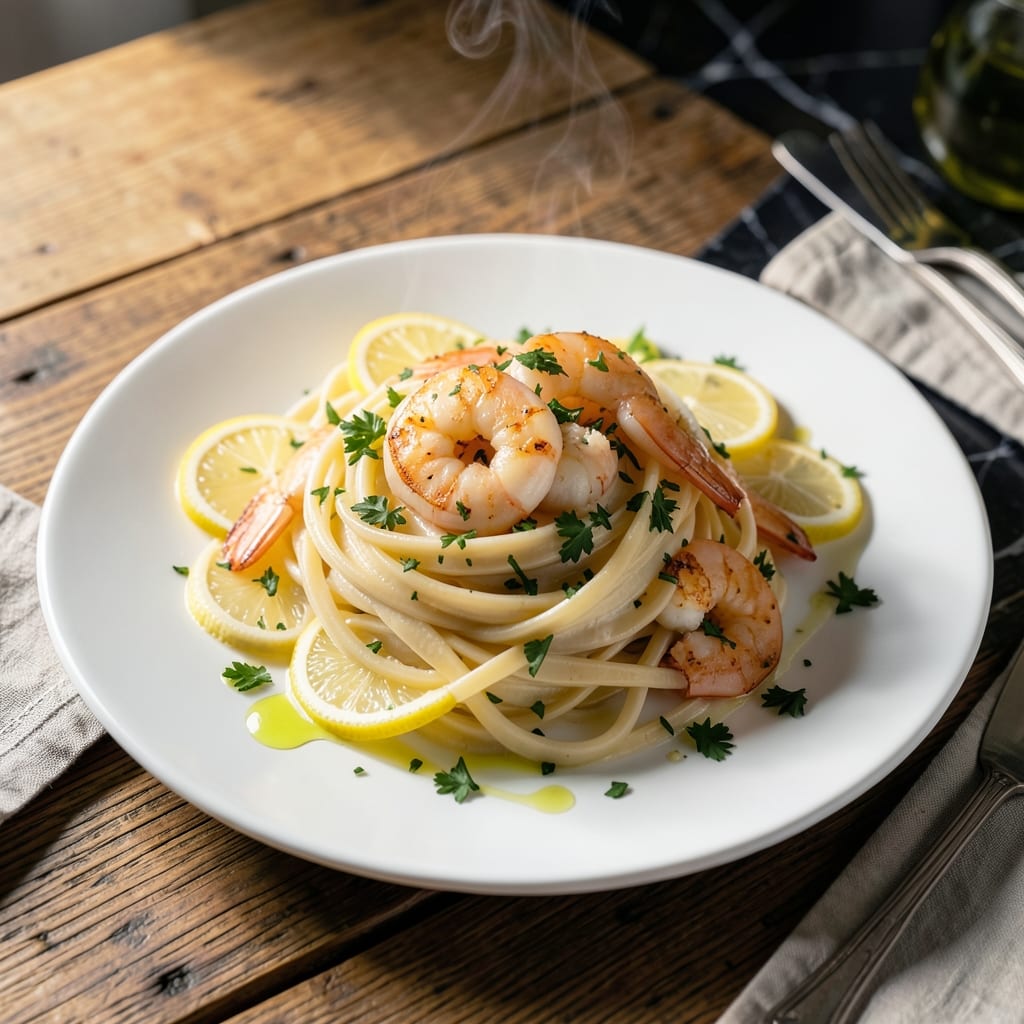
This dish transforms simple ingredients into a restaurant-quality meal with minimal effort. The white wine creates a sophisticated sauce base that enhances the shrimp’s natural sweetness.
I’ve perfected the balance of bright lemon and aromatic garlic to complement the shrimp without overpowering it. The pasta absorbs the flavors beautifully, making every bite rich and satisfying.
The shrimp cooks quickly in the wine-infused sauce, ensuring tender results. A squeeze of fresh lemon at the end adds the perfect finishing touch.
Serve with a crisp white wine for a complete, elegant dining experience. This recipe delivers impressive results with straightforward steps.
Ingredients for Lemon Shrimp Pasta Recipe with White Wine
Restaurant-quality ingredients come together for a bright, sophisticated pasta dish with minimal effort required.
| Ingredient | Amount | Notes |
|---|---|---|
| Linguine Pasta 🍝 | 12 oz | Or sub fettuccine or spaghetti |
| Large Shrimp 🍤 | 1 ½ lb | Peeled, deveined, tails on or off |
| Dry White Wine 🍷 | 1 cup | Sauvignon Blanc or Pinot Grigio |
| Garlic Cloves 🧄 | 5 cloves | Minced finely for even flavor |
| Unsalted Butter 🧈 | ½ cup | Divided for cooking and finishing |
| Extra-Virgin Olive Oil 🫒 | 2 tbsp | For sautéing aromatics |
| Fresh Lemon Juice 🍋 | ⅓ cup | About 2-3 lemons worth |
| Lemon Zest 🍋 | 1 tbsp | Finely grated for bright flavor |
| Heavy Cream 🥛 | ½ cup | For creamy sauce finish |
| Fresh Parsley 🌿 | ¼ cup | Chopped, for garnish and freshness |
| Kosher Salt 🧂 | 1 ½ tsp | Diamond Crystal preferred for even seasoning |
| Freshly Ground Black Pepper 🌶️ | ½ tsp | To taste for subtle heat |
| Crushed Red Pepper Flakes 🌶️ | ¼ tsp | Optional for subtle heat |
| Parmesan Cheese 🧀 | ½ cup | Freshly grated for depth of flavor |
[recipe_ingredient_scaler]
The shrimp quality is paramount here. Wild-caught Gulf shrimp (16/20 count) offer the best texture and sweetness. Whole Foods or local seafood markets are ideal sources for freshness. For the wine, use something you’d drink—Sauvignon Blanc or Pinot Grigio provide the right acidity. The pasta should be high-quality bronze-cut for optimal sauce adhesion.
No white wine? Substitute with chicken stock plus a splash of white wine vinegar. Fresh lemon juice is non-negotiable, but bottled works in a pinch (use one-third less). For a lighter version, half-and-half replaces heavy cream. The Parmesan can be swapped for Pecorino Romano for sharper flavor. Dried pasta is fine, but fresh linguine elevates the dish significantly.
This dish is best served immediately, but leftovers keep in the fridge for 2-3 days. Reheat gently with a splash of water or wine to loosen the sauce. The shrimp will toughen if overcooked during reheating, so warm through just until heated.
Why You’ll Love This Recipe
- One Pan Wonder: I love that everything—linguine, shrimp, even the white wine sauce—cooks in a single pan. Less cleanup, more time to enjoy dinner.
- Bright and Zesty: The lemon and white wine create this tangy, garlicky sauce that makes the shrimp taste like it came from a seaside bistro. Honestly, I could drink the sauce with a straw.
- Date Night Ready: It feels fancy enough for a special occasion but is low-effort enough for a Tuesday. My partner always thinks I put in way more work than I actually did.
- Budget Luxury: Shrimp splurge? Balanced by pantry staples like pasta and white wine. Leftovers (if there are any) taste even better the next day.
Step-by-Step Instructions for Lemon Shrimp Pasta With White Wine
Master this elegant dish with precise timing and layering of bright, citrus-forward flavors.
Step 1: Cook the Linguine Pasta to Al Dente
Bring a large pot of water to a rolling boil and salt it generously with 1.5 tsp kosher salt. Add the 12 oz Linguine Pasta and cook according to package directions until al dente, about 1 minute less than the suggested time.
Reserve 1 cup of the starchy pasta water before draining. This liquid is essential for adjusting the sauce consistency later. Drain the pasta but do not rinse it—the surface starch helps the sauce cling to each strand. Toss the pasta with a drizzle of extra-virgin olive oil to prevent sticking while you prepare the sauce.
Step 2: Sauté the Shrimp and Aromatics
In a large, deep skillet, heat 2 tbsp extra-virgin olive oil and ¼ cup unsalted butter over medium-high heat until the butter melts and begins to foam. Add the 1.5 lb large shrimp, seasoned lightly with ½ tsp kosher salt and ½ tsp freshly ground black pepper, and cook for 2-3 minutes per side until pink and opaque.
Remove the shrimp from the skillet and set aside. In the same pan, add the 5 cloves garlic cloves, minced, and ¼ tsp crushed red pepper flakes. Sauté for 30-45 seconds until the garlic is fragrant but not browned. This builds the aromatic base for your sauce.
Step 3: Deglaze with White Wine and Build the Sauce
Pour in the 1 cup dry white wine and scrape up any browned bits from the bottom of the skillet. Let the wine simmer for 3-4 minutes until it reduces by half. This step intensifies the flavor and balances the acidity of the wine.
Reduce the heat to medium and stir in the 0.33 cup fresh lemon juice, 1 tbsp lemon zest, and the remaining ¼ cup unsalted butter. Once the butter melts, pour in the 0.5 cup heavy cream and stir until the sauce thickens slightly, about 2 minutes. The sauce should coat the back of a spoon.
Step 4: Combine and Finish with Cheese and Herbs
Add the cooked linguine and shrimp back to the skillet, tossing everything together to coat evenly in the sauce. If the mixture seems too thick, add splashes of the reserved pasta water, ¼ cup at a time, until it reaches your desired consistency.
Remove from heat and stir in the 0.5 cup parmesan cheese until melted and fully incorporated. Taste and adjust seasoning if needed. Finally, fold in the 0.25 cup fresh parsley, chopped, for a burst of freshness. Serve immediately while hot, with extra parmesan if desired.
Pro Tips For Making Lemon Shrimp Pasta Recipe With White Wine
- Dry the Shrimp: Pat those shrimp bone-dry with paper towels before cooking—wet shrimp steams instead of searing, and you’ll lose that golden crust that makes the dish.
- Deglaze Right Away: As soon as the shrimp come out, pour in the white wine to scrape up those browned bits on the pan; I learned this the hard way after letting them stick and burn the first few times.
- Skip the Cheap Wine: Use a dry white wine you’d actually drink—sounds obvious, but that $4 bottle leaves a harsh aftertaste that ruins the sauce.
- Save Some Pasta Water: Before draining the linguine, scoop out a cup of the starchy water—it helps the butter and wine sauce cling to the pasta instead of pooling at the bottom of the plate.
Troubleshooting This Recipe
Shrimp Overcooked
If your shrimp turns rubbery, you likely cooked it too long. Shrimp only needs 2-3 minutes per side over medium-high heat. Pull it from the pan as soon as it turns pink and opaque. Pickles once watched me turn shrimp into hockey pucks—lesson learned! 🔥
Sauce Too Thin
If your sauce isn’t coating the pasta, let it simmer longer after adding the 0.5 cup heavy cream. The reduction process takes 3-4 minutes. If it’s still thin, mix 1 tbsp cornstarch with 1 tbsp cold water and stir it in.
Sauce Too Thick
Add reserved pasta water ¼ cup at a time until it reaches your desired consistency. The starchy water helps the sauce cling to the 12 oz Linguine Pasta beautifully. I always reserve at least 1 cup for this purpose.
Wine Flavor Overpowering
If the wine taste is too strong, balance it with more 0.5 cup parmesan cheese or a splash of 0.5 cup heavy cream. The 0.33 cup fresh lemon juice also helps mellow harsh wine flavors. Use a wine you’d actually drink.
Garlic Burnt
Burnt garlic tastes bitter. Keep the heat at medium when sautéing the 5 cloves garlic cloves and only cook for 30-45 seconds until fragrant. Remove the pan from heat if it starts browning too quickly. 💡
Pasta Sticking
Toss the drained pasta with a drizzle of extra-virgin olive oil while preparing the sauce. This prevents the 12 oz Linguine Pasta from clumping together. Also, avoid rinsing the pasta—you need that starch for the sauce!
Nutrition Facts
Frequently Asked Questions
Can I use a different type of pasta?
Fettuccine or spaghetti work just as well as linguine. Choose high-quality bronze-cut pasta for best sauce adhesion. The cooking time may vary slightly.
What if I don’t have white wine?
Substitute with chicken stock plus 1 tbsp white wine vinegar. The acidity mimics wine’s flavor. Avoid cooking wines—they contain added salt and preservatives.
How do I know when the shrimp is done?
Shrimp cooks quickly—just 2-3 minutes per side over medium-high heat. It’s ready when it turns pink and opaque. Overcooking makes it rubbery, so remove it from heat immediately.
Can I make this ahead of time?
Best served fresh, but leftovers keep 2-3 days refrigerated. Reheat gently with a splash of water or wine to loosen the sauce. Avoid microwaving at full power.

Trained in classic French technique but raised on slow-cooked ribs and spicy rubs, she blends culinary skill with smoke and soul.
- Recipe for Boneless Pork Chops in Cast Iron Skillet: Sear and Baste to Juicy Perfection - October 3, 2026
- Recipe for Boneless Cross Rib Roast: Slow-Roasted Beef with Herb Crust - October 3, 2026
- Hamburgers in Sauce Recipe Crock Pot: Slow-Cooked Savory Delight - October 3, 2026