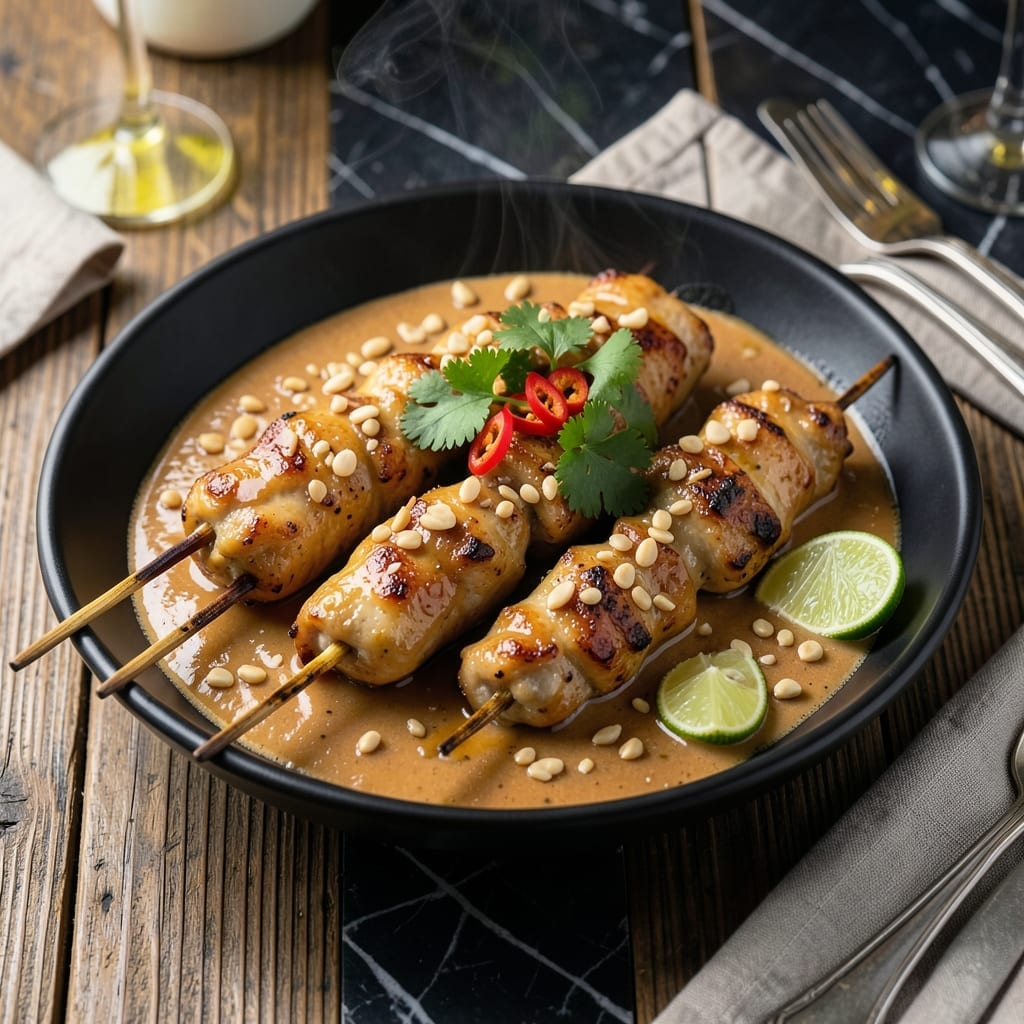
This rich, velvety sauce transforms any dish with its nutty depth and subtle sweetness. I’ve perfected this version to be creamy without dairy, relying on simple blending for a smooth, restaurant-quality finish.
Ready in minutes, it pairs beautifully with grilled meats, fresh vegetables, or as a dressing. Store in the fridge for up to a week—its flavors deepen with time.
Ingredients for Recipe for Peanut Satay
Nine simple ingredients blend into this rich, nutty, restaurant-worthy sauce.
| Ingredient | Amount | Notes |
|---|---|---|
| Creamy Peanut Butter 🥜 | ¾ cup | Unsweetened, smooth variety |
| Coconut Milk 🥥 | ½ cup | Full-fat for creaminess |
| Soy Sauce 🫙 | 2 tbsp | Low-sodium or tamari for gluten-free |
| Lime Juice 🍋 | 2 tbsp | Freshly squeezed preferred |
| Maple Syrup 🍁 | 2 tbsp | Or agave nectar alternative |
| Fresh Garlic Cloves 🧄 | 2 cloves | Minced for bold flavor |
| Fresh Ginger Root 🌿 | 1 tbsp | Grated, peeled first |
| Red Curry Paste 🌶️ | 1 tbsp | Thai-style for authenticity |
| Sesame Oil 🫒 | 1 tsp | Toasted for depth |
[recipe_ingredient_scaler]
The peanut butter is your base—natural, unsweetened is key (the oil-separated kind). Trader Joe’s or Whole Foods carry great options. Coconut milk adds that velvety texture; don’t skimp on the full-fat version (the light stuff just won’t deliver). For the red curry paste, Thai Kitchen or Maesri brands work perfectly. Fresh garlic and ginger are non-negotiable here—they’re what give it that bright, authentic punch.
No coconut milk? Cashew cream or almond milk (with a splash of oil) can sub in. Maple syrup can be swapped for agave or coconut sugar. If you’re out of lime juice, rice vinegar works in a pinch (but use half the amount). The soy sauce can be replaced with coconut aminos for a gluten-free version. No fresh ginger? Ground ginger at one-third the amount works, but fresh is always better.
This keeps beautifully in the fridge for up to 1 week. The flavors actually get better after a day or two. Freeze for up to 3 months in airtight containers (ice cube trays are perfect for single servings). Give it a good stir before using—it’ll thicken as it chills.
Why You’ll Love This Recipe
- 5-Minute Mix: I just blend peanut butter, coconut milk, soy sauce, lime, and maple syrup—no cooking required.
- Ridiculously Good: The nutty, tangy, slightly sweet balance is the reason I make this every week.
- Dinner or Dip: I slather it on chicken tonight, then use leftovers as a veggie dip tomorrow.
- Pantry Hero: All shelf-stable staples, so I can throw this together without a grocery run.
Step-by-Step Instructions for Peanut Satay
Here’s the method I use for a silky, rich sauce that clings perfectly to skewers.
Step 1: Sauté the Aromatics
Heat the 1 tsp Sesame Oil in a small saucepan over medium heat. Add the 2 cloves Fresh Garlic Cloves and 1 tbsp Fresh Ginger Root, stirring constantly for 30-45 seconds until fragrant but not browned.
This step blooms the flavors and prevents any raw garlic or ginger taste in the finished sauce. Keep the heat moderate—burnt aromatics will make the sauce bitter.
Step 2: Build the Flavor Base
Add the 1 tbsp Red Curry Paste to the pan and cook for 1 minute, stirring continuously. The paste will darken slightly and release its complex, spicy-sweet aroma.
Pour in the 2 tbsp Soy Sauce, 2 tbsp Maple Syrup, and 2 tbsp Lime Juice. Stir well and let the mixture simmer for 2 minutes until it thickens slightly and becomes glossy.
Step 3: Incorporate the Peanut Butter and Coconut Milk
Reduce heat to low and add the 0.75 cup Creamy Peanut Butter. Stir vigorously with a whisk or wooden spoon to break up any lumps and fully combine it with the liquid. The mixture will thicken significantly at first.
Slowly pour in the 0.5 cup Coconut Milk, a little at a time, whisking constantly until the sauce is smooth and creamy. This gradual addition prevents the peanut butter from seizing up.
Step 4: Simmer to Perfection
Once fully combined, let the sauce simmer over low heat for 3-5 minutes. Stir occasionally to prevent sticking. You’re looking for a velvety texture that coats the back of a spoon but still drizzles easily.
Taste and adjust seasoning if needed, though the combination of sweet, salty, and tangy should already be balanced. If it’s too thick, thin with a splash of warm water.
Pro Tips For Making Recipe For Peanut Satay
- Simmer, Don’t Boil: Keep the heat at a gentle simmer—boiling coconut milk can cause it to separate. I learned this the hard way after my first batch turned into a greasy mess.
- Thin the Peanut Butter: Warm the peanut butter slightly in the microwave for 20-30 seconds before mixing. It blends into the coconut milk much more smoothly, saving you from stubborn clumps.
- Balance the Sweetness: Taste before adding all the maple syrup—some peanut butters are sweeter than others. I usually start with half the amount and adjust from there.
- Acid Last: Stir in the lime juice at the very end, after removing from heat. Adding it too early can make the sauce curdle, and nobody wants chunky satay.
Common Mistakes When Making This Recipe
Over-Blending Issues
Blending too long can make your sauce thin and oily. I pulse my blender 5-6 times in 2-second bursts for a creamy yet thick consistency. Watch for oil separation—it means you’ve over-processed the peanut butter.
Skipping the Sauté Step
Raw garlic and ginger create harsh, sharp flavors. Always bloom them in 1 tsp sesame oil for 30-45 seconds before adding liquids. This builds depth and removes any bitter edge.
Wrong Peanut Butter
Natural, unsweetened peanut butter is essential. Sweetened or hydrogenated versions will make your sauce cloying or grainy. I trust Trader Joe’s or Whole Foods for smooth, oil-separated options.
Lumpy Texture
To avoid lumps, whisk the peanut butter into the warm liquid gradually. If clumps form, blend briefly or strain through a fine-mesh sieve. A smooth sauce clings better to skewers and looks more professional. 💡
Overheating the Sauce
Peanut butter can separate if exposed to high heat. Keep your stovetop at low heat after adding it, and never let the sauce boil. Gentle warmth preserves the creamy texture.
Ignoring Balance
Taste as you go—this sauce needs harmony between sweet, salty, and tangy. If it’s too thick, thin with 1-2 tbsp warm water. Adjust with extra lime for acidity or maple syrup for sweetness.
Nutrition Facts
Frequently Asked Questions
Can I use crunchy peanut butter instead?
Stick with smooth for this recipe. Crunchy peanut butter will create an uneven texture and won’t blend as smoothly into the sauce.
How do I fix a sauce that’s too thick?
Thin it gradually with 1-2 tbsp warm water or coconut milk until it reaches your desired consistency. Stir well between additions.
Can I make this ahead of time?
The flavors deepen after 24 hours in the fridge. It keeps well for 1 week refrigerated or 3 months frozen.
What if I don’t have coconut milk?
Use cashew cream or almond milk with 1 tsp oil added for richness. The texture may be slightly thinner but still delicious.

Trained in classic French technique but raised on slow-cooked ribs and spicy rubs, she blends culinary skill with smoke and soul.
- Recipe for Boneless Pork Chops in Cast Iron Skillet: Sear and Baste to Juicy Perfection - October 3, 2026
- Recipe for Boneless Cross Rib Roast: Slow-Roasted Beef with Herb Crust - October 3, 2026
- Hamburgers in Sauce Recipe Crock Pot: Slow-Cooked Savory Delight - October 3, 2026