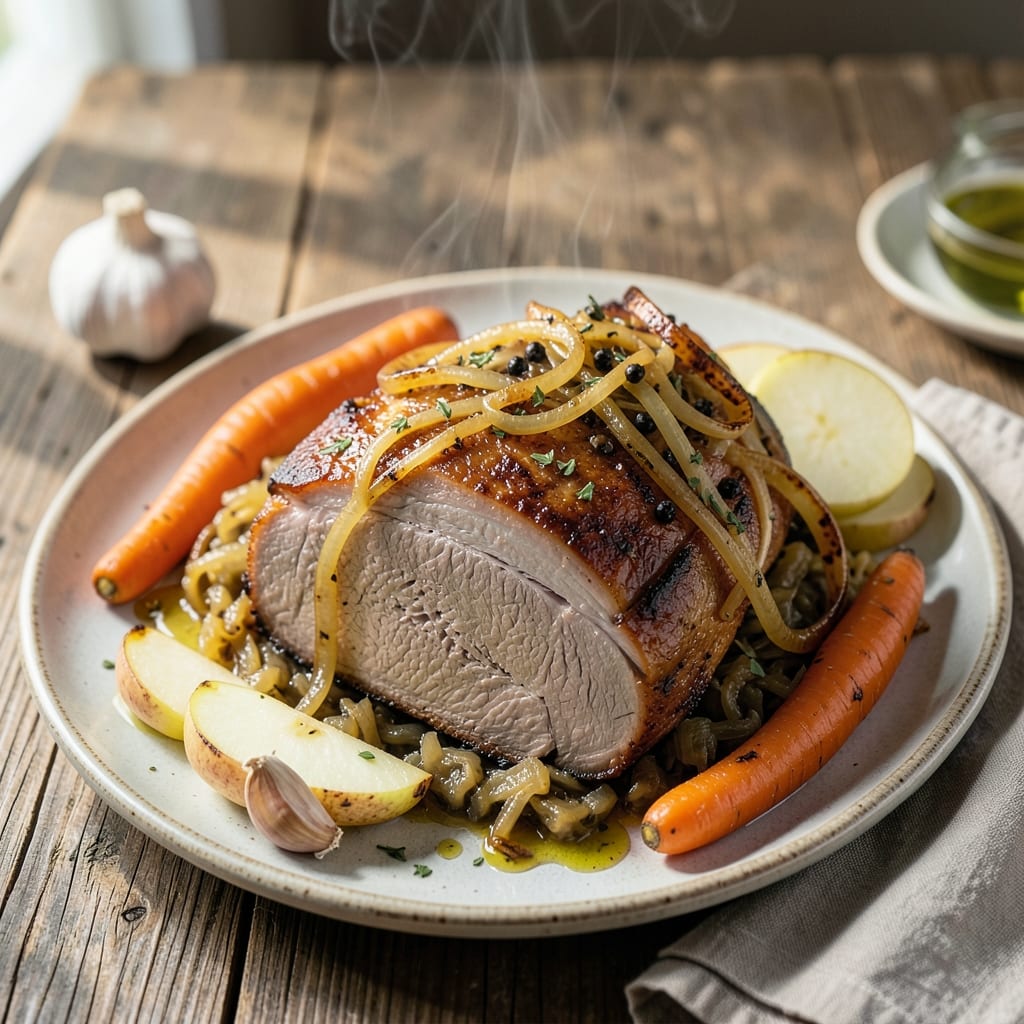
This pork loin roast with sauerkraut delivers tender, slow-cooked perfection that fills your kitchen with irresistible aromas.
I developed this recipe after years of experimenting with pork and sauerkraut combinations, perfecting the balance between juicy meat and tangy fermented cabbage. The low and slow cooking method transforms a simple pork loin into something extraordinary.
The secret lies in the marriage of flavors as the pork roasts with the sauerkraut, allowing the tanginess to mellow while keeping the meat moist. The result is a dish that’s both hearty and comforting, with layers of flavor in every bite.
Perfect for Sunday suppers or special occasions, this recipe proves that simple ingredients can create an unforgettable meal. Let me show you how to achieve this at home.
Ingredients for Recipe for Pork Loin Roast with Sauerkraut
Transform simple pork loin into a tender, aromatic masterpiece with these carefully selected ingredients.
| Ingredient | Amount | Notes |
|---|---|---|
| Pork Loin Roast 🥩 | 2 ½ lb | Boneless, trimmed of excess fat |
| Sauerkraut 🥬 | 2 cups | Drained, rinsed lightly if too salty |
| Yellow Onion 🧅 | 1 whole | Medium-sized, thinly sliced |
| Granny Smith Apple 🍏 | 1 whole | Peeled, cored, and diced |
| Carrots 🥕 | 2 whole | Medium-sized, sliced into thick rounds |
| Garlic Cloves 🧄 | 4 cloves | Minced finely for even distribution |
| Juniper Berries 🌿 | 1 tsp | Lightly crushed to release aroma |
| Bay Leaves 🍃 | 2 whole | Dried, for depth of flavor |
| Dijon Mustard 🟡 | 2 tbsp | For tangy rub on pork |
| Apple Cider Vinegar 💧 | 2 tbsp | Balances richness of pork |
| Brown Sugar 🟤 | 1 tbsp | Light or dark, for caramelization |
| Kosher Salt 🧂 | 1 ½ tsp | Diamond Crystal preferred for even seasoning |
| Black Pepper 🌶️ | 1 tsp | Freshly ground for best flavor |
| Olive Oil 🫒 | 2 tbsp | Extra-virgin for searing |
| Chicken Stock 🥘 | ½ cup | Low-sodium preferred to control saltiness |
[recipe_ingredient_scaler]
The pork loin is the foundation here. Opt for center-cut roasts with even marbling for consistent tenderness. Whole Foods or Costco offer excellent quality, but any reputable butcher will have suitable cuts. For sauerkraut, refrigerated varieties (like Boar’s Head) retain better texture and flavor than canned. The apple adds subtle sweetness—Granny Smith holds its shape during slow cooking better than sweeter varieties.
No juniper berries? Caraway seeds at half the amount provide a similar earthy note. Out of apple cider vinegar? White wine vinegar works in a pinch. For a deeper flavor profile, substitute one-third of the chicken stock with dry white wine. The Dijon mustard can be replaced with whole-grain mustard for a coarser texture, though the flavor impact remains comparable.
Store the pork loin in its original packaging in the coldest part of your refrigerator for up to 3-4 days. Once opened, sauerkraut keeps for 1 week in a sealed container. Leftovers of the finished dish reheat beautifully and taste even better after 2-3 days, as the flavors continue to meld.
Why You’ll Love This Recipe
- I stretch this to three meals: dinner, next-day sandwiches, and a hearty soup base.
- One Pan Wonder: This dish cooks the pork, sauerkraut, apples, and carrots together—no extra pots or pans to scrub.
- Tangy Meets Sweet: The sauerkraut’s zing and the Granny Smith apple’s crisp sweetness balance the pork’s richness perfectly.
- Feeds a Crowd: I stretch this to three meals: dinner, next-day sandwiches, and a hearty soup base.
Step-by-Step Instructions for Pork Loin Roast With Sauerkraut
This method ensures fall-apart tenderness with balanced tangy and sweet notes throughout.
Step 1: Prepare the Pork and Aromatic Base
Pat the 2.5 lb Pork Loin Roast dry with paper towels, then rub it evenly with the 1.5 tsp Kosher Salt and 1 tsp Black Pepper. This seasoning creates the foundation for flavor penetration during cooking.
In a small bowl, mix the 2 tbsp Dijon Mustard, 1 tbsp Brown Sugar, and 2 tbsp Apple Cider Vinegar until smooth. Coat the pork loin completely with this mixture, ensuring every surface is covered. The acidity in the vinegar will help tenderize the meat while the sugar promotes caramelization.
Step 2: Build the Sauerkraut Mixture
In a large Dutch oven or oven-safe pot, heat the 2 tbsp Olive Oil over medium heat. Add the thinly sliced Yellow Onion and cook for 3-4 minutes until it begins to soften and turn translucent.
Add the minced Garlic Cloves, diced Granny Smith Apple, sliced Carrots, 1 tsp Juniper Berries (lightly crushed), and 2 whole Bay Leaves. Sauté for another 2 minutes until the aromatics release their fragrance.
Stir in the 2 cups Sauerkraut and 0.5 cup Chicken Stock, combining all ingredients thoroughly. The liquid will help steam the pork while preventing the sauerkraut from drying out.
Step 3: Sear and Braise the Pork
Push the sauerkraut mixture to the sides of the pot, creating a well in the center. Place the pork loin in this well and sear on all sides for 2-3 minutes per side until golden brown. This initial sear locks in juices and develops deep flavor.
Once seared, nestle the pork loin into the sauerkraut mixture, ensuring it’s mostly submerged. The moisture from the sauerkraut and stock will braise the meat, keeping it incredibly juicy.
Step 4: Slow Cook to Perfection
Cover the pot and transfer it to a preheated 325°F oven. Braise for 2 to 2.5 hours, or until the pork reaches an internal temperature of 145°F. Baste the pork with the cooking liquid every 45 minutes to ensure even cooking and flavor distribution.
The pork is done when it’s tender to the touch and a meat thermometer inserted into the thickest part reads 145°F. The sauerkraut will have softened significantly, absorbing all the pork’s rich flavors.
Step 5: Rest and Serve
Remove the pork from the oven and transfer it to a cutting board. Tent it loosely with foil and let it rest for 15 minutes. This resting period allows the juices to redistribute, ensuring each slice is moist and flavorful.
Slice the pork loin against the grain into ½-inch thick pieces. Serve the pork atop the sauerkraut mixture, spooning some of the cooking liquid over each serving. The result is a harmonious blend of tender pork and tangy, slightly sweet sauerkraut with the perfect balance of textures.
Pro Tips For Making Recipe For Pork Loin Roast With Sauerkraut
- Sear the Pork First: I learned this the hard way—browning the pork loin in a hot pan with a little oil before roasting adds a depth of flavor that braising alone can’t achieve. About 3-4 minutes per side on medium-high heat does the trick.
- Rinse the Sauerkraut: Sounds weird, but it works: give the sauerkraut a quick rinse under cold water and squeeze out excess liquid to cut the sharpness. This keeps it from overpowering the dish.
- Skip the Overcooking: Pork loin dries out fast, so pull it from the oven when it hits 145°F internal temp—it’ll keep cooking as it rests. I used to wait for 160°F and wondered why my roast was tough.
- Add Apple Late: Toss the Granny Smith slices in during the last 30 minutes of cooking to keep them from turning to mush. They’ll soften just enough to soak up the juices without losing their shape.
Storing and Reheating This Recipe
Refrigerator Storage
Let this creation cool for no more than 2 hours before transferring to airtight containers. I use glass Pyrex with snap-on lids from New Seasons Market. Store at 40°F or below for up to 4 days. The flavors actually deepen overnight as the tangy sauerkraut and juicy pork meld together. ❄️
Freezer Storage
This dish freezes beautifully for up to 3 months without losing quality. I recommend flat freezer bags from Portland farmers markets because they stack efficiently. Leave 1 inch of headspace for expansion and squeeze out excess air to prevent freezer burn.
Stovetop Reheating
This is my preferred method because it maintains the best texture. Pour the pork and sauerkraut into a heavy-bottomed pot, add ¼ cup chicken stock to prevent sticking, and heat over medium-low heat for 10-15 minutes. Taste and adjust seasonings—it often needs a pinch of salt after reheating. 🔥
Microwave Reheating
For quick lunches, microwave individual portions covered with a damp paper towel. Heat on 70% power for 2-3 minutes, stir, then continue in 1-minute intervals until reaching 165°F. Add a splash of water if it looks dry.
Oven Reheating
Preheat oven to 325°F. Place the pork and sauerkraut in an oven-safe dish, cover with foil, and warm for 20-25 minutes. This method works best for larger portions and helps maintain moisture.
Nutrition Facts
Frequently Asked Questions
What’s the best way to keep the pork moist?
Baste the pork every 45 minutes with cooking liquid during braising. The sauerkraut and stock create steam that locks in moisture for perfect tenderness.
Can I use a slow cooker instead of the oven?
Yes! Cook on low heat for 6-7 hours or high heat for 3-4 hours. Sear the pork first for best flavor, then transfer to the slow cooker with sauerkraut mixture.
Why does the recipe call for juniper berries?
Juniper adds a subtle piney depth that complements pork beautifully. If unavailable, use ½ tsp caraway seeds as a substitute for similar earthy notes.
How do I prevent the sauerkraut from becoming mushy?
Rinse it lightly before using to remove excess salt, which helps it retain texture. Also, avoid over-stirring during cooking to maintain some crispness.

Trained in classic French technique but raised on slow-cooked ribs and spicy rubs, she blends culinary skill with smoke and soul.
- Recipe for Boneless Pork Chops in Cast Iron Skillet: Sear and Baste to Juicy Perfection - October 3, 2026
- Recipe for Boneless Cross Rib Roast: Slow-Roasted Beef with Herb Crust - October 3, 2026
- Hamburgers in Sauce Recipe Crock Pot: Slow-Cooked Savory Delight - October 3, 2026