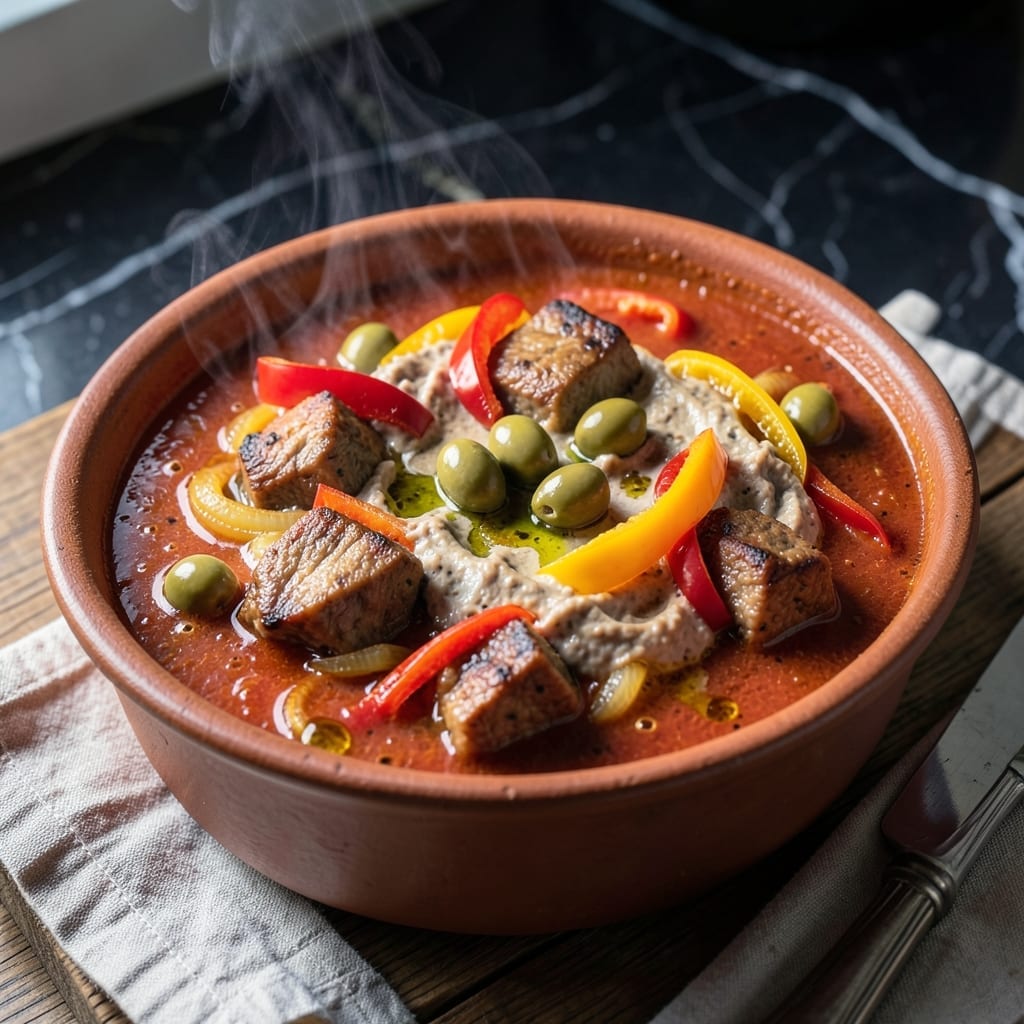
This Filipino goat stew brings comfort in every rich, tomato-infused bite. I learned to perfect it by following my grandmother’s intuitive methods, turning tough cuts into fork-tender meat.
The dish builds deep flavor through slow cooking with liver spread and potatoes. Traditional versions use goat, but beef works just as well for easier preparation.
What emerges is a thick, hearty stew with layers of savory, slightly tangy sauce clinging to every piece. The potatoes soak up the sauce beautifully.
Serve with steamed rice to complete this satisfying meal. Here’s how to make it at home.
Ingredients for Recipe Kaldereta
Rich tomato base and tender goat meat come together in this traditional stew.
| Ingredient | Amount | Notes |
|---|---|---|
| Goat Meat 🐐 | 2 lb | Boneless, cut into cubes |
| Liver Spread 🫒 | ½ cup | Filipino-style preferred |
| Tomato Sauce 🍅 | 2 cups | Thick, rich variety |
| Bell Peppers 🌶️ | 2 whole | Red and green, sliced |
| Green Olives 🫒 | ½ cup | Pitted and halved |
| Onion 🧅 | 1 whole | Large, chopped finely |
| Garlic Cloves 🧄 | 6 cloves | Minced for depth |
| Potatoes 🥔 | 2 whole | Peeled and cubed |
| Carrots 🥕 | 2 whole | Peeled and sliced |
| Bay Leaves 🌿 | 2 pieces | Dried, for aroma |
| Ground Black Pepper 🌶️ | 1 tsp | Freshly ground preferred |
| Salt 🧂 | 1 tsp | Adjust to taste |
| Cooking Oil 🫒 | 2 tbsp | Vegetable or canola |
| Water 💧 | 1 cup | For adjusting sauce consistency |
| Soy Sauce 🫒 | 2 tbsp | For umami depth |
[recipe_ingredient_scaler]
The goat meat is key here. Ask your butcher for bone-in cuts—they add richness to the broth. Most Asian markets carry goat meat if your regular grocery store doesn’t. Look for pieces with good marbling; they’ll stay tender through the long cook. Liver spread might seem unusual, but Pate de Foie or Renée’s are great Filipino brands to try. Don’t skip it; it’s what gives kaldereta its signature depth.
No liver spread? Chicken liver pâté at half the amount works in a pinch. Out of green olives? Black olives or capers add a similar briny kick. If you can’t find goat meat, beef chuck is the closest substitute (though cook time may vary). The soy sauce can be swapped for fish sauce if you want a more authentic Filipino profile. Bell peppers can be any color—just keep the total volume the same.
This stew tastes even better the next day once all the flavors meld. Keeps in the fridge for up to 5 days and freezes beautifully for 3 months. Reheat gently on the stove, adding a splash of water if it thickens too much. Always serve with steamed rice to soak up that amazing sauce.
Why You’ll Love This Recipe
- One Pot Wonder: I love that everything simmers together—the goat meat, liver spread, and tomato sauce—minimal cleanup, maximum flavor.
- Rich and Tangy: The liver spread and green olives add this deep, savory punch that makes every bite crave-worthy.
- Crowd Pleaser: Honestly, I’ve served this at parties and weeknight dinners alike, and it’s always the first dish to disappear.
Step-by-Step Instructions for Filipino Goat Stew With Rich Tomato Base
This traditional method builds deep, complex flavors through careful layering and slow simmering.
Step 1: Brown the Goat Meat and Build the Base
Heat 2 tbsp cooking oil in a large pot over medium-high heat. Add the 2 lb goat meat cubes and sear until browned on all sides, about 5-7 minutes. This creates a flavorful fond that will enrich the stew.
Remove the goat meat and set aside. In the same pot, sauté the chopped onion and minced garlic cloves until fragrant and translucent, about 2-3 minutes. The onion should soften without browning to maintain a clean, aromatic base.
Step 2: Develop the Tomato and Liver Foundation
Add the 2 cups tomato sauce and 0.5 cup liver spread to the pot, stirring to combine with the sautéed aromatics. Cook for 3-4 minutes until the mixture darkens slightly and the raw flavor of the liver spread mellows.
Return the browned goat meat to the pot and stir to coat evenly. Add the 2 pieces bay leaves, 1 tsp salt, and 1 tsp ground black pepper. This step ensures every piece of meat absorbs the rich, savory foundation of the stew.
Step 3: Simmer with Vegetables for Tenderness
Pour in 1 cup water and 2 tbsp soy sauce, then bring the mixture to a gentle boil. Reduce heat to low, cover, and let it simmer for 1 to 1.5 hours, or until the goat meat is fork-tender.
Add the peeled and cubed potatoes, peeled and sliced carrots, sliced bell peppers, and pitted and halved green olives during the last 20 minutes of simmering. This timing ensures the vegetables cook through without turning mushy while soaking up the stew’s rich flavors.
Step 4: Adjust and Finish for Perfect Consistency
Once the goat meat and vegetables are tender, remove the lid and simmer for an additional 5-10 minutes to allow the stew to thicken slightly. Taste and adjust seasoning if needed—this is your chance to balance the flavors.
The stew should have a thick, hearty consistency with the tomato sauce clinging to the meat and vegetables. Discard the bay leaves before serving, and ensure each component is coated in the rich, savory sauce. Serve hot with steamed rice for an authentic experience.
Pro Tips For Making Recipe Kaldereta
- Tenderize the Goat: Pound the goat meat with a mallet or marinate it in calamansi or vinegar for at least 30 minutes—I learned this the hard way after chewing through tough chunks in my first attempt.
- Bloom the Liver Spread: Sauté the liver spread in oil for 2-3 minutes before adding liquids to deepen its flavor and remove the raw taste, or it’ll leave a metallic aftertaste in your kaldereta.
- Skip Early Salting: Hold off on seasoning the goat meat until it’s browned; salting too early draws out moisture and steams the meat instead of searing it.
- Use Quality Tomato Sauce: Splurge on a thick, rich tomato sauce—watery or overly sweet brands thin out the sauce and make the dish taste flat, no matter how long you simmer it.
Troubleshooting This Recipe
Meat Still Tough
If your goat meat isn’t tender after 1.5 hours, it likely needs more time. Goat is tougher than beef—simmer covered for another 30-45 minutes. Check liquid levels and add ½ cup water if needed. I learned this the hard way with my first batch. 💪
Sauce Too Thin
Uncover and simmer for an additional 10-15 minutes to reduce the liquid. If it’s still thin, mix 1 tbsp cornstarch with 2 tbsp cold water and stir in. Simmer for 2-3 minutes until thickened. Grandmother never measured—she just knew by feel.
Sauce Too Thick
Stir in ¼ cup water or beef broth at a time until reaching your desired consistency. The potatoes will absorb some liquid as they cook, so check before adding too much. This stew should coat the back of a spoon but still flow easily.
Liver Spread Overpowering
If the liver flavor is too strong, balance it with 1 tbsp vinegar or 1 tsp sugar. The acidity or sweetness will mellow the richness. I prefer cane vinegar for an authentic Filipino touch. Next time, try reducing the liver spread to ⅓ cup.
Vegetables Mushy
You likely added them too early. The potatoes and carrots should go in only during the last 20 minutes of simmering. For firmer veggies, add them with just 10-15 minutes left. Bell peppers can handle the full 20 minutes without losing texture. 🥕
Bitter Aftertaste
This usually comes from over-browning the liver spread. Cook it with the tomato sauce for only 3-4 minutes until it mellows. If it’s already bitter, stir in 1 tsp brown sugar to balance the flavors. I keep a small bowl of sugar ready for adjustments.
Nutrition Facts
Frequently Asked Questions
Can I use beef instead of goat?
Use beef chuck for similar texture. It cooks faster, so reduce simmering time to 45-60 minutes. The flavor will be milder but still delicious.
What if I don’t have liver spread?
Substitute with chicken liver pâté at half the amount. For a vegetarian option, add 1 tbsp soy sauce and 1 tsp sugar for depth.
How do I store leftovers?
Keep in an airtight container in the fridge for up to 5 days or freeze for 3 months. Reheat gently on the stove with a splash of water.
Can I make this in a slow cooker?
Yes! Brown the meat first, then cook on low for 6-8 hours. Add vegetables during the last 1 hour.

Trained in classic French technique but raised on slow-cooked ribs and spicy rubs, she blends culinary skill with smoke and soul.
- Recipe for Boneless Pork Chops in Cast Iron Skillet: Sear and Baste to Juicy Perfection - October 3, 2026
- Recipe for Boneless Cross Rib Roast: Slow-Roasted Beef with Herb Crust - October 3, 2026
- Hamburgers in Sauce Recipe Crock Pot: Slow-Cooked Savory Delight - October 3, 2026