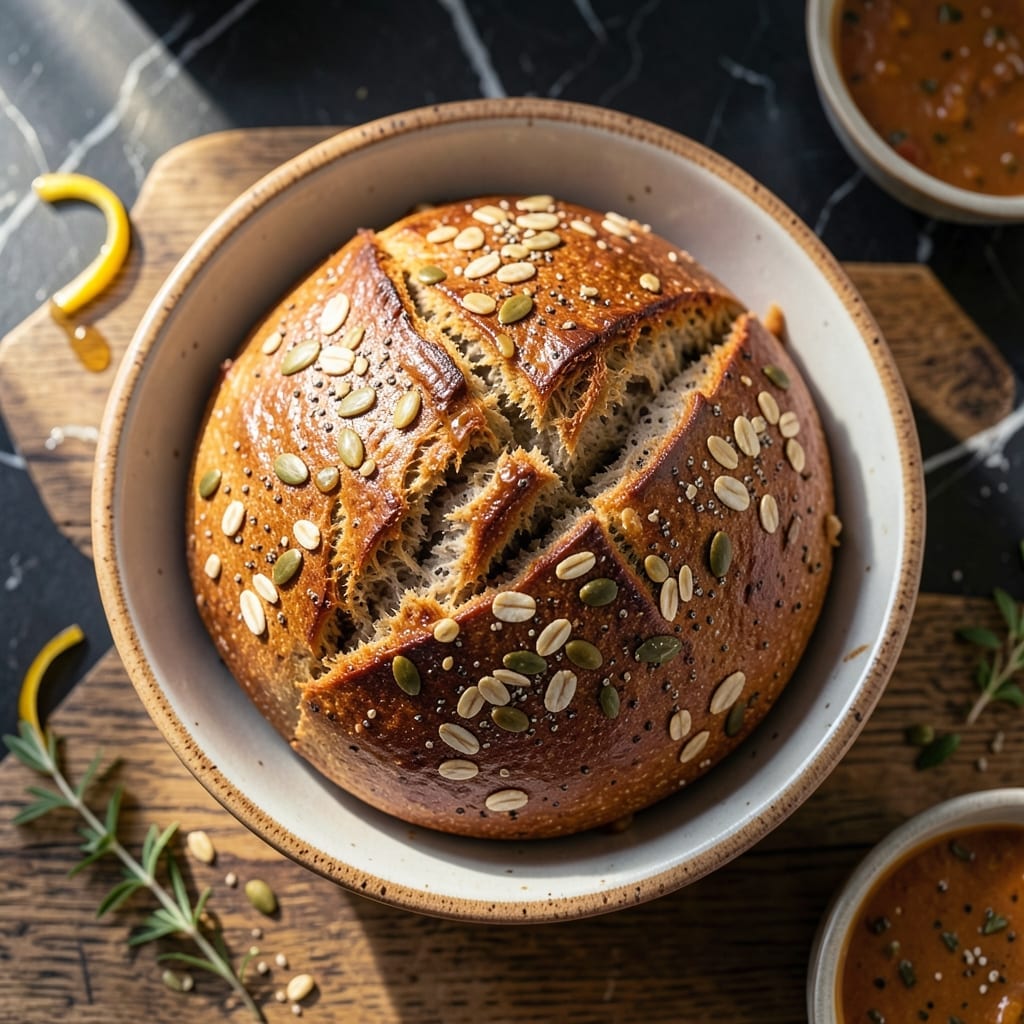
I developed this fiber-rich loaf after years of testing bread recipes that claimed to be healthy but left me hungry an hour later.
This version uses whole grains and seeds to create a low GI bread that keeps blood sugar stable while delivering real bread texture.
The secret is a combination of oats, flaxseed, and whole wheat flour that creates structure without dense heaviness.
You’ll get a hearty, nutty loaf that toasts beautifully and provides sustained energy throughout your morning.
Ingredients for Recipe Low Gi Bread
Whole grains and seeds come together for a fiber-rich, low GI loaf with real bread texture.
| Ingredient | Amount | Notes |
|---|---|---|
| Whole Wheat Flour 🌾 | 3 cups | Stone-ground preferred for texture |
| Rolled Oats 🥣 | 1 cup | Old-fashioned, not quick oats |
| Ground Flaxseed 🪴 | ½ cup | Golden or brown flaxseed |
| Sunflower Seeds 🌻 | ¼ cup | Raw, unsalted for best flavor |
| Pumpkin Seeds 🎃 | ¼ cup | Green, hulled (pepitas) |
| Warm Water 💧 | 1 ½ cups | About 110°F for yeast activation |
| Active Dry Yeast 🍞 | 2 ¼ tsp | One standard packet plus extra |
| Honey 🍯 | 2 tbsp | Or maple syrup for vegan option |
| Olive Oil 🫒 | 2 tbsp | Extra-virgin preferred for richness |
| Salt 🧂 | 1 ½ tsp | Fine sea salt for even distribution |
| Chia Seeds 🌱 | 2 tbsp | Optional for added fiber boost |
| Vital Wheat Gluten 🌾 | 2 tbsp | Improves texture in whole grain breads |
[recipe_ingredient_scaler]
The whole wheat flour is the backbone here. King Arthur or Bob’s Red Mill are my go-tos for consistent quality. Flaxseed and oats add fiber without sacrificing texture—bulk bins at Whole Foods are perfect for buying just what you need. Sunflower and pumpkin seeds (pepitas) bring crunch and healthy fats. Look for raw, unsalted seeds to avoid any bitter aftertaste from roasting.
No flaxseed? Chia seeds at the same amount work in a pinch. Out of pumpkin seeds? Try chopped walnuts or almonds. If you’re avoiding honey, maple syrup or agave are great substitutes. Vital wheat gluten isn’t strictly necessary, but it helps with rise in these denser whole-grain loaves—Amazon or specialty baking stores usually carry it.
Seeds keep for 3-6 months in the fridge or freezer (they go rancid fast at room temp). The loaf freezes beautifully—slice before freezing for easy toasting. Keeps fresh at room temperature for about 5 days in an airtight container.
Why You’ll Love This Recipe
- Mix and Bake: No yeast, no waiting—just stir the whole wheat flour, oats, and seeds, then pop it in the oven.
- Nutty Crunch: The toasted sunflower and pumpkin seeds give every bite that satisfying, hearty crunch.
- Meal Prep Hero: I slice and freeze it, then toast straight from the freezer for fresh-baked taste all week.
- Budget Stretcher: Honestly, a loaf costs pennies compared to store-bought and lasts us days.
Step-by-Step Instructions for Low GI Bread
This method ensures a perfectly textured loaf with maximum fiber and sustained energy benefits.
Step 1: Activate the Yeast and Prepare Wet Ingredients
In a large mixing bowl, combine the 1.5 cups Warm Water with the 2 tbsp Honey and 2.25 tsp Active Dry Yeast. Stir gently and let it sit for 5-7 minutes until the mixture becomes frothy and bubbly—this confirms the yeast is active and ready to work its magic.
Once the yeast is activated, stir in the 2 tbsp Olive Oil. The oil enriches the dough and adds a subtle depth of flavor. I always use extra-virgin for the best results. The mixture should look slightly cloudy with a layer of foam on top.
Step 2: Combine Dry Ingredients for Structure and Flavor
In a separate large bowl, whisk together the 3 cups Whole Wheat Flour, 1 cup Rolled Oats, 0.5 cup Ground Flaxseed, 2 tbsp Vital Wheat Gluten, and 1.5 tsp Salt. The vital wheat gluten is crucial here—it compensates for the lower gluten content in whole wheat flour, ensuring your bread rises properly and has a good texture.
Add the 0.25 cup Sunflower Seeds, 0.25 cup Pumpkin Seeds, and 2 tbsp Chia Seeds to the dry mix. These seeds not only boost the fiber and nutritional profile but also add a delightful crunch and nutty flavor to every bite. Stir until all ingredients are evenly distributed.
Step 3: Mix and Knead the Dough
Gradually add the dry ingredients to the wet mixture, stirring with a wooden spoon until a shaggy dough forms. It will look rough and slightly sticky at this stage—that’s perfectly normal. Turn the dough out onto a lightly floured surface and knead for 8-10 minutes by hand.
Kneading develops the gluten, giving your bread structure and chewiness. The dough should become smooth and elastic, though it will still be slightly tacky due to the whole grains. If it sticks too much, dust your hands and the surface with a bit more flour, but avoid adding too much as it can make the bread dense.
Step 4: Let the Dough Rise Until Doubled
Place the kneaded dough in a lightly oiled bowl, turning it once to coat all sides with oil. Cover the bowl with a clean kitchen towel or plastic wrap and let it rise in a warm, draft-free place for 1 to 1.5 hours, or until it has doubled in size.
I like to place mine near a sunny window or on top of the refrigerator where it’s slightly warmer. You’ll know it’s ready when the dough springs back slowly when pressed gently with a finger, leaving a slight indentation. This rise time allows the yeast to ferment the sugars, developing flavor and improving the bread’s texture.
Step 5: Shape, Proof, and Bake the Loaf
Punch down the risen dough to release the air, then shape it into a loaf and place it in a greased 9×5-inch loaf pan. Smooth the top with damp hands for an even finish. Cover again and let it proof for 30-45 minutes until the dough rises just above the rim of the pan.
Preheat your oven to 375°F. Once the dough has proofed, bake for 35-40 minutes until the top is deep golden brown and the loaf sounds hollow when tapped on the bottom. If the top browns too quickly, tent the pan with aluminum foil halfway through baking.
Remove the bread from the pan and let it cool on a wire rack for at least 20 minutes before slicing. This cooling period allows the interior to set properly, ensuring clean slices and the best texture for your fiber-rich loaf.
Pro Tips For Making Recipe Low Gi Bread
- Soak the Seeds: Cover sunflower and pumpkin seeds in warm water for 15-20 minutes before mixing—this softens them and prevents a crunchy, undercooked texture in your finished loaf.
- Check Oven Temp: I learned this the hard way—low GI bread needs a steady 350°F (175°C), so use an oven thermometer. Too hot and the outside burns before the flaxseed and oats cook through.
- Weigh Your Flour: Scooping whole wheat flour straight from the bag packs it down, so spoon it into the measuring cup or use a scale. After three dense loaves, I finally switched to weighing and the difference was night and day.
- Cool Completely: Sounds tedious, but let the bread cool on a wire rack for at least an hour before slicing—cutting too soon makes it gummy, especially with all that flaxseed and oats absorbing moisture.
Serving Suggestions for This recipe low gi bread
Breakfast Pairings
This bread makes incredible avocado toast—mash ½ ripe avocado with salt, pepper, and a squeeze of lemon, then spread on warm toasted slices. I love adding sunflower seed sprouts for extra crunch. The nutty flavors complement each other perfectly. 💛
Soup Companions
Serve thick slices with lentil soup or minestrone—the hearty texture holds up to dipping. A 1-inch slice per bowl is my standard. The fiber in both keeps you full for hours. The seeds add a nice contrast to the smooth soup.
Cheese Boards
Include this loaf on cheese boards with aged cheddar or goat cheese. The flaxseed and oats add texture that pairs beautifully with creamy cheeses. I always add a drizzle of honey to enhance the natural sweetness.
Sandwich Foundation
Use for hearty sandwiches like turkey with cranberry sauce or hummus with roasted vegetables. The sturdy structure prevents sogginess. Toast the bread lightly first for extra crunch. I prefer 2 thin slices per sandwich for balance.
French Toast Twist
Make low-GI French toast by soaking 1-inch slices in egg and almond milk mixture. Cook on medium heat until golden. Top with berries and a sprinkle of chia seeds for added texture. 🔥
Storage Tip
Slice and freeze extras for quick breakfasts. Toast directly from frozen at medium-high heat for 2-3 minutes. This preserves the texture better than microwaving. I always keep a loaf on hand for busy mornings.
Nutrition Facts
Frequently Asked Questions
Why do we use whole wheat flour instead of white?
Whole wheat flour has more fiber, which slows digestion and helps maintain stable blood sugar levels. It also adds a nutty flavor and heartier texture to the bread.
How can I tell when the bread is fully baked?
Tap the bottom of the loaf—it should sound hollow. Also, the internal temperature should reach 190-200°F. If it browns too quickly, cover with foil.
Can I make this without vital wheat gluten?
Yes, but the loaf will be denser. Vital wheat gluten helps whole grain breads rise properly. For best results, use 2 tbsp as directed.
What’s the best way to store this bread?
Keep it in an airtight container at room temperature for up to 5 days. For longer storage, slice and freeze for up to 3 months.

Trained in classic French technique but raised on slow-cooked ribs and spicy rubs, she blends culinary skill with smoke and soul.
- Recipe for Boneless Pork Chops in Cast Iron Skillet: Sear and Baste to Juicy Perfection - October 3, 2026
- Recipe for Boneless Cross Rib Roast: Slow-Roasted Beef with Herb Crust - October 3, 2026
- Hamburgers in Sauce Recipe Crock Pot: Slow-Cooked Savory Delight - October 3, 2026