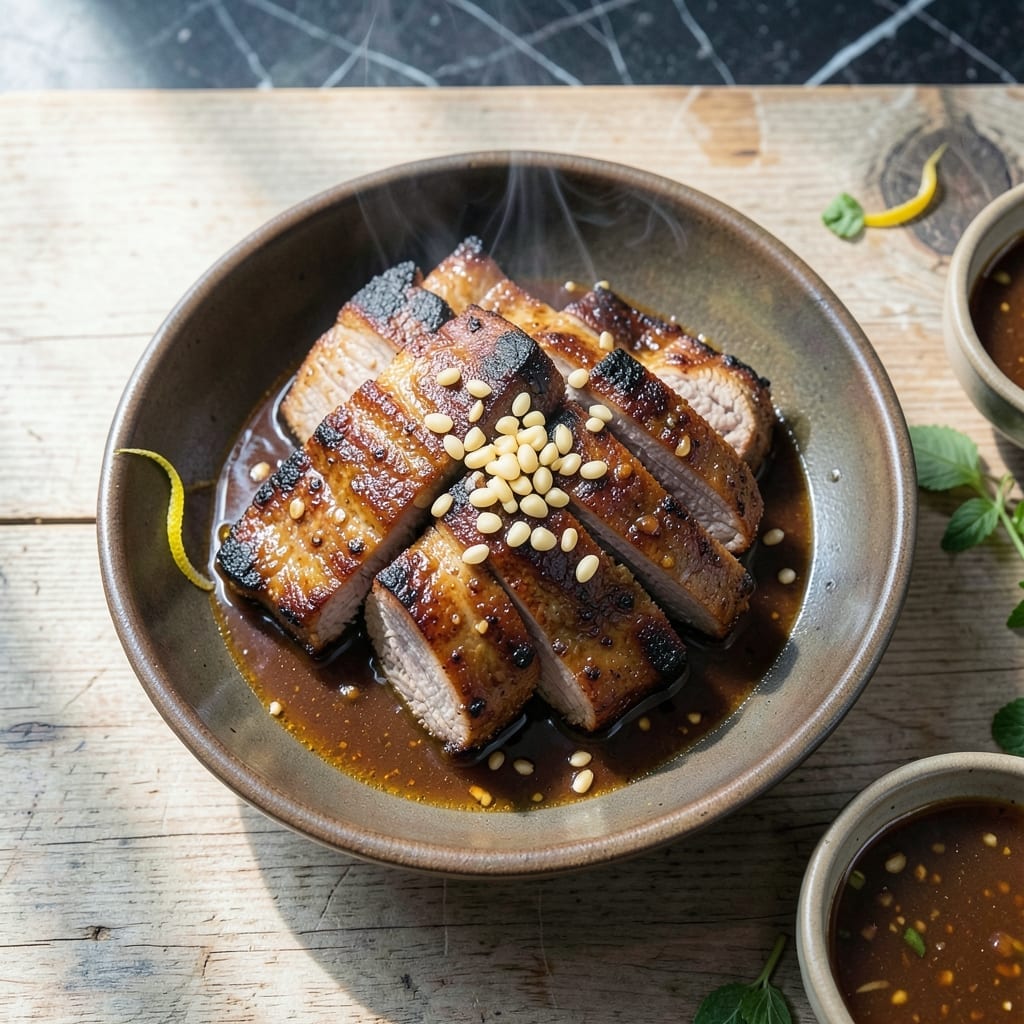
This Filipino pork steak delivers bold, savory flavor with minimal effort. I developed this version after studying my grandmother’s handwritten notes, which relied on instinct rather than precise measurements.
The dish comes together with a simple marinade of soy sauce, calamansi, and garlic that tenderizes the pork while building layers of umami. Cooking it in the marinade creates a rich, glossy sauce that coats every bite.
What you get is tender pork slices with a deeply flavored sauce, ready in 30 minutes. The balance of salty, tangy, and slightly sweet notes makes this a standout dish.
Serve over steamed rice to soak up every drop of the delicious sauce. Here is how to make it.
Ingredients for Recipe of Pork Steak Tagalog
Simple ingredients for a bold, savory Filipino-style dish ready in no time.
| Ingredient | Amount | Notes |
|---|---|---|
| Pork Shoulder 🥩 | 1 ½ lb | Thinly sliced, about 1/4-inch thick |
| Soy Sauce 🫒 | ½ cup | Regular or all-purpose variety |
| Calamansi Juice 🍈 | ¼ cup | Or substitute lime juice |
| Garlic Cloves 🧄 | 6 cloves | Peeled and minced |
| Brown Sugar 🍚 | 2 tbsp | Light or dark variety |
| Black Pepper 🌶️ | 1 tsp | Freshly ground preferred |
| Onion 🧅 | 1 whole | Medium, thinly sliced |
| Vegetable Oil 🛢️ | 2 tbsp | For cooking pork |
| Water 💧 | ¼ cup | For adjusting sauce consistency |
| Bay Leaf 🍃 | 2 pieces | Dried or fresh |
| Salt 🧂 | ½ tsp | Adjust to taste |
[recipe_ingredient_scaler]
The pork is the star here. Pork shoulder (sometimes labeled as pork butt) gives the best texture—tender and juicy after marinating. Most Asian markets will slice it thinly for you if you ask (or save time and buy pre-sliced). Look for pieces with a little fat marbling—this keeps the meat moist during cooking. For soy sauce, Silver Swan or Datu Puti are authentic Filipino brands you can find at most international grocery stores.
No calamansi? Lime or lemon juice works in a pinch (use about half the amount since it’s more acidic). Swap brown sugar for coconut sugar if you want a deeper caramel note. garlic is non-negotiable here—it’s doing most of the flavor work. If you’re short on time, pre-minced garlic from a jar is fine (don’t tell my grandma I said that). The bay leaf adds subtle depth, but skip it if you don’t have any.
Marinate the pork for at least 30 minutes, but overnight is even better (the flavors really sink in). Leftovers keep in the fridge for up to 4 days, and the sauce actually tastes richer the next day. Reheat gently to avoid drying out the meat.
Why You’ll Love This Recipe
- One Pan Wonder: I just toss the pork shoulder, soy sauce, calamansi, garlic, and sugar in a pan—no fancy prep, no fuss.
- That Sweet-Sour Punch: The calamansi cuts through the soy sauce while the brown sugar caramelizes into sticky, savory goodness. Honestly, it’s the flavor I crave weekly.
- Feeds a Crowd: I make a big batch for Sunday lunch, and it’s just as good reheated for dinner the next day.
- Budget Friendly: Pork shoulder is cheap, and the marinade uses pantry staples. I’ll be real: it’s my go-to when I need a satisfying meal that won’t break the bank.
Step-by-Step Instructions for Savory Filipino-Style Marinated Pork
This method guarantees tender, flavorful pork every time with minimal effort on your part.
Step 1: Marinate the Pork Shoulder
In a large bowl, combine the 1.5 lb Pork Shoulder with 0.5 cup Soy Sauce, 0.25 cup Calamansi Juice, minced 6 cloves Garlic Cloves, 2 tbsp Brown Sugar, 1 tsp Black Pepper, and 0.5 tsp Salt. Mix thoroughly to ensure every piece is well coated.
The brown sugar will dissolve slightly as you stir, creating a sticky, savory-sweet base for the marinade. I like to use my hands for this step—it’s the best way to make sure the pork shoulder absorbs all the flavors evenly.
Cover the bowl and refrigerate for at least 1 hour, or overnight for maximum tenderness. The longer it marries, the deeper the flavor penetrates the meat.
Step 2: Sear the Pork to Lock in Flavors
Heat the 2 tbsp Vegetable Oil in a large skillet over medium-high heat. Once the oil shimmers, carefully add the marinated pork shoulder slices in a single layer, working in batches if necessary to avoid overcrowding the pan.
Sear each piece for 3-4 minutes per side until the edges turn deep golden brown and slightly caramelized. The soy sauce and brown sugar in the marinade will create a beautiful glaze as they cook down. Don’t stir too often—let it develop that rich, flavorful crust.
Remove the seared pork from the skillet and set it aside on a plate. The pan will have delicious browned bits left behind—these are the foundation of your sauce.
Step 3: Build the Sauce with Aromatics
In the same skillet, add the thinly sliced 1 whole Onion and cook over medium heat for 2-3 minutes until it softens and becomes translucent. The onions will soak up the leftover marinade and oil, adding depth to the sauce.
Pour in the 0.25 cup Water and add the 2 pieces Bay Leaf. Scrape the bottom of the skillet with a wooden spoon to lift all those browned bits into the liquid. This step ensures none of the flavor goes to waste.
Let the mixture simmer for 2-3 minutes until the liquid slightly reduces and the onion becomes tender. The sauce should start to thicken and take on a glossy, rich appearance.
Step 4: Finish Cooking the Pork in the Sauce
Return the seared pork shoulder to the skillet, along with any juices that have accumulated on the plate. Spoon the sauce over the top to coat each piece evenly.
Reduce the heat to medium-low and let it simmer for 10-12 minutes, turning the pork occasionally. The sauce will continue to thicken and cling to the meat, creating a glossy, flavorful finish.
You’ll know it’s done when the pork is fully tender and the sauce has reduced to a syrupy consistency. Taste and adjust seasoning with a pinch of salt or black pepper if needed.
Serve hot, drizzled with extra sauce from the pan. This dish pairs perfectly with steamed rice to soak up every last drop of that savory goodness.
Pro Tips For Making Recipe Of Pork Steak Tagalog
- Marinate Overnight: I learned this the hard way—pork shoulder needs at least 4 hours in the soy-calamansi-garlic mix to tenderize properly, but overnight actually changes the outcome.
- Sear Before Simmering: Crank the heat high for 2-3 minutes per side to get that crust on the pork before adding the marinade—sounds weird, but it works.
- Skip the Overcrowding: Resist the urge to dump all the pork in the pan at once; give each piece space or it’ll steam instead of brown.
- Balance the Sweetness: Brown sugar can overpower the calamansi, so start with 1 tablespoon, taste, then add more—my grandmother swore by this, and she was right.
Best Sauces and Condiments for recipe of pork steak tagalog
Classic Toyo at Calamansi
The simplest sauce for this dish is a fresh mix of soy sauce and calamansi juice. Combine 3 tbsp soy sauce with 2 tbsp calamansi juice and a pinch of black pepper. This bright, tangy dip cuts through the richness perfectly. 💡
Sweet Chili Sauce
For a sweeter contrast, I love Mae Ploy sweet chili sauce from my local Asian market. Its syrupy texture and mild heat complement the savory pork beautifully. Drizzle 1-2 tbsp over each serving just before eating.
Garlic Vinegar Dip
Mix ¼ cup white vinegar with 1 minced garlic clove and ½ tsp salt. Let it sit for 10 minutes to mellow. This sharp, tangy dip is traditional in many Filipino homes and pairs wonderfully with the dish.
Spicy Banana Ketchup
Filipino Jufran banana ketchup adds a unique sweet-tangy flavor with a mild spicy kick. I serve it on the side for dipping or drizzle 1-2 tsp over the pork. It’s a nostalgic favorite from my childhood.
Look for it in the international aisle of most well-stocked grocery stores.
Sesame Soy Glaze
For a nutty finish, mix 2 tbsp soy sauce with 1 tsp toasted sesame oil and 1 tsp honey. Brush this glaze over the pork during the last 2 minutes of cooking. The aroma is incredible. ✨
Nutrition Facts
Frequently Asked Questions
What cut of pork works best?
Pork shoulder is ideal for its tenderness and fat marbling. For convenience, pre-sliced pork butt from Asian markets works perfectly. Avoid lean cuts like tenderloin, as they can dry out.
Can I substitute calamansi juice?
Yes, use lime or lemon juice in half the amount, as they’re more acidic. The tangy flavor is key to balancing the dish’s richness.
How long should I marinate the pork?
At least 1 hour for basic flavor, but overnight yields the best results. The longer it marinates, the more tender and flavorful the meat becomes.
Can I make this ahead?
The dish keeps well for 4 days refrigerated. The flavors deepen overnight, making leftovers even more delicious.

Trained in classic French technique but raised on slow-cooked ribs and spicy rubs, she blends culinary skill with smoke and soul.
- Recipe for Boneless Pork Chops in Cast Iron Skillet: Sear and Baste to Juicy Perfection - October 3, 2026
- Recipe for Boneless Cross Rib Roast: Slow-Roasted Beef with Herb Crust - October 3, 2026
- Hamburgers in Sauce Recipe Crock Pot: Slow-Cooked Savory Delight - October 3, 2026