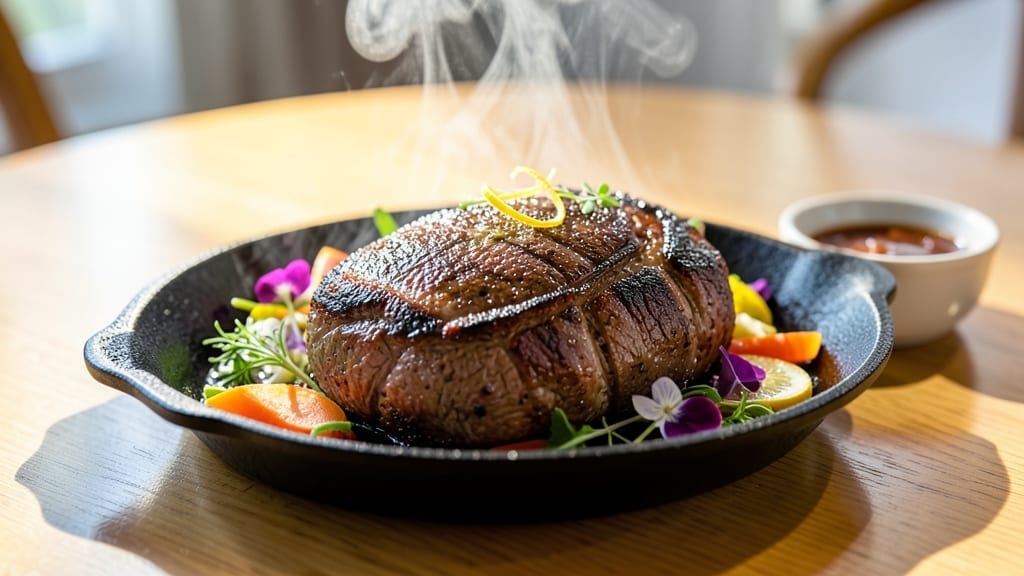
The ribeye roast recipe pellet grill delivers restaurant-quality results with smoky depth and tender perfection—no fancy equipment required. I developed this method after years of perfecting reverse-seared roasts, blending my family’s backyard cookout traditions with French technique. The pellet grill’s consistent heat makes this approach foolproof, even for beginners.
What sets this recipe apart is the balance between slow-smoked tenderness and a perfect crust. You’ll start with a dry rub that clings to the meat, then use indirect heat to cook the roast to medium-rare before finishing with a high-heat sear.
The pellet grill’s ability to maintain precise temperatures ensures even cooking and maximum flavor infusion from the smoke. This method transforms a simple cut of beef into a showstopping centerpiece.
By the time you’re done, you’ll have a juicy, medium-rare roast with a deep mahogany crust and layers of smoky flavor throughout. The reverse-sear technique preserves moisture while creating that coveted restaurant-quality exterior.
Serve with classic sides like garlic butter roasted potatoes or a fresh chimichurri for the full experience. Here’s how to achieve perfect results every time.
This recipe works beautifully for holiday gatherings or special weekend dinners. The pellet grill’s versatility means you can adapt it for different occasions—just adjust the seasoning or serving size.
Whether you’re cooking for a crowd or treating yourself to a luxurious meal, this method delivers professional-quality results at home. Let’s get started on creating your perfect roast.
Ingredients for ribeye roast recipe pellet grill
This ribeye roast transforms your pellet grill into a smoky, restaurant-quality showstopper—just 13 ingredients for legendary flavor.
| Ingredient | Amount | Notes |
|---|---|---|
| Ribeye Roast 🥩 | 4 lb | Bone-in, 1.5-2 inch thick |
| Kosher Salt 🧂 | 2 tbsp | Diamond Crystal preferred |
| Freshly Ground Black Pepper 🌶️ | 1 ½ tbsp | Coarse grind for texture |
| Smoked Paprika 🌶️ | 1 tbsp | For deep smoky flavor |
| Garlic Powder 🧄 | 1 tbsp | Freshly toasted preferred |
| Onion Powder 🧅 | 1 tbsp | For balanced depth |
| Dried Thyme 🌿 | 1 tsp | French thyme if available |
| Unsalted Butter 🧈 | ½ cup | Cold, cubed for basting |
| Fresh Rosemary 🌿 | ¼ cup | Chopped, stems removed |
| Wood Pellets 🪵 | 2 cups | Hickory or cherry blend |
| Yellow Onion 🧅 | 1 whole | Thinly sliced for garnish |
| Fresh Parsley 🌿 | ¼ cup | Chopped for finishing |
| Extra-Virgin Olive Oil 🫒 | 2 tbsp | For searing |
[recipe_ingredient_scaler]
The ribeye roast is the star—bone-in, 4 pounds gives you that perfect balance of tenderness and flavor. Grab a center-cut roast from Whole Foods or your local butcher shop for the best marbling. If you’re buying from Costco, look for the USDA Prime label—it’s worth the splurge for special occasions. The thickness matters too: aim for 1.5-2 inches thick so it sears properly without overcooking. Let it sit at room temperature for 30 minutes before cooking—this ensures even cooking and maximum juiciness.
No smoked paprika? Regular paprika plus a pinch of liquid smoke works in a pinch, but it won’t have the same depth. Fresh thyme is ideal, but dried at half the amount gets you close. The wood pellets are non-negotiable for that authentic smoky flavor—Traeger’s hickory or cherry blend are my go-tos, but any quality brand will do. For the butter, Plugrá or Land O’Lakes are reliable, but grab whatever full-fat butter you’ve got. The olive oil should be extra-virgin—none of that cheap stuff. If you’re short on time, pre-mix the dry rub in a bowl and store it for up to 2 weeks in an airtight container.
This roast reheats like a dream—20 minutes at 275°F in the oven keeps it juicy. Store leftovers in the fridge for 4-5 days or freeze for 3 months wrapped tightly in butcher paper. The dry rub keeps indefinitely in a sealed container, so make extra for future projects. For presentation, slice against the grain and garnish with those thinly sliced onions and fresh parsley. Trust me, it’ll look like you spent hours in the kitchen.
Why You’ll Love This Recipe
- Pellet Grill Magic: Honestly, the pellet grill turns this ribeye into a showstopper without the fuss of a full smoke session. That initial sear at 450°F with olive oil? Crispy crust in minutes, no flipping required.
- Smoky-Spiced Perfection: The smoked paprika and garlic powder blend into that bark while the low-and-slow smoke at 225°F infuses the meat with depth. Trust me, that first bite—juicy center with a smoky crust? Chef’s kiss.
- Crowd-Pleaser Every Time: Whether it’s a backyard BBQ or a weeknight dinner, this roast slices beautifully and feeds everyone. My kids even ask for seconds (yes, even on a Tuesday night) because it’s that good.
- Reheats Like a Dream: Made extra? No problem. Just pop it in at 275°F for 20 minutes, and it’ll taste almost as fresh as the day you grilled it. Leftovers? More like leftovers I can’t wait to eat.
Step-by-step instructions for ribeye roast recipe pellet grill
Here’s how to achieve reverse-seared perfection with smoky depth using your pellet grill.
Season and Sear the Ribeye Roast
Start by patting the 4 lb ribeye roast completely dry with paper towels—this ensures maximum crispiness later. In a small bowl, combine 2 tbsp kosher salt, 1½ tbsp freshly ground black pepper, 1 tbsp smoked paprika, 1 tbsp garlic powder, 1 tbsp onion powder, and 1 tsp dried thyme. Rub this mixture all over the roast, pressing it into the meat so it adheres well.
Heat your pellet grill to 450°F using 2 cups wood pellets (hickory or cherry blend). Once preheated, add 2 tbsp extra-virgin olive oil to a cast-iron skillet and place it on the grill grates. When the oil is shimmering, carefully add the seasoned roast and sear for 4-5 minutes per side until it develops a deep golden-brown crust. This initial sear locks in juices and builds flavor for the slow cook.
Smoke the Roast Low and Slow
Reduce the pellet grill temperature to 225°F and place the seared roast on the grill grates, fat-side up. The rendered fat will baste the meat as it cooks, enhancing tenderness. Smoke the roast for 3-4 hours, or until the internal temperature reaches 115-120°F when measured with a meat thermometer. This low-and-slow phase ensures even cooking and deep smoke penetration.
Here’s the thing—don’t be tempted to open the grill lid frequently. Every time you do, you lose heat and moisture. Instead, use a leave-in meat probe to monitor the temperature without disturbing the cook. The roast should develop a beautiful bark on the outside while remaining perfectly pink in the center.
Baste and Rest for Maximum Juiciness
Once the roast reaches 115-120°F, remove it from the grill and let it rest for 10 minutes. While it rests, melt ½ cup unsalted butter in a small saucepan over low heat. Add ¼ cup chopped fresh rosemary and let it infuse for 2 minutes, then brush this herbed butter generously over the roast. This basting step adds richness and helps create a glossy finish.
Return the roast to the pellet grill and raise the temperature to 350°F. Cook for an additional 30-45 minutes, or until the internal temperature reaches 130-135°F. This final stage ensures the roast is perfectly medium-rare throughout while maintaining that beautiful crust. The roast is now ready to slice and serve.
Slice and Garnish for Presentation
Transfer the roast to a cutting board and let it rest for another 10-15 minutes before slicing. Thinly slice 1 yellow onion and arrange it on a platter. Slice the roast against the grain into ½-inch thick pieces and fan them over the onions. Garnish with ¼ cup chopped fresh parsley for a pop of color and freshness.
Serve immediately with any accumulated juices from the platter. Each slice should be perfectly pink in the center with a smoky, crispy crust. The herbed butter basting adds a luxurious finish that ties all the flavors together. This method guarantees a ribeye roast that’s juicy, flavorful, and impressive enough for any gathering.
Pro Tips For Making Ribeye Roast Recipe Pellet Grill
- Preheat the Skillet First: I used to add the ribeye to the cast-iron skillet before it was properly hot, and the oil would bubble like a volcano instead of shimmering. Heat that skillet first—place it on the grill grates empty for 5 minutes at 450°F until the oil sizzles when you add it. That’s when you know it’s ready for the sear.
- Toast Your Garlic Powder: Freshly toasted garlic powder makes a real difference here—just dry-toast 1 tablespoon in a small pan over low heat for 2 minutes until fragrant. It deepens the flavor without overpowering, and it’s worth the extra minute. (Yes, even if you’re impatient like me.)
- Resist the Lid Temptation: Every time you peek at the roast during the 225°F smoke phase, you’re stealing heat and moisture—like opening the fridge to check if the milk’s still cold. Use that leave-in probe and only check the temp. The bark will form perfectly without your interference.
- Cold Butter = Better Basting: Don’t melt that ½ cup unsalted butter until the roast rests—cold cubes baste like a dream when they hit the grill at 350°F. They’ll sizzle and crisp the crust while infusing flavor. (Pro move: Toss the rosemary into the melted butter after it’s brushed on—cleaner and more precise.)
Regional styles of these flavors
Texas-Style Smoky Ribeye
In Texas, we don’t just cook ribeye—we make it legendary with a bold rub and slow smoke. I borrow from my family’s backyard BBQ tradition, where we’d let the wood pellets do the talking.
The key here is using 1 tbsp extra garlic powder and 1 tbsp coarse black pepper for that signature Texas kick. Smoke it with hickory pellets for 4 hours total at 225°F, then finish with a quick sear at 450°F to lock in that smoky crust.
Serve with pickled jalapeños for a tangy contrast—just like my grandfather used to do. 🔥
French-Inspired Herb Crust
My French technique training taught me to balance bold flavors with delicate herbs. For this version, I reduce the smoked paprika to ½ tbsp and boost the rosemary to ⅓ cup—plus a pinch of fresh thyme.
The roast gets a final basting of herb-infused butter while smoking at 350°F for 1 hour. This creates a crust that’s both crispy and aromatic, just like a French bistro steak. I always garnish with chopped parsley and a squeeze of lemon for brightness.
Appalachian Wood-Fired Style
Down in the Appalachian mountains, they smoke everything with whatever wood they’ve got—often cherry or pecan for a sweeter profile. I swap the hickory pellets for cherry blend and add ½ tsp ground cinnamon to the rub for warmth.
Smoke the roast for 5 hours at 200°F until it reaches 120°F internally, then let it rest wrapped in foil. The result? A tender, slightly sweet ribeye with a deep, woodsy aroma that reminds me of my motorcycle rides through the forests. 🌲
Coastal Foraging Twist
When I’m near the coast, I forage for wild sea grape leaves and young dill to add to the rub. Mix 1 tbsp finely chopped sea grape with the dry spices for an earthy, slightly briny note. Smoke with cherry and apple wood pellets for a milder, fruitier profile.
This version is perfect for summer gatherings—light, fresh, and full of coastal charm. I serve it with a chimichurri made from local herbs I pick on my rides. ✨
Southern Fried Ribeye
For a Southern twist, I pan-fry the roast in ½ cup rendered beef fat before smoking. After the initial sear, place it on the grill grates and smoke at 225°F for 3 hours. The fat renders beautifully, creating a crispy exterior while keeping the inside juicy.
I finish with a buttermilk-mustard glaze brushed on during the last 30 minutes of cooking. This method makes the roast feel like a Southern comfort classic. 💛
Nutrition facts
Frequently asked questions
Why does the reverse-sear method work so well for ribeye on a pellet grill?
The reverse-sear method keeps the roast juicy by cooking it low and slow first, then finishing with a high-heat sear. This creates a perfect medium-rare interior while developing that coveted mahogany crust. The pellet grill’s consistent 225°F temperature ensures even cooking, and the final sear locks in all those delicious flavors. It’s the best of both worlds—smoky depth and restaurant-quality texture!
Can I skip the initial sear on the pellet grill?
While you can skip it, I don’t recommend it. The initial sear at 450°F creates that essential bark and locks in juices, which is especially important for a bone-in ribeye roast. Without it, your roast might lack that perfect crust. If you’re short on time, just sear it in a hot cast-iron skillet first—same effect!
How do I know when the roast is done without cutting into it?
Use a leave-in meat probe to monitor the internal temperature. For medium-rare, aim for 130-135°F when you remove it from the grill. The probe lets you track progress without opening the lid, which keeps heat and moisture intact. Trust the temp—it’s foolproof!
What if my pellet grill runs out of wood pellets mid-cook?
Don’t panic! If you run low, simply add more hickory or cherry pellets to the hopper—just avoid overloading it. If the fire dies out, relight it gently and let it stabilize before returning the roast. The key is maintaining 225°F consistently. A backup pellet stash is always a good idea for long cooks!

Trained in classic French technique but raised on slow-cooked ribs and spicy rubs, she blends culinary skill with smoke and soul.
- Smoked Brisket Recipe: Low and Slow to Fall-Apart Tenderness - November 2, 2026
- Smoked Turkey Breast Recipe: Juicy Pink Center With Crispy Skin Every Time - November 2, 2026
- Leftover Smoked Pulled Pork Chili Recipe: Rustic Flavor Revival in One Pot - November 2, 2026