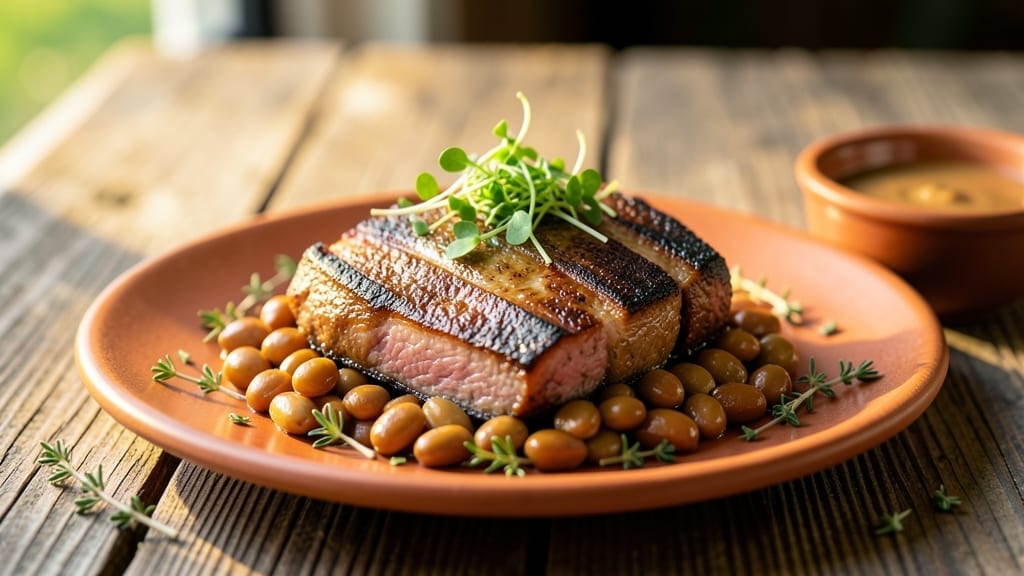
This smoked ham and beans recipe transforms simple ingredients into a deeply satisfying meal that tastes like a hug from your grandma’s kitchen. The marriage of tender smoked ham and hearty beans simmered low and slow creates rich, smoky flavors that linger long after the last bite.
Growing up, I’d watch my grandpa slice that first piece of ham and drop it into the pot—it was the moment the house smelled like home.
The beauty of this dish lies in its foolproof simplicity: no fancy techniques, just time and patience. You’ll start with a well-seared smoked ham to deepen its flavor, then combine it with beans (canned for convenience or dried for texture) and aromatics like onions and garlic.
The key is letting everything simmer together until the ham becomes fork-tender and the beans absorb all that smoky goodness. It’s the kind of meal that gets better as it sits, flavors melding into something truly comforting.
By the time you’re done, you’ll have a restaurant-quality dish that’s perfect for weeknight dinners or holiday gatherings. Serve it over buttery mashed potatoes, alongside crusty bread for soaking up the sauce, or even as a standalone bowl of warmth.
The aroma alone will have everyone gathering around the table, and the first bite will remind them why home-cooked meals are irreplaceable.
This recipe scales beautifully—double it for a crowd or halve it for a quiet night in. The slow-cooker method is a game-changer for busy days, and a sprinkle of smoked paprika adds an extra layer of depth. Let’s get cooking—your taste buds (and your guests) will thank you.
Ingredients for smoked ham and beans
Simple pantry staples become a restaurant-quality meal with slow simmering.
| Ingredient | Amount | Notes |
|---|---|---|
| Smoked Ham Hock 🥩 | 1 lb | Bone-in for maximum flavor |
| Dried Navy Beans 🌿 | 2 cups | Rinsed thoroughly before soaking |
| Yellow Onion 🧅 | 1 whole | Diced finely for even cooking |
| Garlic Cloves 🧄 | 4 cloves | Minced for aromatic depth |
| Carrots 🥕 | 2 cups | Diced into small pieces |
| Smoked Paprika 🌶️ | 1 tbsp | For extra smoky flavor |
| Dried Thyme 🌿 | 1 tsp | Crushed between fingers |
| Bouillon Cubes 🧂 | 2 whole | Beef or vegetable preferred |
| Apple Cider Vinegar 🍎 | 2 tbsp | Balances richness naturally |
| Salt 🧂 | 1 tsp | Kosher or sea salt |
| Black Pepper 🌶️ | ½ tsp | Freshly ground preferred |
| Water 💧 | 6 cups | For soaking and cooking |
[recipe_ingredient_scaler]
The smoked ham hock is your secret weapon—look for bone-in at the butcher counter or grocery meat section. Costco often has them pre-packaged, but call ahead to confirm. I always buy mine from local butchers when I can—it makes a huge difference in the depth of flavor. If you can’t find ham hock, a bone-in ham shank works too, though it’ll take longer to tenderize. The key is to sear it first for that caramelized crust before adding to the pot.
No dried navy beans? Canned white beans work in a pinch, but they’ll make the dish creamier rather than hearty. Fresh thyme is ideal but dried oregano at half the amount gets you close. The bouillon cubes are non-negotiable—they’re what give this dish its rich, savory backbone. Knorr or Better Than Bouillon are my go-tos. For the vinegar, apple cider adds a nice tang—white vinegar works too, but it’s a bit harsher. The carrots and onions can be pre-diced ahead and kept in the fridge for up to 3 days.
This dish tastes even better the next day as flavors meld. Store in an airtight container in the fridge for up to 5 days. For freezer storage, let it cool completely before portioning into freezer-safe bags—3 months is the sweet spot. I always make extra because it’s the perfect meal to reheat for lunches. The ham hock bones can be saved to make a quick stock for future dishes—just simmer them in water with a few aromatics and strain.
Why You’ll Love This Recipe
- No-Pot-Sweat Simmer: I’ll admit it—I used to dread slow-cooker meals because of the cleanup. But this recipe? Just one big pot, and honestly, the ham hock does all the heavy lifting. You toss in the soaked beans, aromatics, and that smoky ham, then let it do its thing while you relax. The only real effort is crushing the thyme between your fingers (yes, it’s satisfying) and resisting the urge to peek every five minutes.
- Smoky, Tangy, Addictive: The smoked ham hock isn’t just a protein—it’s the star, infusing the beans with that deep, woodsy richness. But here’s the kicker: the apple cider vinegar cuts through the fat, balancing it perfectly. I’ll be real, the first bite always makes me pause. That creamy navy bean texture with the ham falling off the bone? Chef’s kiss.
- Leftover Legend: This isn’t just dinner—it’s a meal for days. I make a big batch on Sunday, and by Wednesday, I’m still eating it. The flavors deepen in the fridge, so the leftovers are even better. Freeze portions if you’re feeling ambitious, or just reheat a bowl with crusty bread and call it a win. My daughter even asks for seconds (yes, even on a Tuesday night).
- Budget’s Best Friend: Dried beans and a ham hock? This is the kind of recipe that stretches your grocery budget without sacrificing taste. The bouillon cubes and smoked paprika add punch for pennies, and you’re left with enough to feed a crowd or meal prep for the week. Honestly, it’s the kind of dish that makes me feel like I’m eating at a farmhouse kitchen for a fraction of the cost.
Step-by-step instructions for slow-simmered smoked ham and beans
This hearty dish comes together with minimal effort but maximum flavor—just follow these simple steps.
Prep the Beans and Ham for Maximum Flavor
Start by rinsing the 2 cups dried navy beans thoroughly under cold water to remove any debris. Place them in a large bowl and cover with 6 cups water by at least 2 inches. Let them soak for 8-12 hours at room temperature—this ensures they cook evenly and stay tender. I like to soak them overnight for convenience.
While the beans soak, prepare the 1 lb smoked ham hock by removing any excess fat or silverskin. This step keeps the broth clear and prevents any off flavors. Pat it dry with paper towels, then place it in a large pot or Dutch oven. The ham will infuse the beans with deep, smoky flavor as they cook together.
Build the Flavor Base with Aromatics and Spices
Drain the soaked beans and add them to the pot with the ham hock. Peel and dice the 1 yellow onion into small, even pieces—this ensures they cook through without becoming mushy. Add the onions to the pot along with the 2 cups diced carrots and the 4 minced garlic cloves. These vegetables form the flavor foundation of the dish.
Sprinkle in the 1 tbsp smoked paprika and 1 tsp dried thyme, crushing the thyme between your fingers to release its aroma. Stir everything together gently—you don’t want to break up the beans or ham. The spices will mingle with the ham’s natural smokiness, creating a rich, complex flavor profile.
Simmer the Beans Until Tender and Flavorful
Add 6 cups fresh water to the pot, along with the 2 bouillon cubes and 2 tbsp apple cider vinegar. The vinegar brightens the dish and balances the richness of the ham. Bring the mixture to a boil over medium-high heat, then reduce the heat to low and let it simmer uncovered for 2-2.5 hours. You’ll know it’s ready when the beans are fork-tender and the liquid has reduced slightly.
Here’s the thing—don’t peek or stir too often. Every time you lift the lid, you lose heat and steam, which can lengthen the cooking time. Instead, let the beans develop their own flavor undisturbed. The ham should be falling off the bone by the end, and the beans should be creamy with just a hint of bite.
Season and Finish to Perfection
Once the beans are tender, taste the broth and adjust the seasoning with the 1 tsp salt and ½ tsp black pepper. The ham and bouillon cubes should already add plenty of saltiness, but a final adjustment ensures everything is balanced. If the mixture is too thick, add a splash of water to loosen it to your preferred consistency.
Let the dish sit off the heat for 5-10 minutes before serving. This resting time allows the flavors to meld together, and the beans to absorb any remaining liquid. The result is a deeply comforting, smoky, and savory dish that’s perfect for chilly days or cozy gatherings.
Pro Tips For Making Smoked Ham And Beans
- Skip the Crowding: Navy beans need space to soften properly—don’t pack them into the pot after draining. Give them room to expand and absorb flavor, or you’ll end up with mushy, unevenly cooked beans. I’ve learned this the hard way after forgetting to spread them out and ending up with a gluey mess.
- Salt the Ham Early: The ham hock won’t absorb much salt after cooking, so sprinkle a pinch of the 1 tsp salt directly on it while it’s still raw in the pot. This ensures the meat stays juicy and seasoned from the start, rather than tasting bland even after hours of simmering.
- Cover the Pot for 10 Minutes: After bringing the pot to a boil, cover it and let the beans steam for the first 10 minutes. This jumpstarts the cooking process and helps the carrots and onions soften faster—no need to wait for the full simmer time to see progress. (Yes, even if you’re impatient like me.)
- Prep Onions and Carrots First: Dice the 1 yellow onion and 2 cups carrots before you start soaking the beans. They’ll keep in the fridge for up to 3 days, and you’ll save time scrambling mid-cook. Pro move: Use a sharp knife and cut the carrots into uniform pieces so they cook at the same rate as the onions.
Pro cooking tips for smoked ham and beans
Master the Ham Hock
Your 1 lb smoked ham hock is the star of this dish, so treat it like a prized cut. Before adding it to the pot, I always sear it in a dry skillet over medium-high heat for 3-4 minutes on each side until deeply browned.
This step develops the Maillard reaction and adds layers of smoky depth to the broth. I use a Lodge cast iron skillet because it retains heat perfectly—don’t skip this step, even if the ham looks fully cooked. The caramelized crust will dissolve into the beans and make all the difference.
Bean Soaking Secrets
Dried navy beans are worth the wait for their creamy texture, but soaking them properly is non-negotiable. I always add 1 tsp baking soda to the soaking water to help break down the tannins—this reduces cooking time and prevents that “soapy” aftertaste.
Change the water once after 2 hours of soaking to keep it fresh, then drain well before adding to the pot. I’ve found that beans soaked overnight in cold water develop the best flavor, but 8 hours minimum works in a pinch.
Pro tip: Pat them dry before adding to the pot to prevent a watery broth.
Low-and-Slow Simmering
The magic happens at low heat—this is where patience pays off. Once boiling, reduce to the smallest simmer you can achieve, where tiny bubbles break the surface every 2-3 seconds. This gentle heat ensures the beans cook evenly without breaking apart.
I use a Dutch oven because it distributes heat evenly, but a heavy-bottomed pot works too. If you’re using a slow cooker, switch to low heat after the initial boil to mimic this method—just add the ham hock and aromatics first to let them infuse.
Broth Balance
Your broth should be rich but not greasy—here’s how to get it right. After simmering, carefully skim off any fat that rises to the top using a spoon or fat separator.
For extra depth, I add 1 cup of the cooking liquid from the ham hock to a small saucepan, reduce it by half to make a quick glaze, then stir it back into the beans.
This concentrated liquid adds a savory umami punch that elevates the whole dish. If your broth tastes too salty, dilute it with a splash of water—don’t cut corners on this step, or the beans will taste bland.
Resting is Non-Negotiable
After cooking, let the beans rest off the heat for at least 10 minutes before tasting or serving. This allows the flavors to fully integrate and the beans to absorb any remaining liquid. I’ve learned the hard way—skipping this step results in a watery, unbalanced dish.
While resting, I cover the pot with a clean towel to trap steam and keep everything warm. Trust me, the extra wait is worth it—the first spoonful will taste like a symphony of smoky, savory harmony. 💫
Nutrition facts
Frequently asked questions
Why does this recipe use a ham hock instead of regular ham?
The 1 lb smoked ham hock delivers unmatched flavor depth because it’s bone-in and packed with connective tissue that melts into the broth. This creates a richer, more complex taste than pre-cooked ham slices. The bones also add natural collagen, giving the beans a velvety texture. It’s the secret to turning simple beans into a restaurant-quality dish!
Can I use canned beans instead of dried?
Yes! If you’re short on time, substitute 2 cans (15 oz each) of drained white beans for the dried version. They’ll make the dish creamier but won’t develop the same chewy texture. Just add them after the ham hock has simmered for 30 minutes to avoid mushiness. The flavor will still be incredible, just with a slightly different mouthfeel.
What if my broth tastes too salty after cooking?
Don’t panic! Add ½ cup cold water at a time and stir well, tasting between each addition. The beans will absorb excess salt while keeping the broth balanced. If needed, you can also dilute the entire dish slightly before serving—just be patient and let it rest off the heat for 10 minutes first to help redistribute flavors.
How do I know when the ham hock is fully cooked?
You’ll know it’s ready when the meat easily pulls away from the bone with a fork and the skin peels off cleanly. The internal temperature should reach 165°F (check with a meat thermometer). If you’re unsure, cook it 5 more minutes after the beans reach tenderness—the ham will continue cooking in the residual heat. The bones should also be white and brittle when tapped.
Can I make this in a slow cooker?
Add all ingredients to your slow cooker, cover, and cook on low for 8 hours or high for 5 hours. Start with the ham hock and aromatics, then add beans after 2 hours to prevent mushiness. The result will be just as flavorful—just stir gently before serving to redistribute any settled beans.

Trained in classic French technique but raised on slow-cooked ribs and spicy rubs, she blends culinary skill with smoke and soul.
- Smoked Brisket Recipe: Low and Slow to Fall-Apart Tenderness - November 2, 2026
- Smoked Turkey Breast Recipe: Juicy Pink Center With Crispy Skin Every Time - November 2, 2026
- Leftover Smoked Pulled Pork Chili Recipe: Rustic Flavor Revival in One Pot - November 2, 2026