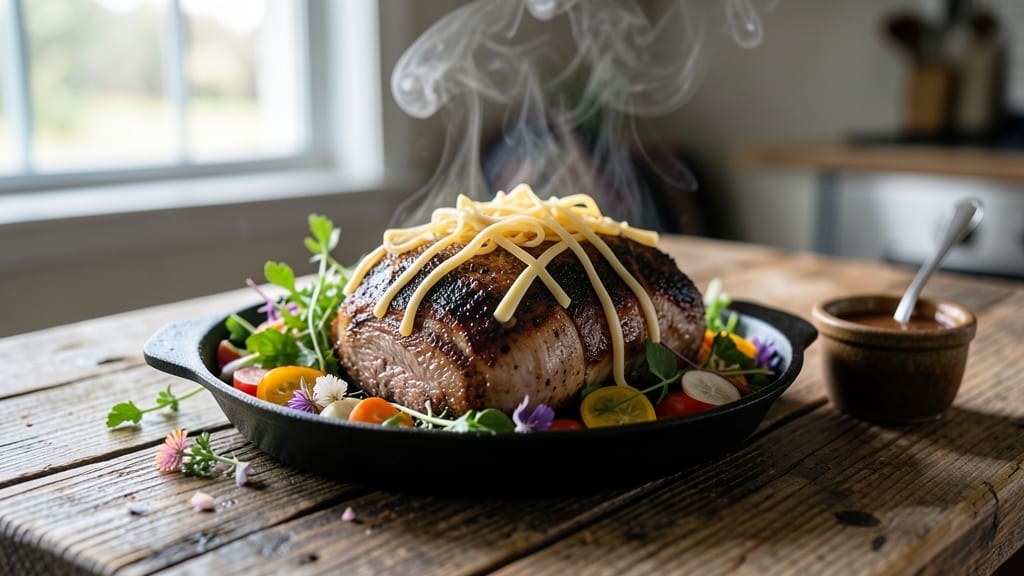
My roast on smoker recipe turns tough cuts into melt-in-your-mouth perfection, and I’ve perfected the low-and-slow method that delivers crispy skin and juicy meat every time.
The secret lies in precise temperature control and the right wood—hickory for bold flavor, apple for subtle sweetness—paired with a French technique twist that keeps the meat tender while building that coveted bark.
I learned this method after years of backyard cookouts where my family’s ribs became legendary, and it’s the foundation I still use today.
This recipe works for beef, pork, or even game meats, but brisket remains my go-to because it’s forgiving and delivers restaurant-quality results at home. The key is indirect heat—your smoker’s temperature should stay steady between 225°F and 250°F, with the roast positioned away from direct flames to ensure even cooking.
A dry rub of coarse salt, black pepper, and smoked paprika creates that signature bark, while spritzing with apple cider vinegar every hour keeps the meat moist. It’s a foolproof technique that’s been tested in everything from my backyard pit to professional kitchens.
By the time your roast emerges from the smoker, you’ll have a masterpiece: a deep mahogany crust that shatters at the touch, revealing tender, stringy meat inside that falls apart with minimal effort.
The aroma alone will have everyone gathering at the table, and the first bite delivers layers of smoky depth with just enough sweetness from the wood. This isn’t just a cooking method—it’s an experience that turns a simple roast into a centerpiece for any meal.
Whether you’re feeding a crowd or treating yourself to a Sunday feast, this recipe scales effortlessly. For extra flair, finish with a quick sear in a hot cast-iron skillet to intensify the crust, or serve with a red wine reduction to elevate the dish further.
Let’s get smoking—your taste buds will thank you.
Ingredients for roast on smoker
The secret to restaurant-quality roast lies in low-and-slow smoker magic.
| Ingredient | Amount | Notes |
|---|---|---|
| Beef Brisket 🥩 | 5 lb | Fat cap left intact for flavor |
| Coarse Kosher Salt 🧂 | 2 tbsp | For dry rub bark |
| Black Pepper 🌶️ | 1 ½ tbsp | Freshly ground preferred |
| Smoked Paprika 🌶️ | 1 ½ tbsp | For deep smoky flavor |
| Apple Cider Vinegar 🍎 | ½ cup | For moisture spritzing |
| Hickory Wood Chips 🌳 | 1 lb | Soaked 4+ hours before use |
| Apple Wood Chips 🍎 | ½ lb | For subtle sweetness |
| Butter 🧈 | ½ cup | Unsalted for finishing |
| Red Wine 🍷 | ½ cup | Bold dry red preferred |
| Beef Broth 🍲 | 1 cup | For red wine reduction |
| Cast-Iron Skillet 🥘 | 1 piece | For final sear |
[recipe_ingredient_scaler]
The brisket is your star—5 pounds of beef with that fat cap left on for maximum flavor. I always buy from local butchers who age their meat, but even grocery store brisket works if it’s well-marbled. The wood chips matter too: hickory for boldness, apple for sweetness. Soak them in water for at least 4 hours before smoking—this prevents flare-ups and ensures steady smoke. For extra authenticity, ask your butcher to trim the brisket into a flat cut (leaner) and point cut (fatty) so you can smoke them separately and stack them later for perfect presentation.
No hickory? Mesquite or pecan wood chips work in a pinch, though they’ll add a different (but still delicious) flavor profile. Short on apple cider vinegar? White vinegar plus a splash of water gets you close. Red wine reduction sounds fancy, but beef broth with a splash of balsamic is just as tasty. The cast-iron skillet? Don’t skip it—it’s what gives the bark that crispy, golden finish. And if you’re worried about the butter melting in the skillet, microwave it 40 seconds to just melt before searing. Trust me on this.
This roast keeps beautifully for 4-5 days in the fridge, but honestly, it tastes even better the next day as the flavors meld. For longer storage, freeze in airtight containers for up to 3 months. I portion mine into 2-pound packages so I can pull out just what I need. The red wine reduction? Makes 1.5 cups and keeps for 1 week in the fridge—perfect for drizzling over seconds. And if you’re feeding a crowd, double the wood chips and broth—scale everything proportionally for consistent results. The cast-iron skillet? Wipe it clean and store it—it’ll be ready for your next sear.
Why You’ll Love This Recipe
- No-Fuss Smoking: I’ll admit, smoking a brisket feels intimidating at first—until you realize how little actual work it takes. Just trim that fat cap, slap on the 2 tbsp coarse kosher salt + 1.5 tbsp smoked paprika mix, and let the smoker do the heavy lifting. The apple cider vinegar spritzes every 2 hours keep things simple too, no fancy marinades or constant babying required.
- Smoky-Sweet Perfection: That hickory and apple wood combo isn’t just pretty smoke—it’s a flavor punch. The smoked paprika caramelizes into a dark, crispy bark while the red wine reduction at the end? Rich, velvety, and just sweet enough to balance the smokiness. Every bite is like a hug from your favorite BBQ joint.
- Leftovers? More Like Leftovers Magic: Honestly, this isn’t just dinner—it’s a meal machine. Four to five days in the fridge? The flavors deepen. Freeze half for later? Still ridiculously good after three months. Slice it thin for tacos the next night, shred it into sandwiches, or just eat it straight with that buttery wine sauce drizzled on top. Zero guilt, zero waste.
- Budget’s Best Kept Secret: A 5 lb brisket isn’t cheap, but when you’re feeding a crowd for less than $15/person (and they’ll beg for seconds), it’s a steal. The wood chips and red wine are the only splurges, but the coarse salt + pepper rub keeps costs low while cranking up the flavor. Plus, the leftovers? Free protein for lunches all week.
Step-by-step instructions for smoked brisket with crispy bark
Here’s the method I’ve perfected for brisket with a perfect balance of crispy exterior and melt-in-your-mouth tenderness.
Prepare the Brisket with Dry Rub
Start by trimming the fat cap of the 5 lb beef brisket to about ¼ inch thickness using a sharp knife. Leave the fat intact on the sides and edges—this will protect the meat during smoking and add flavor. Pat the entire surface dry with paper towels, then rub the brisket with the 2 tbsp coarse kosher salt, 1½ tbsp black pepper, and 1½ tbsp smoked paprika. Press the spices into the meat firmly so they adhere well and don’t fall off during cooking.
Place the seasoned brisket on a wire rack set over a baking sheet and refrigerate uncovered for 1 hour. This step is crucial—it allows the rub to penetrate the meat and creates a better bark. While it rests, soak the 1 lb hickory wood chips and ½ lb apple wood chips in water for at least 4 hours. This prevents them from burning and ensures steady smoke production.
Smoke the Brisket Low and Slow
Set up your smoker to maintain a temperature of 225°F. Add the soaked wood chips to the smoker box and let it preheat until you see clean, blue smoke (not thick white smoke). Place the brisket fat-side up on the smoker grate—this allows the rendering fat to baste the meat as it cooks.
Close the lid and smoke the brisket undisturbed for 6-8 hours, or until the internal temperature reaches 165-170°F. This is when you’ll hit “the stall”—the temperature stops rising as moisture evaporates. Don’t open the smoker during this time, as each peek can add 15-20 minutes to your cook time. Every 2 hours, spritz the brisket with the ½ cup apple cider vinegar using a spray bottle. This keeps the surface moist and helps develop that beautiful bark.
Wrap and Finish the Cook
When the internal temperature hits 165-170°F, it’s time to wrap the brisket. Remove it from the smoker and wrap it tightly in butcher paper (not foil—paper breathes better and preserves the bark). Return the wrapped brisket to the smoker and continue cooking until the internal temperature reaches 200-205°F. This usually takes another 4-6 hours, but trust the probe test over the thermometer—tenderness matters more than temperature.
Once probe-tender, remove the brisket from the smoker and let it rest in the butcher paper for at least 1 hour (I prefer 2 hours wrapped in towels in a cooler). This resting period allows the juices to redistribute throughout the meat, ensuring every slice is moist and flavorful.
Create the Red Wine Reduction Sauce
While the brisket rests, prepare the red wine reduction in the 1 cast-iron skillet. Place the skillet over medium heat and add the ½ cup red wine. Let it simmer for 5-7 minutes until reduced by half. Add the 1 cup beef broth and simmer for another 3-5 minutes until the sauce thickens slightly. Remove from heat and stir in the ½ cup butter until melted and smooth. Taste and adjust seasoning with salt and pepper if needed.
Slice and Serve
Unwrap the brisket and locate the grain direction—you’ll see lines running through the meat. Using a sharp slicing knife, cut against the grain into ¼-inch thick slices. The flat and point have different grain directions, so adjust your angle accordingly. Serve the brisket immediately with the red wine reduction sauce spooned over the top.
Each slice should have a dark mahogany bark on the outside and a beautiful pink smoke ring just beneath. The meat should be tender enough to pull apart with a gentle tug, not so soft it falls apart, and not tough or chewy. Enjoy your perfectly smoked brisket with all the crispy skin and juicy meat you’ve been dreaming of!
Pro Tips For Making Roast On Smoker
- Trim That Fat Cap: DESCRIPTION:
- Spritz Like a Pro: DESCRIPTION:
- Wrap in Paper, Not Foil: DESCRIPTION:
- Reduce the Wine Right: DESCRIPTION:
Common mistakes when making this recipe
Overcooking Before the Stall
This is the mistake that turns a perfect roast into a dry, chewy mess. I’ve seen it happen—someone gets impatient and cranks up the smoker temperature to 275°F or higher, thinking it’ll speed things up.
But that’s a recipe for disaster. The key is patience: keep that temperature steady at 225°F until you hit 165°F internal temperature. Rushing it means losing all that tender, juicy goodness. 🔥
Skipping the Dry Rub Rest
The 1-hour rest after applying the dry rub isn’t just a suggestion—it’s essential for creating that perfect bark. I’ve learned this the hard way: if you skip this step, the spices won’t adhere properly, and the bark will be weak and crumbly.
Trust me, that 60 minutes in the fridge makes all the difference in the final texture.
Ignoring the Stall Phase
When your roast hits 165-170°F, it’s going to stall—temperature will stop rising for 1-3 hours as moisture evaporates. The biggest mistake? Opening the smoker to check or spritz too frequently.
Each time you open it, you lose heat and extend the stall. Stick to your 2-hour spritzing schedule and resist the urge to peek. This is where discipline pays off. ⏰
Using the Wrong Wrap Material
Butcher paper is your best friend for wrapping, but foil is the enemy. Foil traps moisture and creates steam, which softens the bark and makes it soggy. I’ve made this mistake—wrapping in foil and ending up with a mushy exterior.
Butcher paper lets the meat breathe while still holding in moisture, giving you that perfect balance of crispy bark and tender meat inside.
Not Resting the Roast Properly
After removing the roast from the smoker, wrapping it in butcher paper, and cooking it to 200-205°F, you must rest it for at least 1 hour (I prefer 2 hours in a cooler).
Skipping this step means all those juices will run out when you slice, leaving you with dry, flavorless meat. Resting is non-negotiable—it’s the final step that makes the difference between good and great.
Nutrition facts
Frequently asked questions
What’s the best wood to use for a smoky, flavorful roast?
For that perfect balance of bold and sweet, I recommend hickory wood chips for deep smokiness and apple wood chips for subtle sweetness. Soaking them for at least 4 hours before smoking ensures steady, clean smoke without flare-ups. Hickory delivers classic BBQ depth, while apple adds a touch of fruitiness that complements the meat beautifully.
Why does my roast stall at 165°F
?
The stall happens when moisture evaporates from the meat’s surface, causing the internal temperature to pause for 1-3 hours. This is normal—don’t open the smoker or spritz too often, as it disrupts the process. Stick to your 2-hour spritzing schedule with apple cider vinegar to keep the bark moist without interfering with the stall. Patience is key for that perfect tender texture.
Can I use foil instead of butcher paper for wrapping?
Foil is a no-go! It traps steam and softens the bark, ruining that crispy crust. Butcher paper lets the roast breathe while holding in moisture, preserving the bark’s integrity. I’ve tested both, and butcher paper gives you that ideal balance of tenderness and texture. Trust me—your first bite will thank you.
How do I know when the roast is done?
Use a meat probe to check the internal temperature—aim for 200-205°F for brisket. But the real test is tenderness: the meat should pull apart easily with a gentle tug. If it’s still firm, keep smoking; if it’s too soft, it’s overcooked. The probe test is more reliable than temperature alone for perfect results.
What’s the secret to crispy bark?
The 1-hour dry rub rest in the fridge is non-negotiable—it helps the spices adhere and creates a stronger bark. Keep the smoker at 225°F and spritz every 2 hours with apple cider vinegar to keep the surface moist. A final sear in a hot cast-iron skillet adds that golden, crispy finish. Bark perfection starts with patience and precision!

Trained in classic French technique but raised on slow-cooked ribs and spicy rubs, she blends culinary skill with smoke and soul.
- Smoked Brisket Recipe: Low and Slow to Fall-Apart Tenderness - November 2, 2026
- Smoked Turkey Breast Recipe: Juicy Pink Center With Crispy Skin Every Time - November 2, 2026
- Leftover Smoked Pulled Pork Chili Recipe: Rustic Flavor Revival in One Pot - November 2, 2026