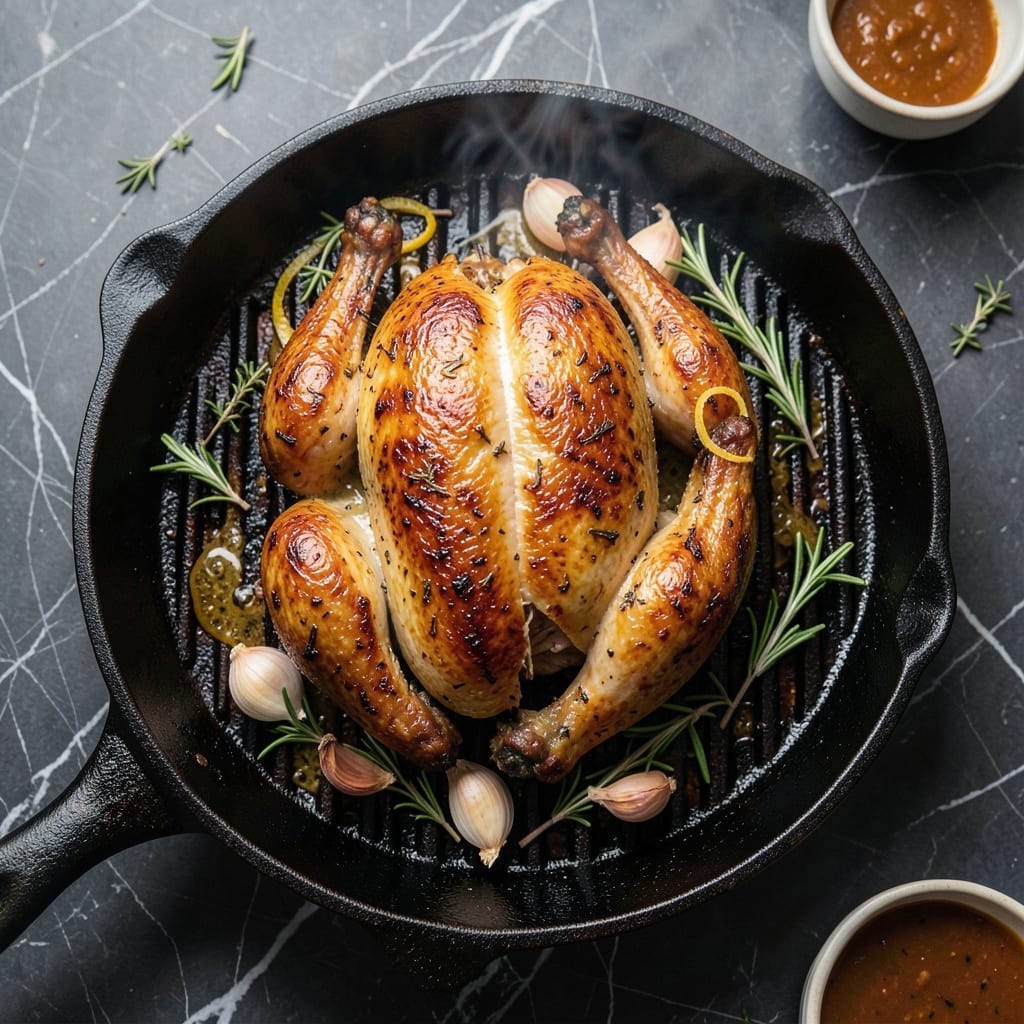
This method delivers perfectly juicy chicken with smoky char and herbed crisp skin every time. The grill adds depth that an oven simply cannot match.
I’ve refined this technique over years of backyard cookouts, balancing heat and timing for consistent results. The secret lies in proper preparation and indirect grilling.
Ingredients for Roast Whole Chicken on Grill
A whole chicken, fresh herbs, and a few pantry staples create this smoky, crisp-skinned masterpiece.
| Ingredient | Amount | Notes |
|---|---|---|
| Whole Chicken 🍗 | 4 lb | Fresh, patted dry inside and out |
| Kosher Salt 🧂 | 1 ½ tbsp | Diamond Crystal preferred for even distribution |
| Freshly Ground Black Pepper 🌶️ | 1 tsp | Coarse grind for texture |
| Garlic Cloves 🧄 | 6 cloves | Lightly smashed, skins removed |
| Fresh Rosemary 🌿 | 3 slices | 2-inch sprigs, stems intact |
| Fresh Thyme 🌿 | 6 slices | 2-inch sprigs, stems intact |
| Unsalted Butter 🧈 | ½ cup | Softened for herb butter |
| Lemon 🍋 | 1 whole | Halved for cavity and zested for butter |
| Yellow Onion 🧅 | 1 whole | Quartered for cavity aromatics |
| Extra-Virgin Olive Oil 🫒 | 2 tbsp | For basting and high-heat tolerance |
| Paprika 🌶️ | 1 tsp | Smoked or sweet for color and depth |
| Dijon Mustard 🟡 | 1 tbsp | For herb butter binding |
[recipe_ingredient_scaler]
The chicken quality is non-negotiable. Air-chilled birds from Whole Foods or local butchers yield superior texture and flavor compared to water-chilled supermarket options. Look for 4-5 lb birds—large enough for leftovers, small enough to cook through without drying. The skin should be pale, taut, and free of tears. For herbs, organic bunches from farmers markets offer the most vibrant aroma (the good stuff, not the pre-packaged kind).
No fresh rosemary or thyme? Dried herbs at one-third the quantity work in a pinch, but fresh is ideal for that bright, aromatic punch. Swap lemon for lime if you prefer a slightly sharper citrus note. Vegetable oil can replace olive oil if smoking point is a concern, though you’ll lose some depth. For a deeper char, a light dusting of brown sugar on the skin before grilling adds caramelization without sweetness.
Store the chicken in the coldest part of your fridge—use within 2 days of purchase for peak freshness. Herb butter can be made 1 day ahead and refrigerated. Leftovers keep for 4 days and make incredible sandwiches or salads (worth the extra effort).
Why You’ll Love This Recipe
- I’ll be real: this is my go-to for Sundays, picnics, or when I need leftovers for sandwiches all week.
- Minimal Fuss: Honestly, it’s just season, truss, and let the grill do the work—no babysitting required.
- Crispy & Fragrant: The garlic and rosemary under the skin make the meat so juicy, while the skin gets that irresistible char.
- Feeds Everyone: I’ll be real: this is my go-to for Sundays, picnics, or when I need leftovers for sandwiches all week.
Step-by-Step Instructions for Roast Whole Chicken on Grill
Master indirect heat and herb butter for perfectly charred skin with juicy meat.
Step 1: Prepare the Herb Butter and Season the Chicken
In a small bowl, combine the 0.5 cup unsalted butter with the 1 tbsp Dijon mustard, 1 tsp paprika, and zest from the lemon. Finely chop 3 slices fresh rosemary and 6 slices fresh thyme, then mix these into the butter compound. This herb butter will infuse the chicken with aromatic depth as it cooks.
Pat the 4 lb whole chicken completely dry inside and out with paper towels. Season the cavity generously with 1.5 tbsp kosher salt and 1 tsp freshly ground black pepper, ensuring even coverage. Place the 6 cloves garlic cloves, the juiced lemon halves, and 1 whole yellow onion (quartered) into the cavity for additional aromatic flavor.
Step 2: Loosen Skin and Apply Herb Butter
Gently separate the skin from the breast and thigh meat by sliding your fingers underneath, being careful not to tear it. Spread half of the herb butter mixture directly onto the meat beneath the skin. This placement ensures the flavors penetrate deep into the meat while keeping the skin crisp.
Rub the remaining herb butter over the exterior of the chicken, coating it evenly. Drizzle the 2 tbsp extra-virgin olive oil over the skin and rub it in. This layer not only adds flavor but also promotes even browning and helps prevent sticking on the grill grates.
Step 3: Set Up the Grill for Indirect Heat
Prepare a charcoal or gas grill for indirect cooking. For charcoal, bank the coals to one side of the grill; for gas, turn off the center burners and leave the outer burners on. Preheat the grill to 375°F. Place a drip pan beneath the grates where the chicken will cook to catch drippings and prevent flare-ups.
Once the grill reaches temperature, clean and oil the grates thoroughly. This step is critical—it prevents the chicken skin from sticking and ensures those beautiful grill marks. You want the grates hot enough that a drop of water sizzles and evaporates immediately upon contact.
Step 4: Grill to Perfection Using Indirect Heat
Place the chicken breast-side up on the grill grate over the drip pan (the cooler side with no direct heat). Cover the grill and cook for 1 hour to 1 hour 15 minutes. Maintain the temperature at 375°F throughout the cook, adjusting vents or burners as needed.
Begin checking the internal temperature after 1 hour. The chicken is done when a meat thermometer inserted into the thickest part of the thigh (not touching bone) reads 165°F. The skin should be a deep golden brown with visible char in areas, and the juices should run clear when the thigh is pierced.
If the skin isn’t browning enough, move the chicken to direct heat for the last 5-10 minutes, turning occasionally. Watch closely to prevent burning—the sugars in the herb butter can caramelize quickly.
Step 5: Rest and Serve
Transfer the chicken to a cutting board and tent loosely with aluminum foil. Let it rest for 15 minutes. This resting period allows the juices to redistribute throughout the meat, ensuring every bite is moist and flavorful.
Carve the chicken into serving pieces, discarding the onion, lemon, and garlic from the cavity. Serve immediately with any accumulated juices spooned over the top. The result should be tender, juicy meat with crisp, herb-infused skin and a subtle smoky char from the grill.
Pro Tips For Making Roast Whole Chicken On Grill
- Preheat the Grill: Get those coals or burners rip-roaring hot—400°F minimum—before the chicken goes on, or you’ll end up with rubbery skin and uneven cooking.
- Dry the Chicken: Pat that bird bone-dry with paper towels first; even a little moisture steams the skin instead of crisping it. I learned this the hard way—soggy skin ruins the whole thing.
- Skip the Overcrowding: Resist the urge to pile charcoal directly under the chicken; bank it to the sides for indirect heat, or the outside burns before the inside cooks.
- Butter Under Skin: Sounds weird, but it works: Loosen the skin and tuck a few pats of butter mixed with minced garlic and rosemary underneath—it bastes the meat from within.
Storing and Reheating This Dish
Refrigerator Storage
Let your grilled chicken cool for no more than 2 hours before refrigerating. Store in airtight containers or wrapped tightly in foil for up to 4 days. The flavors deepen overnight, making leftovers taste even better. ❄️
Freezer Storage
For longer storage, freeze carved portions in heavy-duty freezer bags with excess air removed. It keeps well for 3 months. I recommend portioning into meal-sized servings before freezing for easy thawing.
Stovetop Reheating
Place portions in a skillet with 2 tbsp chicken broth over medium-low heat. Cover and warm for 8-10 minutes, turning occasionally. This method preserves moisture better than microwaving.
Oven Reheating
Preheat oven to 325°F. Place chicken in a baking dish with ¼ cup broth, cover with foil, and heat for 15-20 minutes. This works great for larger portions.
Cold Serving Ideas
Shred leftover chicken for salads or sandwiches. The smoky flavor shines when served cold with mayonnaise and crusty bread. I love it with arugula and lemon dressing.
Nutrition Facts
Frequently Asked Questions
What temperature should the grill be?
Maintain a steady 375°F for even cooking. Use indirect heat by banking coals to one side or turning off center burners on a gas grill.
How do I prevent the skin from sticking?
Clean and oil the grates thoroughly before cooking. The herb butter creates a natural barrier, but well-prepped grates are key.
Can I use dried herbs instead of fresh?
Yes, but use 1/3 the amount since dried herbs are more concentrated. Fresh herbs deliver brighter flavor, though.
How can I tell when it’s done?
Use a meat thermometer—the thickest part of the thigh should read 165°F. Juices should run clear when pierced.

Trained in classic French technique but raised on slow-cooked ribs and spicy rubs, she blends culinary skill with smoke and soul.
- Recipe for Boneless Pork Chops in Cast Iron Skillet: Sear and Baste to Juicy Perfection - October 3, 2026
- Recipe for Boneless Cross Rib Roast: Slow-Roasted Beef with Herb Crust - October 3, 2026
- Hamburgers in Sauce Recipe Crock Pot: Slow-Cooked Savory Delight - October 3, 2026