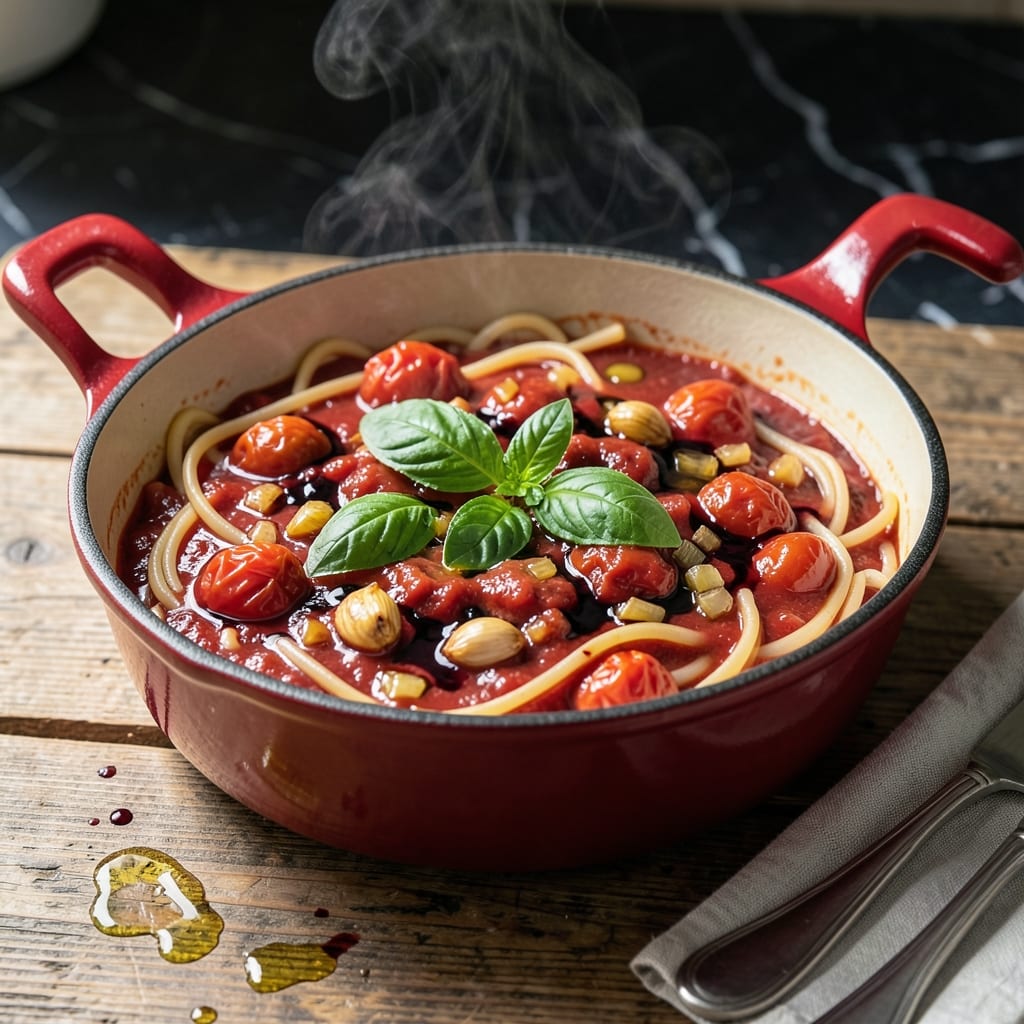
This sauce transforms ordinary pasta into something extraordinary. After years of refining, I’ve perfected a balance of rich tomatoes and fresh basil that delivers depth without complexity.
The secret lies in slow-simmering Roma tomatoes with garlic, onions, and herbs until they reduce into a velvety sauce. No fancy techniques—just patience and quality ingredients.
What you get is a smooth, aromatic sauce with layers of flavor that cling perfectly to spaghetti. It’s versatile enough for dipping bread or topping other pasta shapes.
Make a big batch and store it for quick meals all week. Here’s how to craft this foundation for countless Italian dishes.
Ingredients for Roma Spaghetti Sauce
Nine ingredients transform into that velvety, aromatic sauce clinging perfectly to pasta.
| Ingredient | Amount | Notes |
|---|---|---|
| Roma Tomatoes 🍅 | 28 oz | Canned, whole, peeled preferred |
| Fresh Basil Leaves 🌿 | 1 cup | Packed, stems removed |
| Yellow Onion 🧅 | 1 whole | Finely diced for base |
| Garlic Cloves 🧄 | 6 cloves | Minced for depth |
| Extra-Virgin Olive Oil 🫒 | ¼ cup | For sautéing aromatics |
| Dry Red Wine 🍷 | ½ cup | Optional for acidity |
| Tomato Paste 🍅 | 2 tbsp | For concentrated flavor |
| Dried Oregano 🌿 | 1 tsp | Mediterranean variety preferred |
| Red Pepper Flakes 🌶️ | ½ tsp | Adjust for heat preference |
| Sea Salt 🧂 | 1 tsp | Fine grain preferred |
[recipe_ingredient_scaler]
Roma tomatoes are non-negotiable here. San Marzano if you can find them (the canned ones from Italy), but any good-quality Roma works. Whole Foods or Trader Joe’s usually carry them. The basil? Fresh only—dried won’t give you that bright, summery pop. Grab a bunch from the farmers market if it’s in season (those plastic clamshells at the grocery store are fine in winter).
No red wine? Substitute with beef or vegetable broth plus a splash of balsamic vinegar. Out of fresh basil? Spinach or parsley at half the amount won’t taste the same but adds color. Tomato paste in a tube from Trader Joe’s avoids waste. The oregano can be fresh if you’ve got it—use triple the dried amount.
Sauce keeps 5-7 days in the fridge, but it’s even better after 24 hours once flavors meld. Freeze portions for up to 3 months in airtight containers. Pro tip: freeze in ice cube trays for perfect single-serving portions later.
Why You’ll Love This Recipe
- Minimal Chopping: Five ingredients, one knife, and I’m done before the water boils.
- Sun-Kissed Sweetness: Roma tomatoes collapse into this bright, almost jammy sauce that tastes like summer in a pot.
- Freezer Friendly: I double the batch and stash half—those winter nights need this exact flavor.
- Wallet’s Best Friend: A pound of Romas costs less than a jar of sauce, and it’s 100 times better.
Step-by-Step Instructions for Roma Spaghetti Sauce
This method delivers a rich, aromatic sauce with minimal effort and maximum flavor.
Step 1: Sauté the Aromatics in Olive Oil
Heat the 0.25 cup extra-virgin olive oil in a large saucepan over medium heat until it shimmers. Add the finely diced yellow onion and cook for 5-6 minutes until it turns translucent and golden at the edges.
Stir in the 6 cloves minced garlic cloves and 0.5 tsp red pepper flakes, cooking for 1 minute until fragrant. Watch closely—garlic burns easily and will turn bitter if left too long.
This base builds the foundation of flavor for your sauce. The onion sweetens as it cooks, while the garlic and red pepper flakes add depth and a subtle kick.
Step 2: Build the Tomato Base with Paste and Wine
Add the 2 tbsp tomato paste to the pan and stir constantly for 2 minutes to deepen its color and remove the raw taste. This step is crucial—it caramelizes the paste slightly, intensifying its umami richness.
Pour in the 0.5 cup dry red wine and deglaze the pan, scraping up any browned bits. Let it simmer for 3-4 minutes until reduced by half. The wine adds acidity and complexity, balancing the sweetness of the tomatoes.
Now add the 28 oz Roma tomatoes, crushing them by hand as they go into the pan. This releases their juices and creates a rustic texture.
Step 3: Simmer and Infuse with Herbs
Sprinkle in the 1 tsp dried oregano and 1 tsp sea salt, then stir well to combine. Reduce the heat to low and let the sauce simmer uncovered for 45-60 minutes.
As it cooks, the sauce will thicken and the flavors will meld together. Stir occasionally to prevent sticking, and adjust the heat if it starts to bubble too vigorously. You want a gentle simmer, not a rolling boil.
This slow cooking process allows the tomatoes to break down fully, creating a rich, velvety consistency.
Step 4: Finish with Fresh Basil
Remove the sauce from heat and stir in the 1 cup fresh basil leaves. The heat will wilt the leaves slightly, releasing their aromatic oils. Let it sit for 5 minutes before serving to allow the basil to infuse the sauce.
Taste and adjust seasoning if needed, though the balance of sweet tomatoes, savory garlic, and herbal notes should be just right. The fresh basil adds a bright, vibrant finish that elevates the dish.
Serve immediately over pasta, or let it cool and store in the refrigerator for up to 5 days. The flavors will continue to develop over time.
Pro Tips For Making Roma Spaghetti Sauce
- Blister the Tomatoes: Roast your Roma tomatoes at 400°F for 20-25 minutes until charred—it deepens the flavor way beyond raw. I learned this the hard way after my first few batches tasted flat.
- Bloom the Garlic: Cook minced garlic in olive oil on low heat for just 30 seconds until fragrant, not brown. Burnt garlic turns bitter, and I’ve ruined more than one sauce by rushing this.
- Skip Watery Tomatoes: Use only firm, deep red Roma tomatoes and remove any excess seeds or juice. Sounds tedious, but it prevents a thin, watery sauce that clings poorly to pasta.
- Tear the Basil: Hand-tear fresh basil leaves instead of chopping—it bruises them just enough to release oils without the bitterness of a knife’s edge. My grandmother swore by this, and she was right.
Best Sauces and Condiments for These Flavors
Classic Parmesan Dusting
Freshly grated Parmigiano-Reggiano is non-negotiable for this sauce. Use a Microplane for ultra-fine shreds that melt beautifully. Aim for ¼ cup per serving—it adds salty depth that complements the sweet tomatoes perfectly. 💛
Garlic Bread Pairing
Serve with crusty garlic bread made from a baguette sliced lengthwise, brushed with olive oil and minced garlic, then toasted at 375°F for 8 minutes. It’s ideal for soaking up every last bit of sauce.
Herb-Infused Olive Oil
A drizzle of basil-infused olive oil just before serving elevates the dish. I make mine by blending 1 cup olive oil with ½ cup fresh basil and straining. California Olive Ranch brand works wonderfully for this.
Red Pepper Flakes
For heat lovers, keep crushed red pepper flakes on the table. A pinch (⅛ tsp) per serving adds a subtle kick without overpowering. McCormick or Penzeys brands have consistent quality.
Balsamic Glaze
A light drizzle of balsamic glaze adds sweetness and acidity that cuts through the richness. Reduce ½ cup balsamic vinegar with 1 tbsp honey on low heat until syrupy. Colavita vinegar is my go-to. 🔥
Fresh Herb Garnish
Beyond basil, try chopped parsley or oregano leaves for freshness. Use 1 tbsp per serving for a pop of color and herbaceous brightness. Grow your own for the most vibrant flavor.
Nutrition Facts
Frequently Asked Questions
Can I use fresh tomatoes instead of canned?
Yes, but use 8-10 fresh Roma tomatoes for the same volume. Blanch, peel, and remove seeds first for the best texture. Canned are preferred for consistent flavor year-round.
How do I make it smoother?
Blend with an immersion blender after cooking. For ultra-smooth results, press through a fine-mesh sieve. The seeds and skins will be removed.
Why did my sauce taste bitter?
Overcooked garlic or tomato paste causes bitterness. Sauté garlic only until fragrant (1 minute) and cook paste just until darkened. A pinch of sugar can balance any remaining bitterness.
Can I add meat to this?
Brown ½ lb ground beef or Italian sausage with the onions. Drain excess fat before adding tomatoes. This adds hearty depth to the sauce.

Trained in classic French technique but raised on slow-cooked ribs and spicy rubs, she blends culinary skill with smoke and soul.
- Recipe for Boneless Pork Chops in Cast Iron Skillet: Sear and Baste to Juicy Perfection - October 3, 2026
- Recipe for Boneless Cross Rib Roast: Slow-Roasted Beef with Herb Crust - October 3, 2026
- Hamburgers in Sauce Recipe Crock Pot: Slow-Cooked Savory Delight - October 3, 2026