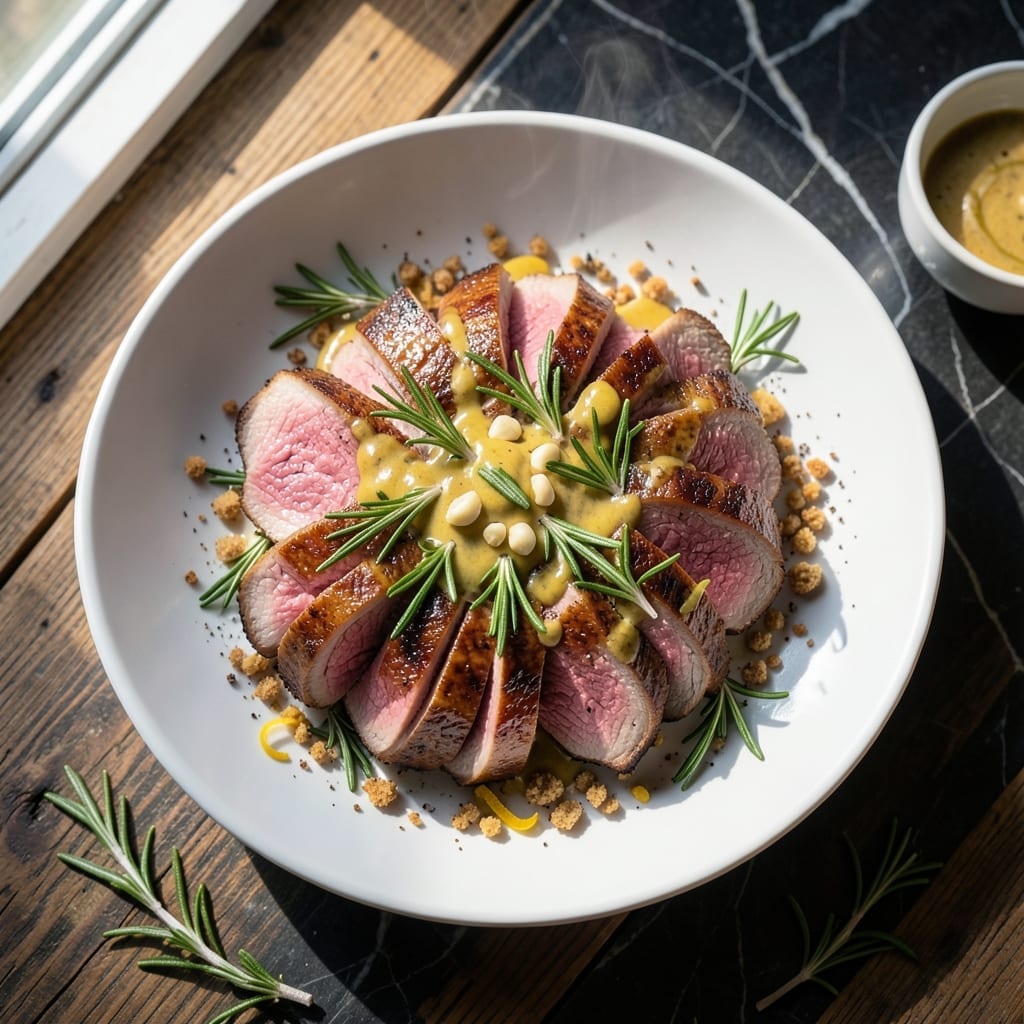
This pork tenderloin delivers tender results with a fragrant rosemary crust. My classic French training meets simple home cooking in this dish.
Ready in 30 minutes, it transforms an affordable cut into a restaurant-worthy main course. The herb crust locks in juices while creating an aromatic seal.
Ingredients for Rosemary Pork Tenderloin
Eleven ingredients transform humble pork into restaurant-worthy fare with aromatic depth.
| Ingredient | Amount | Notes |
|---|---|---|
| Pork Tenderloin 🥩 | 1 ½ lb | Trimmed of excess fat |
| Fresh Rosemary 🌿 | 3 tbsp | Finely chopped, stems removed |
| Garlic Cloves 🧄 | 4 cloves | Minced for maximum flavor |
| Dijon Mustard 🟡 | 2 tbsp | Smooth, not whole grain |
| Extra-Virgin Olive Oil 🫒 | 3 tbsp | Divided for crust and searing |
| Kosher Salt 🧂 | 1 ½ tsp | Diamond Crystal preferred |
| Freshly Ground Black Pepper 🌶️ | 1 tsp | Coarse grind for texture |
| Dried Thyme 🍃 | 1 tsp | Rubbed between fingers to release oils |
| Breadcrumbs 🍞 | ½ cup | Panko for extra crunch |
| Unsalted Butter 🧈 | 2 tbsp | Melted for crust binding |
| Shallot 🧅 | 1 whole | Finely minced for depth |
| Dry White Wine 🍷 | ½ cup | For deglazing pan |
[recipe_ingredient_scaler]
The pork tenderloin is the star—look for 1.5 lb pieces with even thickness at Whole Foods or your butcher. The rosemary must be fresh (those little plastic containers at Trader Joe’s work great). Diamond Crystal kosher salt gives the cleanest flavor. For the Dijon, Grey Poupon is reliable, but any smooth variety works. Don’t skip toasting the breadcrumbs—it adds nuttiness to the crust.
No fresh rosemary? Dried at one-third the amount, but fresh is non-negotiable for that French herby punch. Out of white wine? Chicken broth with a splash of lemon juice does the trick. Shallots can be yellow onion in a pinch, though the flavor’s milder. For extra crunch, swap panko for regular breadcrumbs. The butter binds the crust—vegan butter works if needed.
Pork stays fresh wrapped in the fridge for 2-3 days. The herb crust mix can be prepped a day ahead—store it covered at room temp. Leftovers reheat beautifully (though the crust softens slightly). Freeze cooked pork for up to 3 months.
Why You’ll Love This Recipe
- One Pan Wonder: I sear the pork, toss in rosemary and garlic, and the oven does the rest—one sheet pan, minimal cleanup.
- Herb-Crusted Magic: The Dijon and rosemary form this sticky, fragrant crust that makes every bite irresistibly savory.
- Weeknight MVP: Honestly, it’s my go-to for busy evenings—fancy enough for guests, quick enough for a Tuesday.
- Stretches Far: One tenderloin feeds four with leftovers that taste even better sliced into sandwiches the next day.
Step-by-Step Instructions for Rosemary Pork Tenderloin
This is how I get fall-apart tender pork with a crispy herb crust every single time.
Step 1: Prepare the Herb Crust
In a medium bowl, combine the 3 tbsp Fresh Rosemary, 1 tsp Dried Thyme, 0.5 cup Breadcrumbs, 2 tbsp Unsalted Butter, 1.5 tsp Kosher Salt, and 1 tsp Freshly Ground Black Pepper. I rub the dried thyme between my fingers first to release its oils—this small step makes a noticeable difference in flavor.
Mix everything with a fork until the breadcrumbs are evenly moistened and the mixture clumps together when pressed. The butter should coat all the dry ingredients, creating a paste-like consistency that will adhere beautifully to the pork. Set this aside while you prep the tenderloin.
Step 2: Sear the Pork Tenderloin
Pat the 1.5 lb Pork Tenderloin dry with paper towels—moisture prevents proper browning. Season all over with a pinch of salt and pepper (you’ve already added most of the seasoning to the crust). Heat 2 tbsp Extra-Virgin Olive Oil in a large oven-safe skillet over medium-high heat until it shimmers.
Add the pork and sear for 2-3 minutes per side until golden brown. Don’t move it around too much—let it develop a deep crust. You’ll know it’s ready to flip when it releases easily from the pan. Transfer the pork to a plate and let it rest while you build the sauce.
Step 3: Build the Pan Sauce
Reduce the heat to medium and add the 1 whole Shallot and 4 cloves Garlic Cloves to the same skillet. Sauté for 1-2 minutes until fragrant and just starting to soften. Be careful not to let the garlic burn—it turns bitter quickly.
Pour in the 0.5 cup Dry White Wine and scrape up all the browned bits from the bottom of the pan with a wooden spoon. Let it simmer for 2-3 minutes until reduced by about half. Then stir in the 2 tbsp Dijon Mustard and cook for another 30 seconds to meld the flavors.
Step 4: Crust and Roast to Perfection
Return the pork to the skillet and coat the top and sides with the herb crust mixture, pressing gently so it adheres. Spoon some of the pan sauce over the pork to help the crust stick. Transfer the skillet to a preheated 400°F oven.
Roast for 12-15 minutes until the internal temperature reaches 145°F and the crust is golden brown. The pork will continue cooking as it rests, so don’t overbake it. If the crust starts browning too quickly, tent loosely with foil.
Step 5: Rest and Serve
Transfer the pork to a cutting board and let it rest for 10 minutes. This allows the juices to redistribute, ensuring every slice is tender and moist. Meanwhile, drizzle the remaining 1 tbsp Extra-Virgin Olive Oil into the pan sauce and stir to combine.
Slice the pork into 1-inch thick medallions and arrange on a platter. Spoon the warm pan sauce over the top and serve immediately. The crust should be crispy and fragrant, while the pork stays juicy and tender—exactly as promised.
Pro Tips For Making Rosemary Pork Tenderloin
- Sear First, Roast Later: Start with a screaming hot pan to sear the tenderloin on all sides—about 2-3 minutes per side—then finish it in a 400°F oven. I learned this the hard way after serving gray pork that tasted like regret.
- Crush the Garlic: Smash the garlic cloves with the flat side of your knife before mincing—they’ll release more flavor and blend better with the rosemary and mustard. Sounds weird, but it works.
- Rest Before Slicing: Let the pork rest under foil for 8-10 minutes after cooking—it keeps the juices inside instead of all over your cutting board. My grandmother swore by this, and she was right.
- Use Fresh Rosemary: Skip the dried stuff here; fresh rosemary’s piney aroma actually changes the outcome when paired with the mustard and pork. It’s the thing that matters most in this dish.
Creative Variations of This Rosemary Pork Tenderloin
Mediterranean Inspiration
Swap the Dried Thyme for 1 tsp dried oregano and add 1 tbsp lemon zest to the crust. I love how the citrus brightens the rosemary’s piney notes. Serve with a Greek salad and pita bread for a full Mediterranean spread. 🌿
Spicy Southwestern Twist
Mix 1 tsp chipotle powder and ½ tsp cumin into the crust. Replace the Dijon Mustard with 2 tbsp adobo sauce from canned chipotles. This adds smoky heat that pairs perfectly with black beans and cilantro-lime rice.
French Bistro Style
Add 2 tbsp chopped fresh parsley and 1 tbsp tarragon to the herb mix. Use Dijon with whole grain for texture. The tarragon gives that classic French finesse I learned in culinary school. Serve with roasted potatoes and green beans.
Asian Fusion Version
Replace Fresh Rosemary with 3 tbsp chopped cilantro and add 1 tbsp grated ginger to the crust. Swap Dry White Wine for ½ cup sake in the pan sauce. This pairs beautifully with jasmine rice and stir-fried veggies. 🔥
Apple and Sage
Add ½ cup finely diced apple and 1 tbsp fresh sage to the crust mixture. The apple’s sweetness complements the pork beautifully. I like using Granny Smith for a tart contrast that works well with roasted Brussels sprouts.
Crust-Free Simplicity
Skip the breadcrumb crust and simply rub the pork with olive oil, rosemary, and garlic before searing. Finish with a pan sauce of white wine, Dijon, and butter. Sometimes less is more, especially with mashed potatoes.
Nutrition Facts
Frequently Asked Questions
Can I use dried rosemary instead of fresh?
Yes, but use 1 tbsp dried for every 3 tbsp fresh. Dried is more concentrated, so adjust carefully. Fresh gives better aroma, but dried works in a pinch.
How do I know when the pork is done?
Use a meat thermometer—145°F internal temperature is perfect. The pork will rest and rise to 150°F. Don’t cut into it to check; this releases juices.
Can I make this ahead of time?
Prepare the herb crust mix a day early. Store pork uncooked in the fridge for up to 24 hours. Cook just before serving for best texture.
What if my crust isn’t sticking?
Press harder when applying, or add 1 extra tbsp melted butter to the mix. The pan sauce also helps bind it during roasting.

Trained in classic French technique but raised on slow-cooked ribs and spicy rubs, she blends culinary skill with smoke and soul.
- Recipe for Boneless Pork Chops in Cast Iron Skillet: Sear and Baste to Juicy Perfection - October 3, 2026
- Recipe for Boneless Cross Rib Roast: Slow-Roasted Beef with Herb Crust - October 3, 2026
- Hamburgers in Sauce Recipe Crock Pot: Slow-Cooked Savory Delight - October 3, 2026