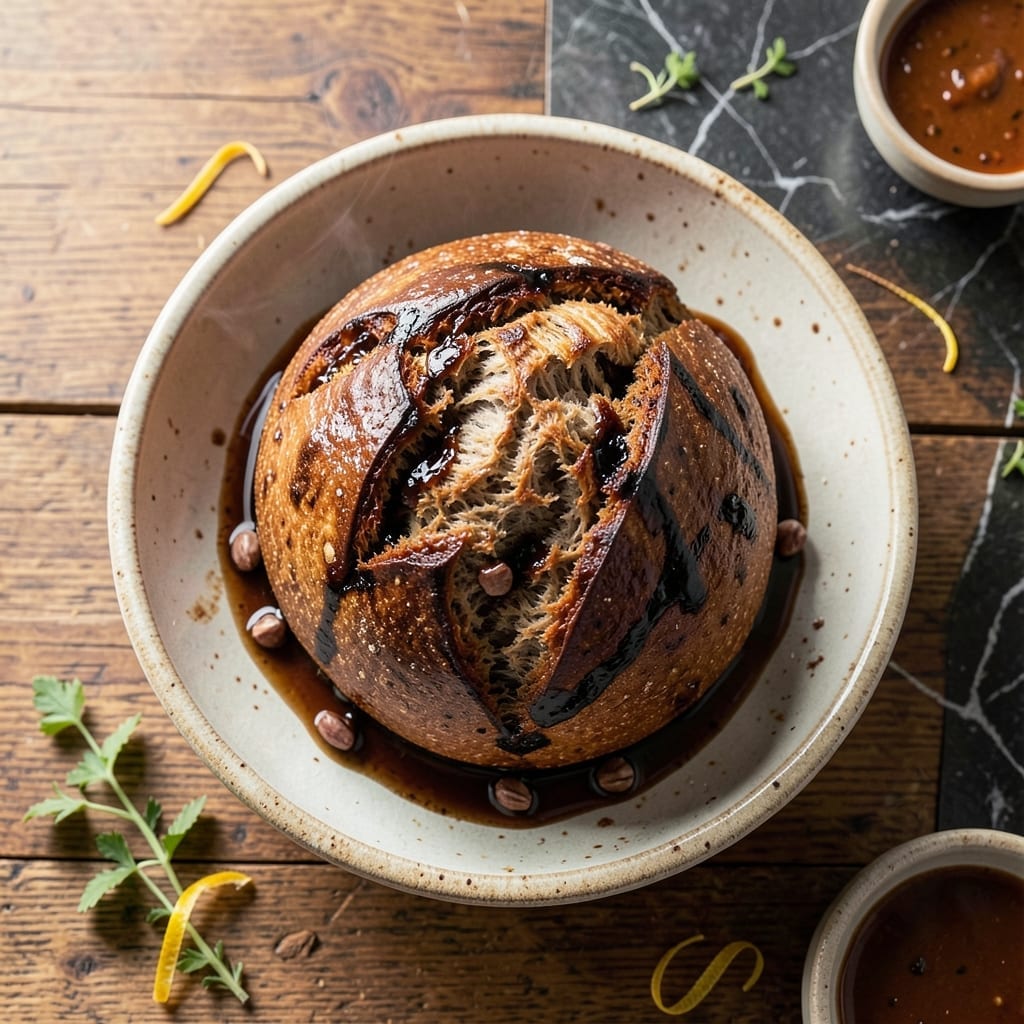
There’s nothing quite like the deep, earthy flavor of homemade rye bread with the sweet richness of molasses. I perfected this recipe in my Austin kitchen, testing it on different ovens to ensure consistent results.
This loaf delivers a dense, moist crumb with a slightly sticky crust, thanks to the molasses and rye flour combination. The process requires patience—mixing, rising, and baking all play a part in creating that signature texture.
The aroma alone, warm and slightly sweet, makes the effort worthwhile. David, my official taste-tester, always requests a second slice.
Serve it fresh with butter or use it for hearty sandwiches. This is the kind of bread that turns a simple meal into something special.
Ingredients for Rye Bread Recipe with Molasses
Dark rye, molasses, and yeast create this dense, rich loaf. Just eleven ingredients.
| Ingredient | Amount | Notes |
|---|---|---|
| Rye Flour 🌾 | 3 cups | Dark or medium variety |
| All-Purpose Flour 🌾 | 1 cup | For lighter texture |
| Molasses 🍯 | ¼ cup | Unsulphured for best flavor |
| Active Dry Yeast 🍞 | 2 ¼ tsp | One packet plus extra |
| Warm Water 💧 | 1 ¼ cups | 110°F for yeast activation |
| Salt 🧂 | 1 ½ tsp | Fine sea salt preferred |
| Unsalted Butter 🧈 | 2 tbsp | Melted for dough |
| Brown Sugar 🍚 | 2 tbsp | Light or dark variety |
| Caraway Seeds 🌿 | 1 tbsp | Optional for authentic flavor |
| Vegetable Oil 🫒 | 1 tbsp | For greasing bowl |
| Cornmeal 🌽 | 2 tbsp | For dusting baking sheet |
[recipe_ingredient_scaler]
The rye flour is non-negotiable here. Bob’s Red Mill or King Arthur are my go-tos—both deliver that deep, earthy flavor we want. Molasses can vary a lot between brands. Grandma’s or Brer Rabbit molasses have the right intensity. (Avoid blackstrap—it’s too bitter for this.) The yeast needs to be fresh; check the expiration date on that packet. Old yeast = flat bread.
No molasses? Honey or dark corn syrup work in a pinch, but the flavor changes. Swap caraway seeds for fennel seeds if you prefer a milder taste. The all-purpose flour can be whole wheat for a nuttier crumb, but add a tablespoon of water since it absorbs more liquid. Brown sugar can be white sugar plus a splash of molasses to mimic the depth.
Store the baked loaf wrapped in foil at room temperature for 3 days. Slice before freezing for easy portions—keeps 3 months frozen. Always let it cool completely before slicing, or the crumb gets gummy (worth the wait).
Why You’ll Love This Recipe
- One Bowl Magic: I mix everything in a single bowl—rye flour, molasses, yeast—then let it rise while I tackle the rest of my day.
- Deep, Rich Swirl: That molasses gives it a complex sweetness that balances rye’s earthy bite perfectly.
- Sandwich Hero: It’s sturdy enough for hearty lunches but soft enough for toast with just butter. Honestly, I make two loaves because it disappears fast.
- Budget Baker: Rye flour and molasses are cheap staples, and this loaf costs pennies compared to store-bought artisanal bread.
Step-by-Step Instructions for Rye Bread With Molasses
This method delivers that dense, rich texture you expect from a proper homemade loaf.
Step 1: Activate the Yeast and Mix Wet Ingredients
In a large bowl, combine the 2.25 tsp Active Dry Yeast with the 1.25 cups Warm Water and let it sit for 5 minutes until it becomes foamy. This is your confirmation that the yeast is active and ready to work its magic.
Stir in the 0.25 cup Molasses and 2 tbsp Brown Sugar until fully dissolved. The molasses adds that deep, caramelized sweetness that defines this bread, while the brown sugar enhances its richness. Next, add the 2 tbsp Unsalted Butter and mix until smooth.
Step 2: Combine Dry Ingredients and Form the Dough
In a separate bowl, whisk together the 3 cups Rye Flour, 1 cup All-Purpose Flour, 1.5 tsp Salt, and 1 tbsp Caraway Seeds (if using). The all-purpose flour lightens the dense rye, while the caraway seeds add that classic aromatic note.
Gradually add the dry mixture to the wet ingredients, stirring with a wooden spoon until a shaggy dough forms. Don’t worry if it looks rough at first—rye dough is naturally stickier than wheat-based doughs. Turn it out onto a lightly floured surface and knead for 8-10 minutes until smooth and elastic.
Step 3: First Rise – Let the Dough Double
Lightly grease a large bowl with the 1 tbsp Vegetable Oil and place the dough inside, turning to coat all sides. Cover with a damp towel and let it rise in a warm, draft-free spot for 1 to 1.5 hours, or until doubled in size.
Rye dough rises more slowly than wheat dough, so patience is key here. You’ll know it’s ready when it’s puffy and a finger pressed gently into the surface leaves a slight indentation. This step develops the flavor and texture that make this bread so special.
Step 4: Shape, Second Rise, and Prep for Baking
Punch down the dough to release the air, then shape it into a round loaf. Place it seam-side down on a baking sheet dusted with the 2 tbsp Cornmeal. The cornmeal prevents sticking and adds a nice, rustic texture to the bottom of the loaf.
Cover loosely with the damp towel again and let it rise for another 45-60 minutes, until it’s puffed and nearly doubled. While waiting, preheat your oven to 375°F so it’s ready to go as soon as the dough finishes rising.
Step 5: Bake to Perfection and Cool
Bake the loaf for 35-40 minutes, or until the top is deep golden brown and the internal temperature reaches 200-205°F. Rye bread should sound hollow when tapped on the bottom—this is your best indicator it’s done.
Remove from the oven and let it cool on a wire rack for at least 1 hour before slicing. I know it’s tempting to dive right in, but cooling allows the crumb to set properly. The result? A dense, moist loaf with a rich, slightly sweet flavor and that unmistakable molasses depth.
Pro Tips For Making Rye Bread Recipe With Molasses
- Activate Yeast Right: Always bloom your yeast in warm water (110°F, no hotter) with a pinch of sugar for 5-10 minutes—if it doesn’t foam, start over. I learned this the hard way after killing three batches with water that was too hot.
- Warm the Molasses: Measure your molasses, then microwave it for 10-15 seconds to thin it out. It mixes into the dough way easier and prevents those stubborn sticky clumps at the bottom of the bowl.
- Don’t Skip the Autolyse: Let the flour and water sit for 20 minutes before adding yeast and molasses. Sounds weird, but it works—your dough will be more elastic and less likely to fight you during kneading.
- Use a Scale: Rye flour is dense and packs differently every time. Weighing it (not scooping from the bag) guarantees consistent texture—I was skeptical until I tried it, and now I never go back.
Storing and Reheating This Recipe
Room Temperature Storage
Once completely cooled, wrap your loaf tightly in aluminum foil or place in an airtight bread box. Stored this way at room temperature, it stays fresh for 3 days. The molasses helps retain moisture better than plain bread. 💡
Refrigerator Storage
For longer freshness, slice the loaf and store in a ziplock bag in the fridge for up to 1 week. I recommend toasting slices before serving since rye can dry out in cold storage. David prefers his warmed with a bit of butter.
Freezing for Long Term
Slice before freezing and wrap individual pieces in plastic wrap, then place in a freezer bag. This keeps well for 3 months without significant texture loss. Thaw at room temperature for 1 hour before using. ❄️
Reheating Slices
For best results, warm slices in a 350°F oven for 5-7 minutes wrapped in foil. This restores moisture better than a microwave. For quick toasting, use a toaster on medium-high setting for 2 cycles.
Reviving a Whole Loaf
Wrap the entire loaf in foil and warm at 300°F for 10-12 minutes. Spritz with water before reheating for extra moisture. This works great for sandwiches when you need multiple slices.
Storage Tip from Nana Mae
She always stored bread with a sliced apple in the bag to maintain freshness. Works surprisingly well for this molasses rye too. The apple releases just enough moisture to keep the crumb tender.
Nutrition Facts
Frequently Asked Questions
Why use molasses in rye bread?
Molasses adds deep, caramelized sweetness and moisture, balancing rye’s earthy flavor. It also gives the crust a beautiful dark color and slightly sticky texture. The combination creates that signature rich taste.
Can I replace molasses with something else?
Honey or dark corn syrup work in a pinch, but the flavor changes slightly. 1/4 cup of either can substitute for the molasses. Avoid blackstrap molasses—it’s too bitter for this recipe.
How do I know when the bread is fully baked?
Check for a deep golden brown crust and an internal temperature of 200-205°F. Tap the bottom—it should sound hollow. Cool completely before slicing to avoid a gummy crumb.
Why is my rye bread dense instead of light?
Rye dough is naturally denser than wheat bread. Over-kneading or insufficient rising time can also cause this. Ensure the dough doubles in size during both rises for the best texture.

Trained in classic French technique but raised on slow-cooked ribs and spicy rubs, she blends culinary skill with smoke and soul.
- Beef Brisket Beer Recipe: Smoky, Beer-Braised Beauty in 6 Hours - October 15, 2026
- Smoked Whitefish Recipe: Wood-Fired Flakes with Herbed Butter Drizzle - October 15, 2026
- Smoked Teriyaki Beef Jerky Recipe: Umami-Deep Flavor in Every Chewy Bite - October 15, 2026