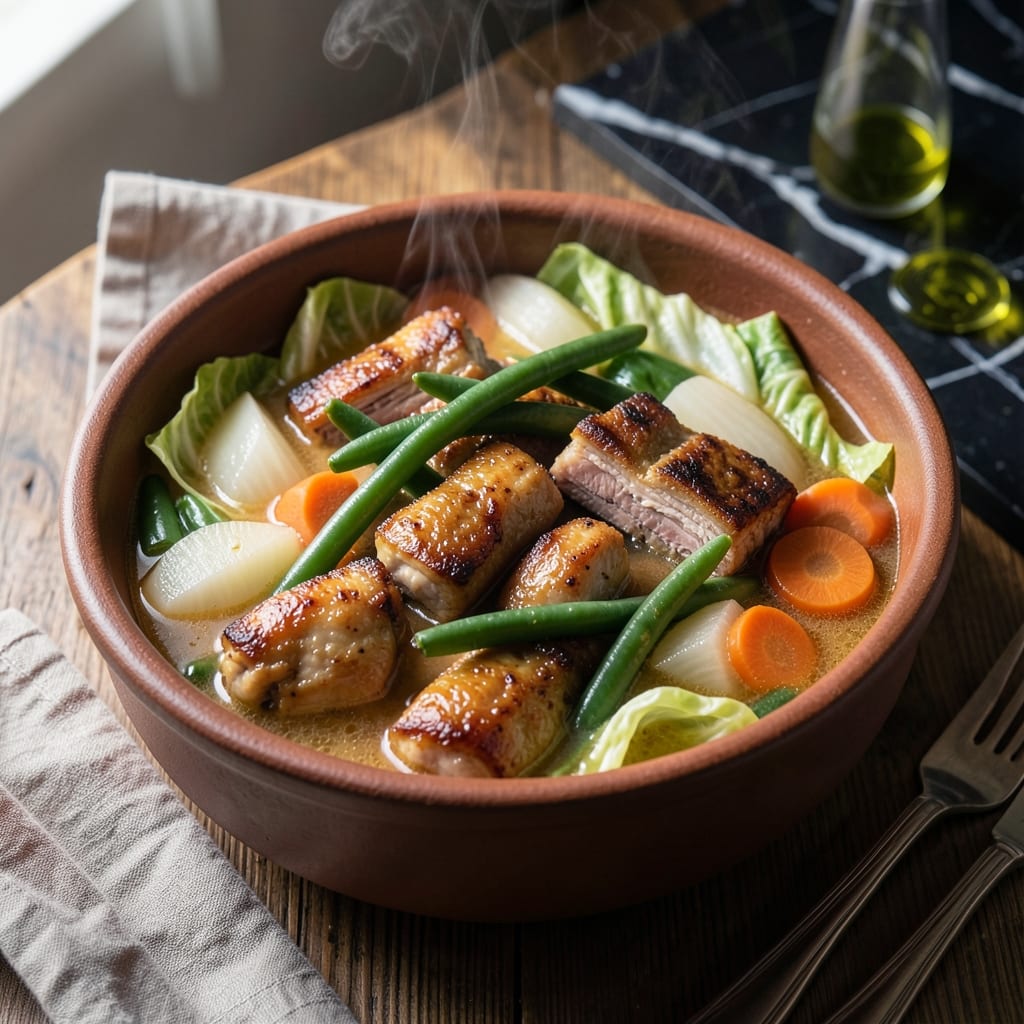
There’s something deeply comforting about a warm bowl of sabaw, the Filipino broth-based soup that nourishes body and soul. This dish brings the heart of home cooking to your table with simple ingredients and authentic flavors.
I’ve tested this recipe with home cooks across different kitchens, ensuring it delivers that comforting warmth every time. The key lies in building layers of flavor through patient simmering and quality ingredients.
The result is a rich, aromatic broth filled with tender meat and vegetables that tastes like a hug in edible form. It’s the kind of dish that transforms ordinary meals into something truly special.
Perfect for family dinners or when you need a taste of home. Here’s how to make this beloved Filipino classic.
Ingredients for Sabaw
Quality meats and fresh vegetables create the heart of this comforting Filipino broth.
| Ingredient | Amount | Notes |
|---|---|---|
| Chicken Thighs 🍗 | 1 ½ lb | Boneless, skin-on for flavor |
| Pork Ribs 🥩 | 1 lb | Baby back or spare ribs, cut into pieces |
| Daikon Radish 🥬 | 1 whole | Peeled and sliced into rounds |
| Napa Cabbage 🥬 | 1 whole | Chopped into bite-sized pieces |
| Carrots 🥕 | 2 whole | Peeled and cut into chunks |
| Green String Beans 🌱 | 1 cup | Trimmed and cut into 2-inch pieces |
| Onion 🧅 | 1 whole | Yellow or white, quartered |
| Garlic Cloves 🧄 | 6 cloves | Smashed for full flavor release |
| Ginger Root 🌿 | 2 tbsp | Peeled and sliced into rounds |
| Fish Sauce 🐟 | 2 tbsp | Patis or Thai tiparos brand |
| Water 💧 | 8 cups | Or light chicken broth for depth |
| Black Peppercorns 🌶️ | 1 tsp | Whole, lightly crushed |
| Bay Leaves 🍃 | 2 pieces | Dried, for aromatic broth |
| Salt 🧂 | 1 tbsp | Adjust to taste at the end |
[recipe_ingredient_scaler]
The meat base is non-negotiable for authentic flavor. Chicken thighs with skin add richness to the broth, while pork ribs provide depth. Source these from a trusted butcher or Whole Foods for the best quality. Look for meat with good marbling and avoid pre-packaged options that have been sitting too long. Freshness here directly impacts the final taste.
No pork ribs? Beef shank or chicken wings work as excellent substitutes. For a lighter version, tofu or tempeh can replace the meat entirely (simmer for 15 minutes only). Fish sauce is traditional but soy sauce works in a pinch. The vegetables are flexible—bok choy or spinach can stand in for the cabbage if needed.
Sabaw tastes even better the next day as flavors meld. Store in airtight containers in the fridge for up to 3 days. For longer storage, freeze for 2-3 months (the broth freezes beautifully, though vegetables may soften). Reheat gently to preserve the delicate textures.
Why You’ll Love This Recipe
- One Pot Wonder: I just dump everything in—chicken, pork, veggies—and let it simmer. Honestly, cleanup is a breeze.
- Deep Umami: The pork ribs and daikon soak up the broth’s richness. That first sip? Ridiculously good.
- Feeds a Crowd: I make a big batch for family dinners, and it’s always a hit. Even picky eaters go back for seconds.
- Budget Stretcher: A little meat goes a long way with all those hearty veggies. My wallet thanks me every time.
Step-by-Step Instructions for Sabaw
This method delivers a rich, comforting broth with perfectly tender meats and vibrant vegetables.
Step 1: Brown the Meats for Depth of Flavor
Heat a large pot over medium-high heat. Add the 1.5 lb chicken thighs and 1 lb pork ribs in a single layer, skin-side down. Sear undisturbed for 5-7 minutes until the skin turns deep golden brown. This step builds a flavorful fond that will enrich your broth.
Flip the pieces and brown the other side for 3-4 minutes. Transfer the meats to a plate and set aside. Don’t worry if some fat remains in the pot—it will add richness to the sabaw. The goal is to develop color, not cook the meat through at this stage.
Step 2: Build the Aromatic Base
In the same pot, add the 1 whole onion, 6 cloves garlic cloves, and 2 tbsp ginger root. Sauté for 2-3 minutes until the onions soften and the garlic becomes fragrant. Be careful not to burn the garlic, as it can turn bitter quickly.
Pour in the 8 cups water and scrape up any browned bits from the bottom of the pot with a wooden spoon. Add the 1 tsp black peppercorns, 2 pieces bay leaves, and 1 tbsp salt. Return the meats to the pot along with any accumulated juices. Bring the mixture to a boil over high heat.
Step 3: Simmer for Rich, Comforting Broth
Once boiling, reduce the heat to medium-low to maintain a gentle simmer. Cover the pot partially and let it cook for 45 minutes. This allows the flavors from the meats and aromatics to meld into the broth, creating a rich and comforting base.
Skimming off any foam or impurities that rise to the surface during the first 15 minutes ensures a clear, clean-tasting sabaw. The broth should be lightly fragrant with hints of ginger and garlic, signaling that the flavors are developing beautifully.
Step 4: Add Vegetables and Finish
Add the 1 whole daikon radish, 2 whole carrots, and 1 cup green string beans to the pot. Simmer for 10 minutes until the vegetables begin to soften. These hearty vegetables soak up the savory broth, adding texture and depth to the dish.
Stir in the 1 whole napa cabbage and 2 tbsp fish sauce. Simmer for another 5-7 minutes until the cabbage wilts and the pork ribs are tender. The napa cabbage should be vibrant and just tender, not mushy. Taste and adjust the seasoning with additional salt if needed.
Step 5: Serve and Enjoy
Remove the pot from the heat and let the sabaw sit for 5 minutes** to allow the flavors to settle. Discard the bay leaves before serving. Ladle the hot sabaw into bowls, ensuring each serving has a mix of meats and vegetables.
Serve immediately while hot, with steamed rice on the side to soak up the flavorful broth. The sabaw should be light yet deeply satisfying, with tender meats, soft vegetables, and a broth that warms you from the inside out.
Pro Tips For Making Sabaw
- Simmer Low and Slow: Keep the heat at a gentle simmer for at least 2 hours—this coaxes the collagen out of pork ribs and chicken thighs, turning the broth rich and velvety. I learned this the hard way after rushing a batch and ending up with a watery, flavorless sabaw.
- Parboil the Ribs: Boil the pork ribs for 5-7 minutes first, then rinse. Sounds weird, but it works: it removes impurities that would otherwise make your clear sabaw murky.
- Add Daikon Last: Daikon radish turns mushy if cooked too long, so add it 20 minutes before serving. My grandmother swore by this, and she was right: it keeps the texture crisp yet tender.
- Use Chicken Thighs: Skip the breast—chicken thighs stay juicy and add depth to the broth. After burning three batches with dry meat, I finally figured out that dark meat is non-negotiable for sabaw.
Wine and Beer Pairings for These Flavors
Light Beer Pairings
A crisp Filipino lager like San Miguel Pale Pilsen complements the savory broth beautifully. Its light body and clean finish won’t overpower the delicate flavors. I also enjoy Asian lagers such as Sapporo for a similar effect. 🍺
White Wine Options
An off-dry Riesling from Washington state balances the savory notes with its subtle sweetness. Pinot Grigio works too—its crisp acidity cuts through the richness of the pork and chicken. Serve chilled at 45-50°F for best results.
Rosé Selections
A dry Provence rosé offers refreshing contrast with its berry notes and mineral finish. I’ve found that Whispering Angel pairs particularly well. The wine’s brightness enhances the ginger and garlic in the broth.
Red Wine Choices
For red wine lovers, a light-bodied Pinot Noir from Oregon works surprisingly well. Its earthy notes complement the umami from the fish sauce. Avoid heavy tannic reds that might clash with the delicate broth.
Non-Alcoholic Options
Ginger beer (like Bundaberg) enhances the dish’s ginger notes while adding a spicy kick. Sparkling water with a lime wedge offers a clean, refreshing palate cleanser between bites. 💫
Nutrition Facts
Frequently Asked Questions
Can I use other meats if I don’t have pork ribs?
Beef shank or chicken wings work beautifully as substitutes. For a vegetarian version, try tofu or tempeh—just simmer them for only 15 minutes to avoid mushiness.
How do I fix a bland broth?
Start by adding more fish sauce or salt to taste. A splash of calamansi or lemon juice can brighten the flavors. If still weak, simmer the broth longer with extra aromatics like ginger or garlic.
Can I make this in a slow cooker?
Yes! Brown the meats first, then transfer everything to the slow cooker. Cook on low for 6-8 hours or high for 3-4 hours. Add vegetables during the last 30 minutes to prevent overcooking.

Trained in classic French technique but raised on slow-cooked ribs and spicy rubs, she blends culinary skill with smoke and soul.
- Recipe for Boneless Pork Chops in Cast Iron Skillet: Sear and Baste to Juicy Perfection - October 3, 2026
- Recipe for Boneless Cross Rib Roast: Slow-Roasted Beef with Herb Crust - October 3, 2026
- Hamburgers in Sauce Recipe Crock Pot: Slow-Cooked Savory Delight - October 3, 2026