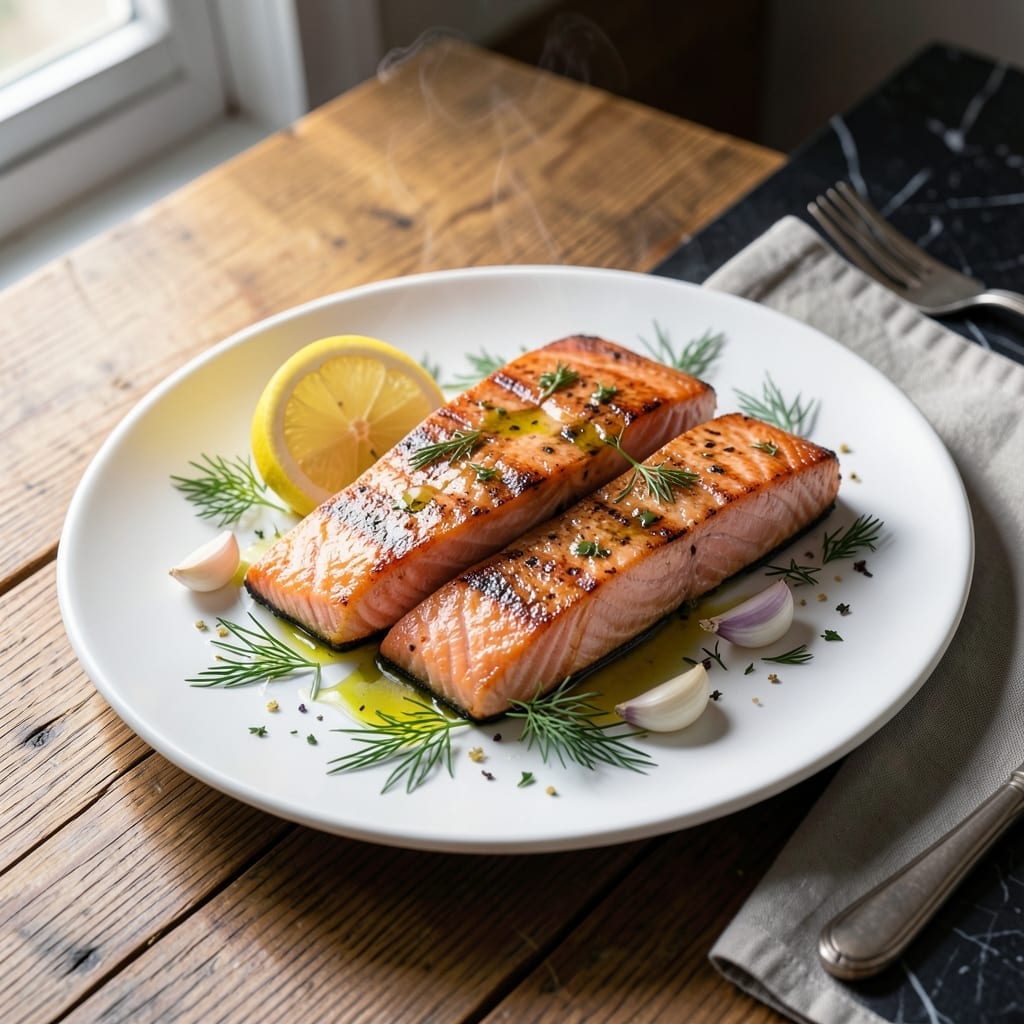
Simple, elegant, and ready in 15 minutes, this method delivers flaky salmon every time. No fancy techniques required—just precise timing and proper heat control.
The secret lies in starting with skin-on fillets and cooking them skin-side down first. This creates a natural barrier that keeps the delicate flesh moist while achieving perfect doneness throughout.
You’ll end up with tender, buttery salmon that breaks apart effortlessly with a fork. The crispy skin adds texture contrast, while the interior stays consistently flaky and rich.
Serve with steamed vegetables or a fresh salad for a complete meal. Here’s how to make it.
Ingredients for Salmon Recipe Ideas
Skin-on salmon, bright herbs, and a few pantry staples. Elegant yet effortless.
| Ingredient | Amount | Notes |
|---|---|---|
| Salmon Fillets 🐟 | 4 whole | Skin-on, about 6 oz each |
| Olive Oil 🫒 | 2 tbsp | Extra-virgin preferred |
| Unsalted Butter 🧈 | 2 tbsp | Melted for basting |
| Garlic Cloves 🧄 | 3 cloves | Minced or thinly sliced |
| Fresh Dill 🌿 | 2 tbsp | Chopped, for garnish |
| Lemon 🍋 | 1 whole | Zested and juiced |
| Kosher Salt 🧂 | 1 tsp | Diamond Crystal preferred |
| Freshly Ground Black Pepper 🌶️ | ½ tsp | Coarse grind ideal |
| Dijon Mustard 🟡 | 1 tsp | For depth of flavor |
| Honey 🍯 | 1 tsp | Optional for glaze |
| Red Pepper Flakes 🌶️ | ¼ tsp | Crushed, for heat |
| Fresh Thyme Sprigs 🌿 | 4 pieces | For aroma while cooking |
[recipe_ingredient_scaler]
The salmon quality is non-negotiable. Wild-caught sockeye or king salmon yields the richest flavor and best texture. Whole Foods or Costco are reliable sources for fresh, skin-on fillets—look for vibrant color and a mild sea scent. The skin should be intact and glistening, not dull or dry. If buying frozen, thaw overnight in the fridge for even cooking.
No fresh dill? Substitute fresh parsley or tarragon. Out of Dijon? Whole-grain mustard at half the amount works well. Honey can be swapped for maple syrup or agave for a vegan option, though the dish won’t be pescatarian. For a simpler version, skip the thyme and red pepper flakes—just salt, pepper, and lemon still deliver excellent results.
Salmon cooks best when cold. Keep fillets refrigerated until ready to cook. Leftovers store in an airtight container for up to 2 days—reheat gently to avoid drying out. The butter-dill-lemon sauce can be made ahead and reheated, but fresh herbs are best added just before serving for maximum vibrancy.
Why You’ll Love This Recipe
- One Pan Meal: I toss the fillets in, add butter, garlic, and dill, and dinner’s done in one go.
- Buttery Garlic Bliss: That combo of melted butter, fresh dill, and roasted garlic? Ridiculously good every single time.
- Weeknight Hero: Honestly, it’s my go-to for busy Tuesdays—fancy enough for guests, simple enough for solo meals.
- Leftovers Win: The flavors taste even better the next day, so I make extra for lunch without guilt.
Step-by-Step Instructions for Flaky Salmon Fillets
Master this technique and you’ll achieve restaurant-quality results with minimal effort and maximum flavor.
Step 1: Prepare the Salmon Fillets
Pat the 4 whole Salmon Fillets completely dry with paper towels. This critical step removes excess moisture, ensuring a perfect sear rather than steaming. Season both sides evenly with the 1 tsp Kosher Salt and 0.5 tsp Freshly Ground Black Pepper.
I always press the seasoning gently into the flesh so it adheres well. Let the fillets sit at room temperature for 10 minutes while you prepare the remaining ingredients—this promotes even cooking throughout.
Step 2: Create the Aromatic Pan Sauce Base
Heat the 2 tbsp Olive Oil in a large skillet over medium-high heat until it shimmers. Add the 3 cloves Garlic Cloves and 4 pieces Fresh Thyme Sprigs, cooking for 30-45 seconds until the garlic becomes fragrant but not browned.
Immediately add the 2 tbsp Unsalted Butter, 1 tsp Dijon Mustard, 1 tsp Honey, and 0.25 tsp Red Pepper Flakes. Stir to combine, allowing the butter to melt and the flavors to meld for 1 minute. The mixture should look glossy and slightly emulsified.
Step 3: Cook the Salmon Skin-Side Down
Place the salmon fillets skin-side down in the hot pan. Press down gently with a fish spatula for the first 10 seconds to prevent curling. Cook undisturbed for 4-5 minutes until the skin is crispy and golden-brown.
You’ll know it’s ready to flip when the edges of the fillets turn opaque and the flesh releases easily from the pan. Avoid moving the fillets prematurely—patience ensures that beautiful crispy skin that’s the hallmark of perfectly cooked salmon.
Step 4: Finish Cooking and Glaze
Flip the fillets and cook for an additional 3-4 minutes until the salmon reaches an internal temperature of 145°F and flakes easily with a fork. During the last 30 seconds, squeeze the juice from half of the 1 whole Lemon over the fillets.
Spoon the buttery pan sauce over the salmon repeatedly to baste. The sauce should coat the fillets in a glossy, aromatic layer. Remove from heat when the salmon is just cooked through—it will continue cooking slightly from residual heat.
Step 5: Garnish and Serve Immediately
Transfer the salmon to serving plates. Garnish with the remaining lemon juice, the zest from the 1 whole Lemon, and the 2 tbsp Fresh Dill. The dill adds a bright, fresh contrast to the rich salmon and buttery sauce.
Serve immediately while the skin remains crisp and the fillets are at their peak of flakiness. Each bite should deliver tender, moist salmon with a delicate crust, complemented by the bright, herby notes of the garnish.
Pro Tips For Making Salmon Recipe Ideas
- Skin Down First: Always start cooking the salmon skin-side down in a hot pan—about 3-4 minutes before flipping. I learned this the hard way after peeling sad, stuck skin off too many fillets.
- Pat It Dry: Blot the salmon fillets thoroughly with paper towels before seasoning. Sounds tedious, but it guarantees a proper sear instead of steamed fish.
- Butter Last: Add the butter, garlic, and dill only in the last 2 minutes of cooking to prevent burning. After ruining a batch with bitter garlic, I finally figured out the timing.
- Rest Before Serving: Let the salmon rest 3-4 minutes under loose foil after cooking—it stays moist and finishes cooking gently. I skip this when I’m hungry, but the difference is noticeable.
Regional Styles of These Flavors
Pacific Northwest Style
This region celebrates wild-caught salmon with minimal interference. I simply season with 1 tsp Kosher Salt, 0.5 tsp Freshly Ground Black Pepper, and a squeeze of lemon. The natural richness shines through. 💛
Mediterranean Approach
I incorporate 2 tbsp Fresh Dill, 3 cloves Garlic Cloves, and 1 tsp Dijon Mustard into the pan sauce. Add ½ cup kalamata olives and 1 tbsp capers for briny depth. The combination transports me to the Greek islands.
Asian Fusion Twist
Replace the butter sauce with a mixture of 2 tbsp soy sauce, 1 tbsp honey, 1 tbsp grated ginger, and 1 minced garlic clove. Brush onto the fillets during the last 2 minutes of cooking for a sweet-savory glaze.
Southern BBQ Glaze
After flipping the salmon, brush with a mix of 2 tbsp BBQ sauce, 1 tsp honey, and ½ tsp smoked paprika. The sticky, smoky glaze pairs surprisingly well with the rich fish.
French Herb Crust
Press a mixture of ¼ cup breadcrumbs, 1 tbsp chopped parsley, and 1 tsp lemon zest onto the flesh side before cooking. This creates a crispy, herbed topping that adds texture and elegance. 🌟
Nutrition Facts
Frequently Asked Questions
What’s the best way to keep the salmon moist?
Don’t overcook it—remove from heat at 145°F internal temperature. Cooking skin-side down first creates a natural barrier that locks in moisture.
Can I use frozen salmon fillets?
Yes, but thaw them overnight in the fridge first. Pat completely dry before cooking to ensure a good sear. Never cook from frozen directly.
How do I prevent the skin from sticking?
Use a hot pan and don’t move the fillets for 4-5 minutes. Press down gently with a spatula for the first 10 seconds to keep it flat.
What sides pair well with this dish?
Try roasted asparagus, quinoa, or a simple arugula salad. The bright, fresh flavors complement the rich salmon perfectly.

Trained in classic French technique but raised on slow-cooked ribs and spicy rubs, she blends culinary skill with smoke and soul.
- Best Smoked Oxtail Recipe: Deep-Rich Flavor After Low-and-Slow Cooking - October 14, 2026
- Pit Boss Smoked Prime Rib Roast Recipe: Bark-to-Bone Crispness in 4 Hours - October 14, 2026
- Smoked Tuna Steak Recipe: Seared Crust Meets Silky Centers - October 14, 2026