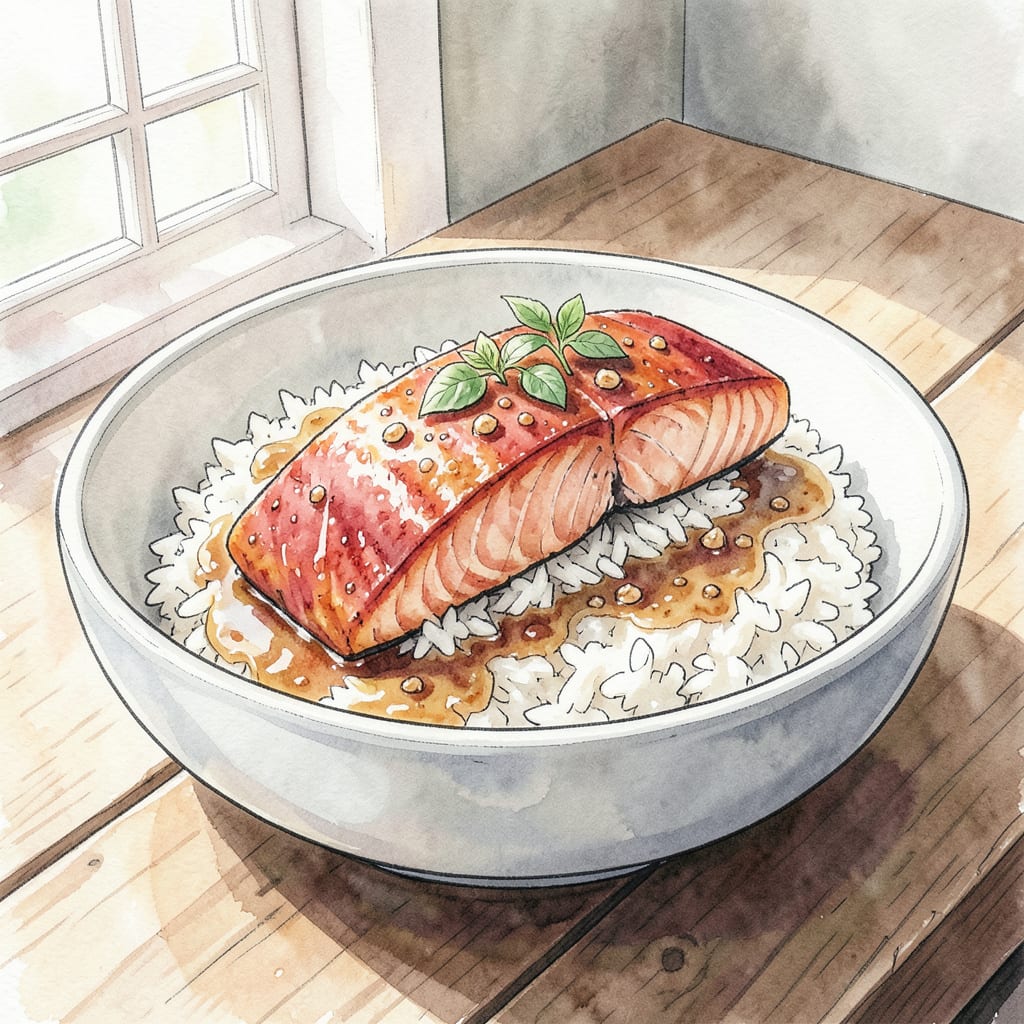
I’ve perfected cooking salmon in a rice cooker, achieving tender fish with minimal effort. This method ensures perfectly cooked salmon every time, paired with flavorful rice and vegetables.
The beauty lies in its simplicity: add salmon, rice, and your favorite seasonings to the cooker. In about 30 minutes, you’ll have a complete, one-pot meal that’s both healthy and satisfying. Let’s cook this salmon to perfection!
Ingredients for Salmon Rice Cooker
Simple ingredients for a complete meal. Salmon, rice, and veggies all cook together.
| Ingredient | Amount | Notes |
|---|---|---|
| Salmon Fillets 🐟 | 1 ½ lb | Skin removed, cut into 1-inch pieces |
| White Rice 🍚 | 2 cups | Uncooked, rinsed and drained |
| Water 💧 | 2 ½ cups | Or according to rice cooker instructions |
| Soy Sauce 🧂 | 2 tbsp | Low-sodium preferred |
| Olive Oil 🫒 | 1 tbsp | Extra-virgin for richness |
| Garlic Cloves 🧄 | 3 cloves | Minced, fresh |
| Ginger 🌿 | 1 tbsp | Grated, fresh |
| Frozen Peas 🥗 | 1 cup | Thawed, drained |
| Green Onions 🌿 | ¼ cup | Chopped, for garnish |
| Sesame Oil 💧 | 1 tsp | For finishing, optional |
| Salt 🧂 | ½ tsp | Kosher or sea salt |
| Black Pepper 🌶️ | ¼ tsp | Freshly ground preferred |
[recipe_ingredient_scaler]
For the best salmon, look for wild-caught at your local fish market or quality grocery store. Freshness matters—check for firm, vibrant flesh. Costco often has great deals on wild-caught salmon fillets, which work perfectly for this recipe.
No fresh ginger? Ground ginger works at one-third the amount. For extra flavor, try adding dried seaweed or a splash of rice vinegar. Frozen peas are convenient, but you can also use fresh—just adjust cooking time accordingly. If you prefer brown rice, increase liquid to 3.5 cups and check for doneness.
This dish stores beautifully in the fridge for up to 3 days. Reheat gently with a splash of water or broth to maintain moisture. Freezes well too—portion into individual containers for quick meals later. The flavors actually meld together better after a day, making it perfect for meal prep.
Step-by-Step Instructions for Salmon Rice Cooker Recipe
Follow these simple steps to create a delicious and convenient one-pot meal.
Step 1: Prepare the Rice Cooker Ingredients
Start by rinsing the 2 cups of white rice until the water runs clear, then drain well. Add the rinsed rice to your rice cooker with 2.5 cups of water. I like to use the water ratio recommended by my rice cooker’s manufacturer for perfect results every time.
Next, add 2 tablespoons of soy sauce to the rice mixture. This will infuse the rice with savory flavor as it cooks. Stir gently to distribute the soy sauce evenly throughout the rice.
Step 2: Sear the Salmon and Prepare Aromatics
Heat 1 tablespoon of olive oil in a skillet over medium-high heat. Add the 1.5 lb of salmon fillets, cut into 1-inch pieces, and sear for about 2-3 minutes on each side until lightly browned. The salmon doesn’t need to be fully cooked at this stage.
While the salmon is searing, prepare the aromatics. Mince 3 cloves of garlic and grate 1 tablespoon of ginger. These will add depth and warmth to your dish.
Step 3: Combine Ingredients in the Rice Cooker
Once the salmon is seared, add it to the rice cooker along with the minced garlic and grated ginger. Stir gently to combine. Then, add 1 cup of thawed and drained frozen peas to the mixture. The peas will cook through during the rice cooking process, retaining their bright color and sweetness.
Close the rice cooker lid and set it to cook. The rice cooker will handle the rest, ensuring that the rice is fluffy and the salmon is cooked through.
Step 4: Finish and Season the Dish
Once the rice cooker has finished cooking, open the lid and gently fluff the mixture with a fork. The salmon should be cooked through and flake easily. Stir in 1 teaspoon of sesame oil, if using, for a nutty flavor and silky texture.
Season the dish with 0.5 teaspoon of salt and 0.25 teaspoon of freshly ground black pepper to taste. Finally, garnish with 0.25 cup of chopped green onions for a fresh, oniony flavor.
Serve hot, straight from the rice cooker, and enjoy your quick and flavorful one-pot meal.
Essential Equipment for salmon rice cooker
Rice Cooker Essentials
A good rice cooker is the backbone of this recipe. I recommend a Zojirushi NS-ZCC10 or Cuckoo CRP-P0610 for their precise temperature control and multiple cooking settings. Look for models with a ‘mixed rice’ or ‘porridge’ setting for best results.
Skillet for Searing
While the rice cooker does most of the work, a good skillet is essential for searing the salmon. I prefer a cast-iron or stainless steel pan as they retain heat well. Make sure it’s large enough to hold all the salmon pieces in a single layer without overcrowding.
Sharp Knife for Prep
A sharp knife is crucial for cutting the salmon into even pieces. I use a high-carbon stainless steel knife that stays sharp through multiple cuts. This ensures uniform cooking and professional presentation.
Measuring Tools
Accurate measurements matter, especially when cooking rice and salmon together. I rely on digital kitchen scales for precise ingredient measurement. For liquids, use a clear measuring cup with metric markings.
Garnishing Tools
For the final touches, have some basic garnishing tools on hand. A microplane grater for fresh ginger and a sharp pair of kitchen shears for cutting green onions make preparation easier. These small tools elevate the dish’s presentation.
Additional Tips
Investing in a thermometer can help ensure your salmon is cooked to a safe internal temperature of 145°F. Some rice cookers come with steamer baskets that can be useful for cooking additional vegetables simultaneously.

Trained in classic French technique but raised on slow-cooked ribs and spicy rubs, she blends culinary skill with smoke and soul.
- Recipe for Boneless Pork Chops in Cast Iron Skillet: Sear and Baste to Juicy Perfection - October 3, 2026
- Recipe for Boneless Cross Rib Roast: Slow-Roasted Beef with Herb Crust - October 3, 2026
- Hamburgers in Sauce Recipe Crock Pot: Slow-Cooked Savory Delight - October 3, 2026