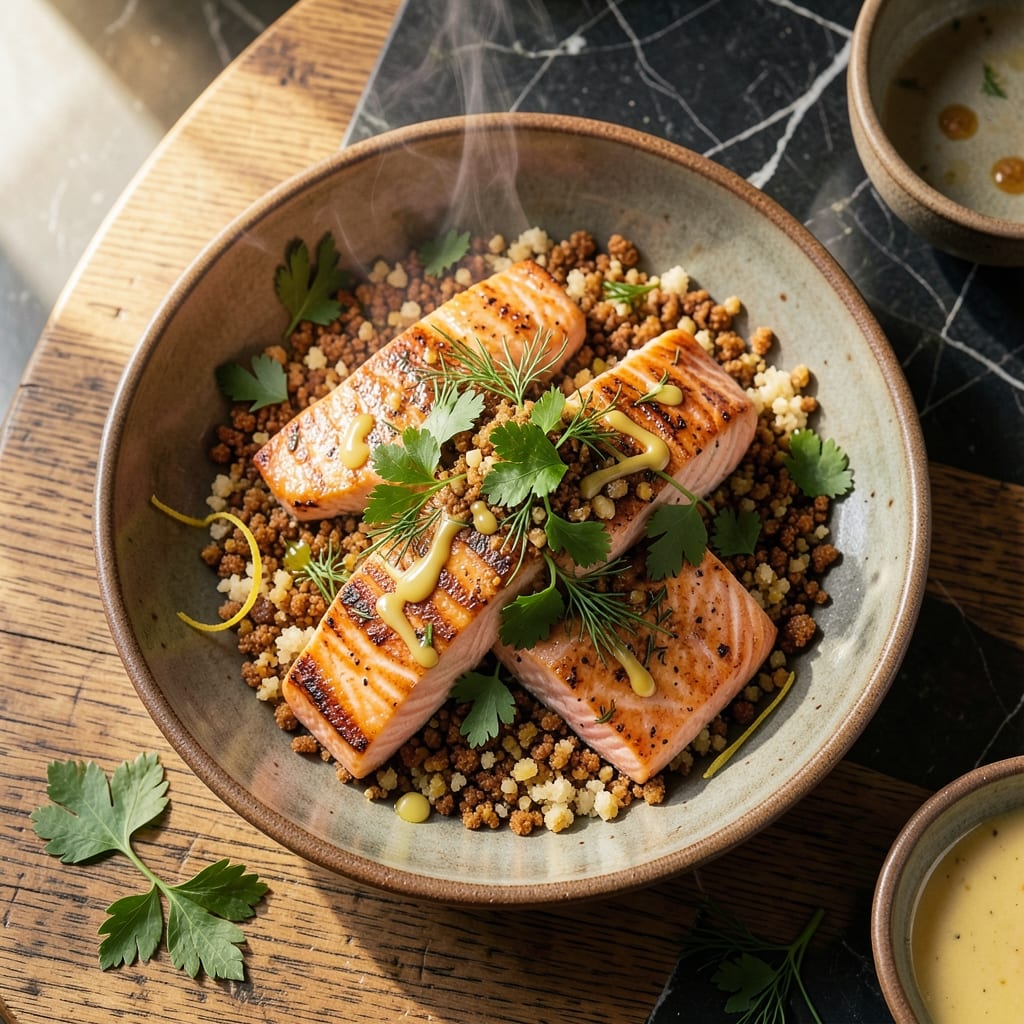
This oven method for salmon steaks delivers flaky centers and a perfectly golden herb crust every time. I developed this technique after years of trial and error, focusing on precise temperature and timing for the best results.
The key is high heat for a short time, which creates a crisp top layer while keeping the inside tender. A simple herb coating adds flavor without overpowering the natural taste of the salmon.
You’ll end up with a dish that looks restaurant-worthy but requires minimal effort. The oven does most of the work while you prepare the rest of the meal.
This method works for both thick and thin cuts, making it versatile for any salmon steak you bring home.
Ingredients for Salmon Steak Recipe Oven
Fresh salmon, bright herbs, and a crisp crust. Simple ingredients for extraordinary results.
| Ingredient | Amount | Notes |
|---|---|---|
| Salmon Steaks 🐟 | 4 pieces | Skin-on, center-cut, about 1 inch thick |
| Extra-Virgin Olive Oil 🫒 | 2 tbsp | Divided for salmon and crust |
| Dijon Mustard 🟡 | 2 tbsp | Smooth, not grainy |
| Fresh Breadcrumbs 🍞 | ½ cup | Panko or homemade preferred |
| Fresh Parsley 🌿 | ¼ cup | Finely chopped, flat-leaf variety |
| Fresh Dill 🌿 | 2 tbsp | Finely chopped, stems removed |
| Garlic Cloves 🧄 | 2 cloves | Minced or pressed |
| Lemon Zest 🍋 | 1 tbsp | From 1 large lemon |
| Lemon Juice 🍋 | 1 tbsp | Freshly squeezed |
| Kosher Salt 🧂 | 1 tsp | Diamond Crystal preferred |
| Black Pepper 🌶️ | ½ tsp | Freshly ground |
| Unsalted Butter 🧈 | 1 tbsp | Melted, for breadcrumb mixture |
| Shallot 🧅 | 1 whole | Finely minced |
[recipe_ingredient_scaler]
The salmon quality is paramount. Wild-caught sockeye or king salmon from Whole Foods or a trusted fishmonger yields the best texture and flavor. Steaks should be cut center-bone for even cooking. Look for vibrant color and a mild ocean scent—avoid any fish with a strong ammonia smell. If buying frozen, thaw overnight in the refrigerator (never at room temperature).
No fresh dill? Dried dill at one-third the amount works, though fresh is superior. Out of breadcrumbs? Crushed saltine crackers or panko substitute well. For a nutty twist, add 1 tbsp finely chopped walnuts or almonds to the crust. The Dijon can be swapped for whole-grain mustard if preferred, but avoid honey mustard—its sweetness clashes with the salmon.
Salmon steaks keep in the fridge for 1-2 days before cooking. The herb crust mixture can be prepped 1 day ahead and stored separately. Cooked salmon is best enjoyed immediately but holds for 3 days refrigerated. Reheat gently in a 300°F oven to preserve moisture.
Why You’ll Love This Recipe
- One Pan Magic: I just toss the salmon steaks with olive oil, slap on that Dijon-breadcrumb mix, and let the oven do the rest—no flipping, no fuss.
- Crispy Crunch: The fresh breadcrumbs toast up golden while the mustard keeps the inside juicy. Honestly, it’s the texture contrast that gets me every time.
- Weeknight Win: Between us, this works for a quick dinner or when I need to impress guests with minimal effort.
- Budget Stretch: I can grab a few affordable salmon steaks, and the parsley and breadcrumbs are pantry staples. Leftovers? Still great cold the next day.
Step-by-Step Instructions for Baked Salmon Steaks
This method delivers tender, flaky salmon with a crispy herb crust every time.
Step 1: Prepare the Herb-Crust Topping
In a small bowl, combine the 0.5 cup fresh breadcrumbs, 0.25 cup fresh parsley, 2 tbsp fresh dill, minced 1 whole shallot, 2 cloves minced garlic cloves, 1 tbsp lemon zest, 1 tsp kosher salt, and 0.5 tsp black pepper.
Drizzle in the 1 tbsp unsalted butter and stir until the mixture resembles wet sand and holds together when pressed. This texture ensures the crust adheres to the salmon and crisps up beautifully in the oven.
Step 2: Coat the Salmon with Mustard
Pat the 4 pieces salmon steaks dry with paper towels—this is crucial for crisping the skin. Arrange them on a parchment-lined baking sheet and brush each piece generously with 2 tbsp Dijon mustard. The mustard acts as a flavorful glue for the herb crust.
Don’t skip drying the salmon. Moisture on the surface will steam the fish instead of allowing it to develop that perfect golden crust. Use the back of a spoon to spread the mustard evenly over the top and sides of each steak.
Step 3: Apply the Crust and Drizzle with Oil
Press the breadcrumb mixture firmly onto the top of each mustard-coated salmon steak. Use your fingers to pack it on thickly—this creates a substantial, crispy layer. The crust should fully cover the top of each steak without spilling over the edges.
Drizzle the remaining 2 tbsp extra-virgin olive oil over the crusted salmon steaks, focusing on the exposed sides. This adds richness and helps the skin crisp up as it bakes.
Step 4: Bake Until Flaky and Golden
Preheat your oven to 400°F. Bake the salmon for 12-15 minutes, depending on thickness, until the crust is golden brown and the salmon flakes easily with a fork. The internal temperature should reach 145°F.
Watch for the edges of the crust to turn golden—that’s your visual cue that it’s done. The salmon will continue cooking slightly after you remove it from the oven, so pull it out just as it reaches temperature.
Step 5: Rest and Serve with Lemon
Transfer the salmon to a serving platter and let it rest for 5 minutes. This allows the juices to redistribute, keeping the fish moist and tender. Lightly drizzle the 1 tbsp lemon juice over the top just before serving.
The crust should be crispy and fragrant, while the salmon underneath stays perfectly flaky. Serve immediately while the crust is still at its peak texture.
Pro Tips For Making Salmon Steak Recipe Oven
- Preheat the Oven: Crank it to 400°F and let it stabilize for 10 minutes—I learned this the hard way after my first few salmon steaks came out unevenly cooked.
- Pat the Salmon Dry: Use a paper towel to remove all moisture from the steaks before seasoning; it helps the breadcrumb crust stick and brown properly.
- Don’t Overcrowd the Pan: Give each steak at least an inch of space on the baking sheet, or they’ll steam instead of crisp up.
- Toast the Breadcrumbs: Toss the fresh breadcrumbs in a little olive oil and toast them in a dry pan for 2-3 minutes before mixing with parsley—sounds like an extra step, but it adds a serious crunch.
Creative Variations of These Flavors
Mediterranean Twist
Swap the herb crust for a Mediterranean-inspired topping. Mix ½ cup crumbled feta, ¼ cup chopped Kalamata olives, and 1 tbsp capers with the breadcrumbs. The salty, briny flavors pair beautifully with the rich salmon. 🌿
Spicy Cajun Style
Add 1 tbsp Cajun seasoning (I use Tony Chachere’s) to your breadcrumb mixture for a bold, spicy kick. A drizzle of hot honey after baking balances the heat perfectly. This variation reminds me of a trip to New Orleans with Tom.
Asian-Inspired Glaze
Replace the Dijon with a glaze of 2 tbsp soy sauce, 1 tbsp honey, and 1 tsp grated ginger. Top with sesame seeds and thinly sliced green onions before baking. The umami flavors elevate the salmon wonderfully.
Lemon-Herb Variation
Double the lemon zest to 2 tbsp and add 1 tbsp chopped fresh thyme to the crust mixture. The bright citrus and earthy herbs create a refreshing combination that’s perfect for spring dinners in Portland. 🍋
Nutty Crunch
Add ¼ cup finely chopped walnuts or pecans to your breadcrumb mixture for extra texture. Toast the nuts lightly first to enhance their flavor. This adds a satisfying crunch that contrasts beautifully with the flaky salmon.
Nutrition Facts
Frequently Asked Questions
Should I leave the skin on when baking?
Yes, keeping the skin on helps hold the fish together and creates a crispy texture. Place the steaks skin-side down on the baking sheet for best results.
How do I prevent the crust from burning?
Bake at 400°F for 12-15 minutes and watch closely after 10 minutes. If browning too fast, tent loosely with foil.
Can I use frozen salmon steaks?
Yes, but thaw completely in the fridge overnight first. Pat very dry before adding the crust to ensure proper crisping.
What’s the best way to check doneness?
Use a fork to gently flake the thickest part. It should separate easily and reach 145°F internally.

Trained in classic French technique but raised on slow-cooked ribs and spicy rubs, she blends culinary skill with smoke and soul.
- Smoked Teriyaki Beef Jerky Recipe: Umami-Deep Flavor in Every Chewy Bite - October 15, 2026
- Stewed Beef Brisket Recipe: Deep-Rich Flavor After 8 Hours of Slow Simmering - October 15, 2026
- Beef Brisket Rolls Recipe: Flaky Layers and Smoky Sweet Filling - October 15, 2026