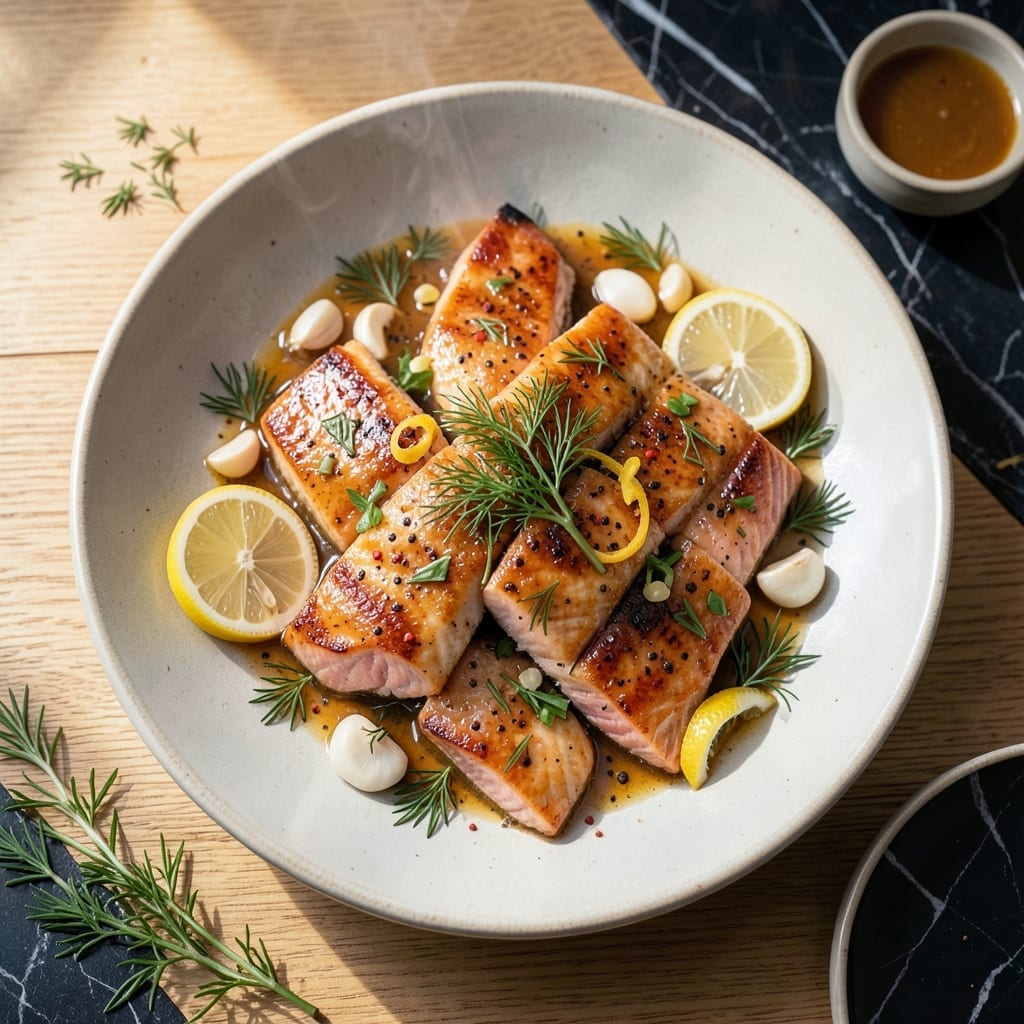
Don’t toss those salmon trimmings—they’re packed with rich flavor waiting to be unlocked. As a chef who values zero-waste cooking, I’ve found these scraps transform into dishes just as impressive as the main fillet.
This recipe turns what many discard into a tender, flavorful meal with minimal effort. A quick sear followed by a gentle finish in the oven preserves the delicate texture while enhancing natural oils.
You’ll achieve restaurant-quality results without the premium price tag. The trimmings absorb marinades and seasonings beautifully, making them versatile for salads, tacos, or pasta.
Perfect for weeknight dinners or elevating simple sides. Here’s how to make the most of every bite.
Ingredients for Salmon Trimmings
Salmon trimmings shine with pantry staples and fresh herbs. Zero waste, maximum flavor.
| Ingredient | Amount | Notes |
|---|---|---|
| Salmon Trimmings 🐟 | 1 ½ lb | Skin-on pieces, bones removed |
| Olive Oil 🫒 | 3 tbsp | Extra-virgin for richness |
| Lemon 🍋 | 1 whole | Zested and juiced |
| Garlic Cloves 🧄 | 4 cloves | Minced for depth |
| Fresh Dill 🌿 | ¼ cup | Chopped, stems removed |
| Dijon Mustard 🟡 | 1 tbsp | Smooth, not grainy |
| Honey 🍯 | 1 tbsp | Or maple syrup for vegan |
| Soy Sauce 🥢 | 2 tbsp | Low-sodium preferred |
| Salt 🧂 | ½ tsp | Kosher or sea salt |
| Black Pepper 🌶️ | ½ tsp | Freshly ground preferred |
| Red Pepper Flakes 🔥 | ¼ tsp | Adjust for heat preference |
| Shallot 🧅 | 1 whole | Finely diced for sweetness |
[recipe_ingredient_scaler]
The salmon trimmings are the star here. Ask your fishmonger for the skin-on scraps—they’ve got the best flavor and texture. If you’re filleting a whole salmon at home, save every last bit (the belly and collar pieces are especially rich). Look for vibrant color and fresh smell—if it’s fishy, it’s past its prime. I usually grab mine from Whole Foods—they’re great about saving trimmings for customers who ask.
No fresh dill? Dried dill at one-third the amount works in a pinch. Out of honey? Maple syrup or agave brings similar sweetness. The Dijon can be swapped for whole-grain mustard if you like a bit more texture. For the soy sauce, coconut aminos are a solid gluten-free alternative. And if you don’t have shallots, a small red onion (finely diced) does the trick just fine.
These cook up fast, so eat them the same day. Leftovers? Not likely—but if you’ve got some, they’ll keep in the fridge for 2 days. Reheat gently to avoid drying them out. Honestly, they’re best fresh out of the pan (worth the extra minute).
Why You’ll Love This Recipe
- 5-Minute Prep: I just toss the trimmings with olive oil, lemon, and garlic—no fancy knife work needed.
- Lemon-Garlic Zing: The bright lemon and punchy garlic make every bite taste like a fancy seafood dish.
- Weeknight Hero: Honestly, it’s my go-to for busy evenings when I need dinner fast.
- Zero Waste Win: I use every bit of the salmon, so nothing goes to waste and my wallet stays happy.
Step-by-Step Instructions for Salmon Trimmings
This zero-waste method transforms scraps into something extraordinary with minimal effort.
Step 1: Marinate the Salmon Trimmings
In a large bowl, whisk together the 3 tbsp olive oil, zest and juice of 1 whole lemon, 4 cloves minced garlic, 0.25 cup chopped fresh dill, 1 tbsp Dijon mustard, 1 tbsp honey, 2 tbsp soy sauce, 0.5 tsp salt, 0.5 tsp black pepper, and 0.25 tsp red pepper flakes until fully combined. The emulsion will look glossy and vibrant.
Add the 1.5 lb salmon trimmings to the marinade, ensuring each piece is thoroughly coated. I like to massage the marinade into the flesh for better penetration. Let it sit at room temperature for 15-20 minutes—this short marinade time is perfect for salmon’s delicate texture.
Step 2: Sear the Salmon for Crispy Edges
Heat a large skillet over medium-high heat until a drop of water sizzles and evaporates immediately. Add the marinated salmon trimmings in a single layer, being careful not to overcrowd the pan. You should hear a satisfying sizzle as they hit the hot surface.
Cook undisturbed for 3-4 minutes until the edges turn opaque and golden and the skin, if present, becomes crispy. Flip each piece gently with a spatula—they should release easily when ready. Cook for another 2-3 minutes until the salmon is just cooked through but still tender.
Step 3: Add Aromatics and Finish Cooking
Push the salmon to one side of the skillet and add the 1 whole finely diced shallot to the empty space. Sauté for 1-2 minutes until the shallot softens and becomes translucent. The residual marinade and salmon juices will deglaze the pan, creating a fragrant base.
Return the salmon to the center of the pan, spooning the shallots and any pan juices over the top. Reduce the heat to medium-low and let it cook for an additional 1-2 minutes to meld the flavors. The salmon should flake easily with a fork when done.
Step 4: Rest and Serve
Transfer the salmon trimmings to a serving platter, drizzling any remaining pan juices and shallots over the top. Garnish with an extra sprinkle of fresh dill for a pop of color and freshness. Let it rest for 2-3 minutes—this allows the juices to redistribute, ensuring every bite is flavorful and moist.
Serve immediately while warm. The salmon should have a slightly caramelized exterior with tender, flaky flesh inside. Each piece will be infused with the bright, herby marinade and the subtle heat from the red pepper flakes.
Pro Tips For Making Salmon Trimmings
- Pat Trimmings Dry: I learned this the hard way—moisture on the salmon trimmings makes them steam instead of sear. Dab them with a paper towel before they hit the pan to guarantee that crispy skin.
- Slice Garlic Thin: After burning three batches, I finally figured out that thinly sliced garlic browns evenly and infuses the oil faster. Don’t mince it—it’ll turn bitter before the salmon’s done.
- Don’t Overcrowd the Pan: Sounds weird, but it works: leave space between the trimmings or they’ll boil in their own juices. A hot, uncrowded pan is the only way to get that golden crust.
- Zest the Lemon First: My grandmother swore by this, and she was right: grate the zest into the oil before squeezing the juice. It packs way more flavor than just the juice alone.
Make-Ahead Tips for This salmon trimmings
Prep Ahead of Time
Mix the marinade up to 24 hours ahead and store it in the fridge. The flavors meld beautifully overnight. I often make a double batch to have on hand. 💡
Trim and Store
If you’re prepping the salmon trimmings in advance, pat them dry, place in an airtight container, and refrigerate for up to 1 day. Keep them separate from the marinade until ready to cook.
Marinate in Advance
Combine the trimmings with the marinade in a sealed container and refrigerate for up to 4 hours. This extends the flavor infusion without over-marinating the delicate fish.
Pre-Chop Ingredients
Dice the shallot and chop the fresh dill ahead of time. Store them in small containers in the fridge for up to 2 days. This saves time on busy evenings.
Par-Cook Option
For a head start, sear the salmon trimmings for 2 minutes per side, then store them in the fridge. Finish cooking just before serving to maintain freshness and texture.
This method works well if you’re prepping for a crowd. 🔥
Nutrition Facts
Frequently Asked Questions
How long should I marinate the trimmings?
15-20 minutes at room temperature is ideal for delicate salmon. For stronger flavor, refrigerate up to 4 hours.
Can I use frozen trimmings?
Thaw completely in the fridge overnight first. Pat very dry before marinating to ensure proper searing and crispy edges.
What’s the best way to prevent sticking?
Use a hot pan with medium-high heat and don’t move the pieces for 3-4 minutes. A well-seasoned cast iron or nonstick skillet works best.
How can I tell when they’re done?
The salmon should flake easily with a fork and reach an internal temperature of 145°F. The flesh will turn from translucent to opaque.

Trained in classic French technique but raised on slow-cooked ribs and spicy rubs, she blends culinary skill with smoke and soul.
- Recipe for Boneless Pork Chops in Cast Iron Skillet: Sear and Baste to Juicy Perfection - October 3, 2026
- Recipe for Boneless Cross Rib Roast: Slow-Roasted Beef with Herb Crust - October 3, 2026
- Hamburgers in Sauce Recipe Crock Pot: Slow-Cooked Savory Delight - October 3, 2026