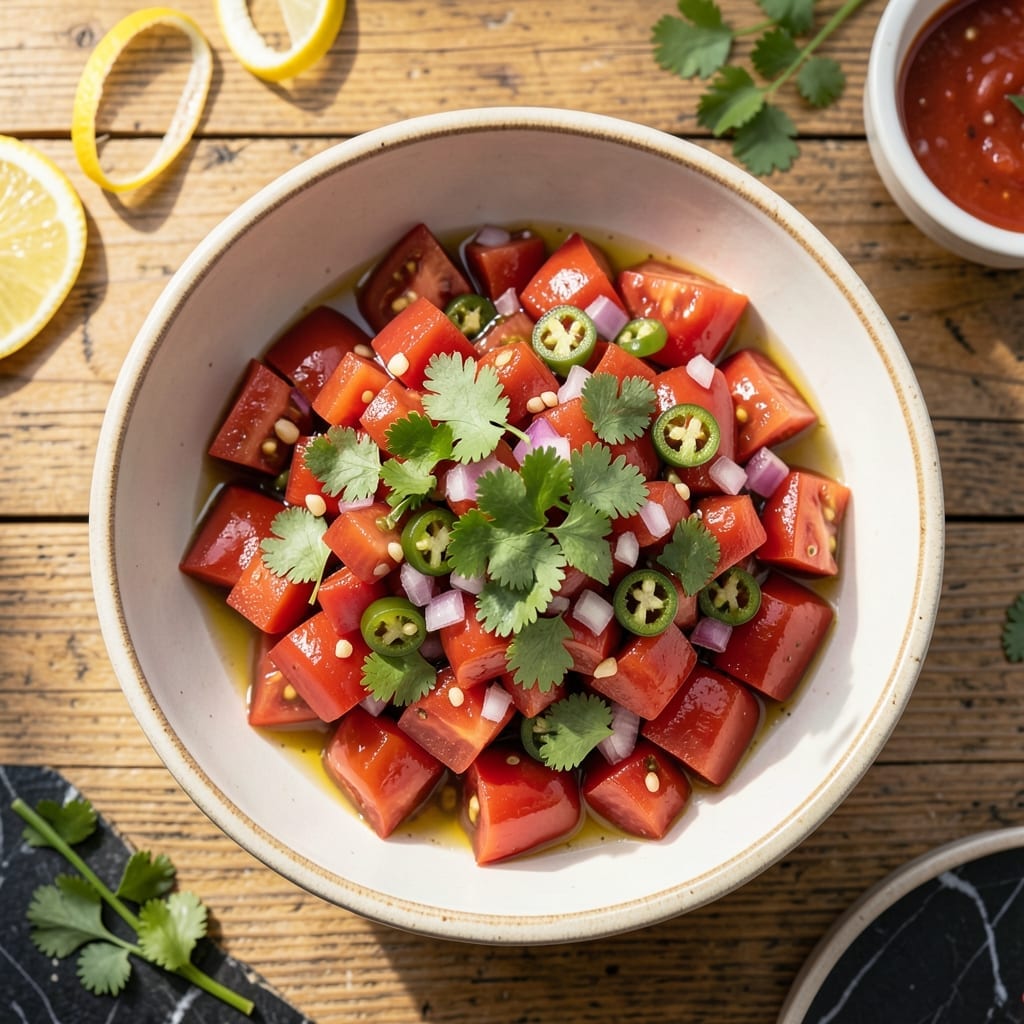
This fresh tomato salsa captures the essence of garden-ripened produce in every bite. The blend of juicy tomatoes, crisp onions, and bright cilantro creates a vibrant, restaurant-quality dip.
With just a few simple ingredients and 10 minutes of prep, you’ll have a versatile condiment perfect for chips, tacos, or grilled meats. The flavors meld beautifully over time, making it even better the next day.
Ingredients for Salsa Recipe with Fresh Tomatoes
Nine fresh ingredients transform into a vibrant, garden-inspired dip with minimal effort required.
| Ingredient | Amount | Notes |
|---|---|---|
| Roma Tomatoes 🍅 | 2 lb | Vine-ripened, diced |
| Red Onion 🧅 | 1 whole | Medium, finely diced |
| Fresh Cilantro 🌿 | 1 cup | Packed leaves, chopped |
| Jalapeño Peppers 🌶️ | 2 whole | Seeds removed, minced |
| Lime Juice 🍈 | ¼ cup | Freshly squeezed |
| Garlic Cloves 🧄 | 3 cloves | Minced finely |
| Sea Salt 🧂 | 1 tsp | Fine grain preferred |
| Ground Cumin 🌿 | ½ tsp | Toasted for depth |
| Black Pepper 🌶️ | ¼ tsp | Freshly ground |
[recipe_ingredient_scaler]
Roma tomatoes are ideal for their low moisture and meaty texture—look for deeply colored, firm fruit at farmers markets or well-stocked grocers. The onion should be crisp and pungent; red onion provides the right balance of sharpness and color. Fresh cilantro from Mexican grocers often has superior fragrance compared to standard supermarket bunches. For jalapeños, select glossy, unblemished peppers with a slight give when pressed.
Out of Roma tomatoes? Heirloom or beefsteak varieties work in a pinch (drain excess seeds). No fresh cilantro? Flat-leaf parsley at half the amount offers a milder alternative. For heat adjustments, serrano peppers at half the quantity intensify the spice, while bell peppers eliminate it entirely. The cumin can be omitted if preferred, though it adds an essential earthy note to the profile.
This salsa keeps well refrigerated for 5-7 days in an airtight container. For longer storage, freezing is possible but may soften the texture—best used in cooked applications afterward. The flavors develop significantly after 24 hours, making it ideal for preparation a day ahead.
Why You’ll Love This Recipe
- I’ll be real: it tastes even better the next day, and a big batch costs less than store-bought.
- No Cook Needed: I just chop, mix, and let the Roma tomatoes and lime juice do the work—no stove, no stress.
- Bright and Zesty: The jalapeños add a kick while the cilantro and lime make it refreshingly tangy, not overpowering.
- Taco Night MVP: Honestly, it’s my secret for upgrading tacos, nachos, or even scrambled eggs in seconds.
Step-by-Step Instructions for Salsa With Fresh Tomatoes
Master the technique for vibrant, restaurant-quality salsa with this precise method.
Step 1: Prepare and Dice the Vegetables
Begin by dicing the 2 lb Roma Tomatoes into ¼-inch pieces. I use a serrated knife for this—it cleanly pierces the skin without crushing the flesh. Consistency in size ensures even distribution of texture in every bite.
Finely dice the 1 whole Red Onion and mince the 2 whole Jalapeño Peppers after removing seeds and ribs. For the jalapeños, wear gloves if sensitive to heat. The finer the dice, the more evenly the flavors meld. Place all diced vegetables in a large mixing bowl.
Step 2: Incorporate Aromatics and Seasonings
Add the 3 cloves Garlic Cloves, minced finely, to the bowl. I prefer to mince garlic by hand rather than pressing—it releases oils gradually for a more balanced flavor. Stir in the 1 cup Fresh Cilantro, chopped, reserving a few leaves for garnish if desired.
Sprinkle the 1 tsp Sea Salt, 0.5 tsp Ground Cumin, and 0.25 tsp Black Pepper over the mixture. The cumin adds depth, while the salt draws out the natural juices from the tomatoes and onion. Gently fold everything together until just combined.
Step 3: Finish with Lime Juice and Rest
Pour the 0.25 cup Lime Juice over the mixture. Freshly squeezed is essential—bottled juice lacks the bright, zesty acidity that balances the salsa’s richness. Stir thoroughly to distribute the lime juice evenly.
Let the salsa rest at room temperature for 15-20 minutes before serving. This resting period allows the flavors to meld and the juices to pool slightly, creating a more cohesive texture. Taste and adjust seasoning if needed, though the initial measurements should yield perfect balance.
Step 4: Serve and Store
Transfer the salsa to a serving bowl and garnish with the reserved cilantro leaves. For best results, serve at room temperature to allow the full spectrum of flavors to shine. The salsa will keep in an airtight container in the refrigerator for up to 5 days, though it’s best enjoyed fresh.
If the salsa tastes too sharp immediately after mixing, don’t be alarmed—this is normal. The flavors will mellow as it rests. For a smoother texture, you can pulse half the mixture in a food processor before combining, but I prefer the rustic, chunky consistency of hand-diced ingredients.
Pro Tips For Making Salsa Recipe With Fresh Tomatoes
- Seed the Tomatoes: Roma tomatoes have a lot of water—scoop out the seeds and gel first to keep your salsa from turning into soup. I learned this the hard way after making a sad, watery batch.
- Char the Veggies: Toss the tomatoes, onion, and jalapeños under a broiler for 8-10 minutes until blackened in spots. Sounds weird, but it works: the smoky depth makes the fresh lime and cilantro pop.
- Salt the Onions: Sprinkle the diced red onion with a pinch of salt and let it sit for 5 minutes before mixing. My grandmother swore by this, and she was right: it takes the harsh edge off without losing the crunch.
- Hand-Chop Cilantro: Skip the food processor for the cilantro—finely chop it by hand instead. After burning three batches of salsa with bitter, muddy cilantro, I finally figured out the processor bruises it.
Common Mistakes When Making Perfect Results
🔥 Overcrowding the Pan
Adding too many tomatoes at once can cause them to steam instead of char, leading to a watery salsa with less depth of flavor. The pan needs space for proper heat distribution.
Fix: Cook tomatoes in batches, allowing each piece to sear and develop a rich, smoky taste. Patience ensures a thicker, more flavorful base.
🍳 Skipping the Drain Step
Fresh tomatoes release a lot of liquid, which can make your salsa too runny. Excess moisture dilutes the vibrant taste and texture you want.
Fix: After chopping, let the tomatoes drain in a colander for 10-15 minutes. Lightly salt them to draw out more liquid before mixing.
🧂 Over-Seasoning Too Soon
Adding salt or spices early can amplify bitterness, especially in raw ingredients like onions or peppers. The flavors need time to meld naturally.
Fix: Season lightly at first, then adjust to taste after letting the salsa sit for 20-30 minutes. This allows the ingredients to harmonize.
⏰ Rushing the Resting Time
Salsa tastes best when the flavors have a chance to blend. Serving it immediately can result in a harsh, uneven taste.
Fix: Let the salsa rest at room temperature for at least 30 minutes (or refrigerate for 1-2 hours) before serving. This step enhances the fresh, zesty profile.
Nutrition Facts

Trained in classic French technique but raised on slow-cooked ribs and spicy rubs, she blends culinary skill with smoke and soul.
- Recipe for Boneless Pork Chops in Cast Iron Skillet: Sear and Baste to Juicy Perfection - October 3, 2026
- Recipe for Boneless Cross Rib Roast: Slow-Roasted Beef with Herb Crust - October 3, 2026
- Hamburgers in Sauce Recipe Crock Pot: Slow-Cooked Savory Delight - October 3, 2026