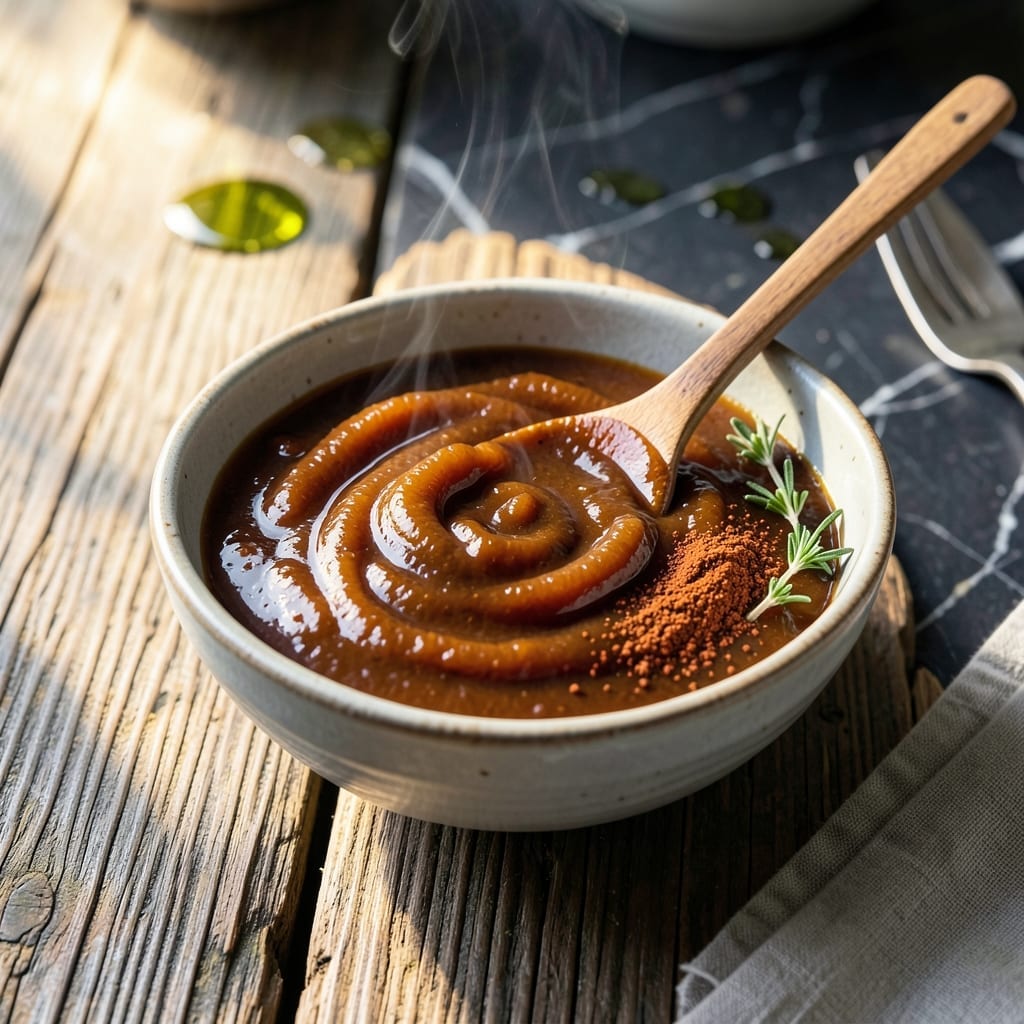
This vinegar-forward barbecue sauce delivers bold tang without relying on salt for flavor. I developed this recipe after years of perfecting my competition sauces.
The balance of sweet, smoky, and acidic notes creates a versatile sauce that enhances without overpowering. Perfect for those watching their sodium intake.
Ingredients for Salt Free Barbecue Sauce
Ten bold, sodium-free ingredients for a tangy, competition-level sauce everyone will love.
| Ingredient | Amount | Notes |
|---|---|---|
| Tomato Paste 🍅 | ½ cup | No-salt-added variety preferred |
| Apple Cider Vinegar 🍏 | 1 cup | Raw, unfiltered for depth |
| Water 💧 | ½ cup | Filtered or distilled |
| Blackstrap Molasses 🫙 | ¼ cup | Rich, deep flavor essential |
| Maple Syrup 🍁 | ¼ cup | Grade A or B |
| Smoked Paprika 🌶️ | 1 tbsp | Sweet or hot variety |
| Garlic Powder 🧄 | 1 tbsp | Fresh ground for best results |
| Onion Powder 🧅 | 1 tbsp | Fine powder preferred |
| Ground Black Pepper 🌶️ | 1 tsp | Freshly ground preferred |
| Ground Mustard 🟡 | ½ tsp | Dry mustard powder |
[recipe_ingredient_scaler]
The vinegar is the backbone here—Bragg Apple Cider Vinegar (the one with the mother) gives that complex tang. Tomato paste has to be no-salt-added; most brands sneak it in. Muir Glen makes a clean version. Blackstrap molasses is non-negotiable for that deep, almost bitter note that balances the sweetness. Find it near the baking aisle or at Whole Foods if your regular store doesn’t stock it.
No molasses? Dark brown sugar at one-third the amount works in a pinch, but you’ll lose some depth. Swap maple syrup for agave or date syrup—just keep the ratio the same. Smoked paprika can be regular, but add a dash of liquid smoke (just a few drops) to compensate. The garlic and onion powders are for convenience—fresh minced works too, but cook it down first to mellow the bite.
This keeps 2 weeks in the fridge thanks to the vinegar’s acidity. For longer storage, freeze in ice cube trays—good for 6 months. The flavors meld and deepen over time, so making it a day ahead is ideal (worth the extra minute).
Why You’ll Love This Recipe
- Five Minute Mix: I just dump everything in a saucepan and stir—tomato paste, vinegar, molasses, done.
- Smoky Sweet Balance: The blackstrap molasses and maple syrup give it that deep, rich flavor without needing salt.
- Grill or Meal Prep: Honestly, I use it on chicken, ribs, even as a dipping sauce for veggies.
- Pantry Staples: All the ingredients were already in my cupboard, and it’s way cheaper than store-bought.
Step-by-Step Instructions for Salt Free Barbecue Sauce
Here’s the method. Simple, straightforward, and packed with bold flavor without a single grain of salt.
Step 1: Combine Liquid Base and Sweeteners
In a medium saucepan, whisk together the 0.5 cup Tomato Paste, 1 cup Apple Cider Vinegar, and 0.5 cup Water until smooth. The tomato paste will be thick at first, but the vinegar and water will loosen it into a pourable consistency.
Add the 0.25 cup Blackstrap Molasses and 0.25 cup Maple Syrup, stirring well to incorporate. The molasses will give the sauce its deep, almost bittersweet richness, while the maple syrup adds a brighter, more approachable sweetness. Bring this mixture to a gentle simmer over medium heat.
Step 2: Incorporate Spices and Seasonings
Once simmering, reduce the heat to medium-low and stir in the 1 tbsp Smoked Paprika, 1 tbsp Garlic Powder, and 1 tbsp Onion Powder. The smoked paprika will infuse the sauce with that classic barbecue smokiness, while the garlic and onion powders build a savory foundation.
Next, add the 1 tsp Ground Black Pepper and 0.5 tsp Ground Mustard. The black pepper adds a subtle heat, and the ground mustard enhances the tanginess of the vinegar. Stir thoroughly to ensure all the spices are evenly distributed and no clumps remain.
Step 3: Simmer to Thicken and Develop Flavors
Let the sauce simmer uncovered for 15-20 minutes, stirring occasionally. As it cooks, the liquid will reduce slightly, and the flavors will meld together. You’ll notice the sauce darkening and thickening as the molasses and tomato paste concentrate.
Watch for the sauce to reach a consistency where it coats the back of a spoon but still drizzles easily. If it thickens too much before the flavors fully develop, add a splash of water to loosen it. The goal is a balance—thick enough to cling to food but not so thick it becomes gluey.
Step 4: Adjust and Cool Before Using
After 20 minutes, taste the sauce and adjust the sweetness or tanginess if needed. If it’s too sharp, a touch more maple syrup can mellow it out. If it’s too sweet, a splash of apple cider vinegar will brighten it up. Remember, the flavors will continue to deepen as it cools.
Remove the saucepan from the heat and let the sauce cool to room temperature. As it cools, it will thicken slightly more. Transfer it to an airtight jar or bottle. The sauce will keep in the refrigerator for up to 2 weeks, and the flavors will only improve over time.
Pro Tips For Making Salt Free Barbecue Sauce
- Simmer Low and Slow: Cook the sauce on low heat for at least 20 minutes—rushing it with high heat will burn the sugars in the molasses and maple syrup before the flavors meld.
- Bloom the Tomato Paste: Cook the tomato paste alone in the pot for 2-3 minutes first to deepen its flavor before adding liquids—this builds a richer base without salt.
- Balance the Vinegar: Apple cider vinegar can overpower, so start with half the amount, taste, and add more gradually—I learned this the hard way after ruining a batch.
- Use Warm Water: Mix the water in warm to help dissolve the molasses and maple syrup evenly—cold water makes them clump and stick to the bottom.
Essential Equipment for This Dish
Saucepan Selection
I always reach for my 3-quart stainless steel saucepan with a heavy bottom for even heat distribution. A quality pan prevents hot spots that can scorch your sauce. All-Clad is my go-to brand for durability and performance. 🔥
Whisk It Right
A balloon whisk works best for combining the tomato paste with vinegar and water smoothly. The curved shape helps break up any lumps in the tomato paste. I keep a 10-inch whisk from OXO in my kitchen for sauces like this.
Measuring Tools
Precision matters with sticky ingredients like molasses. I use a liquid measuring cup for the vinegar and water, and a dry measuring cup for the tomato paste. For the spices, a 1 tbsp measure and 1 tsp measure set ensures accuracy.
Simmer Control
Maintaining the right simmer is key. I use a gas range for instant heat adjustments, but an induction cooktop works too if you have one. The sauce should bubble gently, not aggressively. A medium-low heat setting is usually perfect.
Storage Containers
Once cooled, transfer your sauce to glass mason jars or squeeze bottles for easy dispensing. I prefer 16-ounce Ball jars as they’re airtight and easy to label. For competition days, I use condiment bottles from WebstaurantStore.
Cleanup Help
This sauce can be sticky, so fill your sink with hot soapy water immediately after use. A silicone spatula helps scrape every last bit from the pan. I find that Dawn Powerwash cuts through the molasses residue effectively.
Nutrition Facts
Frequently Asked Questions
Why use blackstrap molasses instead of regular?
Blackstrap molasses has a deeper, more complex flavor with a slight bitterness that balances the sweetness. It also contains more minerals and a richer color, which enhances the sauce’s depth. Regular molasses works, but the flavor won’t be as robust.
Can I make this sauce ahead of time?
The flavors actually improve after 24 hours in the fridge. Store in an airtight container for up to 2 weeks. For longer storage, freeze in ice cube trays for up to 6 months.
What if my sauce is too thin?
Simmer uncovered for an additional 5-10 minutes to reduce and thicken. If it’s still too thin, mix 1 tsp cornstarch with 1 tbsp water and stir in, then cook for 2 more minutes.

Trained in classic French technique but raised on slow-cooked ribs and spicy rubs, she blends culinary skill with smoke and soul.
- Recipe for Boneless Pork Chops in Cast Iron Skillet: Sear and Baste to Juicy Perfection - October 3, 2026
- Recipe for Boneless Cross Rib Roast: Slow-Roasted Beef with Herb Crust - October 3, 2026
- Hamburgers in Sauce Recipe Crock Pot: Slow-Cooked Savory Delight - October 3, 2026