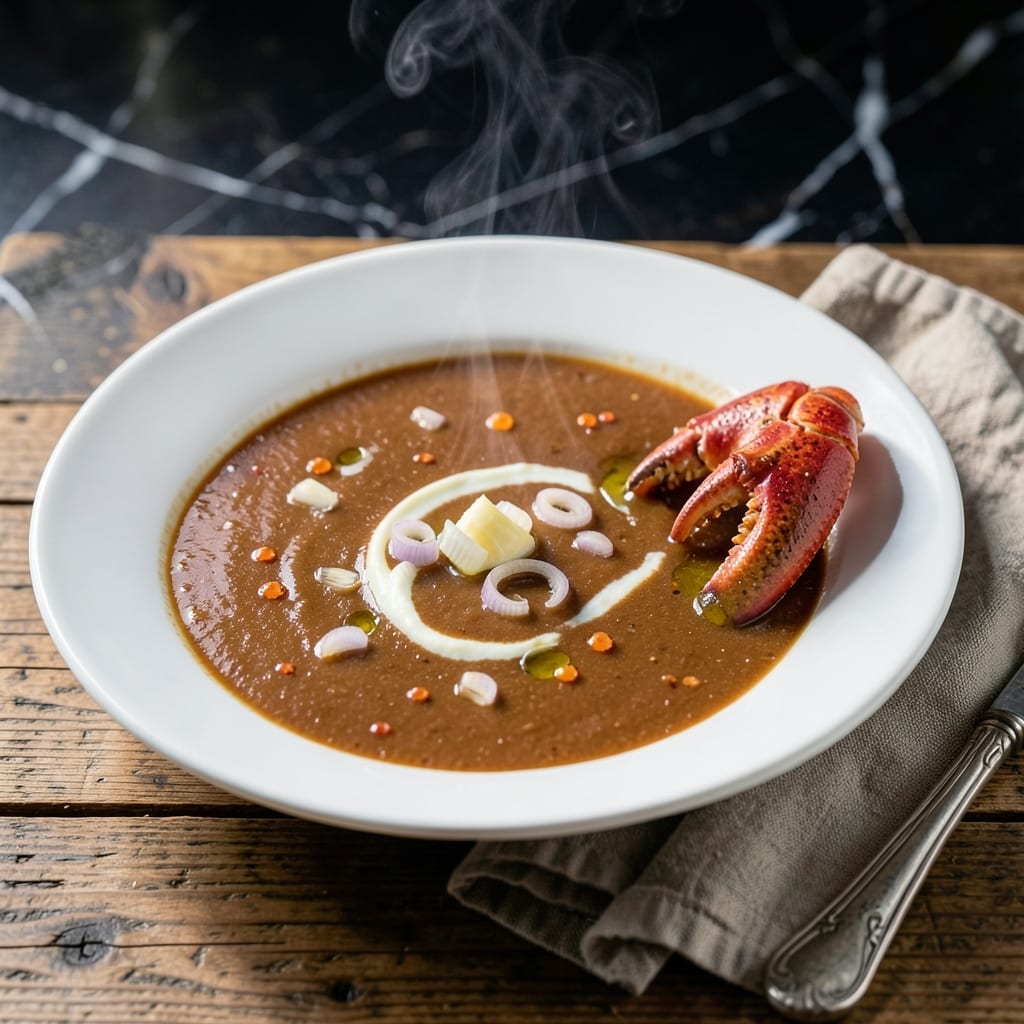
This refined sauce elevates seafood dishes with its rich, velvety texture and deep lobster essence. A classic of French cuisine, it transforms simple preparations into gourmet experiences.
Built on a foundation of shellfish stock and tomato, the sauce gains complexity from brandy and a touch of Cayenne. The slow reduction concentrates flavors while maintaining a smooth consistency.
Perfect for drizzling over grilled lobster or poached fish, this restaurant-quality sauce delivers luxurious results with minimal effort. Its balanced acidity cuts through rich seafood beautifully.
Store in an airtight container in the refrigerator for up to 3 days. Reheat gently to preserve its silky texture.
Ingredients for Sauce Americaine
Ten ingredients form this luxurious, restaurant-quality lobster-infused tomato velouté with French finesse.
| Ingredient | Amount | Notes |
|---|---|---|
| Lobster Bodies and Shells 🦞 | 2 lb | From live lobsters, crushed |
| Shellfish Stock 🥣 | 4 cups | High-quality, unsalted preferred |
| Tomato Purée 🍅 | 1 cup | San Marzano preferred |
| Brandy 🥃 | ½ cup | Cognac or Armagnac variety |
| Unsalted Butter 🧈 | ½ cup | European-style for richness |
| Shallots 🧅 | 2 whole | Finely minced for base |
| Garlic Cloves 🧄 | 3 cloves | Minced for aromatic depth |
| Cayenne Pepper 🌶️ | ¼ tsp | Adjust to preferred heat level |
| Dry White Wine 🍷 | ½ cup | Crisp variety like Sauvignon Blanc |
| Lemon Juice 🍋 | 2 tbsp | Freshly squeezed for acidity |
[recipe_ingredient_scaler]
The lobster shells are non-negotiable for authentic flavor. Source from a reputable fishmonger—ask them to crack the bodies for you (saves time and effort). Shellfish stock should be rich and deeply colored; Anaheim or More Than Gourmet brands deliver consistent quality. For the brandy, Hennessy VS offers excellent value—avoid anything labeled ‘cooking brandy’ as it lacks depth.
No lobster shells? Shrimp or crab shells work in a pinch, though the flavor profile shifts. Substitute fish stock for shellfish stock if necessary, but expect less complexity. The tomato purée can be swapped with crushed San Marzano tomatoes (strain out seeds for smoother texture). For alcohol-free, replace brandy with additional dry white wine—the acidity balances the richness.
Sauce Americaine keeps for 3 days refrigerated in an airtight container. Reheat gently over low heat, whisking frequently to maintain the velvety texture. Do not boil—this causes separation. For longer storage, freeze for up to 1 month, though fresh is ideal for optimal quality.
Why You’ll Love This Recipe
- Minimal Effort: I just simmer the lobster shells in stock while I prep the rest—hardly any active work.
- Rich Depth: The brandy and tomato purée create this luxurious, slightly smoky base that clings to seafood.
- Fancy Without Fuss: I serve it over grilled fish for date night or stir it into pasta for a lazy Sunday supper.
- Stretches Luxury: Those leftover lobster bodies finally earn their keep, turning pricy scraps into a silky, restaurant-worthy sauce.
Step-by-Step Instructions for Lobster-Infused Tomato Velouté
This refined technique transforms shellfish into a rich, deeply flavored sauce with perfect balance.
Step 1: Create the Lobster Stock Foundation
Begin by crushing the 2 lb Lobster Bodies and Shells into smaller pieces using a mallet or heavy knife. This exposes more surface area for flavor extraction. In a large stockpot, melt 0.5 cup Unsalted Butter over medium heat until foaming.
Add the crushed lobster bodies and shells, stirring to coat in the melted butter. Cook for 8-10 minutes until the shells turn bright red and the butter develops a deep orange hue from the lobster oils. This builds the base flavor layer crucial to the sauce’s complexity.
Step 2: Develop the Aromatic Base
Add the 2 whole Shallots and 3 cloves Garlic Cloves, both finely minced, to the pot. Sauté for 2-3 minutes until the shallots become translucent and the garlic releases its fragrance. Be careful not to let the garlic brown, as it can become bitter.
Pour in the 0.5 cup Brandy and carefully ignite to flambe (or simply let it reduce by half if you prefer not to flame). The alcohol will cook off, leaving behind its rich, fruity essence. This step deglazes the pot and incorporates the caramelized lobster bits into the sauce base.
Step 3: Build the Sauce with Liquid Components
Add the 1 cup Tomato Purée and 0.25 tsp Cayenne Pepper to the pot. Stir well to combine with the lobster mixture. Cook for 3-4 minutes until the tomato purée darkens slightly and the mixture thickens.
Pour in the 4 cups Shellfish Stock and 0.5 cup Dry White Wine. Bring to a gentle simmer and cook for 20-25 minutes, reducing the liquid by about one-third. This concentration intensifies all the flavors while maintaining a velvety texture.
Step 4: Strain and Finish the Sauce
Strain the mixture through a fine-mesh sieve into a clean saucepan, pressing firmly on the solids to extract every bit of flavor. Discard the spent shells and aromatics. The resulting liquid should be rich, opaque, and deeply colored.
Return the strained sauce to low heat and stir in the 2 tbsp Lemon Juice. Simmer for an additional 2-3 minutes to incorporate the acidity. Taste and adjust seasoning if needed, though the natural brininess of the lobster often provides sufficient saltiness.
Pro Tips For Making Sauce Americaine
- Crush the Shells: I learned this the hard way—pounding lobster shells with a rolling pin before simmering in stock releases way more flavor. Skip this and your sauce will taste thin and weak.
- Reduce the Stock First: Simmer the shellfish stock by half before adding tomato purée. This concentrates the seafood depth so it doesn’t get lost under the acidity of the tomatoes.
- Flambe the Brandy: Carefully ignite the brandy when deglazing the lobster shells—it burns off the alcohol harshness and leaves a smoother, richer base. Just stand back from the flames.
- Finish with Cold Butter: Whisk in cold, cubed unsalted butter off the heat to emulsify the sauce. Adding it straight from the fridge, a little at a time, gives that glossy, velvety texture you’re after.
Serving Suggestions for This Recipe
Seafood Pairings
Drizzle this velvety sauce over grilled lobster tails or poached whole lobster for a classic French presentation. I also love it with seared scallops—the acidity balances the sweetness perfectly. 🦞
Fish Applications
Try it with pan-seared halibut or black cod for an elegant dinner. The sauce transforms simple poached white fish like cod or haddock into a restaurant-worthy dish. Just spoon it over the top right before serving.
Pasta Perfection
Toss with fresh linguine and lobster meat for a luxurious pasta dish. I recommend using 1 cup sauce per pound of pasta. Garnish with fresh parsley and a sprinkle of grated Parmesan for extra depth.
Vegetable Accompaniments
Serve alongside steamed asparagus or roasted Brussels sprouts to soak up the sauce. The bright acidity pairs beautifully with grilled zucchini or sautéed spinach as well.
Plating Techniques
For an elegant touch, pool the sauce on the plate first, then place your protein on top. I like to garnish with microgreens or edible flowers for color contrast. A drizzle of good olive oil adds a final luxurious finish. ✨
Bread Service
Always serve with crusty bread or baguette slices to mop up every last drop. The sauce is so rich and flavorful that you’ll want to savor every bit. I warm my bread in the oven with a garlic butter rub.
Nutrition Facts
Frequently Asked Questions
Can I use shrimp shells instead of lobster?
Yes, shrimp shells work in a pinch, though the flavor will be less rich. Use the same 2 lb quantity and follow the recipe as written. The result will still be delicious but slightly less luxurious.
Why does the recipe call for flambéing the brandy?
Flambéing burns off the alcohol while preserving its fruity depth. If you skip this step, simply reduce the brandy by half over medium heat to achieve similar flavor concentration.
How do I prevent the sauce from separating?
Avoid boiling after adding the butter. Keep the heat at low and whisk constantly during the final steps. If separation occurs, whisk in 1 tsp cold water to re-emulsify.
What’s the best way to reheat leftover sauce?
Warm gently over low heat, stirring frequently. For best results, add 1 tbsp water per cup of sauce to restore its velvety texture. Never microwave.

Trained in classic French technique but raised on slow-cooked ribs and spicy rubs, she blends culinary skill with smoke and soul.
- Recipe for Boneless Pork Chops in Cast Iron Skillet: Sear and Baste to Juicy Perfection - October 3, 2026
- Recipe for Boneless Cross Rib Roast: Slow-Roasted Beef with Herb Crust - October 3, 2026
- Hamburgers in Sauce Recipe Crock Pot: Slow-Cooked Savory Delight - October 3, 2026